


Statue of women’s and children’s rights campaigner Elizabeth Andrews OBE JP set to be unveiled
Amelia Jones
A statue to honour women’s and children’s rights champion Elizabeth Andrews OBE JP is being unveiled at a Welsh Heritage Park Museum on Thursday, 25 June following a campaign by the Monumental Welsh Women group.
The statue is the fifth and final statue of a real, named Welsh woman being erected by Monumental Welsh Women following a national campaign to honour Wales’ hidden heroines, broadcast by BBC Wales in 2019.
The women honoured by the campaign are Betty Campbell, Wales’ first black headteacher and champion of equality and diversity (statue unveiled in 2021 in Cardiff), Elaine Morgan, screen-writer and evolutionary theorist (statue unveiled in 2022 in Mountain Ash), Sarah Jane Rees, known as Cranogwen, poet, mariner, preacher and campaigner (statue unveiled in Llangrannog in 2023) and Lady Rhondda, Suffragette, global businesswoman and lifelong campaigner for equality (statue unveiled in Newport in 2024)
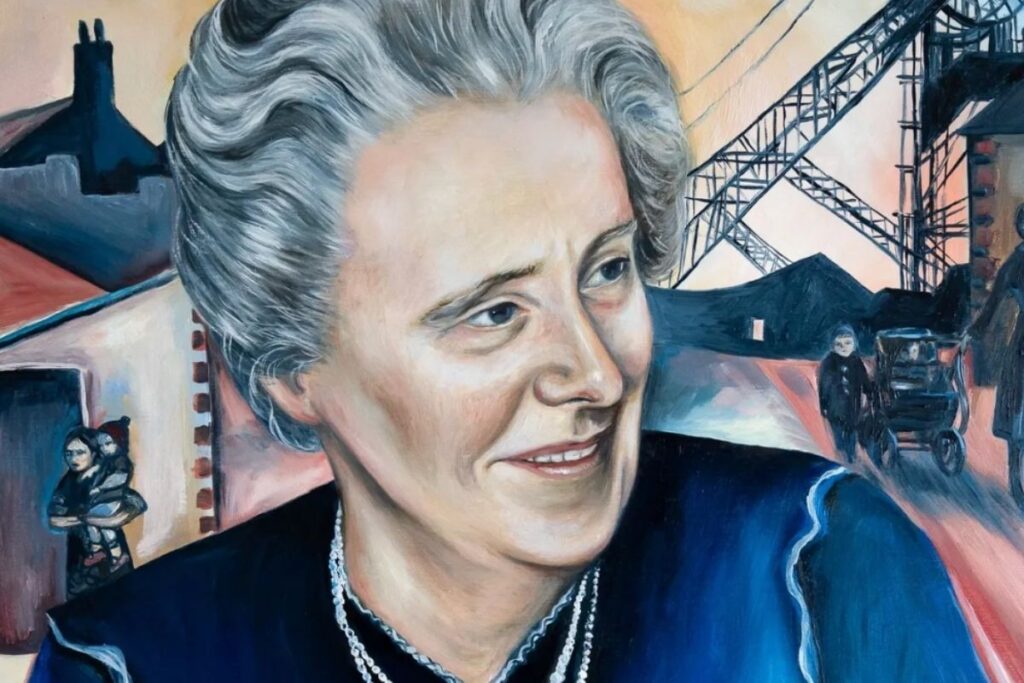
Elizabeth Andrews was one of the most influential Welsh female political activists of the early 20th century. An internationalist, a suffragist and a socialist who brought the needs of working-class families into the political arena, she fought for better maternity and childcare and helped found one of Wales’s earliest nursery schools.
She successfully campaigned for the creation of pithead baths, improving the lives not just of miners, but also the women and children of the mining communities. She also became one of Britain’s first female magistrates. To the generations of women she helped and inspired she was simply known as “Our Elizabeth.”
One of 11 children born into a poor mining family in Hirwaun in the Cynon Valley, Elizabeth dreamed of being a teacher but was forced to leave school at 13 to help her parents make ends meet. She worked as a dressmaker, moving to the Rhondda at the age of 26. The move proved the catalyst for Elizabeth’s political awakening as she saw the social problems suffered by her community.
Labour Party
As the first Labour Party Women’s Organiser for Wales, a role created following some women receiving the vote in 1918, Elizabeth Andrews set up women’s sections, describing them as “working women’s universities.” One of her earliest tasks was translating leaflets from English to Welsh to urge women to use their newly-won vote.
In 1919, Elizabeth Andrews gave evidence in the House of Lords to a Royal Commission on the mining industry, speaking powerfully about the impact of the mining industry on family life. She played a pivotal role in organising community relief during both the 1926 miners’ lockout following the General Strike and the subsequent economic devastation of the Depression in the 1930s.
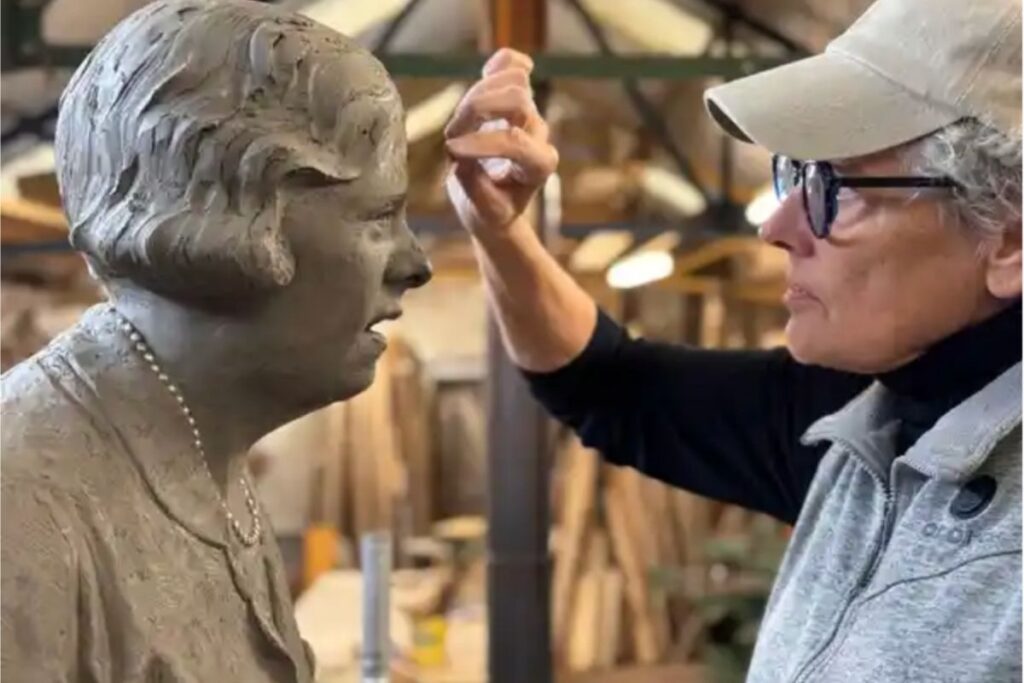
The 6.5ft bronze statue of Elizabeth Andrews is sited outside Rhondda Heritage Park Museum in Trehafod, Rhondda Cynon Taf, a museum dedicated to the history of mining communities in the South Wales valleys. The statue is designed and created by sculptor Billie Bond, known for her figurative works. Previous works include a sculpture of her sister who has Downs Syndrome, on the 4th Plinth in Trafalgar Square as part of Anthony Gormley’s One & Other highlighting the importance of art for everyone.
An inspiration
Helen Molyneux, Chair of Monumental Welsh Women said, “We are delighted to unveil our fifth and final statue of a real Welsh woman. Elizabeth Andrews’ tireless work for her community – and for working families everywhere – continues to be seen in a tangible way today.
“We hope that highlighting her legacy, and the legacies of all five women honoured by the Monumental Welsh Women campaign will act as an inspiration to women and girls throughout Wales. Before the statue of Betty Campbell was unveiled in Cardiff, there was not a single statue of a named Welsh woman in Wales.
“We’ve always said, “You can’t be what you can’t see’, and now Wales has five statues telling the stories of these wonderful women who stand as an example to everyone of what can be achieved when women use their voices to speak up for change.”
Sculptor Billie Bond said, “I feel very honoured to have been part of this remarkable project, creating the fifth and final statue for Welsh Monumental Women.
“It was important to me not only to portray Elizabeth Andrews OBE as the strong, determined woman she was, but also to tell the story of some of her most significant achievements in improving the lives of mining communities. Her campaign for compulsory pithead baths and her dedication to supporting children during the 1926 miners’ lockout were particularly important aspects of the narrative I wanted the sculpture to convey.
“It was also a pleasure to involve the local Hirwaun sewing group in the design. I hope this serves as a fitting tribute to Elizabeth Andrews’ legacy and an inspiration to future generations of women in Wales.”
Depicted standing, papers in hand on an upturned tin-bath, the statue provides a visual narrative of a campaigner who placed improving the lives of working families at the heart of her work.
Educate, Agitate, Organise
Her motto was “Educate, Agitate, Organise”, included in the statue as hand stitched lettering on the front of the tin bath. Symbolising the craftivism of women’s groups, the intricate details and domestic textures associated with campaign banners from the Suffragettes to Greenham Common and beyond. The banner itself is modelled on hand stitched lettering made by The ‘Dare to Stitch’ sewing group, a local community craft collective based in Hirwaun, near Aberdare. It is also a nod to Elizabeth’s time as a dressmaker.
A young girl sits at the edge of the tin bath, representing the children helped by Elizabeth Andrews during the turbulent times of the 1926 miners’ lockout, where families struggled to put food on the table. She helped to organise a relief campaign to ease that intense financial pressure by sending children from mining communities to be temporarily housed with volunteer families.
The girl in the statue is Rhona Allen, who was born to a large mining family in Llwynypia, Rhondda. During the General Strike, Rhona, then aged six, was fostered to a wealthy family in England for several months. She was the aunt of journalist and broadcaster Carolyn Hitt, also a founder member of Monumental Welsh Women.
Carolyn Hitt said, “Billie Bond was particularly drawn to the story of the miners’ children being looked after through the General Strike and asked our Monumental Welsh Women group if we knew of anyone whose ancestors were involved as she would love to have a real child in mind when creating the statue – by fortunate coincidence she didn’t have to look too far.
“It’s emotional enough to think we have completed our mission of five statues of Welsh women in five years but to have this personal connection to our final statue through the figure of the little girl with Elizabeth is just so special.
“My aunt died 30 years ago but she will now live on as a reminder of the hardship previous generations endured in the mining valleys of South Wales and how Elizabeth Andrews fought so passionately for their welfare.”
The event
The event will include performances from Hirwaun School Choir, and a choir made up of members of Côr Cwm Rhondda and Côr Cwm Cynon and a reading of a poem by the National Poet of Wales, Hanan Issa, specially commissioned by Literature Wales.
The statue is being unveiled by members of Elizabeth Andrews’ family including her great-great-niece Melinda Hawthorne and her great-niece Maura High, who is travelling from her home in the United States for the event. During her visit with her daughter and granddaughter, Rhondda-born Maura is eager to practise the Welsh she has been learning online since the pandemic with Learn Welsh Cardiff, run by Cardiff University on behalf of the National Centre for Learning Welsh.
The unveiling ceremony for the statue of Elizabeth Andrews will take place on Thursday, 25 June at 11am at Rhondda Heritage Park Museum. You can find more information here.
Support our Nation today
For the price of a cup of coffee a month you can help us create an independent, not-for-profit, national news service for the people of Wales, by the people of Wales.
Get more trusted Welsh news
Choose Nation.Cymru as a preferred source in Google News to see more of our journalism.


