

Teithiau Tom: Mynydd Parys
Tom Maloney
What comes to mind when we think of Wales? The majestic and often mystical skylines of our wonderful mountain ranges will, I am sure, be to the forefront of many a mind and why not? They are beautiful, and something that we should rightly celebrate.
For me, one of the most intriguing, if not bewitching mountains is Mynydd Parys (Parys Mountain), which is to be found on the north east corner of Ynys Môn (Anglesey), for it is a mountain like no other that I know.
I first came across a reference to Mynydd Parys on a chance visit to Greenfield Dock, a small harbour inlet at Aber Dyfrdwy (the Dee Estuary). The headline on the worn and faded information board literally stopped me in my tracks:
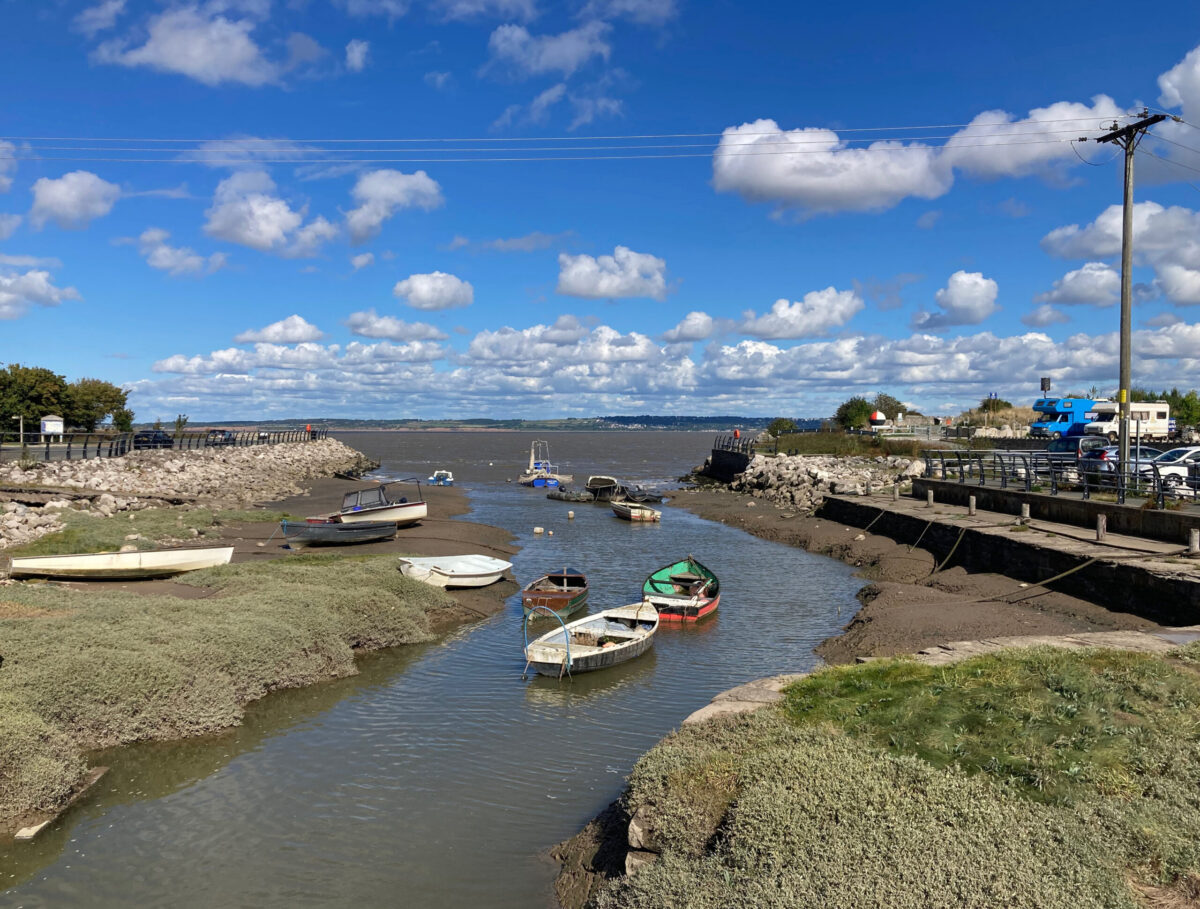
A Heyday at Expense of Slaves (1750 – 1807)
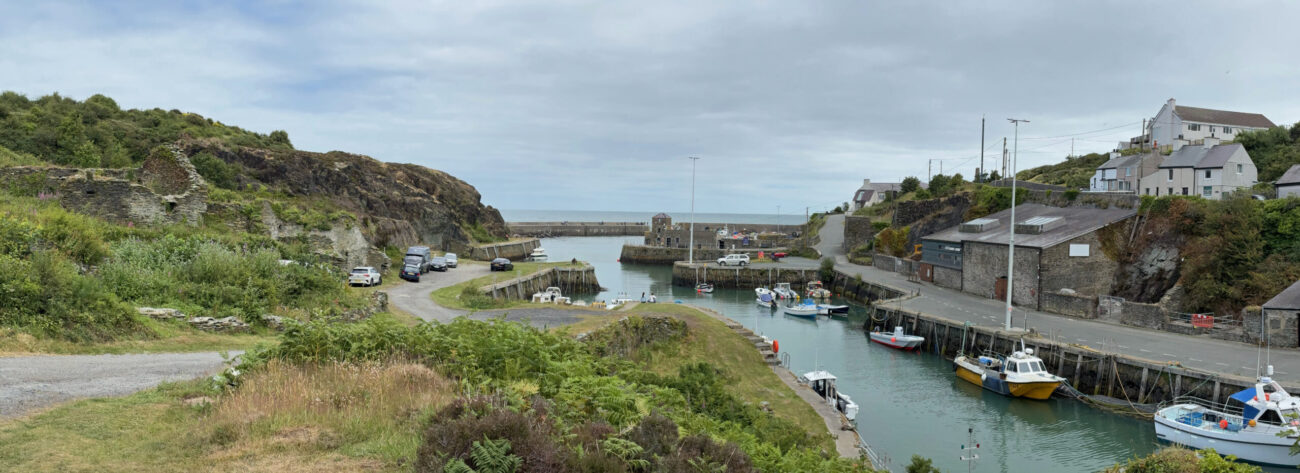
Greenfield Dock was constructed on a natural harbour in the early 1700s. Originally the Dock had two wharfs protected by a breakwater. Raw copper from Parys Mountain on Anglesey was unloaded here and sent to the Greenfield Valley’s mills to be turned into copper goods. The owners of Greenfield Valley and the Dock grew rich and successful exporting these cups, pots and manilas to the slave trader ships in Liverpool to take to West Africa.
At first sight there is nothing particularly distinguishing about Greenfield Dock and you could easily just wander along the coast here without realising the events that had unfolded all those years ago without the aid of the interpretation board.
This was history that had not been on the curriculum when I was in school and I wanted to understand more and to visit Mynydd Parys, which I have done every year since this little walk at Greenfield Dock in 2022.
I would say that the best way to enjoy exploring the mountain would be to plan it into a stay on the beautiful island of Ynys Môn. It can be found quite easily following signs for Amlwch and there is a good car park for visitors off the B5111.
Much has been done by the Amlwch Industrial Heritage Trust* to develop walking trails at the site and following their guidance is very important, as it is a potentially hazardous area with steep slopes and slippery surfaces formed by loose stones on the rough terrain.
The trails are separated into two routes. The green route is the full trail and the guide time given is two hours. The shorter red trail has a guide time of one hour.
Time runs away with you when walking here and if like me you can spend time walking back and forth you can easily exceed these timings. I always seem to leave wishing I had more time!
Mynydd Parys seems a strange name and various sources identify that the hill was named after Robert Parys** who was rewarded with the ownership by the crown just over six hundred years ago for his endeavours in collecting taxes from the people of Anglesey for their part in supporting Owain Glyndŵr. I cannot imagine that this was an easy time at all for the poor folk at the time.
The Welsh given name was ‘Mynydd Trysglwyn’, which gives us a description prior to mining on an industrial scale between 1768 and 1880 of a hillside grove of trees and shrubs. Though there is evidence that mining has gone on here as far back as the early Bronze Age.
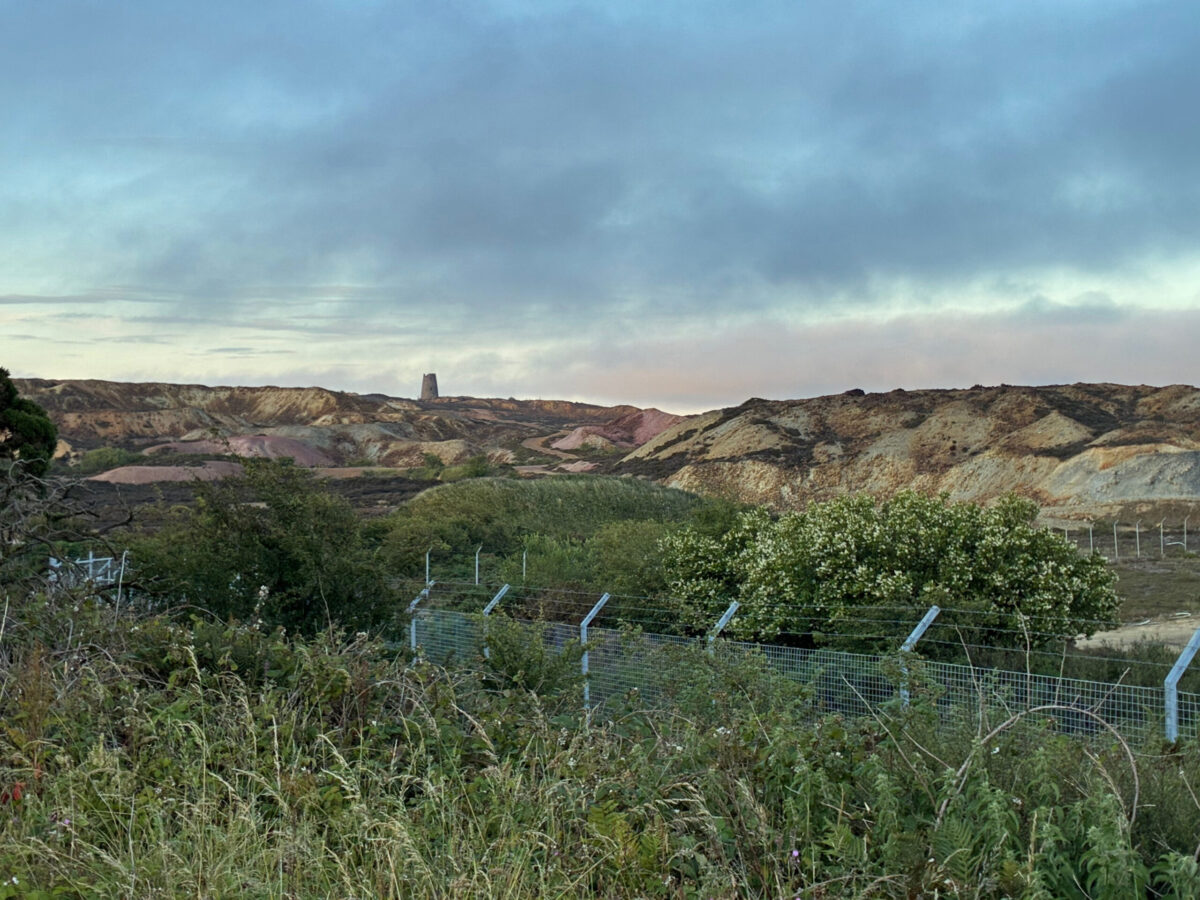
Is it a mountain? Well, it is more of a low hill really and has a compact, rugged profile when seen from a distance.
At its heart is the ‘Great Opencast’. Remarkably it is only a short distance from the car park, I often have to walk much further to experience such sights as this.
I had seen photographs of this iconic feature before visiting for the first time, but I don’t think I was fully prepared for what I was going to see. I have the same feeling every time.
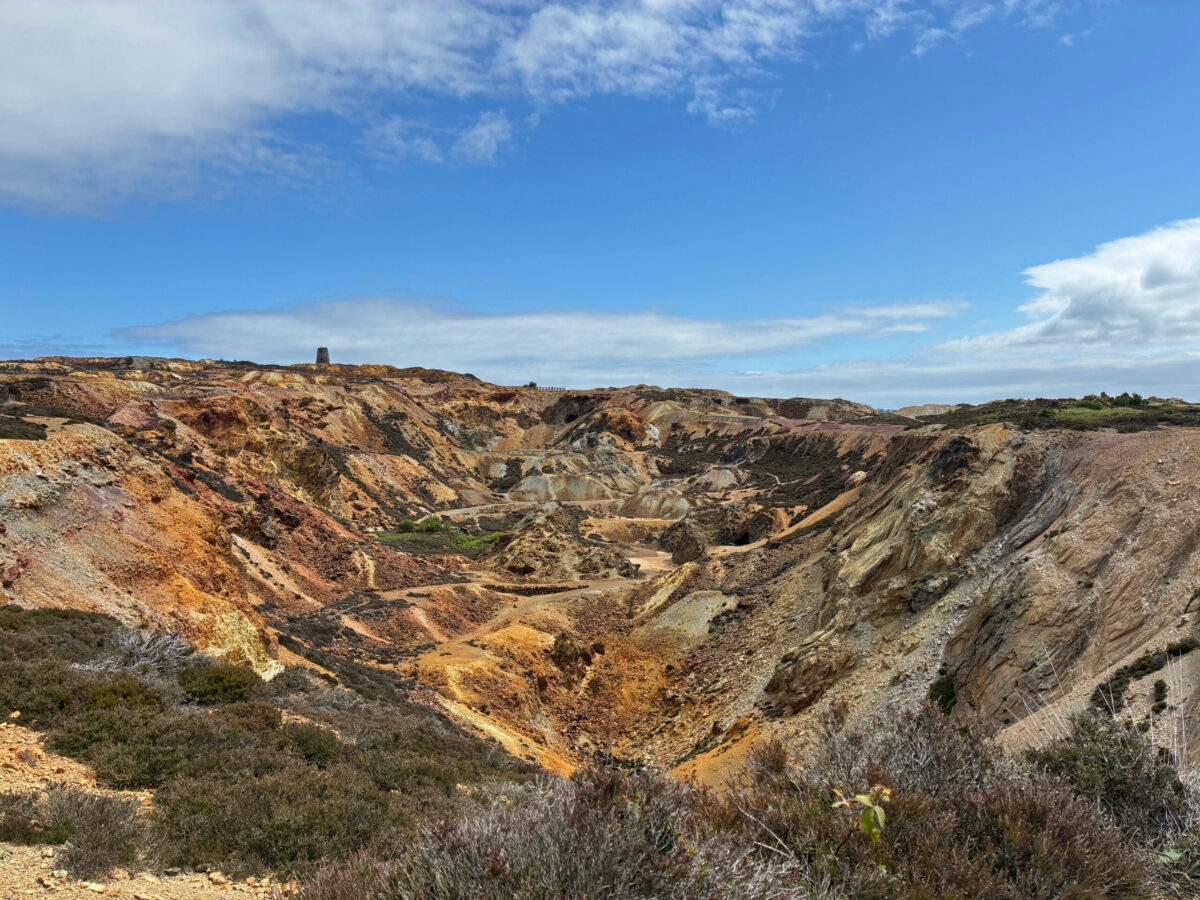
In truth, it is a brutal, strange world, so much reminiscent of a Martian landscape carved deep into the Earth, where layers of geological history are exposed in layers of electric mustard yellow and copper brown in such vivid brightness and clarity.
And … to imagine that people once toiled in its depths with pick axes and shovels, aided by gunpowder.
In my walks I often wonder how quickly a landscape can be transformed by modern machinery, but man has shown a propensity to be able to do this with such basic tools really and with very little regard in days gone by for health and safety.
In the midst of a sweltering heat wave, such as we are experiencing just now, I can only think it must have felt like working in a sweaty, dust laden, chemical cauldron for the unfortunate people compelled to earn their living in such conditions.
The information board here reveals that there is much more that cannot be see!
‘And this is just the tip of the iceberg – lying beneath are many miles of tunnels, shafts and vast caverns.’
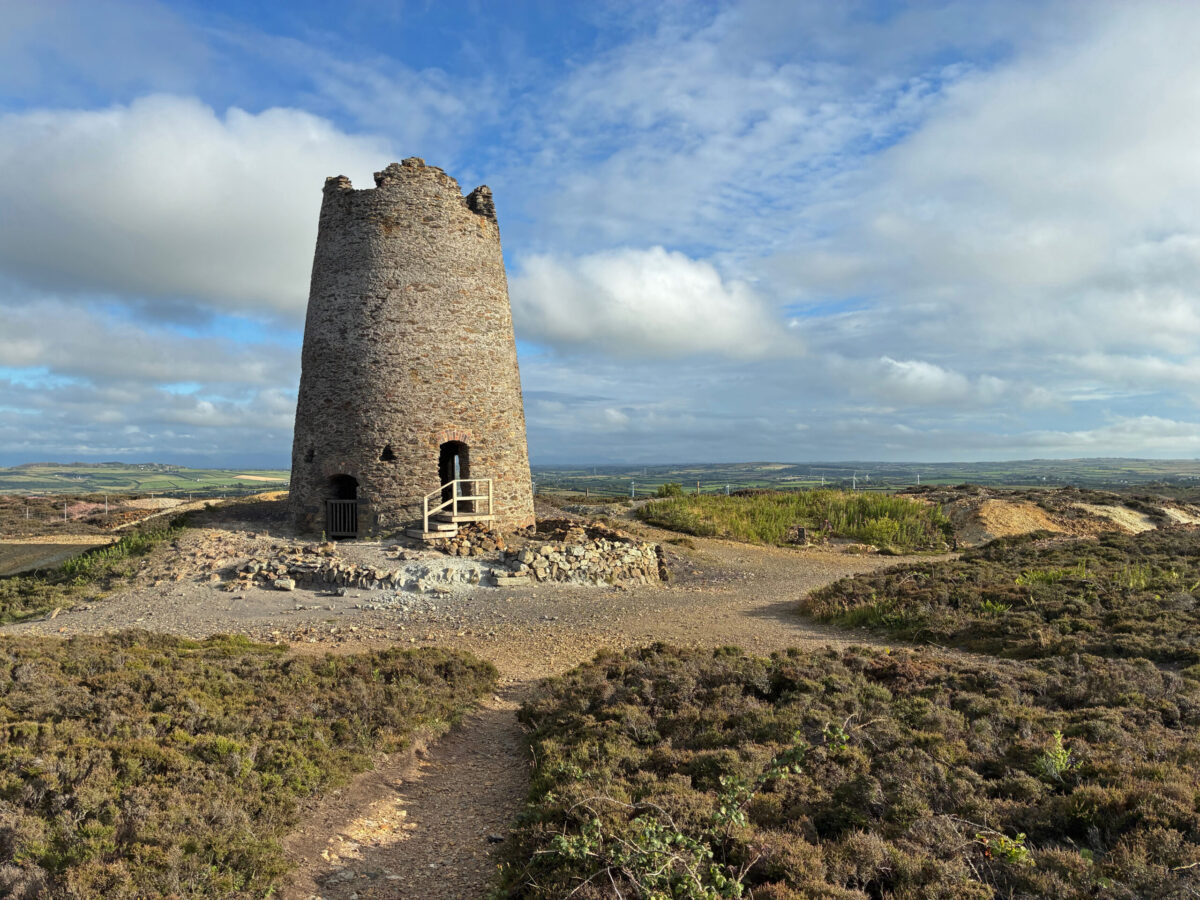
Mining copper ore on such a scale required power and huge amounts of it, to enable water to be pumped out from the mine and to facilitate the raising of ore.
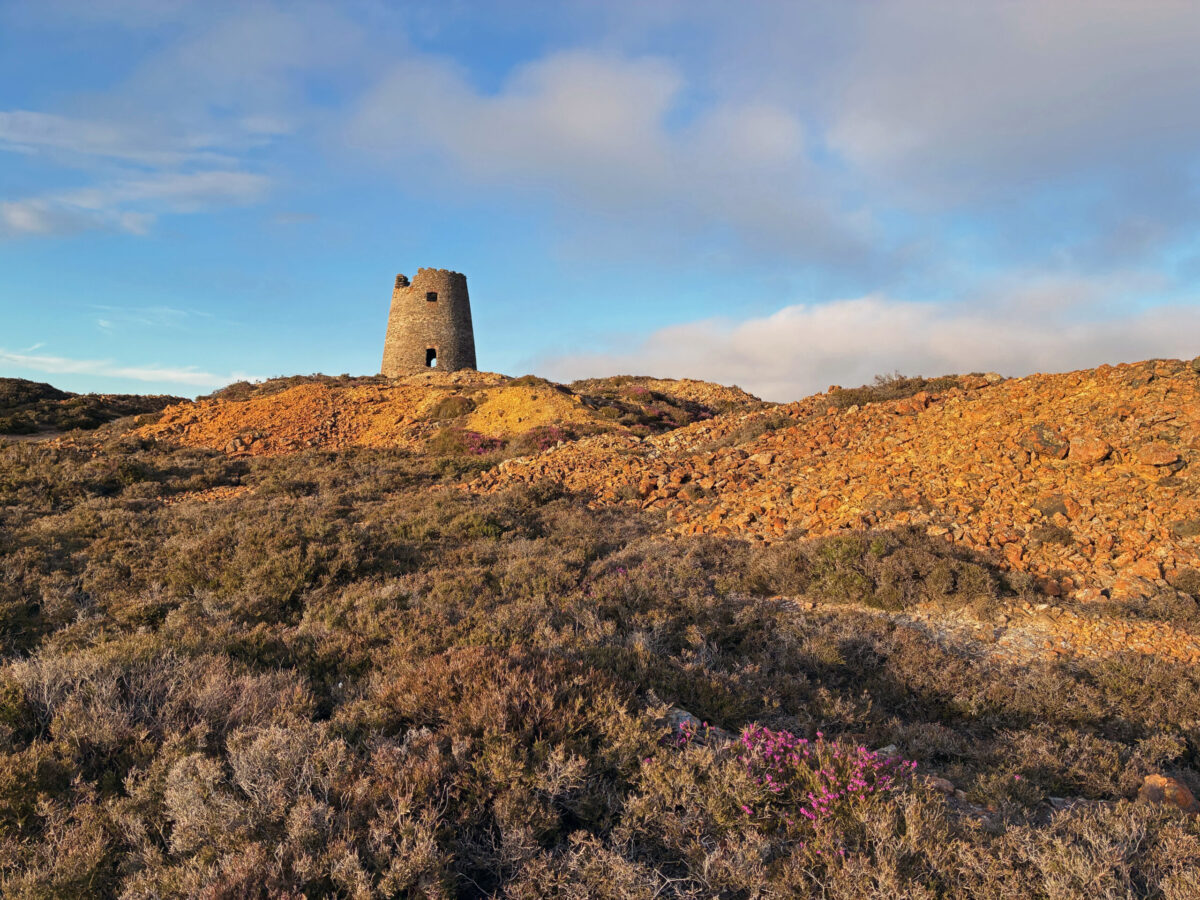
Towering over the opencast workings the human ingenuity connected with how this landscape was created is represented by the steadfast remains of a windmill, which was a highly innovative for its time. Excellent signage again tells the story so well..
‘The five-sailed design of the Summit Windmill was unique in Anglesey and it is the only known example in British metal mines of a windmill being used to supplement a steam-powered pumping engine.’
Wandering around this old building, touching its walls and smelling the history in its foundations puts you in touch with the people that put in their long shifts here in such a close way, you could almost hear the echoes of their voices inside.
If you only have a limited time to spare, just walking in this area will give so much food for thought, but if you are not in a hurry further exploration is so rewarding.
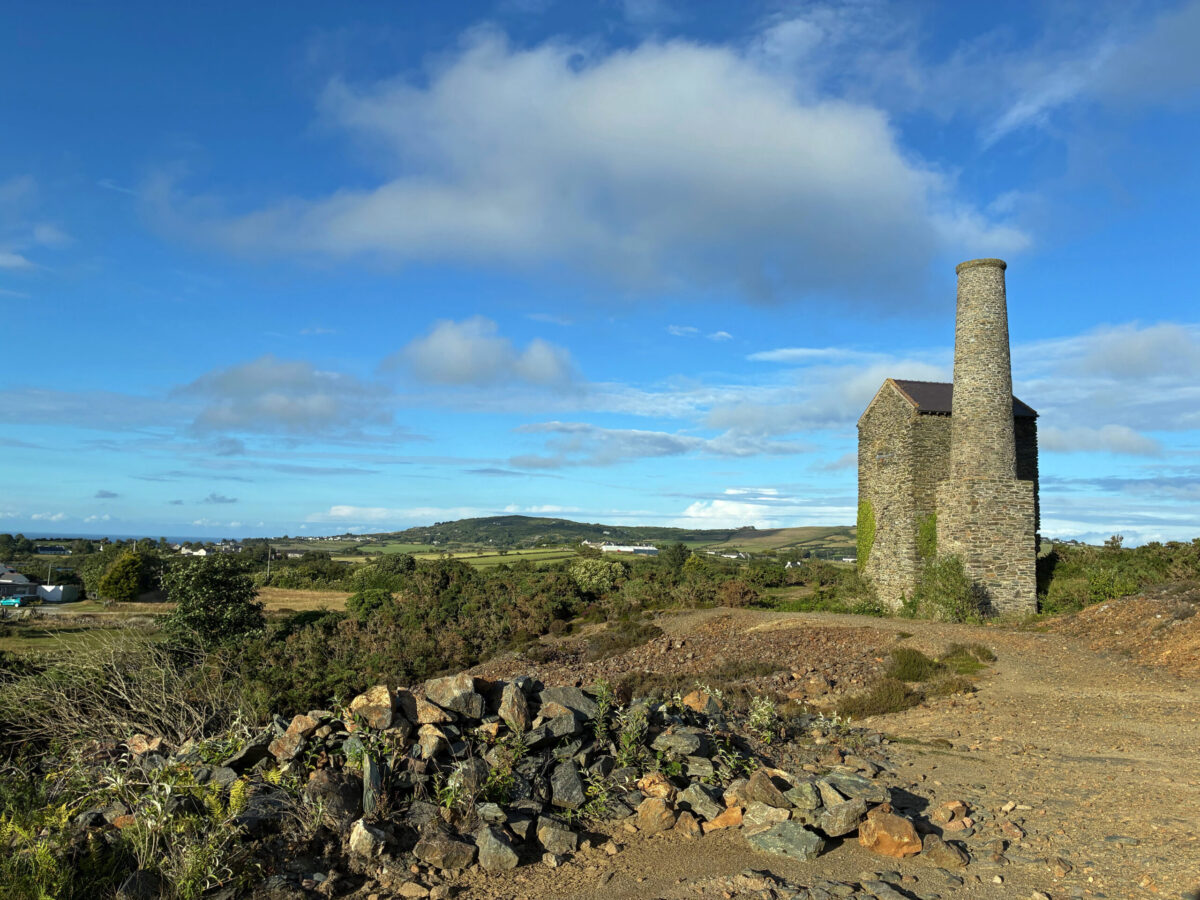
For anyone familiar with the industrial landscape of Cornwall the ‘Pearl Engine House’, situated below the windmill brings a Cornish look to the landscape and remained in use to pump out mine water until around 1880.
According to the information on display its formidable power meant that the mine could be worked at much deeper depths than might have been expected previously.
It is a stout, distinctive structure and although it is a tangible legacy of past industrial technology, for me it is also another powerful reminder that it was people that worked this land.
I remember the words of a miner, who worked one of the deep coal mines locally to where I live who said you could hear the creaking and groaning of the earth above when they were at the coal face. I seem to remember him saying “You could hear Old Monmouthshire Talking”.
How must the miners have felt working in the bowels of the earth at Mynydd Parys. It takes a special kind of courage.
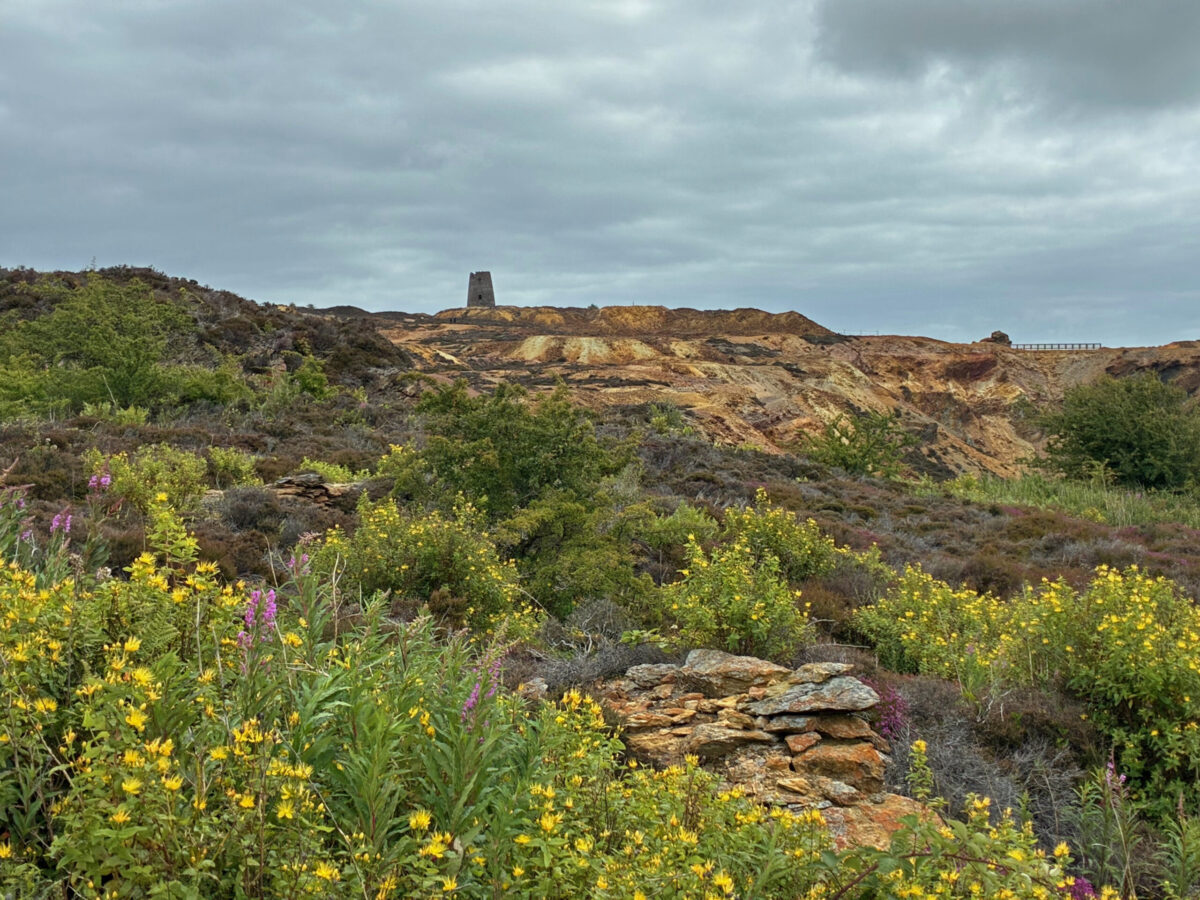
The legacy of mining for copper ore will always be a feature of this landscape, but like so many places that I know with a heavy industrial past that does not mean that nature can make a quiet difference.
Sumptuous shades of purple heather, brightly flowering St. John’s Wort and Rosebay willowherb all seem to absolutely thrive in this rocky environment, providing much needed habitat for insects.
I rather suspect that the colour of the heather will only get better in the next month or so.
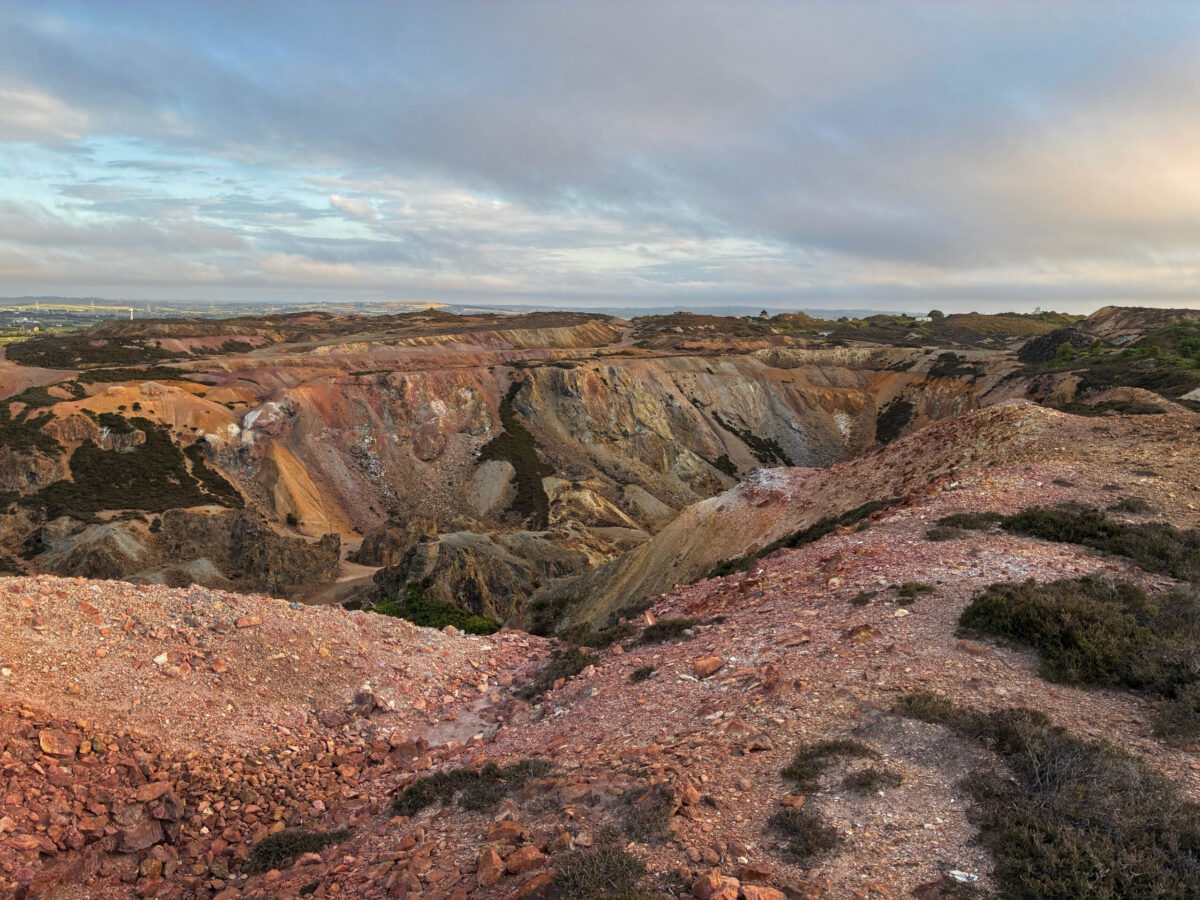
Evening is always a good time to let your thoughts free and in the quiet of the last hour or so of sunlight of this visit to the mine my thoughts turned to Greenfield Dock and the connection with the slave trade.
Whilst it is true that much of the copper ore mined at Mynydd Parys would have found its way to sheath the wooden sailing ships of the day, the fact that even if just some of it found its way to support the slave trade is still profoundly shocking.
Looking at the ‘Great Opencast’ brought enhanced meaning to the abolitionist slogan ‘Am I not a man and a brother?’.
Understanding history is not always straight forward, or even perhaps what we think it is, but the little interpretation board at the Greenfield Dock is doing a great job to ensure that important Welsh history is clearly told.
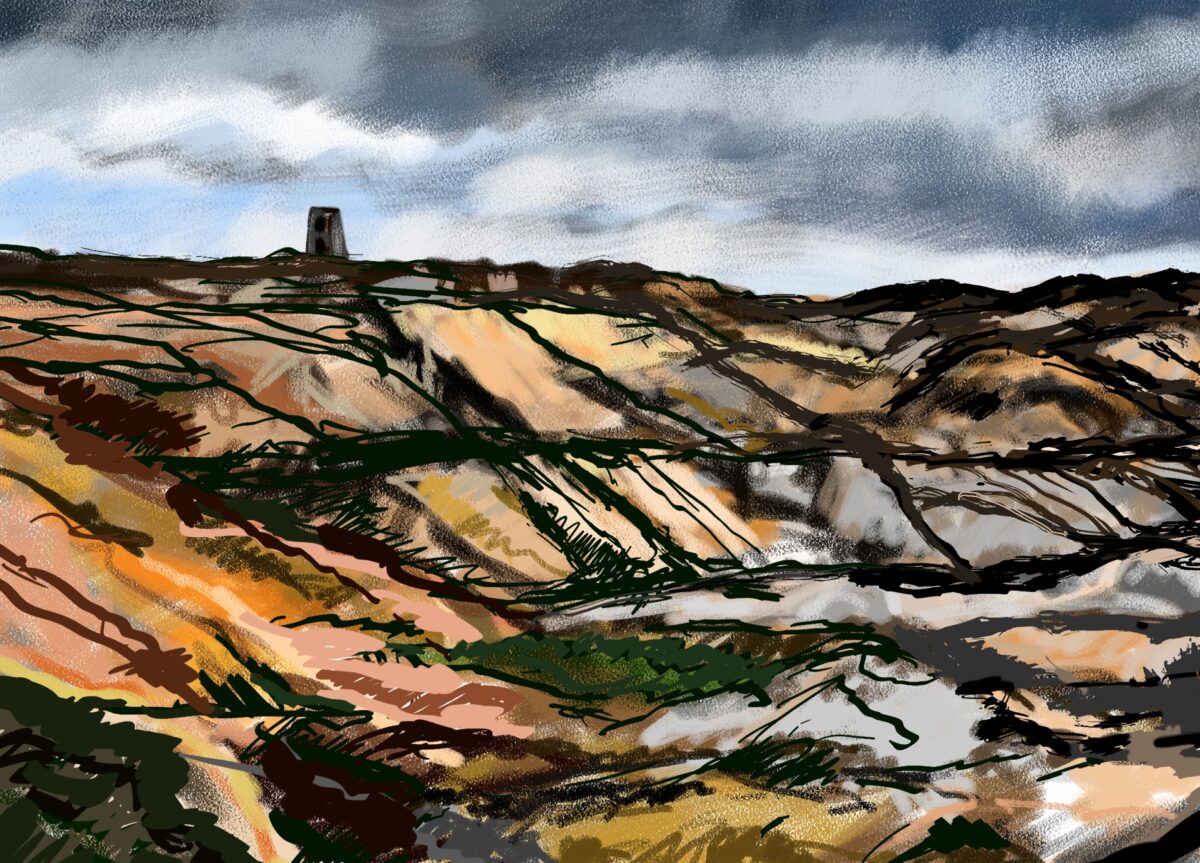
Thoughts about the work of artists are never very far away when I am walking and, on this occasion, it was the paintings of Peter Prendergast that filled my imagination.
I am not sure if he ever painted at Mynydd Parys, but his works inspired by the slate quarries of North Wales, especially his mixed media artworks, came strongly into my mind.
For me, he is truly one of the Welsh greats, an artist who uses colour and mark making to take his images into a different realm of expressionism.
If you are not familiar with his work, then do take a good look, there is nothing quite like admiring them up close. They are just fantastic.
Useful Information
Photographs
All the photographs in this article were taken on the 30th June (evening) and the 2nd July (midday)
Getting To Mynydd Parys
Mynydd Parys can be found quite easily following signs for Amlwch. There is a good car park for visitors off the B5111.
It is important to note that there are no visitor facilities at Mynyd Parys, but there are good facilities at Amlwch, which is worth visiting as the history of Amlwch and Mynydd Parys are closely entwined.
NB. Following the guidance of Amlwch Industrial Heritage Trust is a must for any visit to Mynydd Parys. Their trail leaflets are excellent.
Sources and other information:
Parys Mountain Copper Trails*
https://copperkingdom.co.uk/wp-content/uploads/2021/04/PMTrailLeaflet.pdf
The People’s Collection**
https://www.peoplescollection.wales/content/parys-mountain-amlwch
Peter Prendergast
https://www.peterprendergast.co.uk/
Support our Nation today
For the price of a cup of coffee a month you can help us create an independent, not-for-profit, national news service for the people of Wales, by the people of Wales.
Get more trusted Welsh news
Choose Nation.Cymru as a preferred source in Google News to see more of our journalism.



Fascinating. Lovely writing and pictures that brings the place alive. The painting really captures the spirit of Myndd Parys.
Diolch yn fawr iawn Chris – Mynydd Parys is fascinating and thought provoking on so many levels. I learn something new every time that I go there and always look forward to the next visit.
Greenfield Valley Heritage Park is also part of the Parys story – it includes a pool called Parys Pool that supplied the Abbey Wire factory, which processed copper to make batteries, presumably shipped along the coast to Greenfield Dock from Mynydd Parys. It’s well worth a visit both for its link to the industry of North Wales and for its place on the pilgrimage route to Holyhead.