


The 20mph verdict: headache or hero?
Jibreel Meddah
If you want to start an argument in a Welsh pub, you don’t bring up rugby or the weather anymore; you bring up the 20mph speed limit.
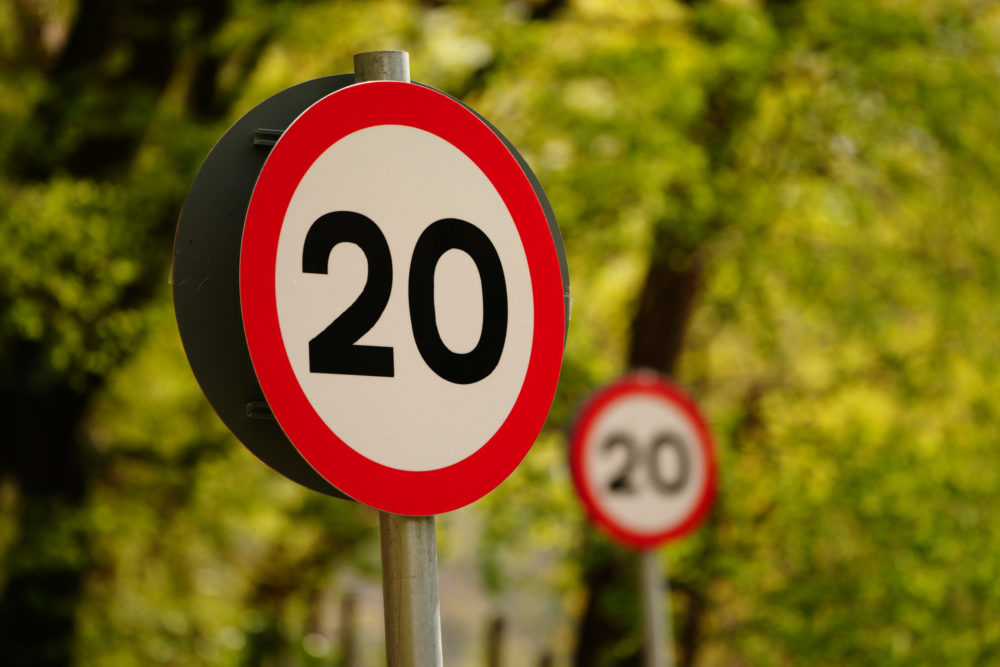
Wales made history over two years ago by being the first country in the UK to introduce a default 20mph speed limit on restricted roads.
This decision sparked controversy and led to fierce pushbacks: a petition calling on the Government to reverse their decision became the most signed in Senedd history amassing nearly 500,000 signatures.
As we move into the final phase, local councils are in the process of “targeted changes” which involves switching some roads back to 30mph. This will let us step back from the shouting and look at the numbers. Only then can we decide: is this policy a daily headache for morning commuters, or the start of a safer Wales.
Trading minutes for lives
While critics complain about longer journey times, the supporters are counting the lives saved and more empty beds available in A&E.
By the start of 2026, provisional figures showed that casualties on 20mph and 30mph roads had fallen by roughly 26% to 28% compared to the year before the rollout.
Writing for Nation.Cymru, Gwenda Owen, Wales advocacy lead for Cycling UK, noted that while Great Britain saw small reductions in road casualties generally, “provisional figures from the Welsh Government… display a much more marked decline – largely due to its trailblazing 20mph default speed limit.”
Those figures are hard to ignore. In the first twelve months alone, there were roughly 100 fewer people killed or seriously injured on our lower-speed roads. While critics argue this follows a long-term downward trend, the sheer drop-off seen in 2024 and 2025 points to the new limit playing a real role.
The 470,000-strong elephant in the room
And then, of course, there is the sheer weight of the public pushback. Wales has rarely seen a campaign like this.
The petition against the law was a record-breaking movement in which 470,000 signed a petition demanding a total U-turn.
This is a staggering statistic that haunts the Welsh Government, as more people were willing to sign a petition against the governing party than the number of people who were willing to vote for the party in 2021.

That petition was more than just online anger; it was a full-blown cultural flashpoint that rattled the windows of the Senedd.
It effectively forced the government’s hand, leading Transport Secretary Ken Skates to admit the obvious: the principle might have been sound, but the rollout was messy.
He’s since walked a tightrope, insisting that ‘safety of all road users will be at the heart of the decisions we take,’ while finally acknowledging the need to ‘carefully balance the benefits and drawbacks of raising speeds’ on roads where the limit felt more like a hindrance than a help.”
Are we actually slowing down?
Are we actually driving slower? Mostly, yes. Transport for Wales data from 2025 shows that average speeds on main through roads have fallen by about 3.8mph. While that might feel like a crawl to someone stuck behind a bus, physics tells a different story: that 4mph reduction significantly increases the chance of a pedestrian surviving a hit.
Compliance is also shifting. Before 2023, only 20% of us drove at or below 24mph in residential areas. Today, that figure sits at roughly 54%.
We haven’t all become perfect drivers, but the “natural” speed of a Welsh street has undeniably shifted downward.
The Economic Tug-of-War
The fiercest arguments are still over lost time. The Welsh Conservatives have consistently hammered home the message that the policy is a ‘blanket’ measure that is ‘slowing Wales down,’ following the vocal opposition led by Andrew RT Davies. They often point to the government’s own early assessment suggesting the loss of time could cost the economy £4.5bn over 30 years.
On the flip side, supporters point to a different set of figure. The reduction in crashes is estimated to have saved the Welsh economy around £100 million in its first year alone by keeping people out of hospitals and keeping emergency services free.
Where do we go from here?
As we move through 2026, the “great 20mph debate” is entering a quieter, more technical phase. Councils are sifting through thousands of resident requests to revert specific stretches of road. The “listening” is happening, but the default remains.
Whether you see the 20mph limit as a “landmark” safety measure or a “failed pet project,” the streets are undeniably different from how they were three years ago.
We are a nation driving a little slower, arguing a little louder, but most importantly saving more than a few lives along the way.
Support our Nation today
For the price of a cup of coffee a month you can help us create an independent, not-for-profit, national news service for the people of Wales, by the people of Wales.



Worth the headache if it’s saving the lives the statistics says it does!
For car owners in Wales a saving of over £100 for car insurance is also worth it.
I didn’t get the policy when it was first introduced but these numbers are making it easier to adhere to the limit. Whatever it takes to keep the people safe
The thing that those who oppose this policy don’t seem to understand, is that the majority of these roads would eventually become 20mph zones in the fullness of time anyway, as local authorities increase these across the country. This is a process that continues in England.
This is a relatively costly exercise, requiring councils to apply through the courts to amend traffic regulations. The Welsh government’s approach will actually save us all money over the longer term.
Exactly this. If there are a 1000 restricted roads in a council area and the optimum end game that everyone agrees on is 100 at 30 and 900 (mainly cul-de-sacs) at 20 it’s far cheaper and safer to switch them all to 20 then opt out the 100 than opt in the 900 that may take years and never fully happen. That the Cons disagree proves they are incapable of delivering taxpayer value for money.
Well put, Otto.
What’s particularly ironic about your mentioning of the Conservative party who now oppose this policy, is that it was a Senedd Conservative group which first introduced this topic for debate sometime before the pandemic, citing financial efficiencies as a positive factor.
It’s a great policy sold terribly. There’s so many benefits that weren’t even sold by the Welsh Government that are clear from places such as the Netherlands where 20mph (30kmh) limits are commonplace. 1) Cars are significantly quieter when travelling at 20 than 30. If you live on a main road this is probably especially obvious. At 30 it doesn’t even matter if the vehicle is electric, the road noise is louder than the propulsion noise from an engine. 2) Roads with 20 limits don’t necessarily need a lot of safety infrastructure unless they are especially busy (things like traffic… Read more »
I totally agree with 20mph. Completing my online speed awareness course due to speeding in a 20 opened up my eyes. Even the extra 10mph when hitting a pedestrian can cause so much more damage!!!
According to a book I read recently by Ben Collins (he was the Stig on Top Gear and is also a stunt driver for movies like the James Bond franchise) if they need to do a stunt where a person is hit by a vehicle the maximum speed they will do it at is 20mph (presumably they speed up the footage to make it look faster in the film). Any faster and they end up in hospital (his words not mine). If professional drivers trained to drive with inch perfect precision and stunt men and women who throw themselves in… Read more »
I said it before when 20 mph was introduced and I’ll say it again. My travel across Cardiff used to average 12 mph N and S or E and W, before 20 mph, with the exception of journeys using Eastern Avenue and North Road.
Since 20 mph, , my regular average speed continues to be 12 mph – again with the exceptions indicated. Traffic lights are the main controlling factor
It’s a good point, Alwyn. Delays to motorists driving on urban roads are mostly caused by pedestrian crossings, roundabouts and other junctions, parked vehicles and other traffic, etc, rather than the speed limit in force.
My commute to work has increased by maybe 2 minutes since the speed limit change.That’s not a big enough difference for me to complain about, at least I know my insurance is cheaper and less people are in the hospital taking up valuable beds due to completely avoidable matters.
Only the manic Reformative brigade who believe they must have the freedom to increase the deaths of innocents to facilitate a 2 minute saving in their journey time. In its way it typifies the chasm between the caring, loving, empathetic Welsh culture of the majority & the greedy selfish, sociopathic, Anglo/American Fartage disciples!
You could never accuse that lot of partaking of an argument in a pub, though, because everybody starts speaking Cymraeg the minute they walk in 😉
Or not finding said pub as there were bilingual roadsigns that forced them to crash.
It’s cut road deaths, it’s cut car insurance and as a bonus it really winds up the Wales haters. Ironically I’ve heard londoners and Bristolians crying about it, bothe groups forget they introduced the 20mph limits in 2010, but hey, it’s Wales fault.
There’s no blanket policy. There’s a procedure for local changes. This measure protects health, saves lives, – and saves millions in public expenditure and reduced car insurance.
20mph makes it very difficult to get my disabled child in an emergency in a timely manner.
The problem drivers probably still drive at 30mph+ in the 20 zones anyway, so you do wonder what the point was. That said, having discovered how much calmer I am driving everywhere at 18-20mph I for one won’t be going anywhere any faster, even if the limits do go back up. As my old driving instructor used to say, it’s a limit, not a target.