


The boy in the school photograph
Steve Hughes
When I started working with Tom, four years ago, it presented a new kind of challenge. Over twice the age of my other clients, who had mostly become homeless due to addiction, Tom’s story was longer and more difficult to disentangle.
For homeless people, the Covid lockdown had proved to be advantageous. Throughout Britain, councils were suddenly required to put a roof over people’s heads immediately, so a process that could take years and was prone to failure suddenly became instantaneous.
Newly commandeered hotels were complemented by hastily constructed container homes and Tom had, after two decades on the streets, found himself living in one of them.
He hadn’t wanted to move indoors. Over the years, countless outreach workers had tried to coax him into hostel accommodation, but even when it was snowing, he was having none of it.
Tom’s not an easy man to persuade.
By the time he was assigned to me, though, he’d been in his shipping container unit for 12 months and had come to like it there. The trouble was, though, that the units were temporary, so it was my job to transfer Tom into a permanent home when the time came for them to close.
I’d go to see him on Wednesdays. Tom would be sat on his black, vinyl sofa in his underwear surrounded by half-finished microwave meals and copies of the Sun newspaper.
The telly would be on along with three radios, two in the lounge and one in the bedroom, all blaring out different channels.
There was an etiquette to observe during these visits. Tom retains information like a computer. He remembers everything you tell him about yourself, and each new detail is added to your file, to be brought up when he sees you.
‘How’s your wife?’
‘What’s the weather like up there where you live?’
‘When do you have to get up to commute to work?’
‘Are you still playing the guitar?’
All of this would be fired out machine-gun style, along with enquiries about colleagues he’d met and items he’d heard about on the news.
Only after he’d finished with his questions would he be open to discussing things like moving into a flat, or whether he’d allow us to send cleaners into his unit.
Eventually, though, his trust in the process grew enough that he agreed to move and we sorted out a flat with views of the city and staff on hand for him if he needed them.
It didn’t go well.
Tall, loud and missing an eye, Tom is a conspicuous presence. Some of the other residents in his block took issue with the abrupt way he would question them and his often-dishevelled appearance.
We’d counsel him to be more cautious with his interactions but whilst he’d promise to live more quietly, by the next time we saw him another row would have broken out.
False rumours
False rumours spread about his past, the worst kind of rumours. He quarrelled with staff in the block too, asking intrusive questions and making personal comments. People couldn’t cope with him. He couldn’t cope with people.
So began a harrowing cycle of eviction, fresh starts and chaos. Each new placement would see Tom determined to settle in, but the stress of disruption was accumulating, meaning that regulating his behaviour was increasingly beyond him.
His inappropriate comments started to be directed at random strangers he met on his daily trips into town. The untrue rumours that had started about him followed when he moved and, out of defiance, he took to confirming them, so the rumours grew.
Life became a series of confrontations with neighbours, housing staff, emergency services and anyone who crossed his path. I began making frequent trips to court, explaining that Tom’s behaviour masked the depth of his vulnerability and asking magistrates to show mercy.
Dementia
Mental health services became involved; their meticulous processes being outpaced by Tom’s escalating behaviour. Brain scans suggested a form of dementia that was caused by a head injury decades ago.
Diagnosis, though, is arrived at slowly, and convictions have accumulated as we wait upon it.
Conversation with Tom tends to be educational. He’s a store of interesting information and can be funny too. It’s factual rather than relational, though, so his feelings are opaque until they erupt out of his frustration startling, whoever is there.
Occasionally, though, something will slip out; dark, snatched reminiscences of things that happened to him when he was young. Memories around which he’s built a wall to protect himself. Incidents that make a life like his.
Outbursts
He’s in trouble again now. Outbursts have become more frequent as his condition deteriorates, but lacking a formal diagnosis, society treats him as if nothing is wrong.
I Googled him once, wondering if any of the rumours he sometimes confirms had any truth to them.
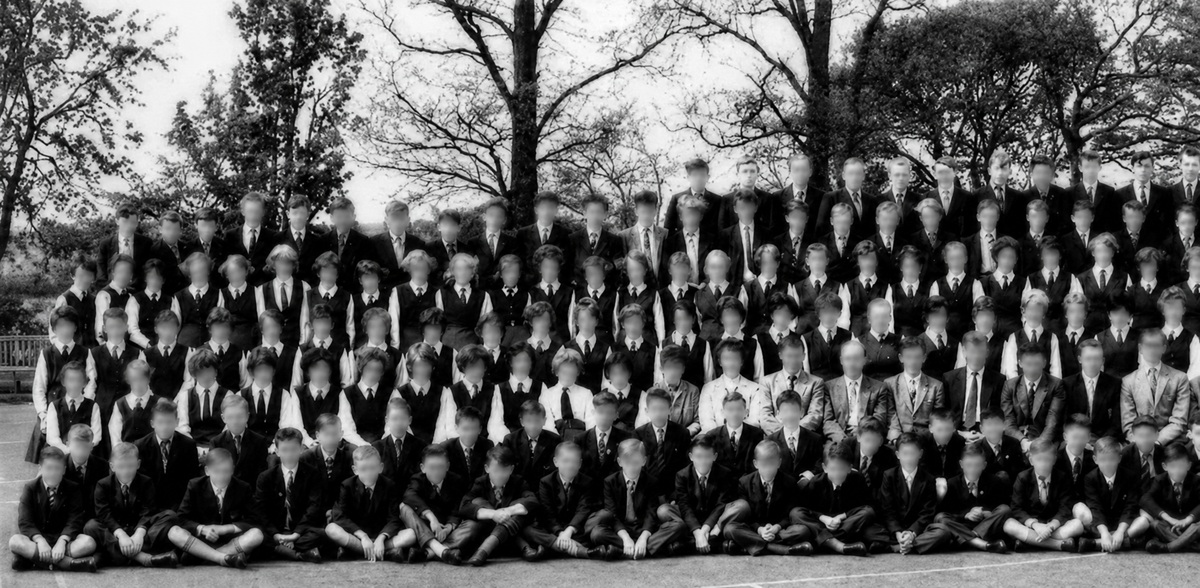
They didn’t, but I found him out in cyberspace. On a school reunion page there was a photograph of all the pupils at his Valleys grammar school in the late 1960s.
There he was, aged 17, smiling out into the world, both eyes shining with intelligence and a mop of carefree black hair tumbling over his forehead.
He’s one of 500 boys in the photo; I had to zoom in to find him. 500/1 is long odds, I suppose.
Support our Nation today
For the price of a cup of coffee a month you can help us create an independent, not-for-profit, national news service for the people of Wales, by the people of Wales.
Get more trusted Welsh news
Choose Nation.Cymru as a preferred source in Google News to see more of our journalism.



Well told and well done. We are rarely told of when the system works and it is good to know. I understand things could be better