


The choices for Welsh Labour are clear: marginalisation, oblivion or a principled path to recovery
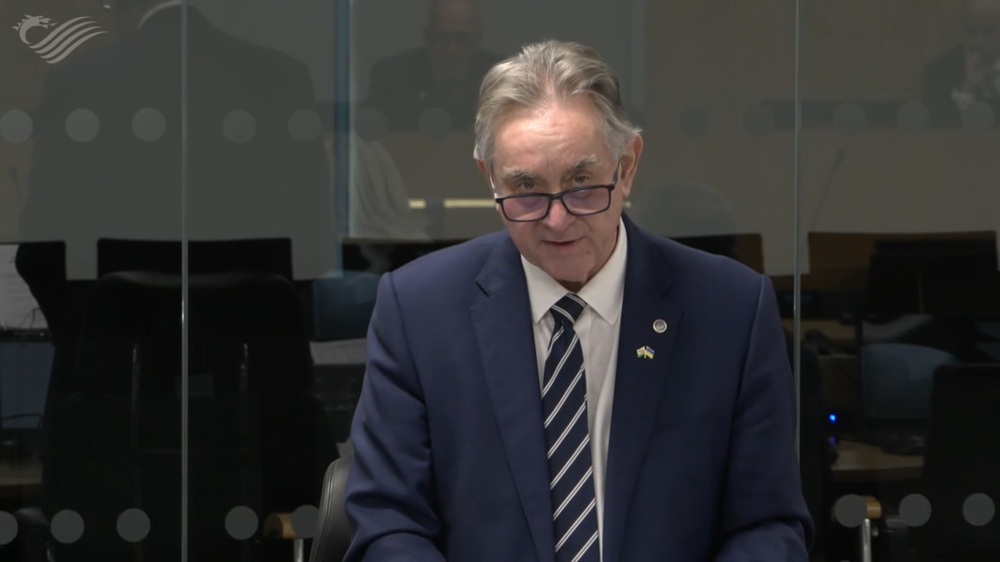
Martin Shipton
After an election defeat that was even more brutal than expected, Welsh Labour must now decide how to navigate a future that in the worst-case scenario could see it excluded from power indefinitely.
In the short term, it will have to work out what approach to adopt towards a Plaid Cymru government.
Plaid has won 43 seats – nearly five times as many as Labour and six short of an overall majority. Clearly there will need to be some kind of cooperation between the two parties, but Rhun ap Iorwerth will be wary of getting too close to its predecessor as the biggest party.
A constant taunt throughout the election campaign from Reform UK and the Conservatives was that Plaid had propped up Labour through most of the devolution period, and that a Plaid-led administration would simply carry on such a dynamic.
Ap Iorwerth has expressed a preference for running a minority government and there is unlikely to be much appetite for a wounded and diminished Labour group to muscle in on Plaid as it finds its feet.
Nevertheless, the maths dictate that there will have to be an arrangement of some kind, even if it’s not a formal partnership-style agreement, let alone a full-blown coalition.
It’s already possible to detect different approaches to the future of Welsh Labour in some of the immediate reactions to the party’s defeat. Former Counsel General and Pontypridd MS Mick Antoniw has made it clear that Keir Starmer needs to go, and there are many in the party who agree with him.
But a change of leadership is not in itself going to mend what is clearly a broken party. There have long been tensions between those who are loyal to British Labour above all, not seeing it in any way as distinct from Welsh Labour. In the main those who adopt this position are MPs, but in the aftermath of the election results Ken Skates, a senior Minister who managed to squeak back into the Senedd went out of his way in a BBC interview to make the point that during the campaign MSs and MPs had campaigned together as one.
Mick Antoniw takes a very different view and believes that getting rid of Starmer is only a first step towards making a fundamental change in the relationship between Welsh Labour and British Labour. Despite all the unconvincing talk about two governments working together at both ends of the M4, the dynamic didn’t work because Starmer’s government wasn’t prepared to make concession to the Welsh Government that would allow the latter to make a convincing case to the people of Wales that Labour was standing up for their interests.
If Labour wants to make a come-back in Wales, the Westminster branch of the operation needs to give greater autonomy to the Welsh party. Expect to see detailed proposals along these lines before long.
If British Labour digs its heels in, the prospect of Welsh Labour making any kind of recovery will be remote, and the party will face marginalisation at best and oblivion at worst.
Support our Nation today
For the price of a cup of coffee a month you can help us create an independent, not-for-profit, national news service for the people of Wales, by the people of Wales.
Get more trusted Welsh news
Choose Nation.Cymru as a preferred source in Google News to see more of our journalism.



The patient’s condition is clearly terminal – and any attempt at resuscitation would be futile. Best left to die in peace.
Couldn’t agree more. They’ve had their chance.
Every democracy is enriched by a wider array of voices.
And the Welsh electorate decided to all but terminate so called ‘Welsh labour’ on Thursday – democracy in action.
Every party must revolve, probably once a generation. Labour isn’t the Corbyn para-communist party of the 1950’s; it tested that brand and it failed. However, in its under-powered attempt to enter the 21st Century, it has become a South-east England/London centric clique, out of touch with the reality of the UK as a whole. Wales is not (and should not) be, effectively, an English county. Its long historic and cultural heritage imbues Wales with different (similar, but different) values to England, especially South-east England. Welsh Labour must evolve now if it is to survive. A different offering to Labour England;… Read more »
I have never read such drivel. Labour has never been ‘para-communist’ and even on his worst days, Corbyn was no more than a middle of the road social democrat, and crucially, little further to the left than Conservative party policy in the 1960s when both Labour and Tories had broadly similar policies and shared the same economic beliefs, such as taxing the obscenely rich in order to reduce inequality thus making the UK a better place to live.
Corbyn middle of the road 😂’?
Just give Labour a decent burial. It’s over..