


The Crêpe Escape: Is this the way to Alicante?
Del Hughes
La Etapa Final
The city was eerily empty. Waves of savage heat shimmered above toasting tarmac, and parks lay parched and lifeless. The only sounds were the creak of swings and the skittering of brittle leaves through dust. The scorched air carried the arid scents of eucalyptus and tree sap.
Think Cillian Murphy in 28 Days Later – but with a fiercer sun, zero zombies, and no full-frontal flashing. Yet – eek!
We’d been two weeks incommunicado, and now genuinely feared the apricot autocrat might have pressed the bloody button. Welcome to the apocalypse – or, as it’s known in these here parts – Zaragoza.
But first – after our YOLO U-turn in Castelnaudary – we followed the A9 back past Carcassonne, skirted Narbonne, and a mere hour later, crossed la frontera Española at La Jonquera. Olé!
However, Spain didn’t exactly make the best first impression. Within minutes of crossing the border, I became convinced we were about to be robbed, abducted, or conscripted into a rogue flamenco troupe.
Because, alongside the welcoming ESPAÑA sign – in that jolly EU blue with circling gold stars (sodding Brexit!) – startling warnings flashed up on the passing gantries: Do Not Stop in Isolated Areas, Don’t Trust Strangers, and most alarming of all, Highway Robbery. Yikes!
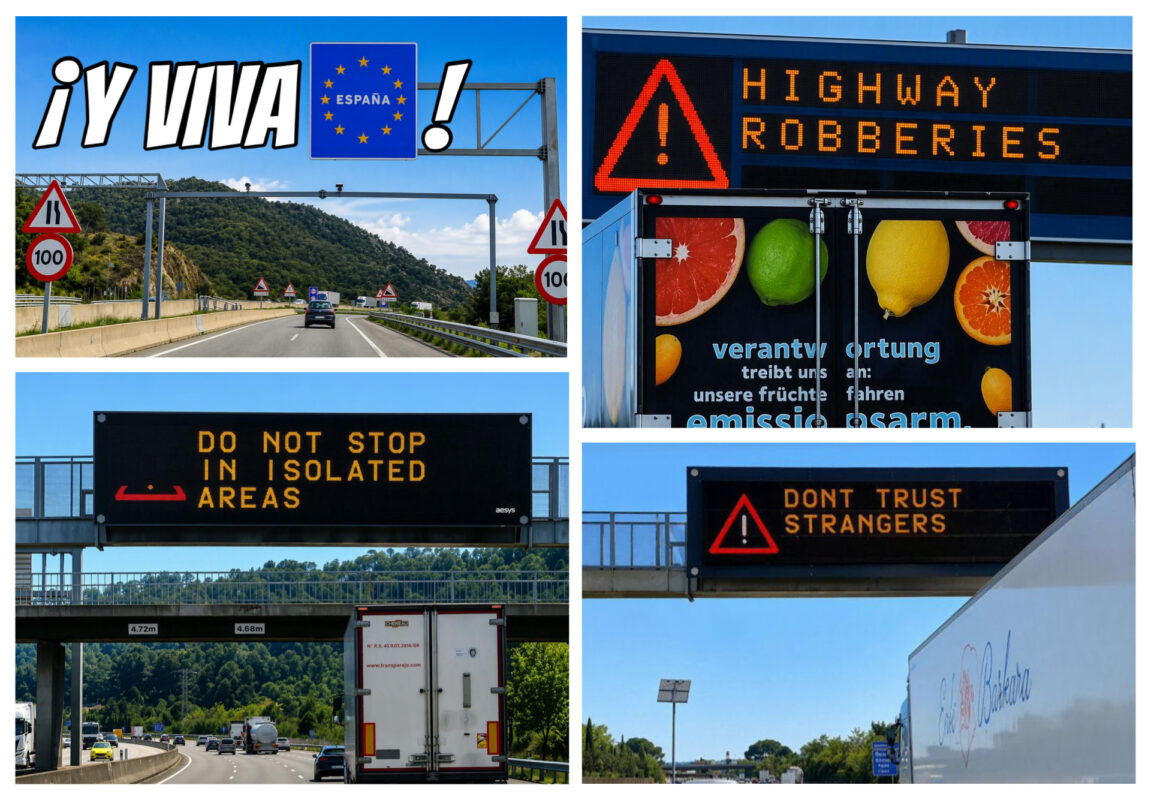
Mind, as a woman weaned on Georgette Heyer, I had visions of El Ricardo Turpin galloping up on his trusty caballo, dashing in tricorn hat, garrick coat, and top boots, flintlocks exposed with a devil‑may‑care flourish. La, I am undone. Though I still found myself clutching my bag to my chest, and surreptitiously snapping the registration plates of any driver who so much as glanced in our direction. With hindsight, I was easily the dodgiest customer on that autovía. Lol.
But as the kilometres ticked by, I relaxed my hyper-vigilance enough to clock the glorious views – brief flashes of amber Catalan coastline and cerulean sea – and reflect on the real reason for our impromptu Spanish detour.
Not Zaragoza, nor the promise of sun-drenched sierras, and not even the lure of an icy Mahou, supped ‘neath a beach-side palm. It was Ants – Tim’s first ever partner in crime, and a stalwart presence in his life since primary school days.
Ants had been tucked away on the Costa Blanca for the better part of thirty years, which, to me at least, lent him the faint air of gangland boss gone to ground.
Unsurprising really, given I’d only met him once before, when Tim rowed me out to his temporary lair – a remote island on Loch Lomond.
(Turned out, Ants was there on a family holiday, and his sole vice was nothing more sinister than an all-out addiction to peanut M&Ms… so that quashed my fantasies.)
As the years rolled by, Ants disappeared into the familial rhythms of Iberian life, and Tim’s days were consumed by the exhausting, non-stop hustle of the classroom.
Months could slide by without a word – not from neglect, but rather a shared, long‑standing incompetence at maintaining contact. Their friendship ran on long gaps and easy reunions; an understanding that didn’t need constant tending – until it did.
Health scares
Lately, life hadn’t been kind to Ants. He’d weathered numerous health scares and had a kidney transplant to boot – all while navigating both the Spanish health system, and the loss of Helen, his wife.
And Tim – despite the odd phone call, and the agony (for me) of watching two sixty-three-year-olds attempt to Zoom – carried a quiet guilt about not checking in more often.
He’d even toyed with the idea of flying out for a week or two, but life always intruded, and he never quite made it past the planning stage.
Guess we’ve all got friendships like that – the kind that can go silent for years, only to pick up again as if no time has passed at all.
So, enter Bella, our hired three‑tonne motorhome (aka MoHo) – and the unlikely glue holding together a bizarrely varied holiday agenda…
… to climb Alpe d’Huez (Première Étape), do a lap of Monaco’s F1 circuit (Étape Deux), explore Carcassonne (Étape Trois), scatter Mum’s ashes in the Ardèche Gorge, and threading through all of this, to finally visit Ants.
We hadn’t told him what we were up to; Tim didn’t want to make promises until we were sure we’d have time enough to get down there.
I’d wanted to ping Ants a pic of a Calp road sign as the surprise reveal. But Tim, more cautious, was concerned the shock might finish the poor chap off, so he rang him instead, giving a more measured twenty‑four hours’ notice. Boo.
We spent our first night midway between Calp and the border, on a coastal eco-site. But pulling in at eight-ish, the shop and pool were closed, and more depressingly, so was the restaurant.
With barely any food on board, and two dogs who needed a leg stretch, Tim took them off to the beach while I explored the bar area, and which – ¡Gracias a Dios! – was still serving pizzas.
Tim returned to a freshly made Farmhouse and a gently beading glass of Mahou, while I chowed down on a Hawaiian with anchovies and a Sidra Natural – deliciously refreshing, even if my tooth enamel still hasn’t recovered.
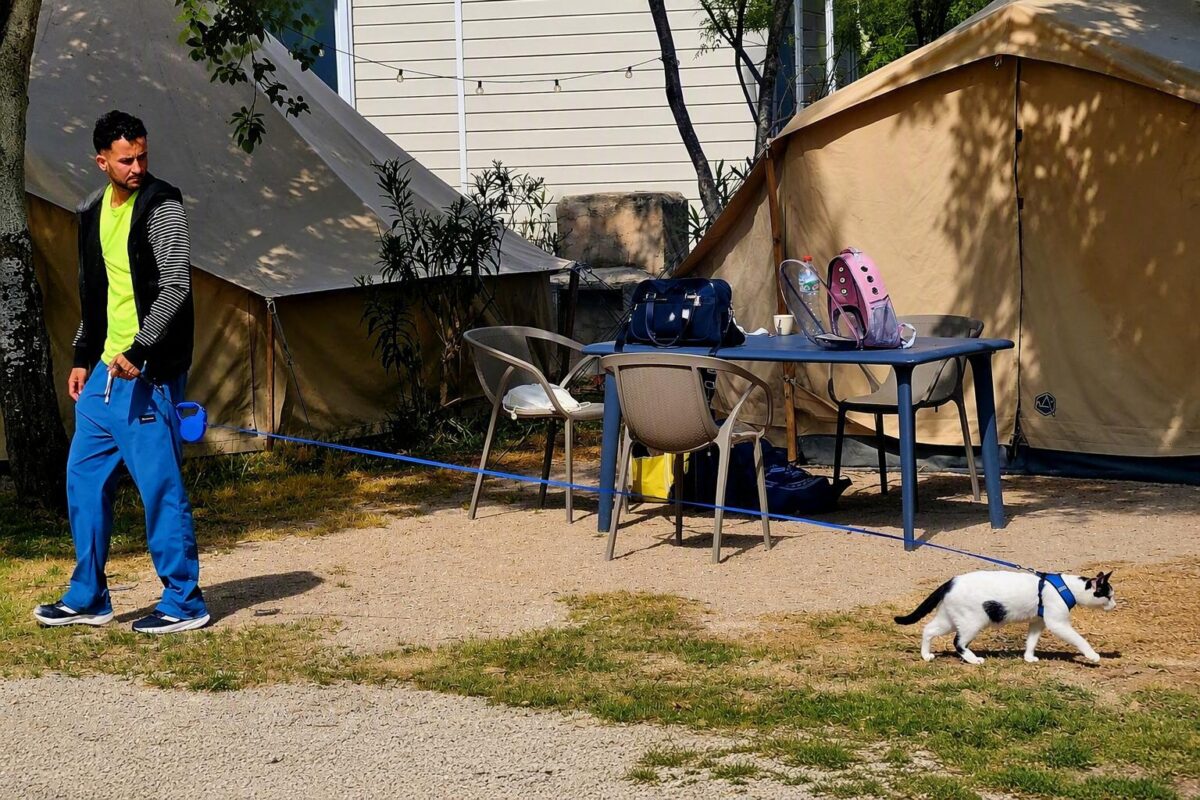
And it was here that we got our first experience of Cats Under Canvas. We watched, entranced, as the young man in the safari tent opposite, bundled the somewhat reluctant ‘Diego’ – a black-and-white moggie – into harness and lead, before heading to the fenced ‘exercise area.’
Well, that was the plan. Diego, quite clearly, had his own agenda. Cue extended stand-off.
Next morning, dieseling up, we discovered that Spain’s gasóleo was fifty cents per litre cheaper than France. ¡Hurra! (Plus, at €6 for a pack of Marlboro, sod vaping – I’m getting the ashtray out.)
And so to Calp, which is pure, stucco-scuffed, architectural chaos. It’s wonderfully unhinged – managing to pack three conflicting worlds into a short, sweat-inducing stroll.
Perched on the hill is the sleepy Old Town, a steep maze of vertical cobblestones, exploding geraniums, and steps boldly painted in Spanish flag stripes.
Down on the promenades, it’s icy beer, straw-topped parasols, palm trees, cocktails, and the aroma of freshly caught squid and monkfish.
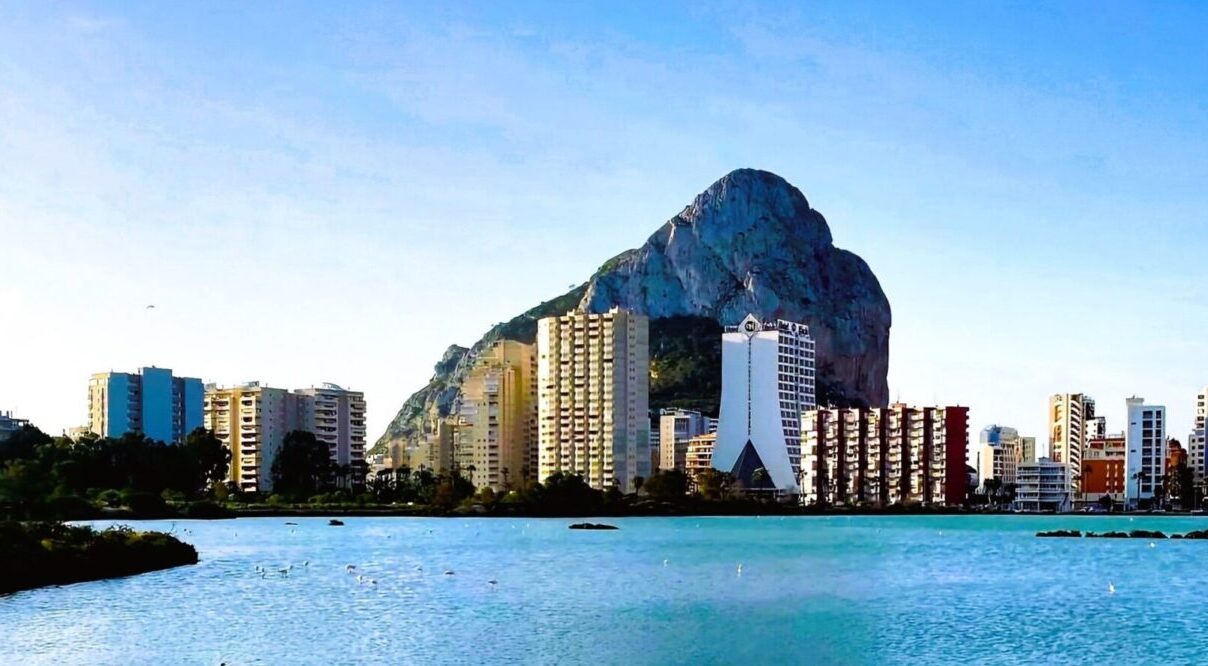
And then there’s the wild, prehistoric heart of the place. The limestone heft of the Peñón de Ifach (‘Rock of the North’) – now a protected Natural Park – looms over the brutalist tower blocks, eclipsing them, and leaving no doubt that nature rules this skyline.
This giant outcrop rises 332 metres straight out of the Med and spans a kilometre in length. Connected to the mainland by a narrow isthmus, its sheer size dominates the town, whilst providing a handy landmark for any tipsy tourist who might have forgotten where they’re staying.
And don’t forget the salt lagoon of Las Salinas de Calp, sitting slap-bang in the middle of a mess of sky-scraping holiday apartments.
Step off the sizzling strip, look past the neon pub signs, and you’re face-to-beak with wild, pastel-pink flamingoes, casually wading through the brine.
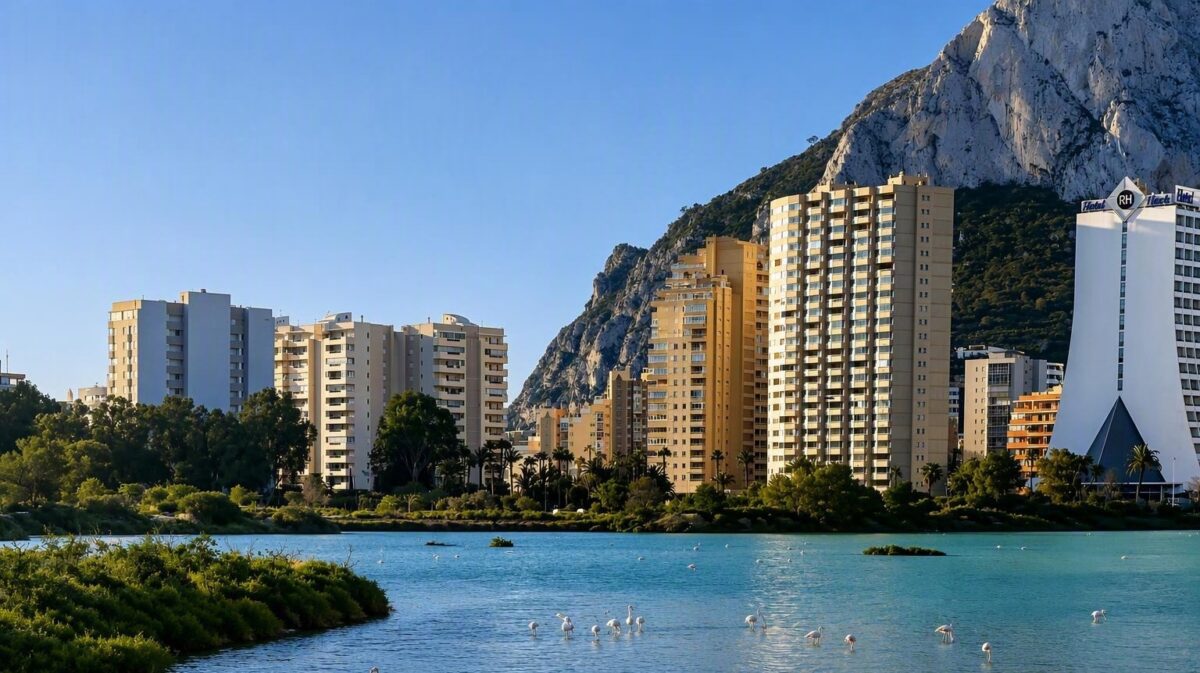
In summer, the population surges from twenty-six thousand residents to a roaring mass of over a hundred-thousand heat-seekers, crammed into stacked concrete boxes.
But as the seasonal madness dies away, Calp reverts to an outdoor hub for intense, Lycra-clad cyclists, and the gravity-defying ‘crag-rats,’ desperate to scale the dizzying flanks of the Peñón.
Park bosses now have a strict daily cap of 300 souls allowed on the rock, to keep the fragile ecosystem from collapsing under the weight of too many hiking boots.
Calp also boasts a bustling harbour and has a well-deserved reputation for world-class seafood, especially the legendary Gamba Blanca prawns. And fittingly, our campsite brought sardines straight to mind.
Our tiny gravel pitch offered a sliver of space, large enough for Bella and two camping chairs. There was zero room for a gazebo – which, given Tim’s ongoing hate-hate relationship with the ‘pop-up,’ was a blessing – and the boys were left with a few inches of hard-standing sprawl-space.
Terracotta
Still, we weren’t there to roast our bodies to a David Dickinson terracotta, nor did we plan to participate in the traditional evening campsite entertainment (read: high-stakes bingo brawls) which the owner helpfully warned me about on entry. ¡Ay caramba!
So, despite reservations (of both kinds), we hooked up, put the kettle on, and Tim messaged his mate to say we’d arrived. And ten minutes later, Ants strolled in – just in time for a brew. Ah, reet gradely.
This initial meeting was notable for its supreme display of restrained emotion. As any Yorkshireman knows, you must always begin with: ‘How do? Alright?’ Because – God forbid – you can’t risk an emotional outpouring that might hint at the deep pleasure of meeting up with an old pal.
But a cuppa – Yorkshire Gold, obvs – got them talking, and suddenly they were kids again.
Boys from the 60s, laughing, bantering, slipping back into an easy nostalgia that’s both lovely and – if I’m honest – a bit baffling when you weren’t there for any of it. Still, watching them reconnect so effortlessly was oddly touching.
And just like that, the emotional heart of our Spanish detour clicked into place: friendship, amity, and the comfort of a lifetime of shared history.
I left them to it, choosing to sit out in the idle air with Sudoku and a jug of sangria. And it was then I discovered that our tiny plot had one massive saving grace: the view.
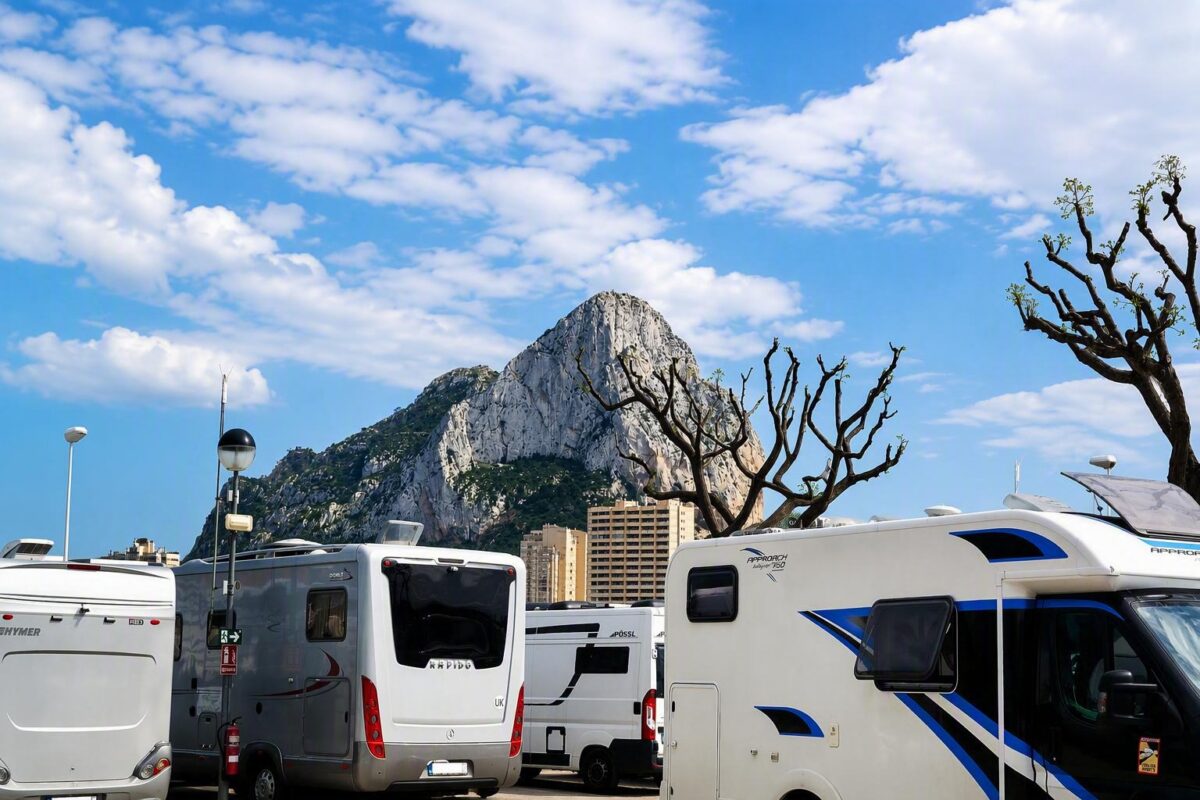
Sitting high above the shoreline, looking over the roofs of the competing motorhomes, I caught a glimpse of distant blue water. But the real prize was the mighty silhouette of Calp’s rock. And I was mildly astonished at how mesmerising a giant chunk of stone can be.
That evening, Ants showed us a dog park on the Las Salinas shores, where solid fencing meant secure fun could be had by all.
While our boys had a blast, I watched a flamboyance of twig-legged flamingoes (best collective noun ever!) feeding on the lagoon’s brine shrimp – a diet which turns those audacious avians from a natural, dowdy white into a vision of Barbara Cartland blush.
We dined at a cracking Italian place on the Playa de la Fossa, where I had my second pizza in as many nights. It was a smashing evening: fabulous food, and since the guys had finally exhausted their historic archives and transitioned into the present tense, great conversation, too.
Back at our campsite, to the strains of the recommencement of bingo-based hostilities, Tim and I worked out how many days we had left before Bella needed to be returned. Unfortunately, no matter how imaginatively we juggled the dates, it was exactly as feared. We had to leave the following day. Sob.
We met up for brekkie at a sea-front café, and over coffee and waffles, explained that we had to head off. It cast an immediate pall over all three of us; our time together had been far, far too short.
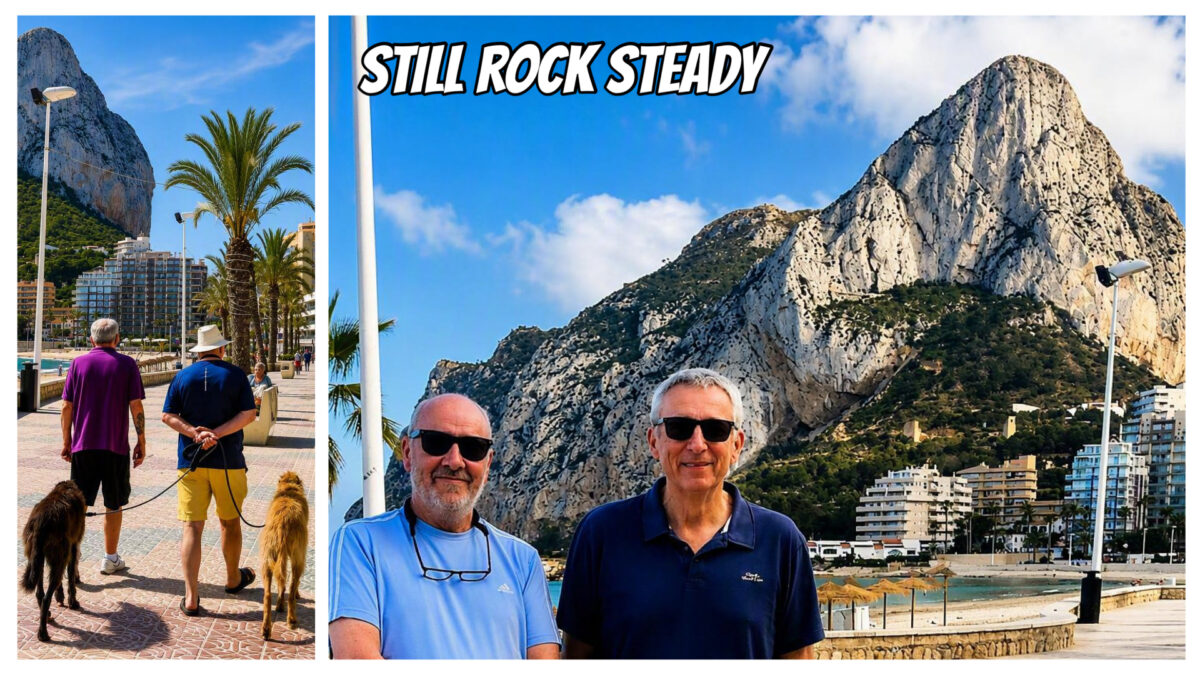
We headed north, climbing the 1,000-metre backbone of the Sistema Ibérico, before crossing the Monegros – the desert of Spain – a vast sweep of cracked earth and withered scrubland. A few stubborn hamlets cling on at the edges, but mostly it’s tumbleweed, forsaken farmsteads, and a shimmering barrenness that is almost hypnotic.
The emptiness soon shifted into a thirty-mile stretch of agricultural industry, a bleak horizon broken only by piggeries, poultry farms, and windmills. And it was all stitched together by that arrow-straight strip of asphalt, as well as a surprising amount of graffiti – slapped across any piece of masonry left unattended.
Turns out graffiti is a big deal in France and Spain. It’s ubiquitous: it clings to the splintering shutters of forgotten places, crawls across pitted concrete hoardings, and spurts in neon spray‑paint over honeyed medieval stone.
At first, I found it a jarring intrusion on the perfect landscapes I’d pictured. But then I started to see it differently. In these slow‑motion hamlets, where clocks stopped circa 1940, that defiant splash of colour is the only thing that feels alive.
A quick slogan, a complaint, a demand – the visual version of a protest march, filling the silence of being ignored. It’s modern ‘history’ written in real time – a restless, teenage tag against a backdrop of centuries.
Perhaps it’s the youth of rural Europe asserting their presence, a way of saying ‘We woz here’, even when much of the world has long since stopped passing through.
And it struck a chord, because sometimes you make your own messy scrawl across a lovely day – a bust-up or argument (Étape Trois) – and you wish you could simply gloss over it. But there it is, noisy and too bright against the harmony you’d hoped for. So maybe we’re the human version of that artwork – flawed, loud, and leaving a mark regardless.
Whatever the reasons, it’s deffo better than some of our home-grown attempts: BEWARE of GOLF, indeed!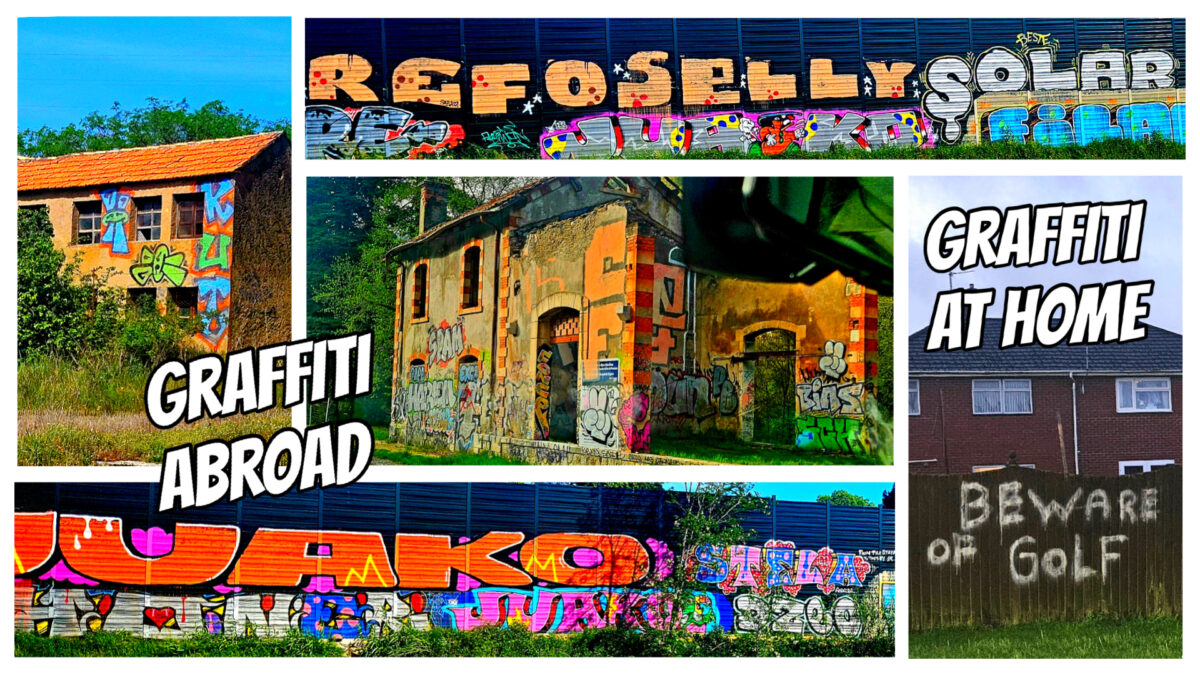 Graffiti-a-go-go
Anyway, tags and scrawls aside, the A23 was about to deliver on those gantry warnings. This stretch was so devoid of traffic, it was tailor-made for an A-road ambush. And when a battered Seat Ibiza cruised past, its four ne’er-do-wells shooting us – steady the buffs – far too much suspicious side-eye, I was certain there was going to be trouble.
I mentioned it to Tim, expecting my fears to be brushed aside, but no. Instead, he said they’d been behind us for a while, which was no salve for my stress. And, once they’d overtaken us, they slowed, until their bumper was much too close for comfort, and black exhaust clouds swallowed our view.
Tim, who wouldn’t panic unless the Peñón itself hit the motorway, took decisive action. Seeing a sign for services, he waited until we’d almost passed the exit, then wrenched the wheel to the right, sending Bella lurching across the chevrons and bumping down the slip lane towards civilisation. (It was a derelict petrol station, but still…). Phew.
Scary
It was proper scary, though as Tim later posited, their smoking exhaust was probably a symptom of an EGR valve issue robbing the engine of power. Riveting.
Paranoia rebooted, I sat white-knuckled until we crept into Zaragoza, where my spidey-senses immediately went nuclear. We’d expected culture, crowds, and a shedload of tapas – but the city seemed completely abandoned.
The same unsettling quiet from the desert had followed us, spilling into the suburbs and turning it into a ghost town.
However, our campsite was the polar opposite. We plunged straight into a riot of shrieking kids, e-scooters, footballs, and inflatable unicorns – and my nerves promptly switched from apocalyptic dread to full‑blown sensory overload.
Because, of course, it was a Spanish bank holiday weekend, one when everyone flees the cities and heads to the coast. Or, failing that, the campsites. And we’d happened to book ourselves into the region’s go‑to camping resort for families… and school trips. Absolute carnage.
Thankfully, the lovely lad on reception tucked us away in a peaceful corner. But with Zaragoza’s end-of-days vibe still lingering, Tim double-chained his bike – clearly thinking that if the undead can barely manage a shuffle, a bike is their best shot at speed.
(Editorial note from Tim: There are no zombies. It’s the living I worry about. And it was a new bike.)
Humpf.
We left the next morning, with no time to explore the Moorish architecture of the Aljafería Palace or the mighty basilica. Instead, we had to content ourselves with distant views of those landmarks while we endured an interminable gasóleo queue, because suddenly, Zaragoza was resurrected.
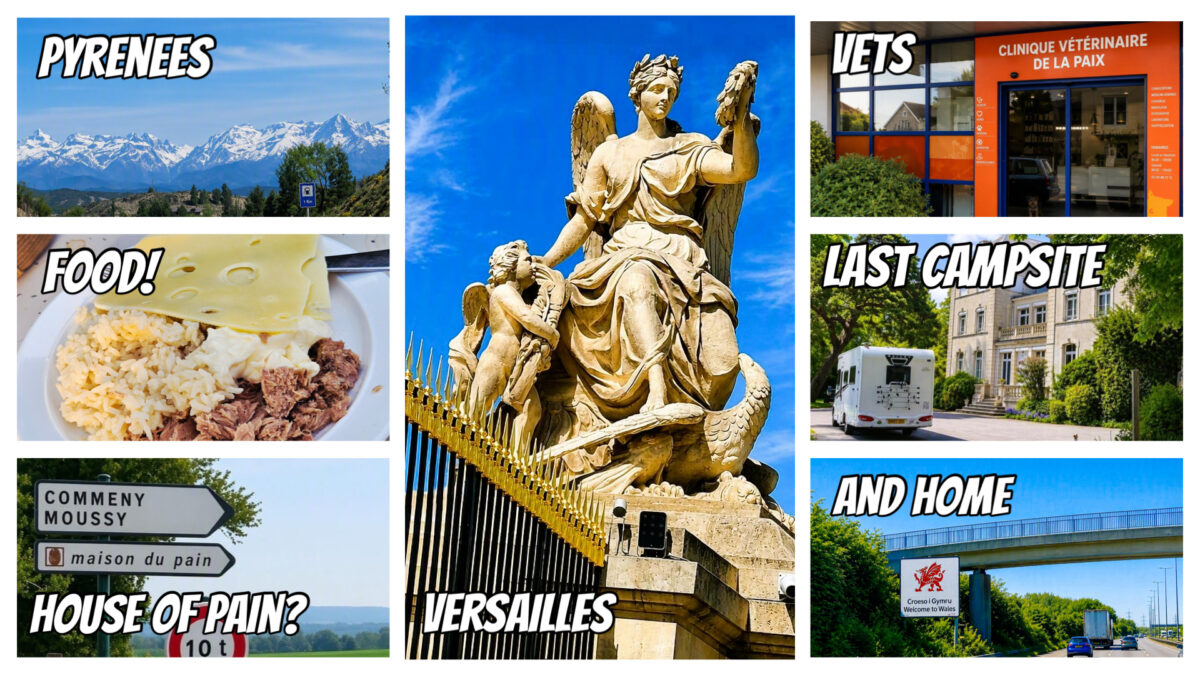
And then we climbed, over the spectacular Monrepós Pass and into the mountains. The Pyrenees lay ahead, and while I tried coaxing Tim to take the road over them, he was determined to protect Bella’s clutch – which meant the subterranean route.
The border lay halfway along the massive Somport Tunnel – an 8-kilometre concrete void – which we entered in thirty-degree Spanish heat, popping out the other side into France’s ridiculously lush, Aspe Valley (where I needed my cardi – brr).
But no time to enjoy it, because then came the race to the finish. Four days of high mileage, forgettable campsites, bureaucratic post-Brexit vet treatments (grr), cupboard-clearing meals, and a speedy drive-by photo op in Versailles. And then we were home. Heavy sigh.
Since then, I’ve missed the camaraderie of the carriageways; sketching a salute to passing MoHos – a tiny tradition that says we choose road over routine.
The payoffs were huge: the freedom of a day without deadlines, finding connections in unlikely places, and discovering what the world has to offer when you swap your sofa for a cab seat.
And amid the utter uproar of four large bodies squashed into a shed‑sized box, and the many navigational screaming matches, three weeks without devices was bliss – and a rare hush from the digital din.
Later, when the inevitable post‑holiday blues descended, that hollow ache carried with it a sly whisper – go on, you know you want to… so we did.
Meet Felix Caradog: twenty years young, two fixed beds, and a garage big enough to house the boys, Anwen, and the host of paraphernalia needed to keep him well-oiled and willing. He’s not only a motorhome; he’s our next chapter, a shift from pause to play, and one massive hunk of happiness.
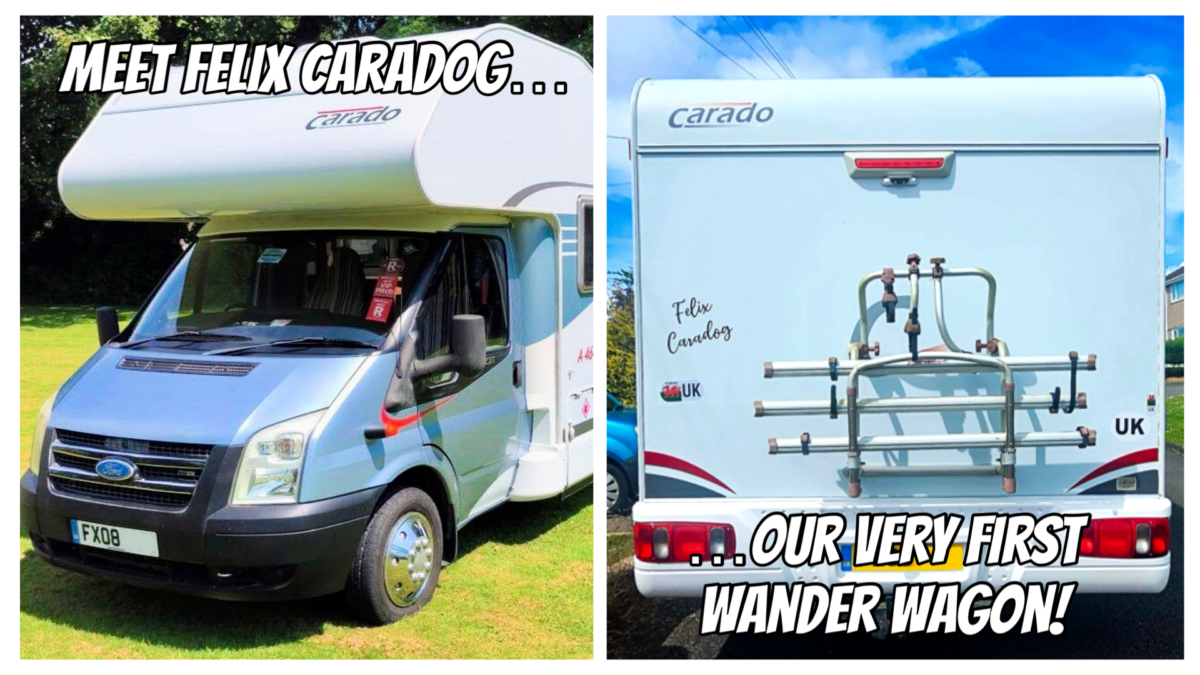
So, if La Première Étape was survival, Étape Deux was catharsis, and Étape Trois was conquest, La Etapa Final is very simple: freedom. And we’re already rolling.
(And Ants, it won’t be another ten years. Come autumn, we’re heading south. So put t’kettle on, lad – we’ll be wanting a brew.)
If this gives you the urge to roam, and you want to experience the ups and downs of the open road (while in cosy confinement with family and friends), Bella and her various-size sisters are available to hire from Whyknott Motorhome Hire in Bridgend.
Support our Nation today
For the price of a cup of coffee a month you can help us create an independent, not-for-profit, national news service for the people of Wales, by the people of Wales.
Get more trusted Welsh news
Choose Nation.Cymru as a preferred source in Google News to see more of our journalism.



They look like lines out of a Bob Dylan song…A long one, here we go…
Expect the Spanish Inquisition Del…
😂Let’s hope not
Suggested reading, Ignatius of Loyola, The Psychology of a Saint…
Only kidding, it took me to the brink of insanity, the things to study while in Aber!
But the Stolen March set in the mountains between France and Spain, a fantasy by Dornford Yates…is as daft as they come…