


The Farmer-poet: Robert ap Gwilym Ddu (1766-1850)
Adam Pearce, Llyfrau Melin Bapur
Like so many of the best Welsh poets of the 19th century, Robert ap Gwilym Ddu (Robert Williams, 1766-1850) sits somewhat outside the mainstream represented by figures like Dewi Wyn, Eben Fardd, Caledfryn and the rest.
But whilst figures like Alun and Gwenffrwd rebelled by rejecting tradition and embracing new forms of verse, Robert ap Gwilym Ddu favoured a quieter brand of rebellion.
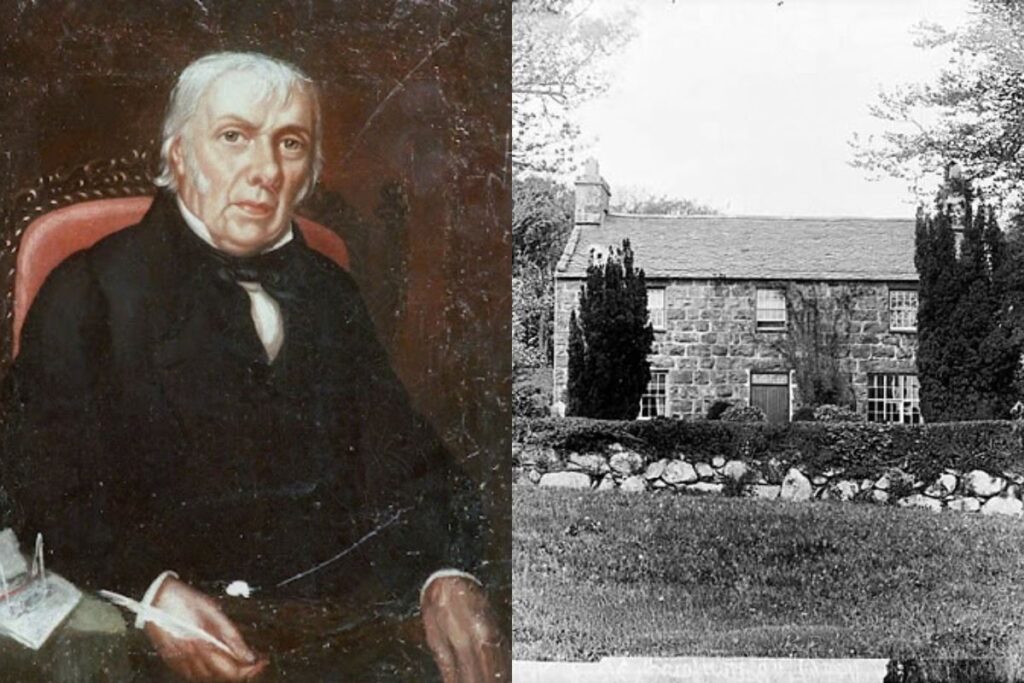
Little is known of his early life, and indeed he seems to have led a fairly settled existence, working his whole life as a farmer on the land he had inherited from his parents at Betws Fawr, Llanystumdwy, still a working farm today. Obviously a man of reasonable means, he clearly enjoyed the leisure time to pursue his various interests in literary, scientific and theological matters.
He was the oldest of a loose grouping of poets sometimes referred to as ‘Beirdd Eifionydd’ (though the term is a much later coinage) who were prominent in the first half of the 19th century. As the name suggests, they were based in Eifionydd, roughly the south eastern quarter of Penrhyn Llŷn stretching up to Beddgelert in Eryri and included some of the biggest poetic names of the period, including Dewi Wyn o Eifion and Eben Fardd.
Already in his mid thirties by the turn of the 19th century, Robert ap Gwilym Ddu had been around for the revival / reinvention of the Eisteddfod by the Gwyneddigion in the 1790s; but, as far as we can tell, submitted a poem for a competition exactly once (a later claim he competed with an Awdl turned out to be false). This seems to have been a principled, deliberate stand: many of his friends and associates like Dewi Wyn were avid competitors, and there is no question of Robert’s lacking the means or skill to have been very successful.
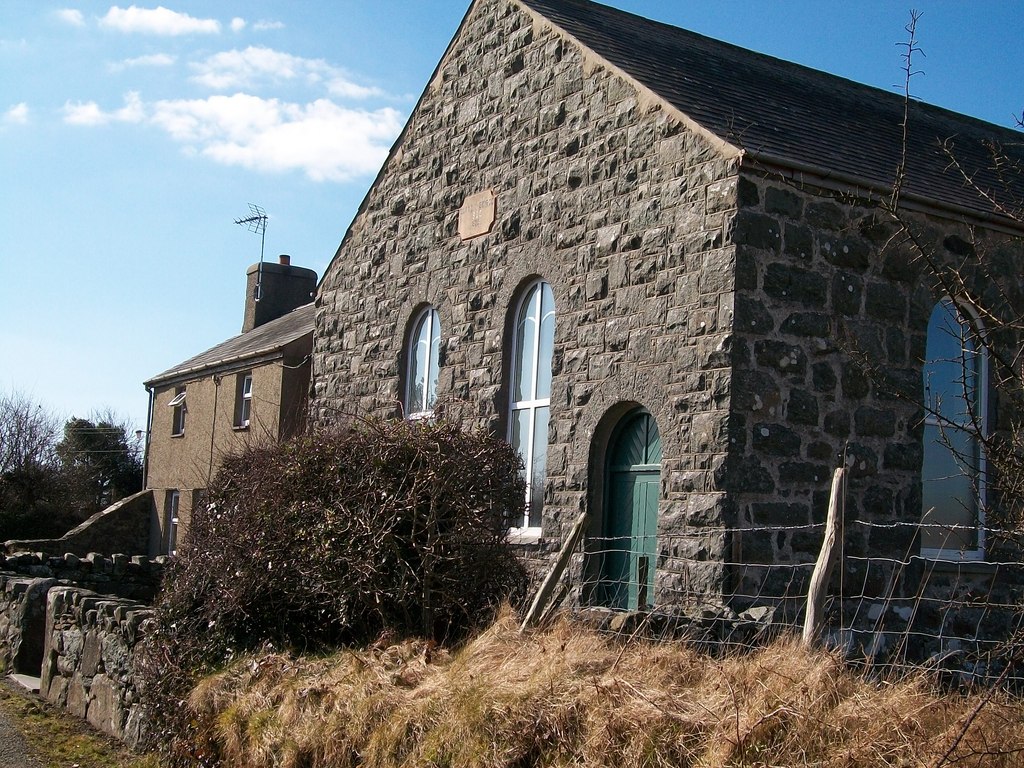
This refusal to conform seems to have been a broader personality trait: though clearly a deeply religious man, he declined to formally align himself with any single denomination, though he was involved (alongside Dewi Wyn) in the foundation of a Baptist chapel, still in use, near Llanystumdwy which became known as ‘Capel y Beirdd’ (‘The Poets’ Chapel’) due to its connection with the two poets.
Robert’s faith is a strong element in his poetry, and he was one of the age’s great hymn-writers, his most famous being the one which begins:
Mae’r gwaed a redodd ar y groes,
O oes i oes i’w gofio;
Rhy fyr yw tragwyddoldeb llawn
I ddweud yn iawn amdano.
It is still sung by congregations today.
It is difficult to precisely date most of Robert ap Gwilym’s verse, but the references to individuals and events place most of it after 1810, by which time he would already be in his mid forties, as do the frequent references to illness and infirmity. This makes him very much a poet of the 19th century, even though he led a significant part of his life in the 18th.
He was something of a late flowerer in his personal life too: having remained a bachelor until 50, he unexpectedly married a woman twenty years younger than him, Catherine. It was perhaps to her that he wrote these moving lines:
Pan fyddo’r anadl yn byrhau,
A’r poenau mawrion yn trymhau,
A’r enaid dros y genau mud
Yn dianc i’r tragwyddol fyd;
Gad imi syllu ar dy wedd,
Nes byddwyf yn anghofio’r bedd;
A phrawf o’th gariad dyro im’,
Nes byddo marw’n mynd yn ddim.
[When my last breaths are getting short
And the great pains are heavier
And when my soul, through silent lips
Escapes to the immortal world;
Let me then gaze upon your face
’Til I forget about the grave
And give me then proof of your love
Until to die becomes as naught.]
By all accounts their marriage was a very happy one, and Betws Fawr became a haunt for poets and other intellectuals. They had one daughter, who tragically died in 1834 aged just 17, and Robert’s memorial awdl expressing his grief at her loss is one of the century’s most moving and immediate pieces of strict metre poetry:
Angau arfog, miniog, mawr,
Ar ei gadfarch ergydfawr,
Wele yma carlamodd,
A’i rym ar egni a r’odd;
Torrodd i lawr, drwy fawr feth,
Ein diddig, unig eneth;
A mynnodd hwnt o’n mynwes,
Enaid a llygaid ein lles;
This personal, reflective tone runs through much of Robert ap Gwilym’s poetry, and is refreshingly unusual in an age when so much poetic energy went towards descriptive writing on a set subject. He was not in any sense a Romantic though, and a classical attention to form is a feature of almost all his work. It is perhaps not surprising therefore that of all the forms, it is the Englyn in which he excelled most of all, expressing an idea in four short lines of cynghanedd, such as this example on ‘Christ and Pilate’:
Dros fai, nas haeddai, mae’n syn – ei weled
Yn nwylo Rhufeinddyn;
A’i brofi gan wael bryfyn,
A barnu Duw gerbron dyn.
[For a fault, underserved, how strange – to see him
In a Roman’s hands
Tested by a low insect
God judged, before a man.]
Whilst the Englyn is an ancient form, it was during the 19th century that it took on the significance which it has retained to this day, particularly as a self-contained epigrammatic unit (as opposed to a verse form employed in a chain as a single poem). It was Robert ap Gwilym Ddu who was perhaps the first great practitioner of the englyn in this way, in the words of W. J. Gruffydd, “perfected” the form. Here’s another example, on an eternally relevant subject:
Nid gwir grefydd sydd, ond sŵn – ym Mhrydain,
Amrywiadau filiwn;
Taeru cas, a natur cŵn,
Pa wyneb heb opiniwn?
[No true religion, but noise – in Britain
In a million variations
Cruel assertions, in dog-like fashion
Is there a face without an opinion?]
The quotations may give the impression of a rather serious and even morbid poet, but whilst it is true that mortality and eternity feature extremely prominently in his verse, Robert ap Gwilym Ddu was also a playful poet who wrote about toothache and an Englyn to his walking stick. It gave me great pleasure to include a ribald verse about a fight between two women in our collection:
Bu yno ’sgythru dannedd,
A churo didrugaredd;
Ac yn yr amser cyfyng hwn
Daeth gofyn ar y gwinedd!
[There was gnashing of teeth
And merciless beating
And then, when things got desperate,
Out came the fingernails!]
Robert ap Gwilym Ddu was a prime example from his period of the Welsh ‘Bardd Gwlad’, a poet who wrote much of his verse not for fame or immortality but to his friends and associates, to mark occasions such as births and especially deaths.
This is a strand of poetry which survives to this day and has always distinguished the poetic tradition in Wales, tracing its origins back to the social role of the medieval court poet.
Although his refusal to compete at the Eisteddfod likely prevented him from earning the respect and admiration from his contemporaries that the high standard of his verse clearly deserved, later generations have recognised his value.
W. J. Gruffydd called him the “greatest artist that had been seen in a century and a half of Welsh verse”, and Bobi Jones’s seminal Blodeugerdd Barddas anthology of 19th century Welsh Verse includes more individual selections from his work than any other single poet.
Although he was a master of cynghanedd Robert ap Gwilym Ddu wrote no lengthy awdlau for the Eisteddfod, and though much of his work is very serious in tone he remains highly readable and accessible.
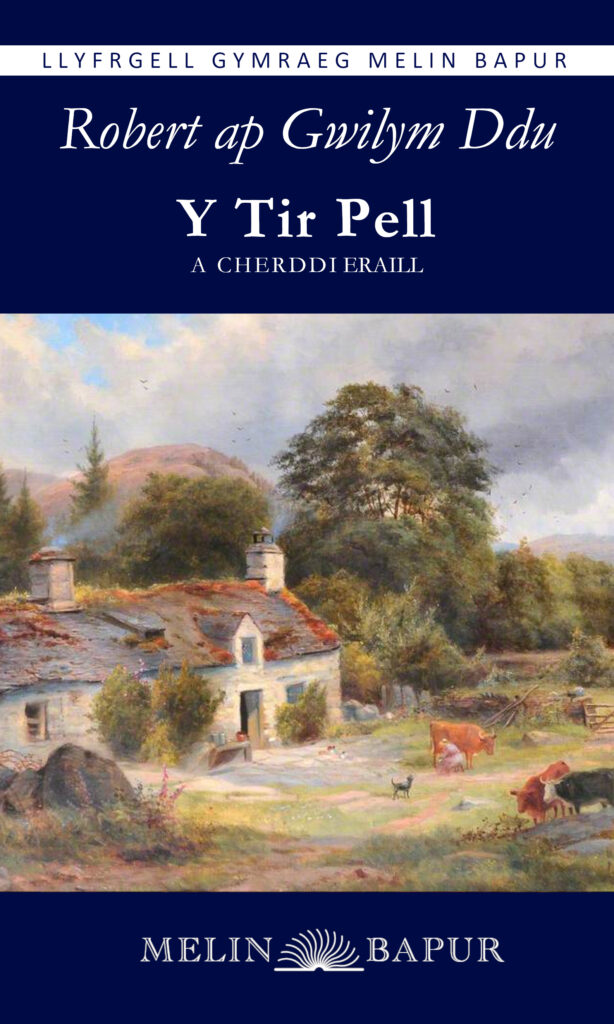
Melin Bapur’s collection of Robert ap Gwilym Ddu’s poetry, Y Tir Pell a Cherddi Eraill, is available now from www.melinbapur.cymru for £7.99+P&P. Also new from Melin Bapur this month are Daniel Owen’s Enoc Huws (£13.99) and Gerald Coles’ debut novel Enigma (£9.99).
Support our Nation today
For the price of a cup of coffee a month you can help us create an independent, not-for-profit, national news service for the people of Wales, by the people of Wales.
Get more trusted Welsh news
Choose Nation.Cymru as a preferred source in Google News to see more of our journalism.


