


The Karate Kid the Musical heads to Wales to the delight of its composer
Nation Cymru staff
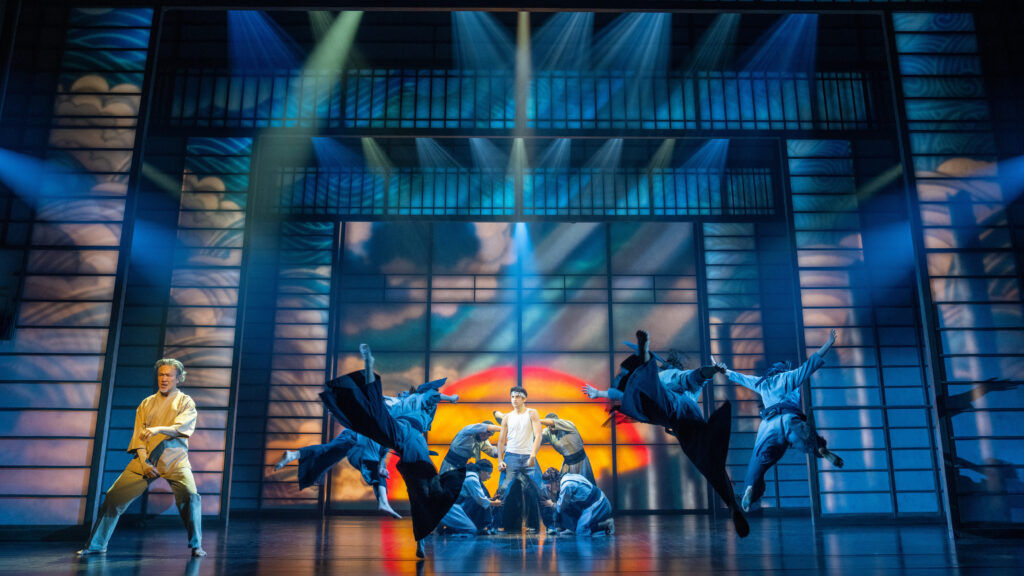
For award-winning composer and lyricist Drew Gasparini, writing the score for The Karate Kid: The Musical wasn’t an obvious fit.
A proud Italian-American from California, Gasparini has built a career as one of the most distinctive voices in contemporary musical theatre. His work includes We Aren’t Kids Anymore, It’s Kind of a Funny Story, Night Shift, The Whipping Boy and the cult hit Skittles Commercial: The Broadway Musical. His concerts have sold out in New York and London’s West End, while his music has found audiences across theatre, television and popular culture.
Yet when he was first approached to adapt one of Hollywood’s most beloved films for the stage, his instinct was to walk away.
“When I got the call from my agent, I had no interest. I didn’t think I was the guy to turn one of the biggest movies into a big musical.”
It was only after revisiting the original 1984 film that he realised that this was a beautiful opportunity.
“I rewatched the movie, and it was gorgeous. It’s something I felt very passionate about, musicalizing this beautiful story about the relationship between these two men, because of this amazing, very healthy male dynamic between Mr Miyagi and Daniel.”
“Their relationship is at the heart of the musical surrounded by themes of toxic masculinity. Mr Miyagi shows him balance and centring, and that really spoke to me.”
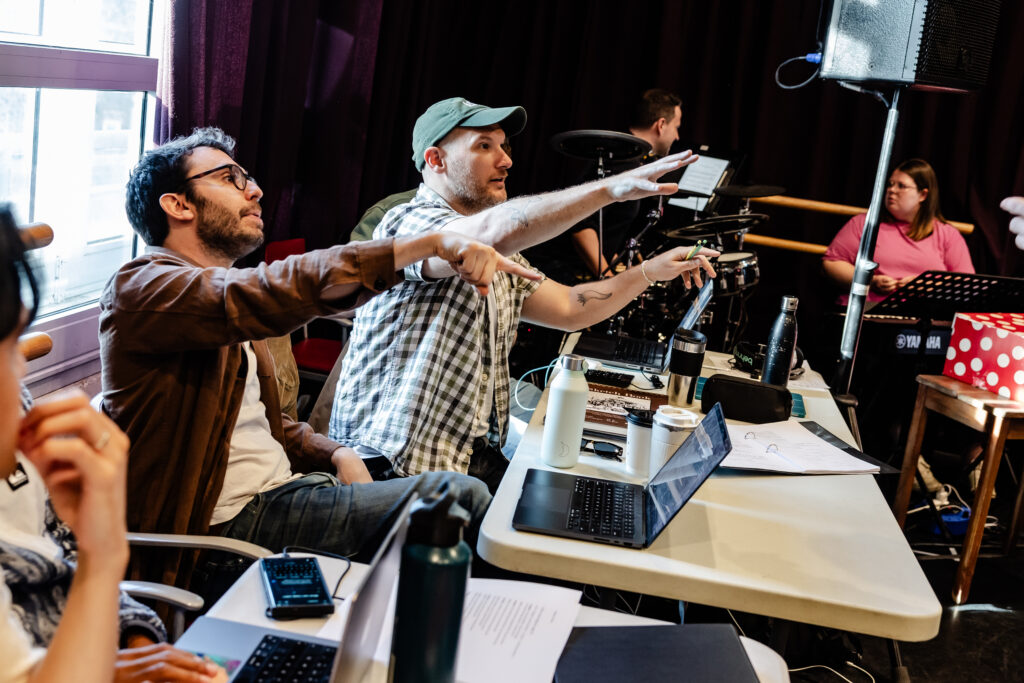
Gasparini says that one of the biggest creative hurdles was putting aside his own background.
“Early on, the biggest challenge I had was not to musicalize an Italian-American story, that’s my own story, that’s me, but to musicalize Mr Miyagi.”
For a composer whose own family heritage is deeply rooted in Italian-American culture, finding an authentic musical language for the Okinawan karate master meant looking far beyond his own experiences.
The producers knew authenticity mattered, so they gave him an extraordinary opportunity.
“The producers shipped me out to Okinawa for two weeks, for which I am so grateful. I went to Okinawa and Tokyo, where I saw live taiko drumming.”
The experience would fundamentally shape the score.
“They placed me in a room with three pianos and two musicians from Okinawa. They had no English, so we spoke through music. I played them what I had already written for Mr Miyagi, and they said, ‘This is close, fix this note and this note,’ because the Okinawan scale is so specific.”
For Gasparini, it remains one of the defining moments of his career.
Eight years after beginning the project, that connection has only deepened.
“It’s been eight years since I started this journey, and it only speaks to me more now. I feel very proud, and it feels very personal to me to write the score for this musical.”
“We are bringing so much culture and nuance to this musical. We did not want to give the audience any low-hanging fruit. What you think this musical is going to be, is not what it is. You must come and see it and experience it. It’s not the obvious in any way yet it still stays loyal to the original.”
Surprisingly, the first piece of music he wrote wasn’t for Daniel or Mr Miyagi.
It was for the villain.
“I always start with the villain, I don’t know why. I particularly love the villain in this show, John Kreese. Talk about toxic masculinity. This guy is indoctrinating kids to lead with violence.”
To find Kreese’s voice, Gasparini looked back to the era that created The Karate Kid.
“I was listening to a lot of rock music. The movie came out in ’84, peak Metallica time, so I was listening to a lot of that kind of music.”
The result was one of his favourite moments in the show.
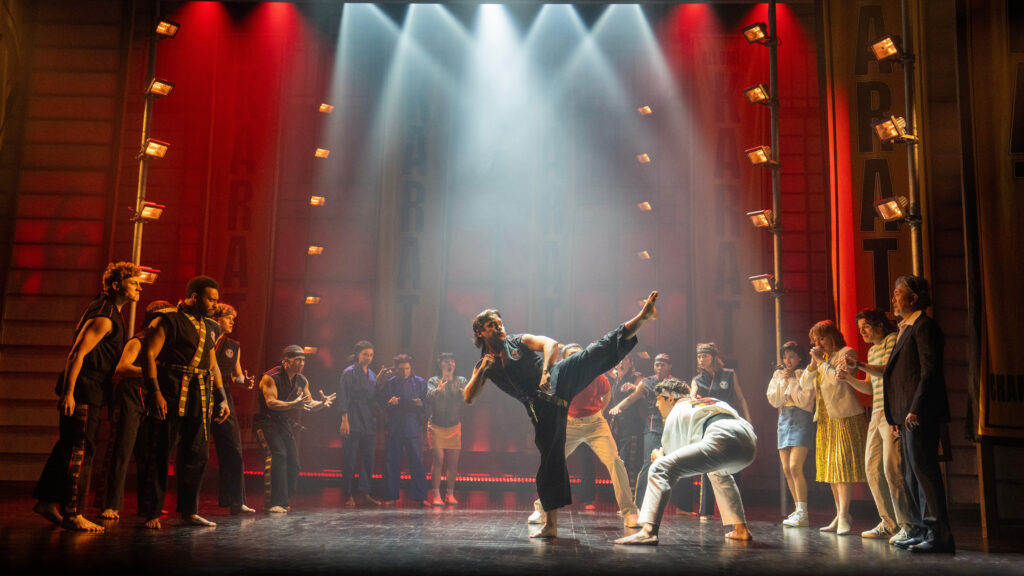
“The first song I wrote was ‘Strike First, Strike Hard, No Mercy,’ and we haven’t changed one word, one note. It’s probably my favourite song from the whole show.”
The score itself reflects the different emotional worlds within the story. The darkness of Kreese, the vulnerability of Daniel and the quiet wisdom of Miyagi each have their own musical language, helping audiences understand the characters in new ways. Gasparini’s work on the show has been praised for balancing contemporary musical theatre with the spirit of the original 1984 film.
Now, after living with the score for almost a decade, the composer is preparing to share it with audiences across the UK and comes to Wales Millennium Centre in July.
For any composer, there comes a moment when the music no longer belongs solely to its creator. It belongs to the performers and, ultimately, to the audience.
For Welsh audiences, there is another connection to be made.
Gasparini’s score is rooted in the idea that music can tell stories beyond words, crossing cultures and generations. It’s a fitting match for Wales, a nation celebrated for its rich musical traditions and affectionately known as the Land of Song.
“I’ve never had the chance to properly experience Wales, but I’ve heard so much about its incredible musical heritage. To know that this score is being performed there, for audiences who have such a deep connection with music and storytelling, is genuinely exciting. I’d love the opportunity to visit and experience Welsh culture for myself.”
And perhaps that’s the greatest achievement of The Karate Kid: The Musical. What could have been a simple adaptation of a much-loved film has become something richer, a story about mentorship, resilience, friendship and finding balance in an often chaotic world.
The Karate Kid: The Musical comes to the Wales Millennium Centre from 28 July to 1 August.
Support our Nation today
For the price of a cup of coffee a month you can help us create an independent, not-for-profit, national news service for the people of Wales, by the people of Wales.
Get more trusted Welsh news
Choose Nation.Cymru as a preferred source in Google News to see more of our journalism.


