


The location in Wales which has had more treasure finds than anywhere else
It’s the location in Wales where everything that glitters is possibly gold.
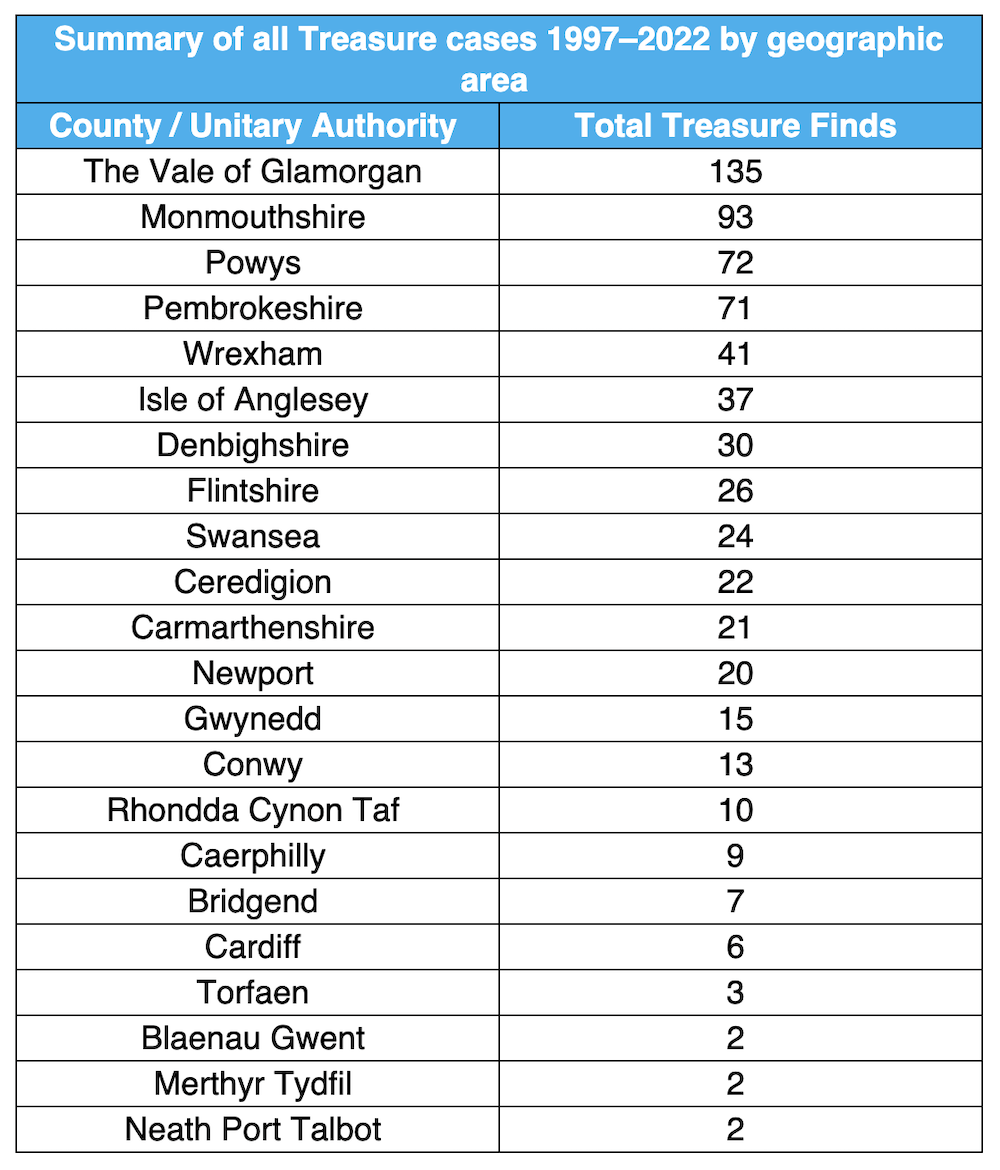
Named the treasure capital of Wales, with the most finds over the past 34 years, according to a new study the Vale of Glamorgan is a veritable goldmine for treasure hunters.
Researchers analysed the latest Treasure Act report to reveal people in The Vale of Glamorgan have made the most finds over the past 34 years.
In fact, with 135 discoveries in the area, finds here account for over 20% of all in Wales.
Monmouthshire came second with 93 finds, and Powys third with 72.
Pembrokeshire and Wrexham rounded out the top five with 71 and 41 respectively.
The full figures, which take England, Wales, and Northern Ireland into account, revealed treasure cases have seen a 28% rise. In 2021, there were 1,072 cases, but it shot up to 1,377 in 2022, which is the most recent data.
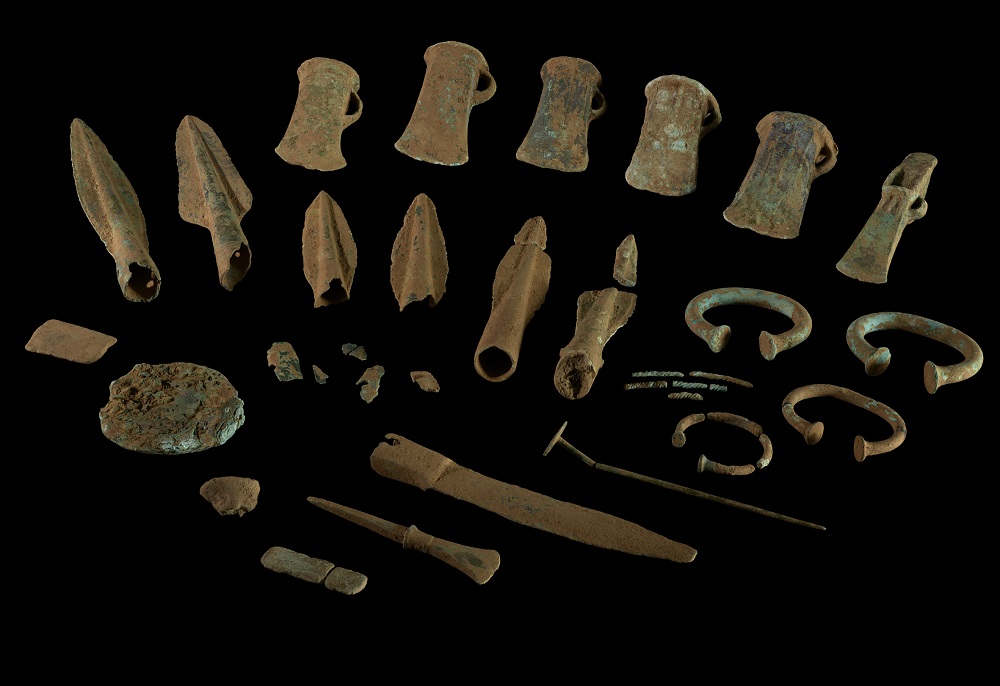
Experts also discovered that most of the object finds were Post-Medieval (407), followed by Early Medieval, and then Bronze Age.
94% of finds were via metal detecting. Archaeological finds followed at 3.85%.
Trevor Moxon, from Fast Skips who analysed the data, explained why treasure hunting is so much fun: “There’s something genuinely exciting about not knowing what’s just beneath your feet.
“One minute you’re walking through a quiet field, the next you’re holding something that hasn’t been seen for hundreds of years.
“It’s the mix of history, fresh air and pure luck that makes treasure hunting so addictive.
“Every trip out is different, and even if you come back empty-handed, it still feels like time well spent.”
Top tips for anybody wanting to start treasure hunting
1. Start with Research
“Before you even think about digging, invest time in researching promising locations. Old maps, local archives, and historical records can reveal where settlements, trade routes, or battles once took place, these are ideal places for potential finds.
“Also look for areas that haven’t been heavily redeveloped or ploughed repeatedly, as they’re more likely to have undisturbed artefacts.”
2. Get Permission from the Landowner
“You must have permission to search on any land, even common or seemingly unused land. This includes farmland, public spaces, and protected heritage sites.
“It’s best to have a written agreement, especially if you’re planning regular visits.”
3. Invest in a Quality Metal Detector and Learn How to Use It
“While it’s tempting to buy a cheap metal detector to start, investing in a reputable, mid-range model will make a huge difference. Modern detectors come with various settings that help you distinguish between junk and valuable targets. Features like depth indicators and iron discrimination are particularly useful.
“Just as important is learning how to interpret the signals. Spend time practising, read guides, and watch tutorials. Knowing your kit well could be the difference between unearthing treasure and digging bottle tops all day.”
4. Join a Local Detecting Club or Online Community
“Local metal detecting clubs are a brilliant way to learn best practices, gain access to club-permission land, and attend group digs. You’ll also benefit from the collective knowledge of more experienced detectorists.
“Online communities and social media groups offer constant discussions on finds, detector reviews, legal advice, and even tips on reading ground conditions.”
5. Know the Law
“Familiarise yourself with the Treasure Act 1996 and the Portable Antiquities Scheme (PAS). Understanding what qualifies as “treasure” and what your legal obligations are will protect you from accidentally breaking the law.”
“Treasure hunting isn’t just about what you find, it’s about the stories, the history, and the unexpected joy of uncovering the past.
“With the right knowledge and respect for the rules, anyone can enjoy the thrill of the search.”
Support our Nation today
For the price of a cup of coffee a month you can help us create an independent, not-for-profit, national news service for the people of Wales, by the people of Wales.


