

The Mabinogi: Welsh English American traditions
Shân Morgain
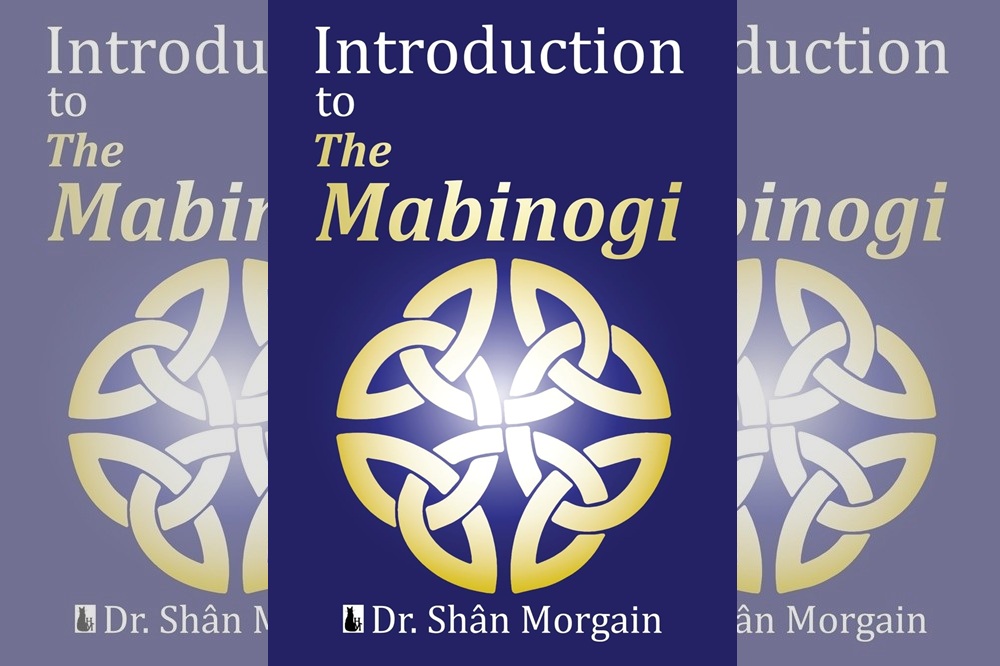
This piece has been written in response to Simon Rodway’s generous review of my book ‘Introduction to the Mabinogi’ 2025 for which much thanks.
In brief introduction, the Four Branches of the Mabinogi is a revolutionary work which pioneered telling stories in prose, instead of poetry. Until the Mabinogi bards had used poetic forms to help memorise tales for performance. Manuscripts then relaxed the ruthless demand on memory somewhat.
As well as pioneering prose story-telling, the Mabinogi tales are wonderful to read or hear, exciting, touching, profound, complex and comic. Fussy scholars might spend a lifetime studying them (like me) but young children can delight in them without effort.
It was a nervous wait for what Dr. Simon Rodway would say about my book, as my respect for his opinion could not be higher. How I wish my beloved companion John Davies, who aided my work so valiantly down the years, was still among us to enjoy Simon’s kindly comments.
Three stages
I am glad Simon quite likes how I present the history of ‘Ideas about the Mabinogi’ in three stages. My account gives a Welsh tradition 1700 – 1870s, an English tradition 1870s – 1970s, and an American tradition 1970s – 1990s. Simon thinks this is ‘neat’ and helps to cope with the sprawling mass of writing about the Mabinogi.
But he then objects that most scholars in my ‘English tradition’ were actually Welsh. He is quite right. I also put the Englishwoman Charlotte Guest in the Welsh tradition. The point here is a scholar’s personal nationality is not the issue. Perhaps I could have made this clearer.
I explain in the book (and here on nation Cymru) that the English lady Guest is utterly faithful to the ideas of the Welsh tradition. She is its highly successful mouthpiece, its triumphant finale. Daughter of England she may be, but she married Wales, and was faithfully devoted.
Simon welcomes that I champion William Owen Pughe, for whom I have much affection. Pughe was the leading writer and publisher of the Welsh tradition. He has been badly treated by the English tradition writers, to the extreme of censorship.
Colonial English tradition
The English tradition following after the Welsh tradition, roundly rejects the earlier ideas.
Its leading innovator Matthew Arnold, an English poet, is harshly contemptuous of Welsh bards. He famously declared they were ignorant of the true nature of their own tales (1867). John Rhŷs duly began rearranging Mabinogi characters (1877). His student WJG ballooned reconstruction into comprehensive rewritings, unrecognisable as the Mabinogi (1912-53).
I explain the Welsh tradition has minimal interest in gods and goddesses. Its focus is history, ancestral British society. The English tradition builds mythology, and loves deities.
The English tradition is colonial, and the first colony the English conquered was Wales. From Wales to the world, their studies of native traditions saw them as inferior, in need of tidying up by their masters.
In the 1970s the American tradition insisted on respect for the original Mabinogi, at least as we know it in the surviving manuscripts. John Bollard and company called for a balanced approach, allowing space for mythology but stressing the Mabinogi as a literature of genius. I call their approach ‘trusting the text’.
Example: Rhiannon’s rescue
One example that illustrates the differences is where Rhiannon rides to the rescue of her captive son. Tragically she too becomes a prisoner. (Third Branch)
The Welsh tradition might consider the newly built stone tower, their prison, as part of the Norman conquest (18th-19thC).
The English tradition (Proinsias Mac Cana 1955) condemns Rhiannon as a failed goddess who has lost her power.
The American tradition (Rob Valente 1986) sees Rhiannon acting quite understandably as a mother. We would find her lacking if she did not try a rescue.
All this goes to show yet again, what a complex work is the Four Branches of the Mabinogi. Yet while exploring its intricacies, never forget children’s simple excitement about these tales of wonder and adventure.
……………………………………………………………………….
Available on Abebooks, Alibris, Amazon, Ebay, ZVAB. For best prices check Bookfinder
Dr. Simon Rodway, Aberystwyth: review of Shân’s ‘Introduction to the Mabinogi’ here.
Nation Cymru articles by Dr. Shân Morgain here.
LATEST Interview with Nation Cymru here. Meet her as scholar, priestess, widow, radical feminist, and Catlady.
Support our Nation today
For the price of a cup of coffee a month you can help us create an independent, not-for-profit, national news service for the people of Wales, by the people of Wales.


