


The non-native spider taking over our homes (but not necessarily our hearts)
Stephen Price
Unlike, it seems, the majority of people I know, I walk a very thin line between being a house-proud clean-freak and being quite happy to let spiders do their thing and occupy a corner or ten throughout the house.
Learned behaviour no doubt, but I have fond memories of sitting with the family in the living room while we watched a rather large house spider cross the living room carpet nightly as part of his or her regular routine.
I wouldn’t say it was the highlight of our nights – TV was a bit better back then – but it made us all smile nonetheless, and no harm was being done to us, or our eight-legged friend.
Fast-forward twenty or so years to the 2000s or thereabouts, and I remember first encountering a spider of a very different kind, living in an old property my sister and her partner were renting.
One thing about being a part-feral village urchin, I know my insects and trees and whatnot, but this was quite unfamiliar at that point, and unseen to me in my many years of stone upturning and relic-bothering.
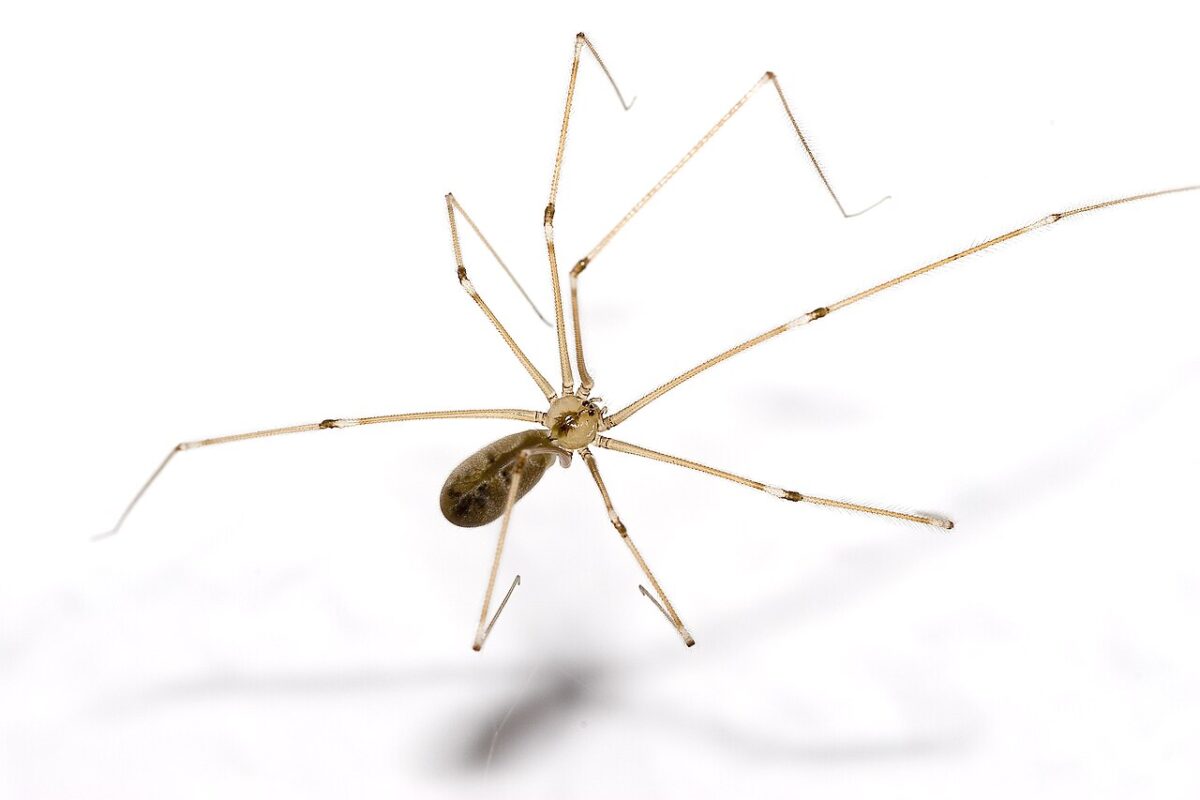
Transluscent brown/yellow/grey/who-even-knows, with very visible knees, a chaos of a web, and a penchant for a pirouette when bothered, I’ve only recently taken it upon myself to find out their name as I see more and more of them colonise house after house (along with house moths, who also never bothered me until I began a Welsh blanket collection, bless ’em)..
The spider in question is the not-so-humble cellar spider or Pholcus phalangioides, or daddy long legs spider if you’re in need of a third option.
Having moved house more than I care to admit (irritable around others, me?), I’ve noticed more and more Pholcus phalangioides (spider, not Harry Potter spell or epic drag queen name) wherever I’ve ended up.
And I’ve also noticed that they’re not as welcoming of others in their space, as I have been of them in mine…
No 10 (part two)
House renovation number four went the way of previous ones – perfect house, lovely neighbours, but too much time to think during Covid-lockdowns making me dream of a life lived by the sea.
Sharing number ten with me, my partner and the dogs, were more than a few cellar spiders, while I dreamed of distant moody shores and let them do their thing.
Now and then I’d need to paint around them, or catch them in a (stolen) pint glass and pop them somewhere else, but generally I did my thing, they did theirs.
After a year or so, I welcomed a more familiar house spider to the hallway (I probably named him, but I’m useless with names so it’s gone now), and I watched as said house spider made his or herself comfortable.
For weeks, I’d raise a smile at the shy house spider (Eratigena atrica, Voldemort!) as he or she thought I couldn’t spot those legs ‘on display’ (to quote the Daily Mail) above one of the doorframes.
Months passed by, and for some reason, Mr or Mrs spider decided to take a walkabout upstairs one day. Thinking nothing of it, I let things be, unaware that the trek was to be a one-way trip to spider heaven.
The following day, my little friend had been chased down and encased in a web. A web I thought meant for flies and flies alone. A young life, with so much more to give, lost to a killer from the mediterranean. Yes, dear reader, the drag queen did it.
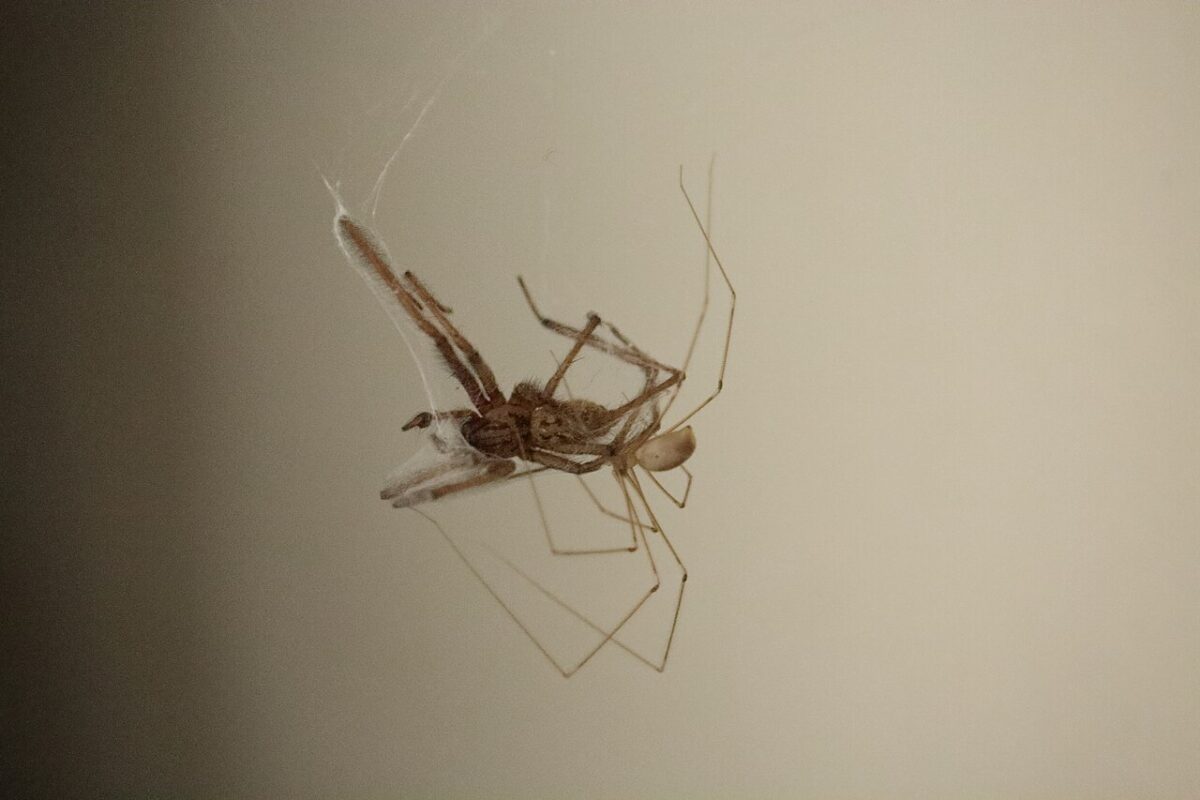
The fact that I’m recounting this tale of horror six or so years later might explain why I’m one of those annoying vegans, and why an accidental step on a snail has the power to ruin the following week for me. And it’s made me question my willingness to host our nasty friends from the south.
Pholcing things!
The Wildlife Trusts writes: “The giant house spider is the larger cousin of the house spider (Tegenaria domestica), and can be found living behind the fireplace, under the sofa, or in the bath. They tend to keep themselves to themselves, preferring dark corners where they can live in peace. But in late summer and early autumn some spiders become more active as males reach maturity and seek out a female to woo.
“The males stay with their chosen females for some weeks, mating numerous times until eventually they die, at which point they are eaten by their female. Giant house spiders spin sheet-like cobwebs in neglected corners of the room and wait close by for unsuspecting insects to get caught. They are most active at night.”
Unlike my family favourites, however, the cellar spider isn’t native to Wales, or indeed the UK.
The evil gits are a subtropical species that has been spread around the world by people and are now found throughout Europe. It was first recorded in southern Britain in 1864 and has now spread widely, with records as far north as Shetland.
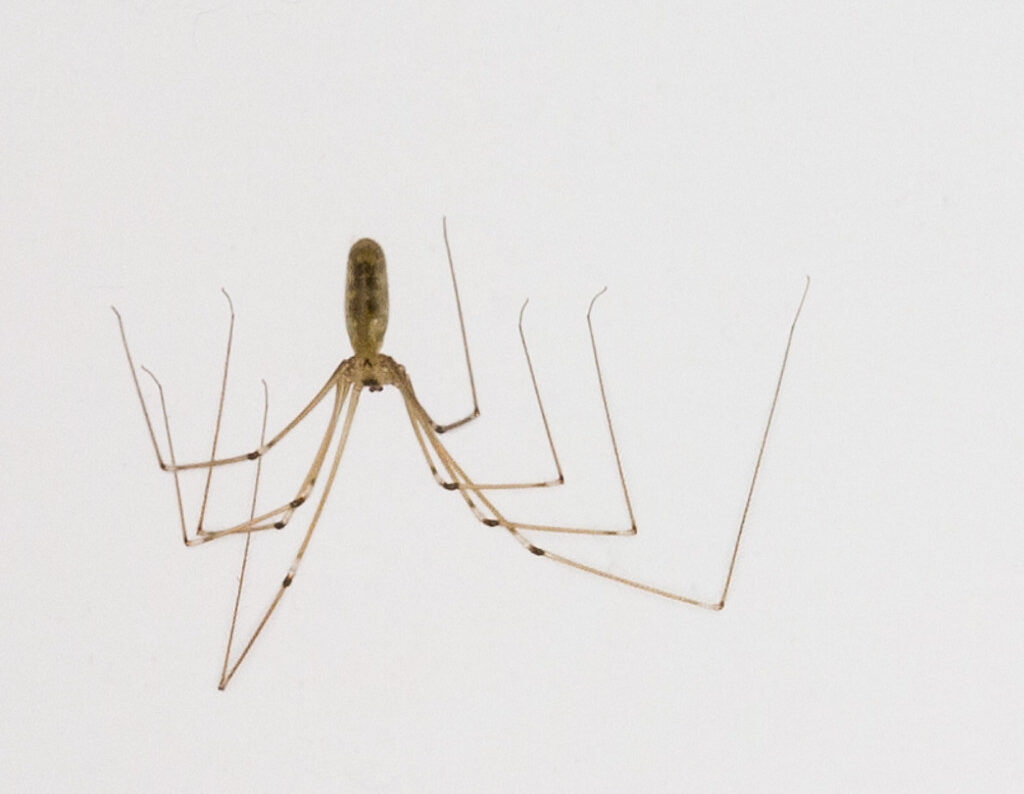
The Wildlife Trusts writes: “The cellar spider, also known as the daddy long-legs spider, is almost only ever found indoors, where they benefit from a warm, stable temperature. Cellar spiders spin loose, messy webs in the corners of rooms, usually where the wall meets the ceiling. They feed on any insects they can find within a home, but will also hunt other spiders – including surprisingly large house spiders!
“Cellar spiders often hang upside down from their webs, but different spiders have different approaches to danger. If they’re disturbed, some cellar spiders will bounce and vibrate rapidly in their web to try and frighten away the threat, whilst others will curl up and try to look as inconspicuous as possible.
“They have very long legs but a tiny body, which is where the alternative name of daddy long-legs spider comes from. This often leads to confusion with craneflies and harvestmen, both of which are also sometimes known as daddy long-legs.”
Not that our natives are cuddly by any means (eating your bedfellow when you’ve had enough with them, anyone?) but I like to play by rules, and at no point did the old lady who swallowed a fly eat two spiders in a row.
No, a bird came next, not another bloody spider. I’m not having it.
Grub’s up
Cellar spiders are carnivorous predators that feed on insects, other spiders, and other small invertebrates.
Unlike many other spiders, who simply feed on prey that have found themselves stuck in their webs, as I’ve found – these spiders frequently venture out from their own webs to hunt other spiders resting in their respective webs and feed on them or their eggs.
In times of low prey availability, both the males and females of the species will turn to cannibalism to meet their nutritional needs. Bless ’em!
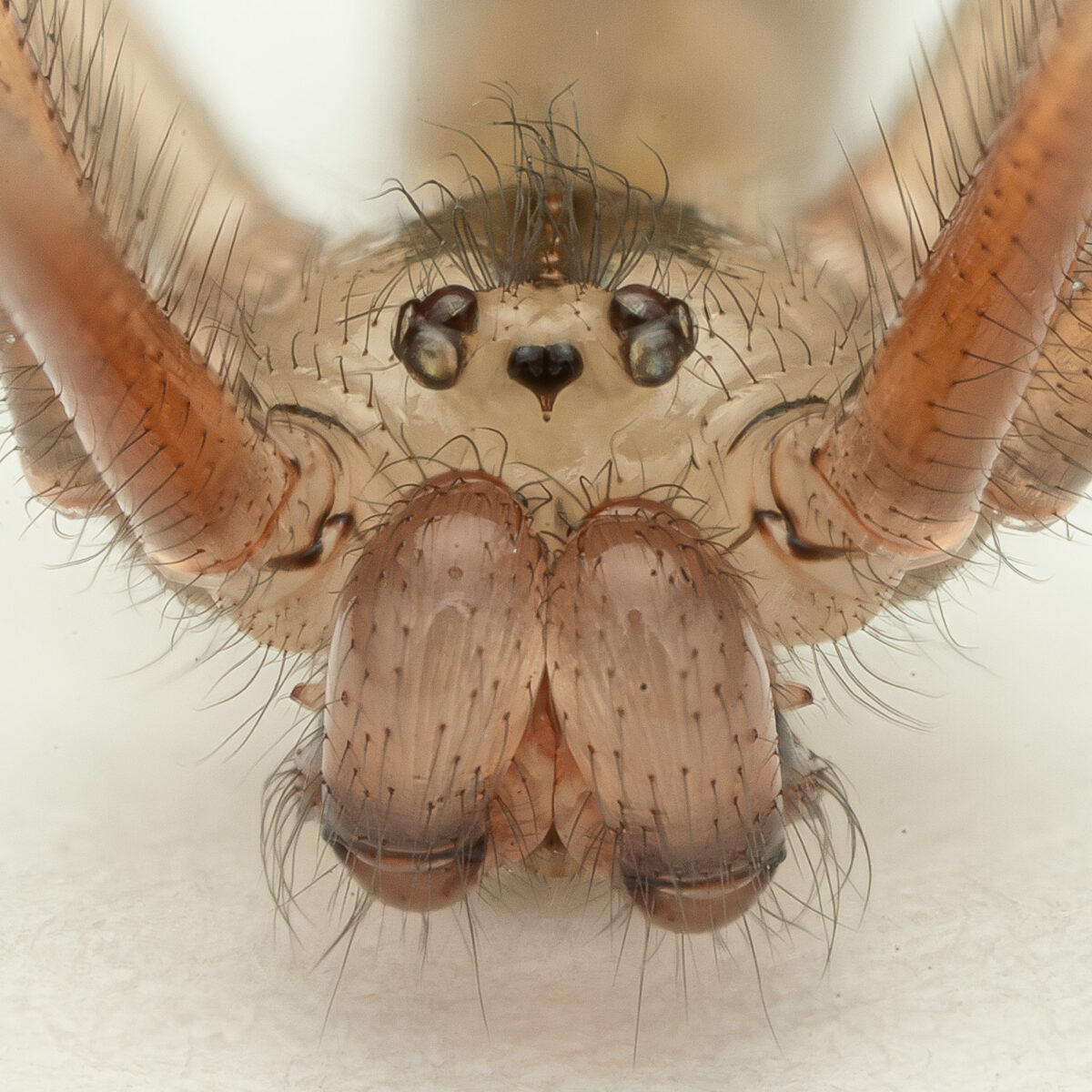
It is a common misconception that our dear cellar spiders are incapable of biting humans due to an inability of their fangs to penetrate the human epidermis. These spiders can bite humans since their fangs are roughly 0.25 mm long, while the thickness of the human epidermis is less, around 0.1 mm thick; however, there are hardly any reports on bites, so no need for any alarm or sensationalist reporting.
According to researchers Greta Binford and Pamela Zobel-Thropp, “the effects of P. phalangioides venom on humans and other mammals are negligible. In humans, the P. phalangioides bite simply results in a mild stinging sensation that has no long-term health consequences”.
Looking online, they’re short on fans as you can expect, with one Mumsnet user writing: “First came across these spiders last year in my home. They looked all skinny and didn’t bother me the odd one here and there.
“Roll on this year and they’re taking over my house! I’ve killed 25 already in 10 days! Is there a way of getting rid of them! They’re everywhere!”
Yep, they’re everywhere… but kill them? Is that the answer?
In the past, I’ve walked around the house with a pint glass and grabbed a few at a time – they’re easy to get hold of since they boldly like to either stay put in a corner or do their impressive little spin – but the fright has led to them then attacking each other in said pint glass. Playing nice just isn’t in their nature.
So now, in theory, it’ll be one at a time, and a short detour to the garage where I’m happy for them to take over.
But for now, with Christmas on the way, War is Over, and they can all stay put and kill whoever they like until I do a spring clean.
After all, we’re all just here for a short time trying to get by aren’t we.
I might not be their biggest fan, but they value their lives just as much as I do mine, so a side-eyed truce it is.
But consider notice served.
Support our Nation today
For the price of a cup of coffee a month you can help us create an independent, not-for-profit, national news service for the people of Wales, by the people of Wales.
Get more trusted Welsh news
Choose Nation.Cymru as a preferred source in Google News to see more of our journalism.


