

The power of bees: A Welsh charity’s global mission
Caitlin Thomas
A Welsh charity is proving that small insects can have a global impact.
Bees for Development, founded in Monmouthshire in 1993, works with communities in Africa, Asia, and South American in order to promote sustainable beekeeping as a route out of poverty, while protecting biodiversity at the same time.
The charity said: “Our work is driven by a simple idea: bees can help people live better lives in harmony with nature. By promoting nature-based community-led beekeeping, we create income for marginalised groups while encouraging biodiversity and pollinators.
“As people learn to value their bees, they become champions for conservation, restoring land, sharing knowledge and fostering social cohesion, inclusive growth and environmental stewardship.
“This demonstrates how interconnected solutions can address climate change, biodiversity loss and poverty.”
Rooted in Monmouth
The organisation was established in Monmouth more than 30 years ago as it was the founder’s home town and remains proudly based in the town.
“It’s a wonderful place to run a small, globally focused charity,” they said.
“Our offices are now on St Mary’s Street, right in the heart of town, where our team works daily with partners around the world supporting sustainable beekeeping livelihoods.
“Visitors are always welcome to pop in, we’re very happy to share more about the work we’re doing and the impact bees are having for communities worldwide.”
Although the charity no longer operates a public shop in the town, being an active part of the local community is very important to them.
“We have strong links to Monmouth and organise and run the very popular Monmouth Bee Festival each year, a free, family friendly community event promoting bees and other pollinators.
“We are also supportive of other Monmouth based charities’ events such as the Monmouth Seed Swap and ACE (Action on Climate Energy) festival.
“We run a bee club for young people with one of our local schools and are currently investigating rolling these out to more local schools.”
‘A mutually-beneficial relationship’
The idea behind the charity stemmed from a recognition of the untapped potential of bees in rural communities.
“We became interested in bees when we realised that people living in rural communities in developing nations were poor in financial resources (limited cash), but rich in natural resources (bees and flowers).
“With the right skills and knowledge it is feasible for people to keep bees almost everywhere, produce honey and beeswax, and create a livelihood.
“Unlike cutting trees for charcoal-making or firewood – beekeeping is environmentally-friendly and creates an incentive for people to conserve their forests. This creates a mutually-beneficial relationship between people, economic activity and natural resources which is essential for people to earn their way out of poverty in a sustainable way.
“We realised the power of bees to meet people’s needs – and that is what sparked our motivation and drives our mission.”
Global Reach
Today, the charity runs projects in Ethiopia, Ghana, Uganda, Peru, Malawi and Zimbabwe, from its Monmouthshire base.
“We work through in country partners. These are often beekeeping specialist organisations which understand the country context – the beekeeping environment and value chain, people’s needs and how to work with local culture.
“Our partnerships are built over time. We establish a strong working relationship with partners and support their organisational growth. With time, this allows us to deliver at scale work.
“This approach allows us to work in multiple countries over long periods of time. We have excellent working relationships with our partners, and they have skills to deliver the on the ground work.
“It also makes projects sustainable as follow up training is available for beekeepers and market connections developed or strengthened.”
Their projects vary widely depending on the local needs.
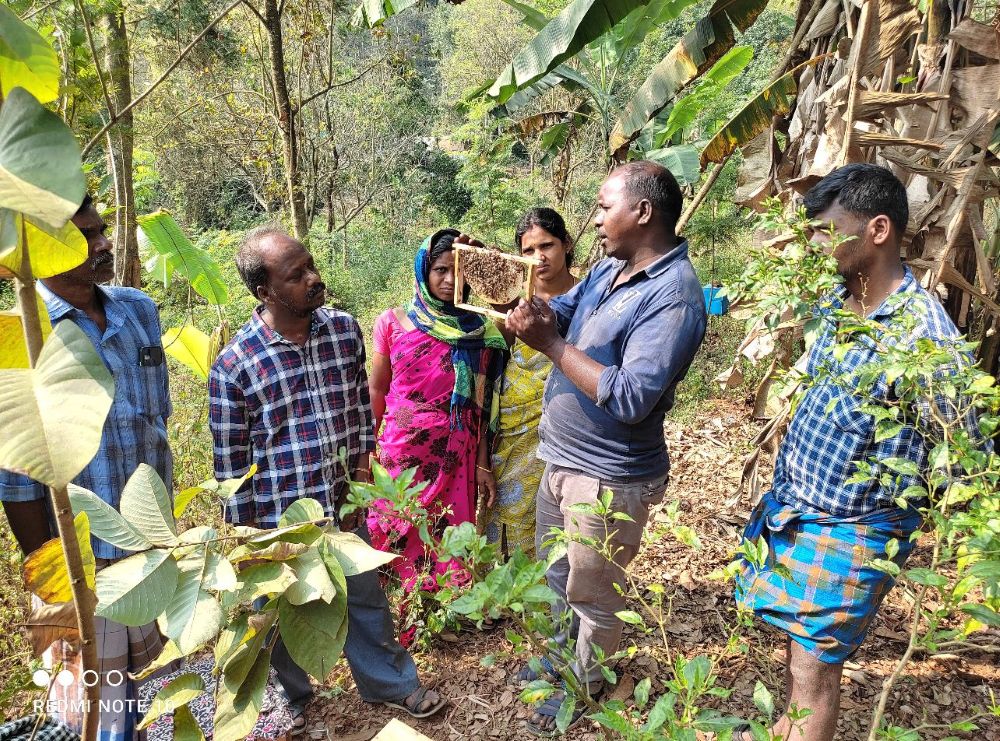
“In Ethiopia we are training farmers to better understand the importance of pollination and reduce their pesticide use, moving to more sustainable methods of pest management in their crops.
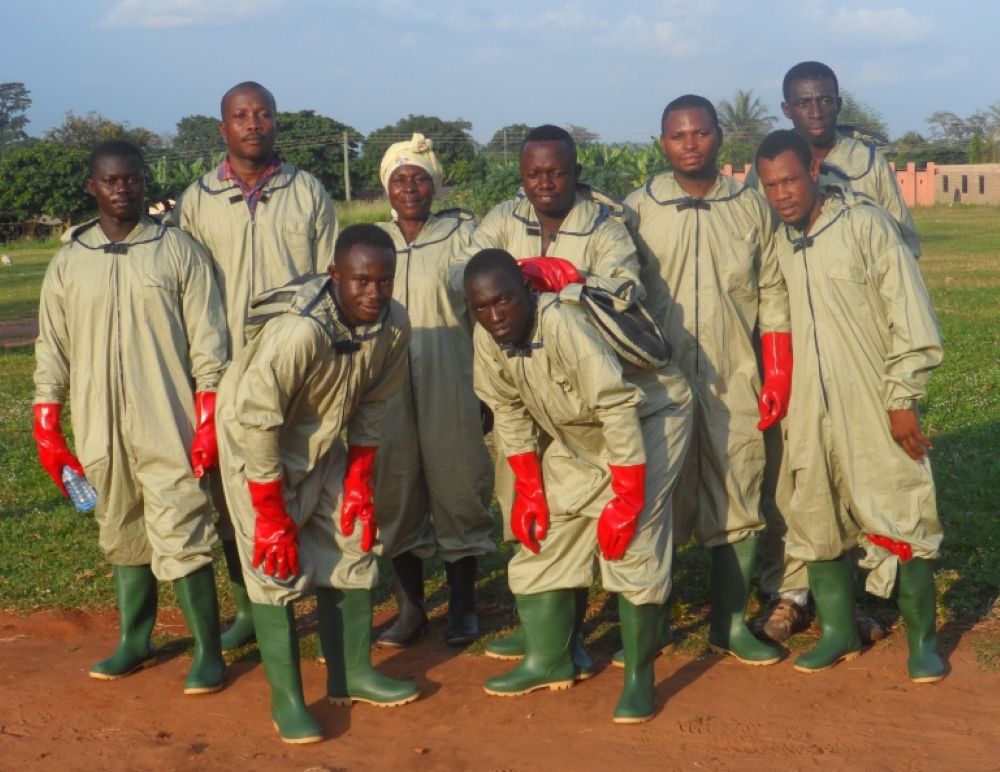
“Our work in Ghana is largely based around the protection of the forests in the Afram Plains. Through the development of a beekeeping industry in the area we are helping to turn charcoal burners into beekeepers who can protect their forest resources from fires and logging.
“We are also developing skills and knowledge in environmental protection and beekeeping through our Buzz Club programme which focuses on primary school children.
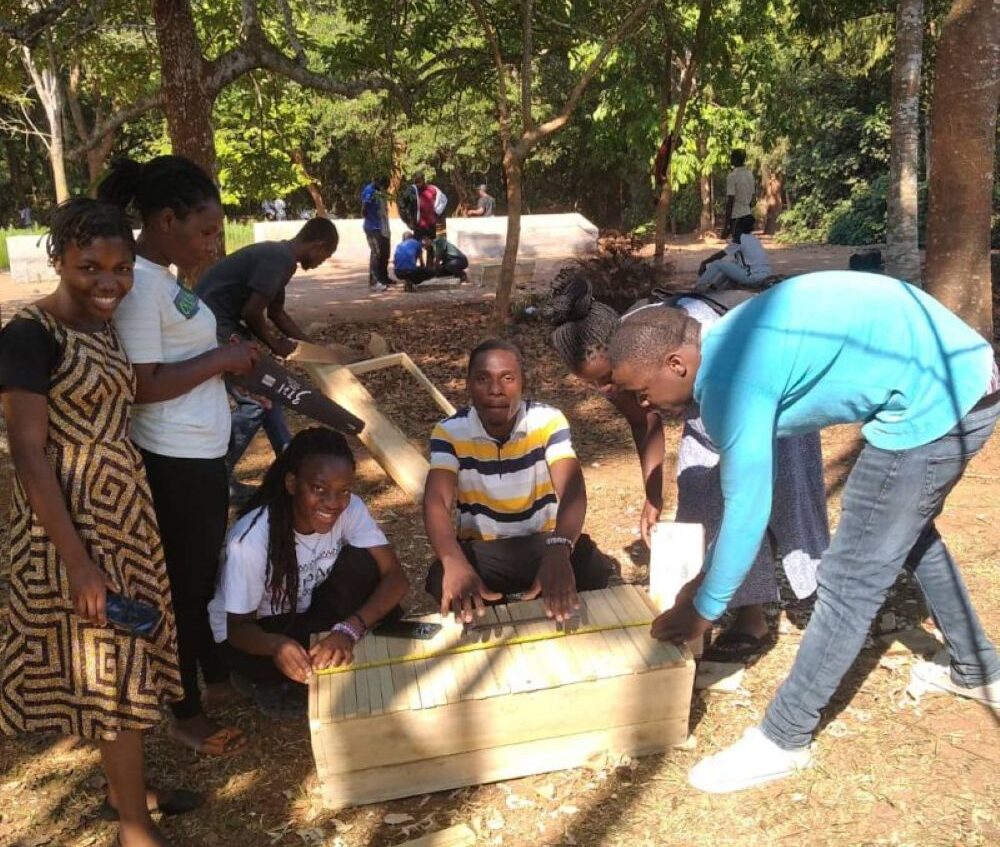
“Uganda is focused on supporting those who have previously been excluded, with specific projects focused on supporting women and people with disabilities to become beekeepers. We have also been working with the Batwa people who keep stingless bees and produce stingless bee honey.
“Similarly in Peru, we are working with the indigenous Ashaninka people to develop their stingless beekeeping and the trade in stingless bee honey.
“While in Malawi we are helping to establish a national association for beekeepers and traders to have a place to raise their concerns and seek help on a national scale.
Finally our work in Zimbabwe is focused on helping women beekeepers who are protecting and restoring areas of Miombo woodland.”
Ongoing challenges
Like many other small charities, funding remains a key issue that Bees for Development face.
“We are a small charity, with a small team and we endeavour to deliver our work with maximum value for money. The truth is raising money costs money.
“Getting our message across, meeting the right people, attracting supporters and donors is certainly a challenge for us. And it only seems to get harder!
There are other challenges that they face too: “Increasingly in the countries where we work there is a rising use of pesticides which harm bees. And despite their best efforts and motivations, beekeepers cannot counter all the threats facing our natural world.
“Changes in land use to intensive agriculture is a challenge as is climate change. Bees and beekeepers try and adapt to climate change, but it’s hard.
“Where they are accustomed to harvesting honey in February (for example) – they sometimes find drought or excessive rain has altered the flowering season and they get less honey or have to wait until a later season.”
Getting involved
The charity is encouraging people in Wales to get involved, and there are a variety of ways to do so.
“Subscribe to our newsletter, consider setting up a monthly direct debit with us to help support our projects around the world or come along to the events we’ll be organising and attending in 2026.
“We have offices in the town of Monmouth and are always open for a tea or coffee and a chat about our work – please feel free to pop in and say hello!”
For those who are looking to get started in beekeeping, they also provided some practical advice:
“Consider joining your local Beekeeping Association! These groups offer a wealth of knowledge and experience for budding beekeepers as well as offering training opportunities, social get-togethers and support.”
More information can be found on the charity’s website.
Support our Nation today
For the price of a cup of coffee a month you can help us create an independent, not-for-profit, national news service for the people of Wales, by the people of Wales.



There has been a three fold increase in the price of locally made honey since Covid…