

The secrets of the Ogmore stone
Graham Loveluck-Edwards
Here in Wales, we have many ancient, engraved stones which capture something fascinating about our past.
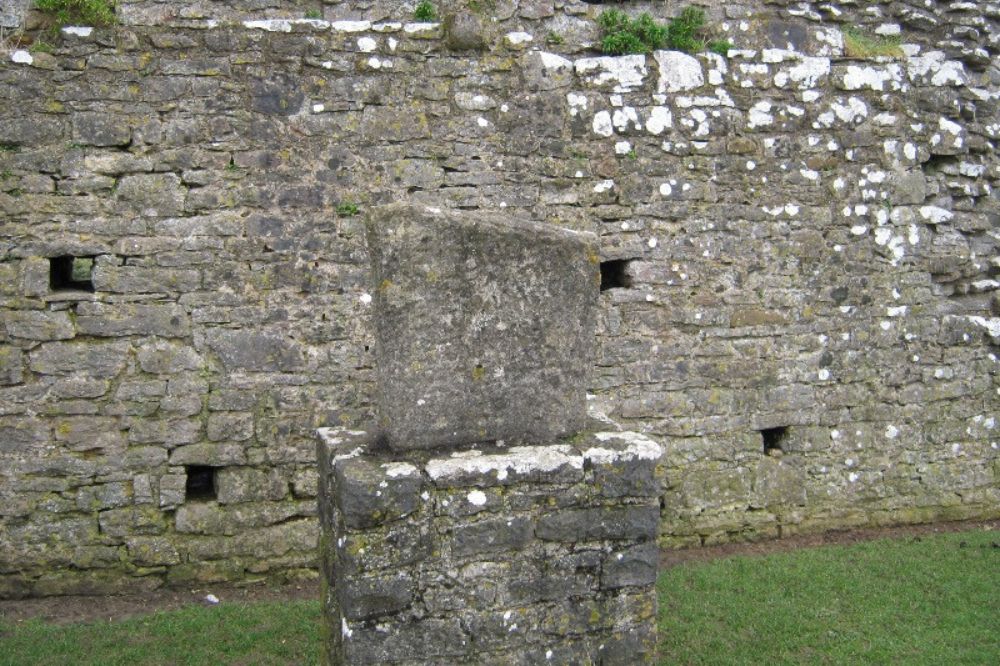
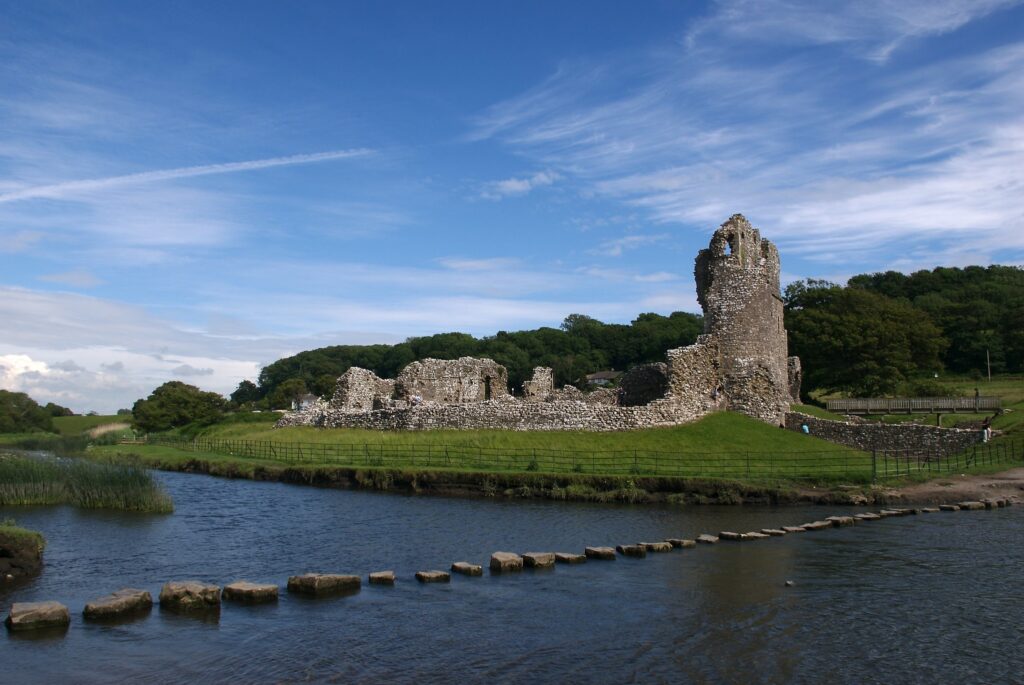
A favourite of mine was found in Ogmore Castle in 1929 and a replica of it is displayed on a plinth in the castle to this day.
It was originally part of the base of standing stone cross. The cross itself is no longer at the same site but is quite likely to be one of the ones displayed round the back of St Teilo’s Church in Merthyr Mawr. They are all that is left of a monastic cell which stood somewhere between the village of Merthyr Mawr and Ogmore Castle in the Sub Roman or Early Mediaeval period.
As much as this stone has a lot to tells us about our past, it is not without its controversies.
The engraving on it is very faded but is believed to say: “Sciendum est omnibus quod hoc ager a Arthmael datur ad gloriam Dei et Gliguis et Nertat et Filie episcopo” which translates as “Let it be known that this portion of land is given by Arthmael to the glory of God and to Gliguis, Nertat and Filie the Bishop”.
This tells us a few interesting things…
Deed of Transfer
First of all, that the land where this stone cross once stood was given to the church by a man called Arthmael. This was quite a common thing for people to do throughout the medieval period. It was seen as a good way of atoning for your sins.
Secondly, the language the engraving is written in is a very formal style of Latin. So, this tells us that these are the words of well-educated person. Quite possibly a lawyer.
This stone therefore has to be one of the oldest Deeds of Transfer in Britain. After all, the information engraved onto it is an account of who gave land to who and on what terms.
So, an obvious question to ask at this point is “exactly how old is it?”.
I have found many sources including the Royal Commission on the Ancient and Historical Monuments of Wales (RCAHMW) that date the stone to the 11th C. However, I suspect it is 300 years older than that again.
We have some great clues to help us work it out its age, as we have the names of four people mentioned in it. Arthmael who presumably was a landowning lord and Filie who was a bishop. Find out who they are and you can more accurately date the stone.
Book of Llandaff
A good place to start is the Book of Llandaff. It was written by clerics under the patronage of Bishop Urban in the 12th C and it documents all the land which the Cathedral and Diocese of Llandaff laid claim to. It still exists and is in the National Library of Wales, in Aberystwyth.
According to the Book of Llandaff, Ffili (spelled with two Fs) was a Bishop of Llandaff at the turn of the 7th and 8th C. In fact, he was “Saint Ffili”. You may think that this is an obscure saint that you have never heard of, but I can assure you that you are more familiar with some of his accomplishments than you may realise.
For example, he established a monastery north of Cardiff. It suffered badly from pagan raids, so it had to be strengthened with the addition of some defences.
As such it was described by many as a Caer (fort) rather than a Llan (enclosed monastery or church). As it was established by St Ffili, its full name was Caer Ffili. Sound familiar?
There is also a place in Whitchurch known as “the Philog” which is also believed to derive its name from him.
As is Rhossili in Gower, which used to be known as “Rhos Ffili”. Ss and Fs often interchangeable in medieval texts. So he is a bigger deal than you may have realised.
So, what’s the controversy?
Suspiciousness
When the Normans took over Llandaff, they muscled in on a lot of land that had previously been the property of their neighbours at St David’s and Hereford.
They used this book to justify their actions, so it is known that some of the entries in it were altered, edited or just plain made up, to give them false claims to land they were not entitled to. That means it is not wholly reliable as a source.
But it’s OK because we have another source which talks about Ffili, and also mentions Arthmael.
The chronicles of a 12th C cleric called Caradoc of Llancarfan. Like the Book of Llandaff, he also places Ffili in the early 8th C, describing him as the grandson of St Gildas the Wise who we know to be a real person and from the right period. So surely that proves it? Doesn’t it?
Alas, once again, no. Because there are suspicions that the chronicles of Caradoc of Llancarfan have also been tampered with. This time by the bard known as “Iolo Morganwg”. Another unreliable source.
For me at least, however, there is enough evidence to be able to make the claim that the Ogmore stone “could be” the oldest Deed of Transfer in the country.
Anyone joining one of my history walks in the area in the coming months will hear me repeat this claim until someone proves me wrong. But I’ve got a funny feeling, that will never happen.
Or should that be “a funny Ffili feeling”?
Graham Loveluck-Edwards is an author and broadcaster specialising in the history and folklore of Wales. This summer he is running a festival of history walks throughout Glamorgan. More information and tickets available from www.grahamloveluckedwards.com.
Support our Nation today
For the price of a cup of coffee a month you can help us create an independent, not-for-profit, national news service for the people of Wales, by the people of Wales.



The fact that it is written in Latin may also indicate formal use of a legal language not in common speech. I believe that Welsh state records continued from Roman administration in local government at least in Gwynedd. These were written in Latin. You need an expert opinion but it is worth considering.
Was at Ogmore Castle few days ago and wondered what this odd stone was. Very interesting explanation.