

The Senedd’s lost leaders
Desmond Clifford
As we enter the final furlongs of this Senedd, journalists are asking what next? Maybe it’s also a good moment to look back.
Who, if the political cards had fallen differently, might have been good First Ministers? Who are the Senedd’s lost leaders?
Labour has been in power continuously since 1999 so everyone who had a shout will, it’s reasonable to conclude, have had a shot at power.
There’s just Jeremy Miles, who many thought might have made a decent First Minister but who has now ruled himself out. So, let’s consider Plaid Cymru, the Liberal Democrats and the Conservatives.
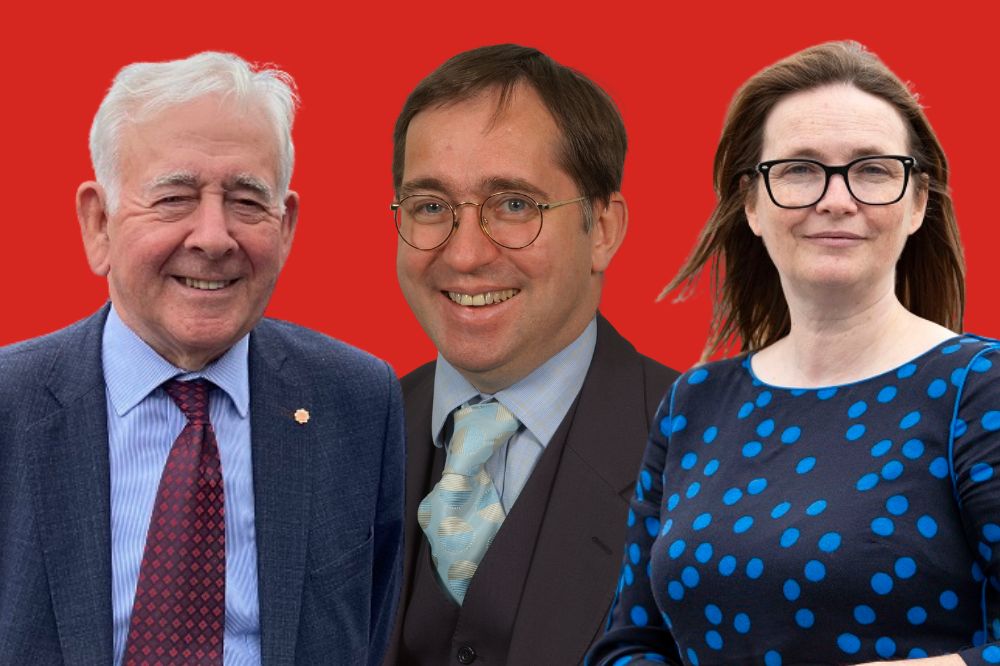
I’ve come up with three names: Dafydd Wigley, Kirsty Williams and David Melding.
Lost leader
Wigley is certainly Plaid’s lost leader. Although he was a founding member in the Assembly’s first term and served as Plaid’s opposition leader after their promising result in 1999, devolution came just a little too late for him. He ended his elected career relatively young, though he’d already served 30 years.
Happily, he later resurfaced as an active member for Welsh interests in the House of Lords.
Wigley was first elected to parliament in 1974 and, along with Dafydd Elis-Thomas and other modernisers, helped transform Plaid Cymru from a cultural movement into a modern party with broad Wales-wide appeal.
He was a key figure during the 1997 referendum campaign and a close ally of Ron Davies.
Had the latter become First Minister, Wigley may well have been offered a cabinet post on day one. As events turned out, neither of them made it into government. By the time Plaid did, as part of the 2007-11 coalition with Labour, Wigley had gone and it was Ieuan Wyn Jones who, as Deputy First Minister, became Plaid’s first government office holder.
As a journalist I recall being sent, I think in 1991, to interview Wigley as he came off the platform from addressing Cardiff Chamber of Commerce. Bear in mind, Plaid then was not the established party it is today, and this probably light-blue audience was by no means Plaid’s tribe. Wigley had them eating from his hand. He looked and sounded, in many ways, just like them – only that he happened to believe in Welsh independence too.
Centrism
Sensible centrism was the basis of Wigley’s appeal. He had that priceless political asset of somehow seeming all things to all people. I think of him as a centre point, not on a spectrum but in a circle, able to touch the circumference at practically any angle. I don’t infer from this a lack of principle, but a general appeal. He’s one of few politicians I can think of who, with a small nudge of the compass, could have made a fist of it in any of the major parties.
With a few caveats, I could see him as Enterprise Minister in John Major’s government and as Home Secretary in Tony Blair’s. I could see him sitting alongside Lloyd George in the coalition as Chief Secretary to the Treasury (an unhistorical fantasy since they represented the same seat!). I could certainly have seen Wigley as First Minister in Cardiff Bay.
I see all these possibilities without surrender of his essence; good sense, integrity, pragmatism – doing what works.
What kind of First Minister might he have been? He would have projected Wales with vigour, articulated big ambitions and he’d have whipped the system with urgency. He would have hassled London for more money and powers night and day, and he would have got it or made them demented. Then he’d have gone back for more.
He would have been the most financially literate First Minister; business finance was his pre-politics day job. He’d have chased investors around the world and, I suspect, brought them to Wales, even if kicking and screaming while held in an arm lock.
His tenure would not always have been comfortable, and some eggs would have been cracked. He would have overreached, and not everything would have worked – but he would have been energetic, determined and purposeful.
Persuasion
Kirsty Williams was also a founding member of the Assembly, one of six Liberal Democrats elected in 1999. By 2016 she was the last Lib Dem standing so she resigned the party leadership and joined Carwyn Jones’ administration as Education Minister.
She was good at it, too. She got more money for schools and introduced the new Welsh curriculum, now in effect, which most observers seem to agree is a positive step forward. Schools were central during the Covid pandemic, and she managed a tricky education cohort as well as anyone could have, with a combination of persuasion, firmness, flattery and cajoling.
Williams first came to prominence during the 1997 devolution referendum. Still in her twenties, she was the positive voice of youth for the Yes campaign, facing off against the No campaign’s David TC Davies, a rather scowling presence when the cameras are on but perfectly pleasant once they’re off.
Kirsty was optimistic, fresh and spoke human. She was a major asset to the campaign, and it provided a launch pad for her membership of the Assembly in 1999, one of its youngest members.
Her misfortune was to be tied to the Liberal Democrats during their extraordinary demise in Wales.
Partly for sentimental reasons, Wales had a kind of special relationship with Liberalism which was mostly killed off when Nick Clegg abandoned a pledge not to raise tuition fees. The party has struggled in Wales ever since.
Kirsty Williams was in the Senedd for 17 years before she had a shot at government. The vivacity of the referendum campaign dulled over time but she became expert at asking hard-to-answer questions of ministers.
In government, she was a natural. She was practical, generally liked by her colleagues and focussed on what could be done. Around the cabinet table she was streets ahead of most in her political acumen.
Empathetic
Had she been in Welsh Labour, she would certainly have been First Minister. Her public demeanour was empathetic. She came from Llanelli but married into a Brecon farming family and so, in her own life, combined two sides of Welsh experience; it’s a rare politician who appeals equally in rural and urban Wales. She had been sleep-walking in the Senedd and her experience as a minister re-energised her and brought her back to life politically.
She joined the Lib Dems at fifteen years of age; had she made a different choice, she could have been First Minister.
David Melding, too, was a founding Member of the Senedd from 1999 till he stood down in 2021. He is one of few Conservatives who engaged positively with devolution and used it to promote his values. Nick Bourne, the Conservatives’ first leader, had campaigned against devolution but accepted the public’s verdict and went a long way to making his party a responsible participating partner in the political process (not at all easy with Rod Richards nipping at his heels!). As a result, ministers were prepared to discuss deals and in 2007 the Conservatives came within a hair’s breadth of joining a Rainbow Coalition to keep Labour out of office – a deal sunk, quixotically, by the Liberal Democrats, who thus rendered themselves politically pointless.
Tundra
Afterwards the Conservatives entered a long tundra under Andrew RT Davies who was determined only to take them as far away from power and influence as possible. The summit of ambition for Conservative members was to escape the Senedd and bag a seat at Westminster.
It was a hostile environment for the liberal, emollient and popular David Melding. His major expertise was constitutional affairs. He was a pro-devolution Conservative and wanted a future in which Wales and the United Kingdom were firmly and positively embraced together.
He became deeply concerned at the UK Government’s nihilistic approach both to Wales and to Brexit negotiations. He resigned from the Conservative frontbench in protest at the UK Internal Market Bill which allowed the UK Government to act in devolved affairs (the Welsh Government was viscerally opposed to this when Conservatives were in power but strangely lost interest when Starmer was elected, even though it is still used today to undermine Welsh interests).
Melding served with distinction and gravitas as Deputy Presiding Officer and would almost certainly have been a shoe-in for the Llywydd post in 2016 had he wanted to do it.
Sadly, he suffered nervous anxiety, a condition which, bravely, he spoke about publicly, and lacked the appetite. In many ways, Melding’s approach and personality belonged to a gentler and more civilised age.
The piranha fishbowl of contemporary politics with its online abuse, intolerance and brain-drained populism is enough to put most people off, a huge problem for democracy.
Melding would have made an excellent Llywydd and through his long Senedd career he showed what constructive politics from the centre right could look like.
That tide is out right now but one day Welsh Conservatives, if they’re still there, may appreciate clearly what they had and what they lost.
Support our Nation today
For the price of a cup of coffee a month you can help us create an independent, not-for-profit, national news service for the people of Wales, by the people of Wales.



I’m sorry, but as someone who works in the education sector, Kirsty Williams was utterly useless in the job of Education Minister!
As always Des, an excellent article and analysis.
Very well said. I was a fan of Desmond but Kirsty has no idea.