


The tricentenary of Sarah Wesley
Norena Shopland
The month-long celebrations around International Women’s Day are coming to an end, and a fitting time to remember Sarah Wesley, born three hundred years ago in 1726.
She was the fifth of nine children to Welsh squire, Marmaduke Gwynne and his wife Sarah at Garth, Breconshire.
Marmaduke had converted to Methodism, so when John Wesley was on his numerous and influential tours of south Wales, Marmaduke was eager to welcome him.
John’s brother, Charles Wesley, a part-time itinerant Methodist preacher, also visited the Gwynne’s home in August 1747 and met the twenty-one-year-old Sarah (usually called Sally).
Almost immediately, she and the forty-one-year-old Charles, felt a connection. For eight months they corresponded, the relationship slowly growing into romantic love with him writing, ‘Never have I found such a nearness to any fellow-creature as to you.’
Charles was a prolific hymnwriter, writing over 6,500 including Hark! The Herald Angels Sing and the iconic Christ the Lord Is Risen Today (originally Hymn for Easter Day) in 1739. Many were adapted from his love poetry to Sally.
His first to her begins, ‘Two are better far than one, / For counsel or for fight! / How can one be warm alone…’
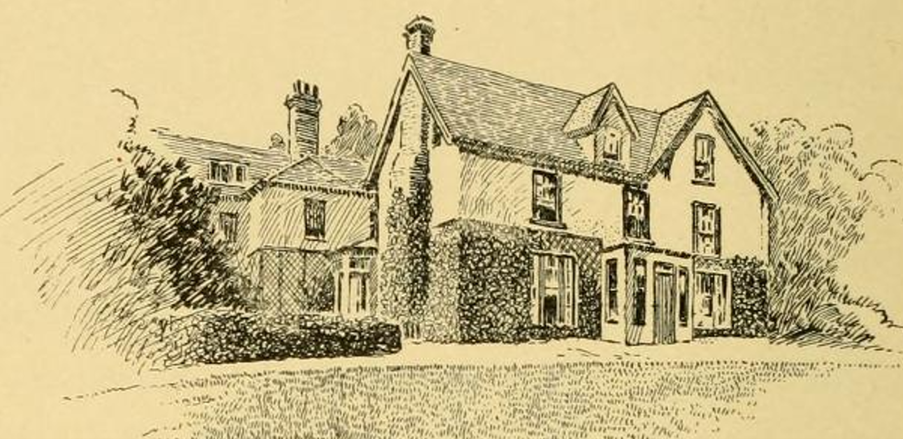
In March 1748, Charles returned to Garth, but he fell ill and was nursed back to health by Sally. In his journal of 3 April, he wrote: ‘At night my dearest Sally, like my guardian angel, attended me…I asked her if she could trust herself with me for life and with a noble simplicity she readily answered me she could.’
Despite their fondness for Charles, Sally’s parents were reluctant about the marriage as he had no regular income.
John too, was lukewarm, nevertheless, he assured an income of £100 a year for Sally from book sales and arrived from Bristol to marry the couple on the 8 April 1749.
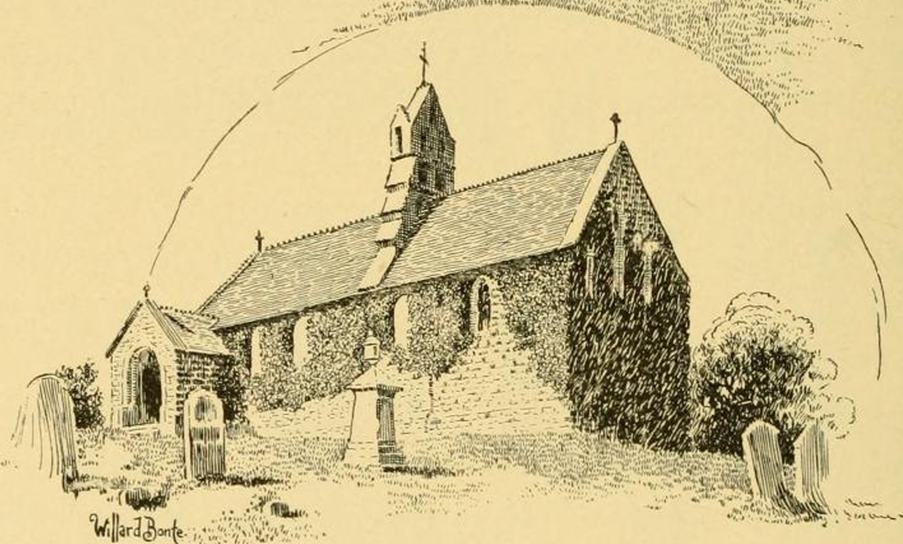
John wrote a brief note in his journal, ‘I married my brother and Sarah Gwynne. It was a solemn day, such as became the dignity of a Christian marriage.’ Charles however, was more effusive:
Not a cloud was to be seen from morning till night. I rose at four spent three hours and a half in prayer, or singing… I led my Sally to church… Never had I more of the divine presence at the sacrament….
Sweet day! so cool, so calm, so bright,
The bridal of the earth and sky…
Honeymoon
After a two-week honeymoon, Sally often accompanied Charles on his tours, sitting behind him on the horse and in later life would regaling visitors with stories of their travels.
They moved to Charles Street, Bristol and when he was away preaching, he missed her, ‘My heart is with you. I want you every day and hour. I should be with you always, or not at all; for no one can supply your place.’
When she was twenty-seven, Sally was infected with smallpox and for twenty-two days her life was in doubt while Charles dashed home from visiting a sick John.
Although she survived, Sally’s face was left disfigured leaving her looking much older, which Charles reassuringly said he preferred, as they now seemed more the same age. That year, 1753, their first child John was born, but died the following year.
Sally took the death hard, and kept a lock of his hair in a sheet of paper labelled: ‘My dear Jacky Wesley’s hair: who died of the small-pox… I shall go to him; but he shall never return to me.’ An equally distraught Charles penned the hymn, A Mother’s Act of Resignation on the Death of a Child.
Sally and Charles had five children, all dying young. Several letters survive from Charles trying to console his wife, and in one to him she wrote, ‘To walk always in the light of God’s countenance is most desirable, but some seem more highly favoured in that than others. I long to be one of those, but when will it be?’ It did happen, and their youngest three all survived.
Sally was an accomplished singer, passing on her love of music to her children. When her son was organist for King George III, the king asked her sing Handel for him. Even in her late life, people marvelled at her voice.
In 1771 the couple moved to London, Charles dying in 1788, followed by John in 1791.
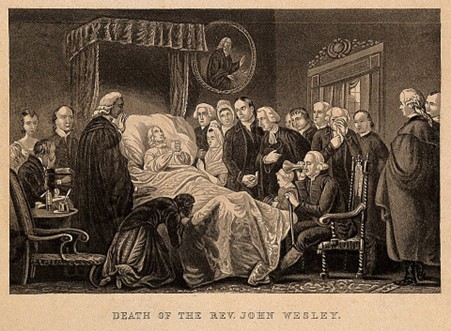
A painting by Marshall Claxton shows his death scene with, it is claimed, Sally weeping at the bottom of the bed while her daughter Sarah stands on the far left.
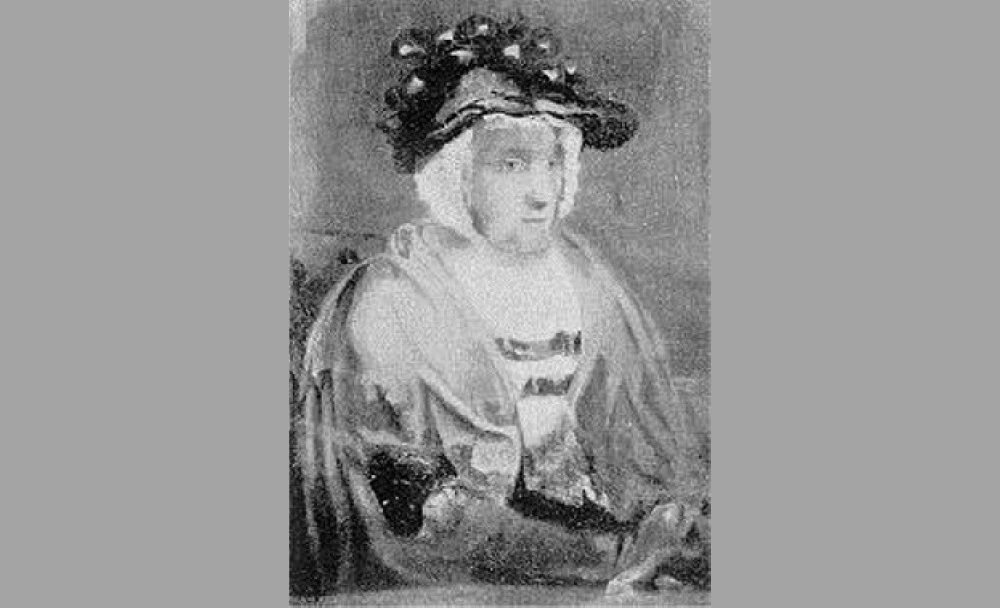
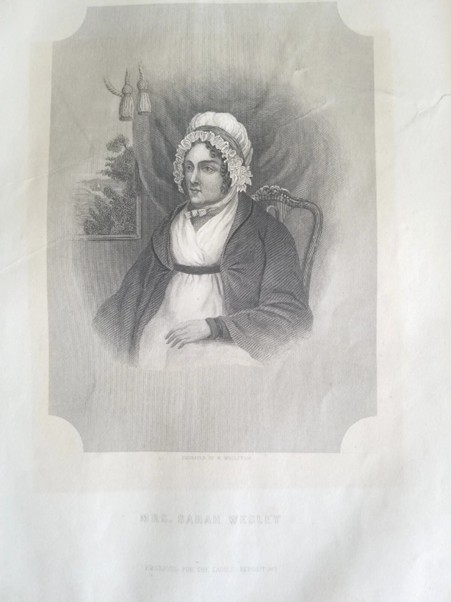
Two paintings of Sally are known, one by Thomas Blood when she was ninety-eight and a lesser-known etching from The Ladies’ Repository June 1867.
Sally died on 28 December 1822 and is buried with Charles at London’s St Marylebone Parish Church.
Support our Nation today
For the price of a cup of coffee a month you can help us create an independent, not-for-profit, national news service for the people of Wales, by the people of Wales.


