

The unintended consequences of decarbonising steelworks
Steffan James, PhD Candidate, Sustainable Supply Chains, Cardiff University
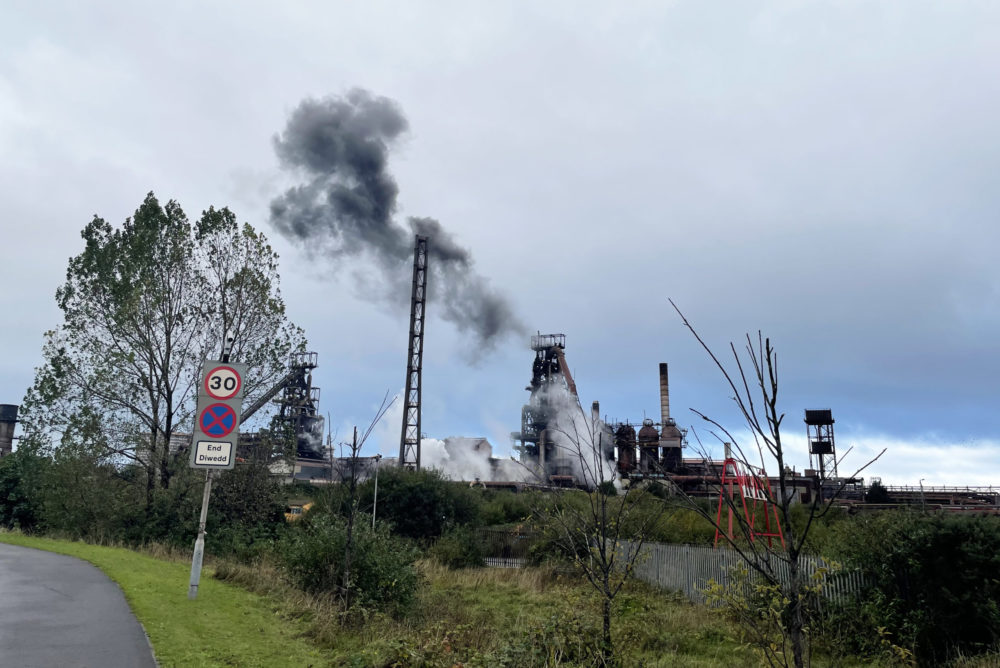
For more than a century, Port Talbot in Wales has been dominated by its steelworks. The daily lives of residents have been shaped by this industry. Shifts have set the traffic, sirens marked time, at night the furnaces lit the sky orange. Steel wasn’t just an industry. It was the rhythm of this place.
Where outsiders saw towers, smoke and steel, locals told me in interviews that they saw pride, beauty and belonging.
In 2023, the multinational corporation Tata Steel announced it would replace Port Talbot’s coal-fired blast furnaces with an electric arc furnace. The news felt inevitable after years of uncertainty. The promise of £1.25 billion of investment was cautiously welcomed when total closure was the other option. It would save 2,000 jobs, but another 2,000 would go. The shift was framed as a step toward a greener future.
Since that announcement, my PhD research has tracked the consequences of the action, conducting multiple rounds of interviews with a broad range of people to monitor unintended, or unanticipated, consequences as they arise.
Steel sits at the centre of overlapping, nested systems – from local communities to the national economy and global markets. Altering one part of a system sends tremors through the rest. Systems scientists describe this dynamic as panarchy: a concept from ecology that explains how interconnected systems operate at different scales and timescales, so change propagates unevenly and often in unexpected ways.
With this approach, focusing only on emissions risks a kind of carbon tunnel vision. Judging success by a single metric misses how one decision ripples into livelihoods, culture, mental health and identity.
Immediate surprises
When the blast furnaces shut, the change was immediate. The noise stopped. The air cleared. Residents told me how their windows were clean and when they left washing outside to dry, it no longer came in dusted grey. Families who had lived with industrial pollution for decades spoke of tangible relief.
In the short term, the local economy saw unexpected positive ripples. Redundancy payments and government transition grants meant more money circulating locally for a time and gave people the capital to try new ventures, from pizza making to dog walking. So far, 85 new businesses have been created.
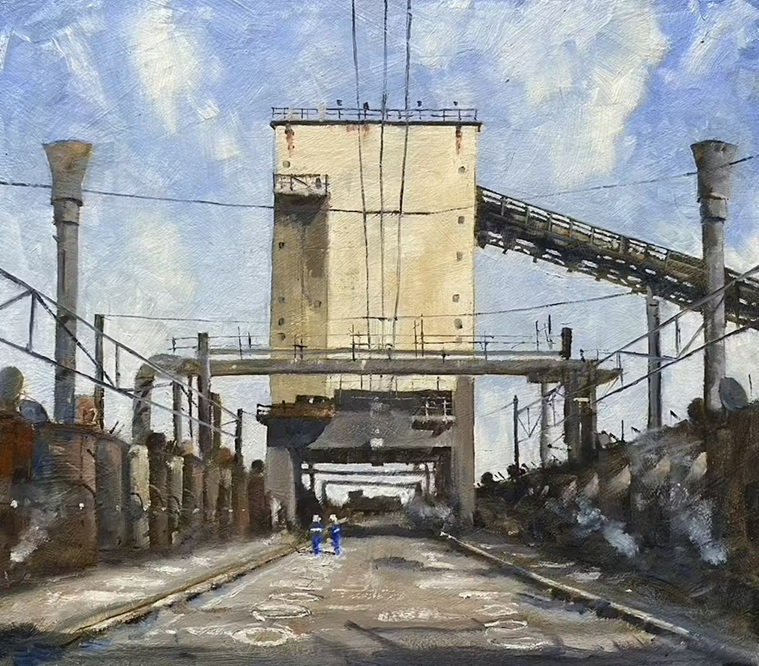
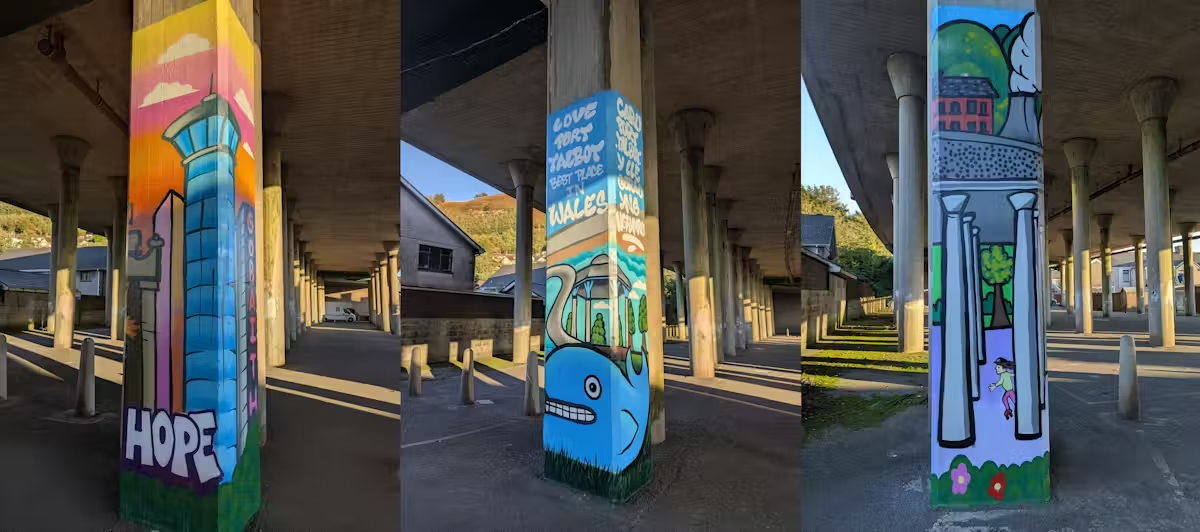
Creativity became a way to process change, loss and pride all at once. Schoolchildren painted murals beneath the motorway as they imagined a different future for Port Talbot. Artists captured the towering cranes on the beach before they made way for the new electric arc furnace. The town hosted Urdd Eisteddfod, Europe’s largest youth cultural festival and people celebrated.
But not everyone experienced these changes in the same way, or at the same time. After the immediate change came quieter, more troubling effects which emerged more slowly. Steelmaking wasn’t just a job. Many former steelworkers told me of the pride, dignity and identity it gave them. When the furnaces closed, loss of purpose, stress and depression followed in ways that don’t show up in emissions data or balance sheets.
The local economy shifted again too. The short-term boost from redundancy money faded. Businesses that relied on a large, stable workforce began to feel the loss. The town entered an uncertain medium-term phase, where opportunity and fragility coexisted.
A slow shift
Ecosystems don’t change overnight; they slowly reorganise over decades as conditions change. Port Talbot’s coast is a good example of a novel urban-industrial ecosystem, where industry has helped shape the conditions that wildlife now uses.
Alongside the steelworks, Eglwys Nunydd Reservoir – built to serve the site and designated a Site of Special Scientific Interest for its birdlife – sits alongside sand dunes that support nationally rare plants such as sea stock.
Because of this long coexistence of nature and steel, moving to an electric arc furnace won’t instantly restore or erase what’s there, but will gradually reshape the local ecology as species and habitats adjust.
The new electric arc furnace will cut the steelworks’ carbon emissions by about 90% – around 8% of the UK’s industrial total.
But the global picture is more complicated. As Tata shuts the blast furnaces in Wales, it is building a new one in Kalinganagar, India. Even before the announcement about Port Talbot was made, unions warned that this could export emissions rather than reduce them, shifting the carbon cost of transition thousands of miles away. Even the most modern blast furnaces still emit far more carbon than electric arc furnaces.
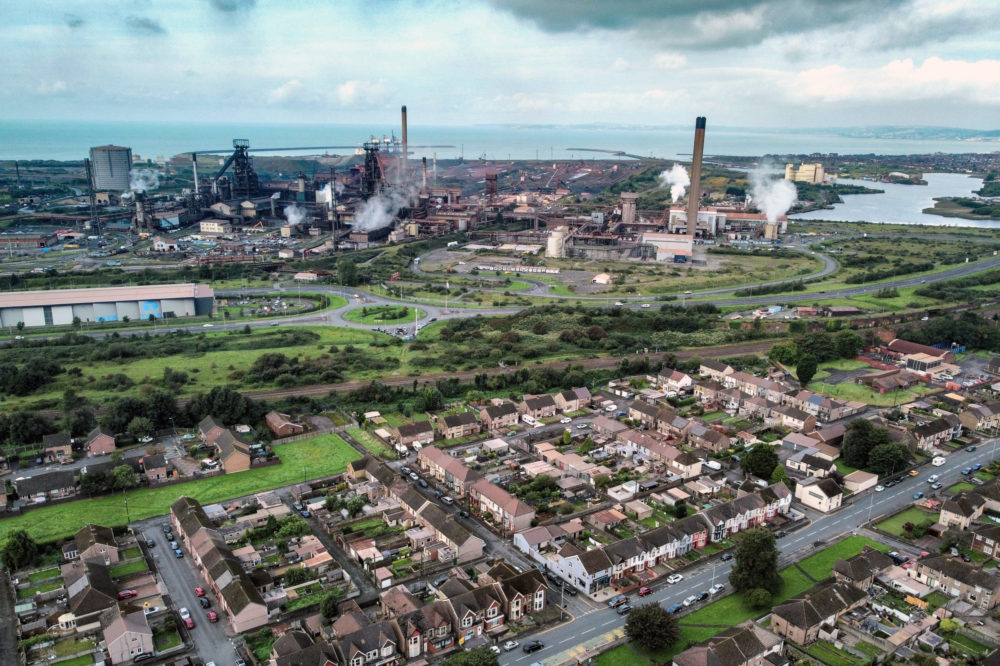
Heavy industry must change if emissions are to fall fast enough. But in places like Port Talbot, that change lands unevenly. Some residents see opportunity, others feel loss. Versions of this story are unfolding worldwide, wherever climate policy meets heavy industry.
Decarbonisation isn’t a quick technical fix, but a complex social, economic and ecological transformation whose success depends on how well we understand them. Complex effects ripple out over time at different scales.
Job losses are immediate. Ecosystems adapt more slowly. Consequences on our warming planet will take decades to become apparent. Achieving a just transition from carbon involves looking beyond single metrics to account for how change ripples through interconnected systems over time.
This article was first published on The Conversation 
Support our Nation today
For the price of a cup of coffee a month you can help us create an independent, not-for-profit, national news service for the people of Wales, by the people of Wales.



The two processes are entirely different, and EAF don’t make steel, but reprocess scrap, which I understand we were exporting due to a lack of capacity
Once we make the change to hydrogen reduction, virgin steel production will probably only happen where electricity prices are extremely low (much like aluminium smelters). The Middle East with mass solar for example
Shifting the coke process to India probably does make sense environmentally, given the 2.5 tonnes raw materials per tonne of steel we need to import, but you’d need to look at the end to end supply chain
Yes Tata are investing in hydrogen reduction, but at the Netherlands plant. No chance of this happening in the uk now sadly. A big part of the decision was access to green hydrogen, which they’re able to secure from Norway as well as offshore and onshore wind from northern Europe. Too much reluctance to make use of our wind resources in the UK. Too many lobbyists stopping that from happening!
Steel is an alloy of Iron and Carbon. Whilst it’s possible to reduce iron ore into liquid iron by fuelling a furnace with hydrogen, the carbon still has to be introduced later in the process to make steel. The idea that a hydrogen fueled furnace produces no CO2 is a myth. The coke ovens at Morfa were very efficient unlike that used in India. The whole arrangement increases net carbon emissions by merely exporting the problem offshore.
The question is what learning has come from other steel works closing around the world / new industries created not connected to steel?
We cannot rely on net zero on short term https://www.energyvoice.com/renewables-energy-transition/hydrogen/uk-hydrogen/593129/aberdeen-city-council-set-to-withdraw-from-hydrogen-hub-joint-venture-with-bp/
Really interesting PhD project. It could have real benefit if you can show what knock on effects are having a positive impact. Best of luck with it.
It’ll be interesting to know how the vast array of sme’s supporting the plant are coping with this transition. And how it’s impacting adjacent parts of the Tata business – such as shotton.
The blast furnaces at Port Talbot were one of the most efficient in the world. Spewing molten iron into converters, then using torpedo wagons to transport ‘toffee’ directly into the rolling mill. The idea that using electricity generated from fossil fuel to re-melt imported scrap or virgin steel from India helps the planet is utter stupidity. Electric Arc is just a work-around for an Indian conglomerate to get a toe-hold in European markets bypassing tariffs. Getting the taxpayer to pay for it to boot.