
The Welsh brain behind leading AI innovation
Stephen Price
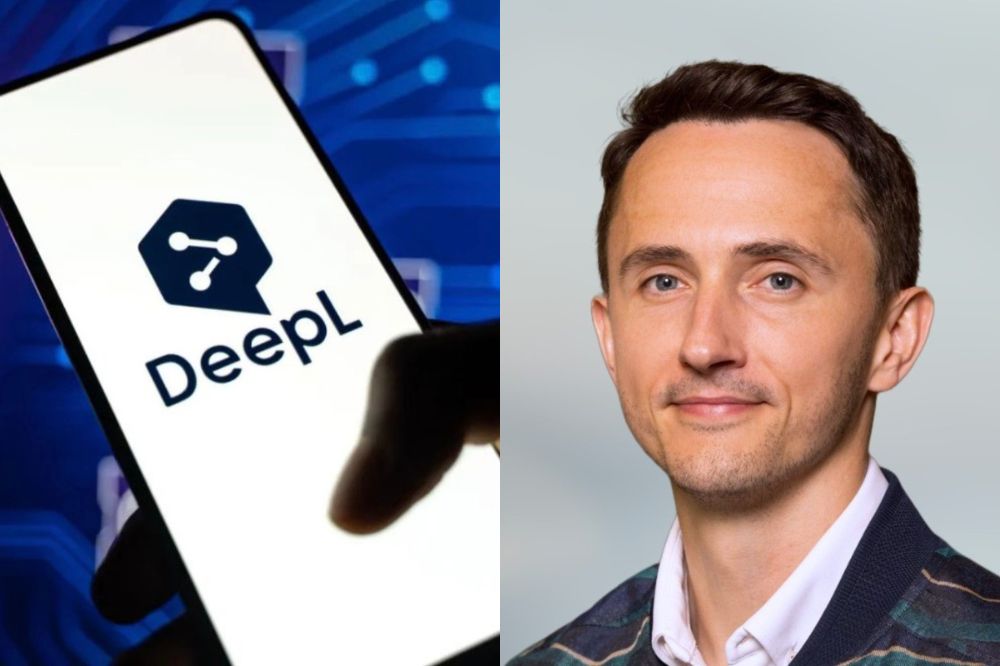
With AI stealing headlines and stirring controversy at its mere mention online, one of the leading figures in AI in Wales, who has helped to bring about a new Welsh language AI platform, chatted with Nation Cymru about its value, its misconceptions and how Wales might benefit from its growth.
Ed Crook is the Strategy & Operations VP at DeepL, a leading global AI product and research company which recently announced the introduction of Welsh on its Language AI platform.
This latest update brings the number of languages supported by DeepL Translator to over 100, which they say will help to remove communication barriers and help businesses around the world to drive growth and connectivity.
The inclusion of Welsh was personal for Ed, but the company hasn’t left it there, introducing languages as varied as Basque and Maori to the system which aims to help communities to connect and bridge communication gaps.
Hot on the heels of the Welsh language launch, we spoke with Ed about misconceptions around AI, how Wales might stand to benefit in AI’s relatively early days, and how green is their platform…
Congratulations on the Welsh language launch – why was this important for you to work towards?
The introduction of Welsh on DeepL is incredibly important, as it underscores that Welsh is a working language, not a historical curiosity. It also highlights DeepL’s commitment to supporting linguistic diversity by delivering precise, enterprise-grade translations, enhanced by next-generation LLM technology.
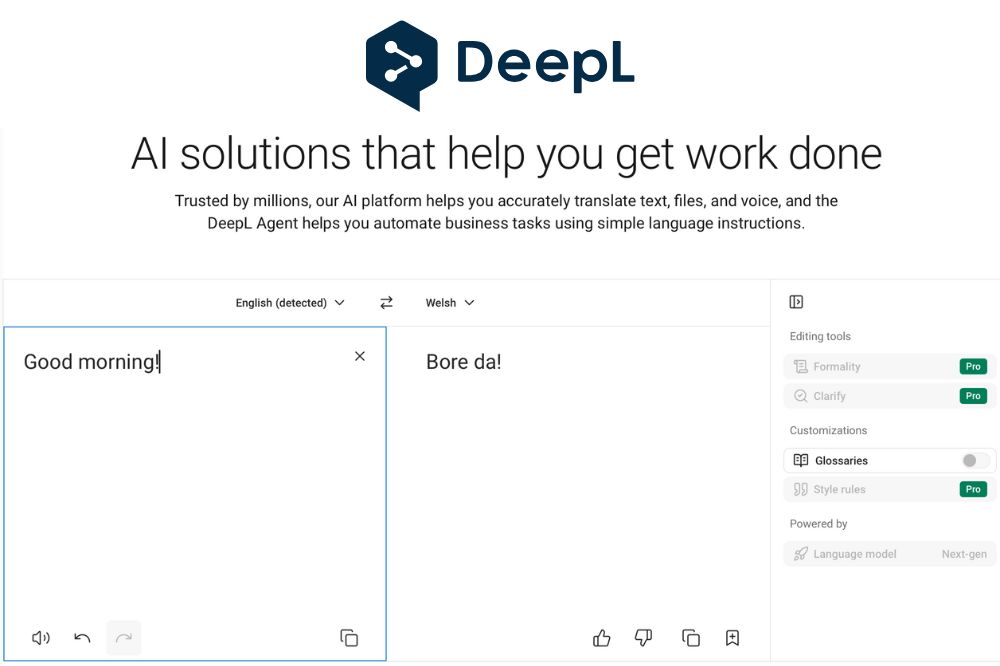
Welsh plays a critical role in the day to day lives of many people, and the active preservation of its linguistic heritage is important.
If AI tools are going to shape how people communicate in the modern world, Welsh has to be there too. Otherwise you quietly lock a language out of the future.
You’ve also got other minority languages on board – was there a personal reason behind this? And are there plans to expand further?
Including minority languages on the platform was also about meeting demand. Having those dialectical or linguistic nuances is really important for specificity.
And personally, I want to advocate for minority languages. DeepL is built on the promise of unlocking human potential, and that shouldn’t be limited to privileged groups only. So many technologies out there, even today, assume English as default.
But more broadly, it’s a principle. Technology shouldn’t decide which cultures get to participate fully in modern life.
As part of the Welsh launch, DeepL now supports over 100 languages, including Spanish (Latin American), Cantonese, Afrikaans, Basque and Maori, showing that high-quality AI isn’t just for global majority languages
How do you see Wales capitalising on the growth of AI?
Wales has a real opportunity to grow alongside technology. Recently, £2.1m was announced as funding to empower Welsh SMEs, entrepreneurs and microbusinesses to integrate AI.
Wales already has strong industry foundations, including high value manufacturing, public sector innovation and creative industries. AI can support all of that, from better bilingual services for local people, to exporting Welsh creativity and expertise globally.
The key is using AI as infrastructure, not as a gimmick. Tools that help people work better in Welsh, not tools that push Welsh out of the way.
How much has language diversity impacted the business you are today?
We hire teams as diverse as our customer base, and that includes linguistic diversity. It’s shaped how I think about inclusion and responsibility in technology, and being more alert to who gets left out by default systems. And awareness isn’t something that is just for show. There is a need to start designing products that recognise the real diversity of how people live and communicate.
AI still has a ‘dirty word’ reputation – fears about art, jobs, water use. What needs to change?
AI isn’t uniquely dangerous compared to other technologies that consume energy or reshape work. However, it’s true that access has outpaced education. When people see AI doing useful jobs then it contributes value. It can be used for helping clinicians make faster decisions, improving accessibility, or enabling people to work and communicate in their own language. This is where the conversation becomes more grounded.
The responsibility is on companies to be specific and transparent. For instance, what problem is this model designed to solve, what data does it use, what does it cost to run, and where are its limits? Trust doesn’t come from sweeping claims about ‘AI transforming everything’, but from evidence that a particular system delivers real value without unnecessary collateral impact.
Another fear is that AI will ‘dumb us down’ – that it replaces effort and learning. What would you say to that?
That risk exists when AI is positioned as a substitute for thinking. But that’s a design and deployment choice, not an inevitability.
The most effective systems aren’t general-purpose replacements for human judgment. They’re specialised tools that support specific tasks. In that sense, AI should be a scaffold, not a crutch; something that helps people perform better in context, rather than absolving them of the need to think at all.
To give you a very personal example: I use DeepL Translator every day, and I still choose to learn new languages (Italian currently). There is value in the process of learning, which AI complements but doesn’t replace.
On that note, how ‘green’ is DeepL?
Sustainability is something we take seriously at DeepL.
We invest heavily in efficient AI systems that reduce unnecessary computing power. Language AI is far less resource-intensive than many generative use-cases people associate with AI headlines.
There’s always more to do, but responsible AI means being conscious of environmental impact alongside social ones. We’ve signed up to SBTi, CDP and last year launched our first sustainability page, making our commitments more visible.
And finally – what’s the future for DeepL?
We’ll keep doing what we’ve always focused on: quality first. As a leading global AI product and research company, we have a strong heritage in AI model design, and we want to use that to expand our products. Last year we launched DeepL Agent, a general-purpose AI agent designed to autonomously handle a wide range of business tasks.
We’re constantly looking at the ways we can improve our AI design. That means better services, including more languages offered, but also wider AI services and tools that fit into real working lives – not flashy demos that don’t scale.
Welsh joining the platform is part of that future. It says something simple but important: modern technology should adapt to people, not the other way around.
Learn more about DeepL and experience Welsh language AI at work at www.deepl.com.
Support our Nation today
For the price of a cup of coffee a month you can help us create an independent, not-for-profit, national news service for the people of Wales, by the people of Wales.



Top marks for introducing Welsh and other minority languages to an AI future