

The Welsh POWs who survived Japan’s captivity, and their activism for remembrance and reconciliation
Helena F. S. Lopes
Eighty years ago, on 16 August, Les Spence wrote in the diary he secretly kept at the prisoner-of-war (POW) camp he was held in in Japan: ‘What a day. It will live in my memory’. He added later in the same entry: ‘I feel sure that the war is over. The men who have just arrived say they have been told it’s finished’.
Nowadays we celebrate 15 August as V-J Day, but for those on the ground in 1945 the end of the war was not a certainty for at least a while.
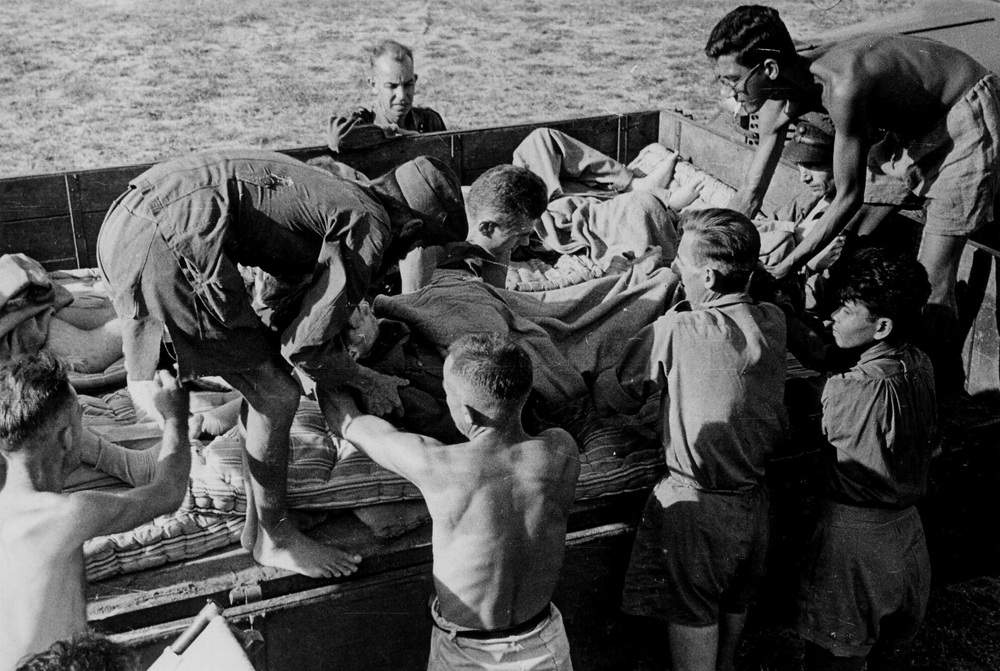
Inside POW camps, change was not immediate. Peace only felt tangible when food arrived, dropped by US forces: a restoration of basic humanity after years of dehumanising torment. Japan’s surrender was only officially signed on 2 September. Many POWs waited days, even weeks for release, and months to be able to return home. The experience left profound marks on all who survived it.
According to the British Legion, 140,000 Allied personnel from Great Britain, the Commonwealth, the United States and the Netherlands were captured by Japanese forces in the Second World War. The majority of those who served in the South East Asia Command ‘were from Commonwealth and Empire forces’.
Survivors
Figures vary, but one third to one fourth of British servicemen captured by Japan are estimated to have died or gone missing, a much higher rate than those captured in Europe. Many survivors were so traumatised they preferred not to talk about what they went through for the rest of their lives. A few eventually wrote and spoke up so future generations would not forget.
Les Spence excelled in sports. He had been the captain of Cardiff Rugby Club before the Second World War. Trained to fight in Europe, he was sent to Asia instead, serving in the 77 th Heavy Anti-Aircraft Regiment of the Royal Artillery. He was captured in Java, Indonesia (then under Dutch colonial rule), and was later sent to Fukuoka Camp #8, Inatsuki, in Japan. At least twenty-three other Welshmen were in this camp.
Spence survived, and remained connected to sports, going on be president of the Welsh Rugby Union in 1973-74. In the 1990s, excerpts of his wartime diary were posthumously published in the South Wales Echo, and later in a book, From Java to Nagasaki, edited by Greg Lewis. Despite his harrowing experience in POW camps, after returning to Wales Spence was involved in encouraging reconciliation with Japan through sports, including via visits of the Welsh and Japan rugby teams to each other’s countries. He wasn’t alone in his commitment to reconciliation.
Poetry and prayer
Frank Evans, from Llanwenn, was captured in Hong Kong in December 1941 when he was serving with Royal Army Pay Corps. He was incarcerated in the Shamshuipo and Argyle Street camps in the then-British colony, and afterwards taken to Oeyama camp near Osaka, where he was forced to work in a nickel mine and a factory. He would be freed after the war ended, returning to Wales.
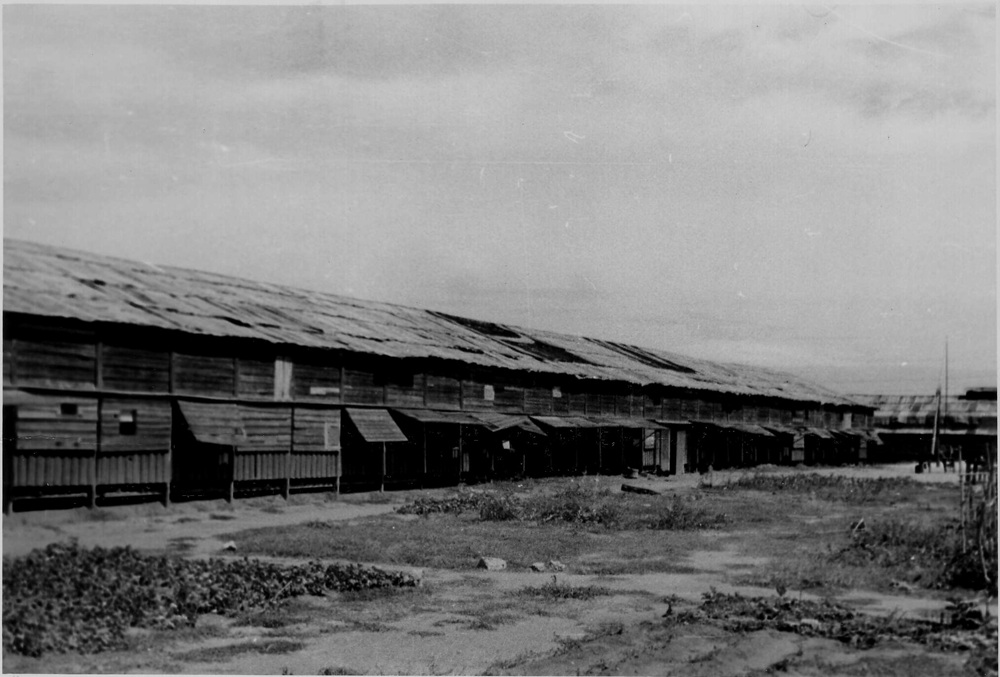
In captivity, Evans took solace in poetry and prayer, and the Welsh language played a key role in his efforts to withstand his ordeal. Evans, too, kept a diary of his experience. Passages of it were integrated in his war memoir, Yn Nwylo’r Nippon, published in Welsh in 1980, with an updated English language version, Roll Call at Oeyama, coming out five years later. Like Spence, Evans was committed to reconciliation, fostering links between Aberystwyth – where he moved after the war – and Kaya-cho, where the Oeyama camp had been located.
A different, but no less important case of activism is found in Jack Edwards. Originally from Cardiff, Edwards was captured in Singapore while serving in the Royal Corps of Signals. He was forced to perform horrific tasks there and, later, in the Jinguashi/Kinkaseki camp in Taiwan (then a Japanese colony). Like Evans, he too was subjected to force labour in mines, in his case of copper. Only around 12% of those in that camp survived.
On 17 August, Edwards was still doubtful the conflict had ended: ‘A day of speculation. Is it or is it not?’. Only the next day the promise of peace seems to have become reality, and among the ad-hoc celebrations, Edwards recounted singing Welsh hymns with the ‘few Welshmen’ in that camp.
Campaigners
Immediately after the war, Edwards played an important role aiding a war crimes investigation team in Taiwan, finding a file that had planned the killing of all remaining POWs in his camp. After a brief return to Wales, he moved to Hong Kong where he became arguably the most vocal campaigner for honouring those who served in East Asia during the Second World War: not simply those from the British Isles, but from across the world.
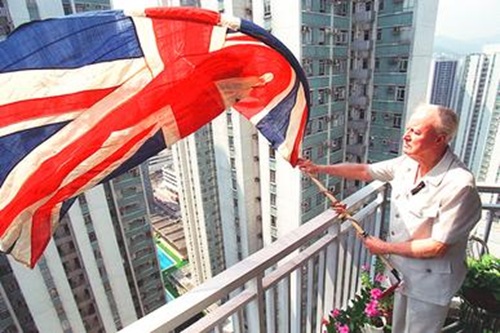
His activism was determinant in ensuring the recognition of Chinese veterans who served with the British armed forces in Hong Kong and in guaranteeing some government support for their widows – a cause he battled for decades. He lectured on his experience, guided tours to cemeteries, assisted family members track graves of their missing relatives, and published a memoir, Banzai You Bastards! in 1990. It ended with a powerful conclusion: ‘The Allies rebuilt Japan and Germany and Italy. Nobody rebuilt our lives. The tears and nightmares will remain till death. I’m willing to forgive. None of us should forget’.
That enduring commitment to remembrance is something that, in different ways, Spence, Evans, and Edwards shared. All left important testimonies that allow us to study and remember the extreme conditions of military captivity in Japanese-occupied Asia. Their testimonies also give us glimpses of how connections to Wales were maintained in extreme circumstances: when Welsh songs and Saint David’s Day celebrations brought camaraderie and comfort amidst wartime violence and misery.
Dr Helena F. S. Lopes is Lecturer in Modern Asian History at Cardiff University, specialising in the Second World War in East Asia and its aftermath. With colleagues at other Welsh universities, she is involved in a research project on Wales-Asia connections. If you have stories of Welsh POWs and civilian internees in East Asia that you are willing to share, please contact her at [email protected].
Support our Nation today
For the price of a cup of coffee a month you can help us create an independent, not-for-profit, national news service for the people of Wales, by the people of Wales.


