


This Life at 30: Groundbreaking TV – with Welsh representation at its heart
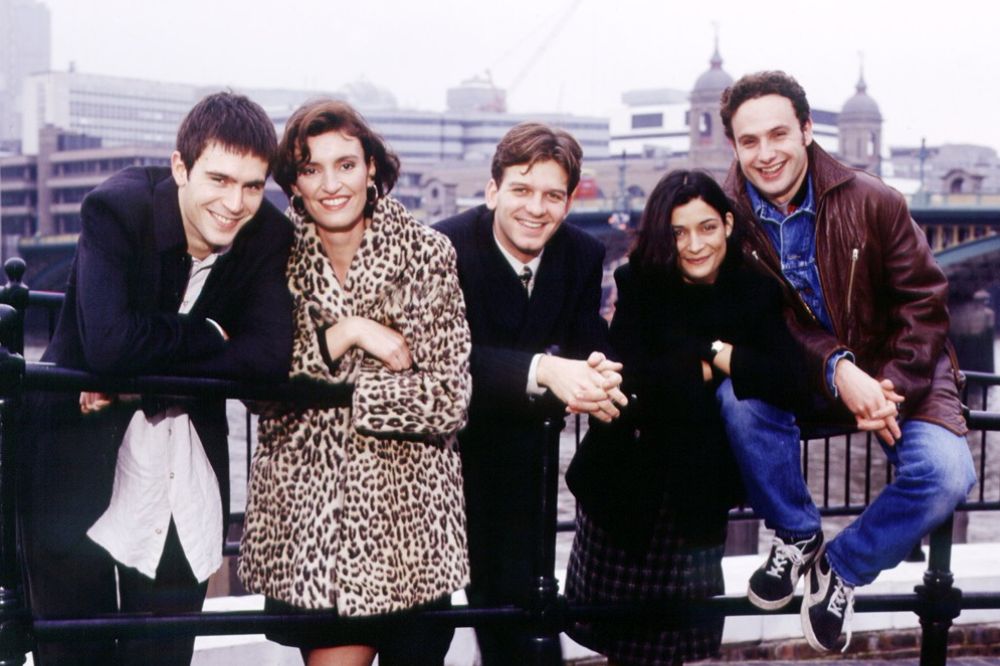
Stephen Price
This month marks the 30th anniversary of This Life, which (unbelievably) first aired on 18 March 1996.
The series centres on a group of law graduates in their twenties, embarking upon their careers while sharing a house in south London. It became a popular word-of-mouth hit and is (quite rightly) included on BFI’s list of the 100 greatest British television programmes ever.
Just two series of This Life were broadcast from 18 March 1996 to 7 August 1997, with a later reunion special on 2 January 2007, although the less said about the reunion the better.
The series had a number of ‘firsts’ and its importance in shifting the acceptable on-screen cultural narrative, and breaking social taboos cannot be underestimated.
I’ve lost count of real life and online dialogue praising television shows such as This Life, Eurotrash and Queer as Folk.
Where This Life differed from the more niche, the more confrontational shows of Channel 4 however, was its mainstream positioning on BBC 2, and its wider audience – its second series going out at peak time, thanks to its growing ‘cult status’ and the sleeper-hit success of its repeats after Newsnight.
Before the internet hit the big time, young teenagers had little to work with, especially closeted valleys gay ones like myself, and much of the watching had to happen alone, hushed with remote in hand, ready to change the channel at any given moment.
This Life, however, didn’t have the same feeling of risking being ‘found out’. We could watch with our parents and siblings, scanning the room for their take on subjects we had yet to broach.
Welsh excellence
One of the first series’ lead characters, is Warren, played by Jason Hughes. Hughes is a contemporary of Michael Sheen, and to me his brilliance is no less.
His character Warren was openly gay, which was quite unbelievably considered groundbreaking at the time, as it was still rare to see such a prominent, positive portrayal of a gay character on primetime television in the mid-90s.
Many young gay men, pleased at seeing their experience represented on-screen, wrote to Hughes about their stories of coming out to their families.
Jack Davenport shared in a later interview: “One of the very few bright spots of the last 20 years has been the way the stigma around not being heterosexual has changed.
“Did This Life contribute towards that? It’s not a metric anyone can prove, but, in as much as any television show can bring about social change, it did very elegantly address a lot of hot-button social issues.”
Caring, complex, broken
Amy Jenkins, the series’ writer and creator told the Guardian: “I got a couple of incredibly touching letters from young men saying: “To see a gay man portrayed like that on television really changed things for me.
“I felt as if I’d contributed something that was actually valuable.”
While Hughes added: “I found all that so touching. Younger gay men out there, maybe 18-25 years old, were writing about how they had watched the show with their parents, and it had made it so much easier for them to talk to them about being gay. They said that without the show they might not have come out.”
Warren’s character is deeply caring, complex, and broken.
His move to London so reflective of gay men from Wales and their call to London, Brighton, Manchester and the like to escape the small-town lives, the fear of bringing shame not only on themselves but also their families, all too-aware that living their lives openly back then meant – even until relatively recently – at best, shunning, at worst, fear for their lives.
Warren’s character wears his hurt on his sleeve, as evidenced by his counselling sessions which form recurrent asides from the group of 20-somethings’ dramas.
Amy Jenkins shared: “Warren starts the first series having therapy. With those scenes, I was looking for something that hadn’t been done on television before. But it wasn’t intentionally pioneering. I had been to therapy. People were doing it, but it hadn’t reached TV screens yet. It was seen as a bit of a saddo thing and I wanted to make it more ordinary.”
While Hughes added: “In Britain, there was this view that therapy was something Americans did. But of course people in this country did go to therapists; we just didn’t talk about it. Those scenes were fun, but for some reason they were always shot at 2am when everyone else had gone home.”
His empathy for the lost and broken is also evidenced by his support for Delilah, his attempt to ‘save her’ from her destructive addictions.
Tim Jones, writing for the Guardian in 2020 wrote: “This Life was real life, and yet somehow it felt revolutionary. It broke with the moralising TV conventions of the time: people went out to take ecstasy only to end up having a great time; gay characters introduced TV viewers to the art of cruising; interracial couples didn’t spend their entire screen time discussing being interracial couples.”
This Life, too reflected a gay world that is largely no more.
To the “art of cruising” – Warren’s fall from professional grace thanks to a cruising episode gone-wrong – outdoor gay sex, once the only chance many closeted, fearful men had to meet others, and an act that has largely disappeared from the lives of most gay men thanks to apps or simply being able to live life out in the open, in workplaces, in communities. An unthinkable idea going back mere decades.
In its shadow first came chat rooms, then came apps such as Grindr and Scruff.
Anonymous chat rooms, where I found many of the friends I still have to this day – friends who introduced me to Cardiff’s once-thriving gay scene and beautiful gay abandon.
The gay world of This Life was still present in late 90s, early 2000s Cardiff, however. Before gay clubs’ newfound calling as a hen night destination, shame was still in the air, with gay bashing, fear of outing, still a reality for many who found safety and kinship on the dancefloor.
Cymry ar sgrin
One angle much of the write-ups that followed often fails to mention, however, is the absolutely brilliant Welsh representation This Life offered alongside its representation of Scots, Indian, black and others who made up the most dysfunctionally beautiful house share ever seen outside of a comedy-series.
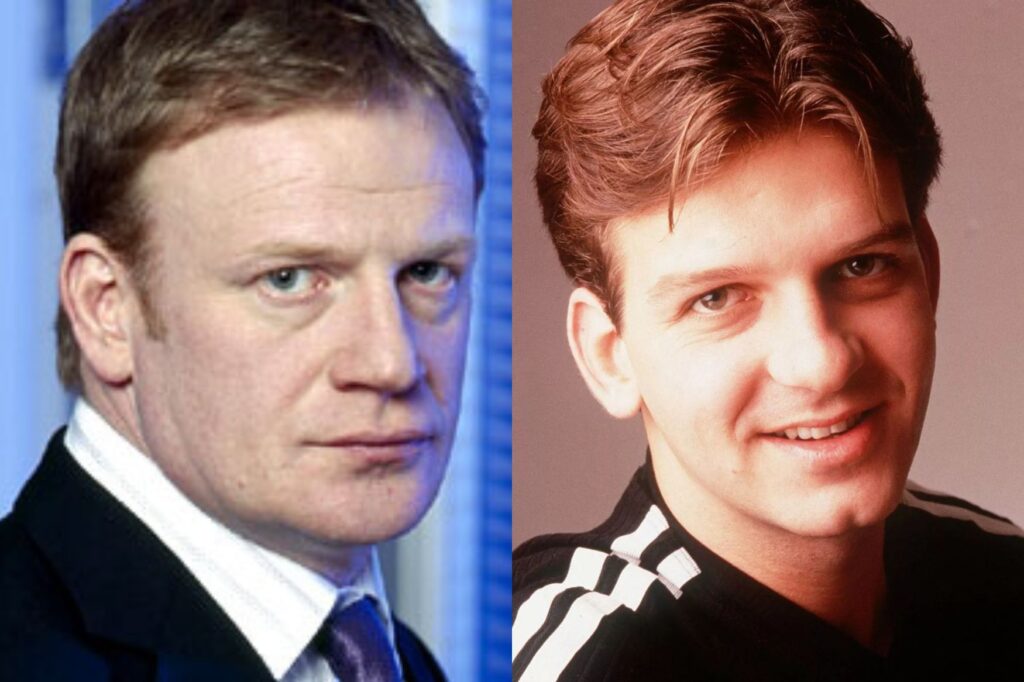
As well as Warren flying the rainbow flag, he wasn’t the only flyer of the Wales flag, the job handled expertly by his on-screen brother Mark Lewis Jones.
Lewis Jones played the role of Warren’s less-than-supportive brother, Dale, truthfully portraying the role of a brother who, despite wanting the best for his brother, also carried with him his own, his family’s and his community’s judgement and fear.
Lewis Jones and Hughes’ storyline has stayed with me ever since, and is a highlight each time I rewatch. Two actors in their prime – complex, honest storytelling and a masterclass in acting and ‘show don’t tell’.
In 1999, Channel 4’s much more graphic Queer as Folk hit TV screens, unapologetically portraying gay lives, and gay sex, in a way unseen before – for non-mainstream TV eyes only.
It wasn’t until 2006 when mainstream TV featured such a strong gay lead, in the form of Alan Hollinghurst’s Nick Guest in The Line of Beauty. A character-driven piece again showing gay lives on the margins, our lives never quite falling into place in a world we have yet to find our place in fully.
Hughes left the show midway through series two. He said: “That was perhaps not the best decision I’ve ever made in my life. But I was a young, naive man.”
His impact, however, was no less for it. His absence, his importance to the very fabric of the show, felt enormously.
A seminal drama, a masterclass of acting, and both gay and Welsh mainstream representation like nothing we’d seen before.
Unknown casts, untold stories; our stories. That’s the BBC we want, and need, and long may it live.
Time for a (better) return for This Life too?
Support our Nation today
For the price of a cup of coffee a month you can help us create an independent, not-for-profit, national news service for the people of Wales, by the people of Wales.



Great piece. This Life was seminal, and Jason Hughes’ performance was integral. It’s worth adding though that any history of Welsh & gay trailblazing characters surely has to namecheck Stifyn Parri in Brookside, that pre-dates This Life by some years?