


This World Wildlife Day is a reminder that foraging is part of our heritage
Jon Conradi, Wild Mosaic
This year, World Wildlife Day is about plants. This took me by surprise. Typically when I think of wildlife, I think of animals, perhaps with some vegetation as background.
I prefer to talk about wildlife rather than nature as the term ‘nature’ annoys me. It’s vague and ambiguous. It includes the fox, the hare, the stars, my heartbeat and the oil executive. The fact that ‘nature’ is used meaningfully reflects how much we’ve lost. How often we fail to properly see ourselves, and the wilder world we are part of.
So, I was pleased to be reminded that plants are a prominent part of wildlife. This is certainly my experience of rewilding.
The importance of plants to rewilding
The stories about rewilding that make headlines are often about animal reintroductions. But the day-to-day work is often about plants: Encouraging wildflower meadows. Breaking through grass swards. Planting saplings. Feeling threatened by thickets of bracken.
Reflecting this importance, this year’s World Wildlife Day theme is about “Medicinal and Aromatic Plants: Conserving Health, Heritage and Livelihoods”. It’s a fresh way to move beyond simply seeing plants as crops.
Foraging to rewild ourselves
A few generations ago, most communities would have had knowledge of their local wild plants and their uses. This loss of knowledge is a loss of our heritage, as well as evidence of our disconnection.
I have a lot to learn about foraging but I show off my limited knowledge with a friend I go walking with. He would describe what I share as more on the ‘medicinal’ spectrum than ‘tasty’.
Nevertheless, I love being able to identify an edible wild plant. It’s a gateway to learning how they are formed, and their rich cultural histories. They also tell us about the land we find them in, whether that is a rewilding site, your garden or a public park.
Learning about the plants around us and being able to identify them with confidence (only eat what you’re sure about!) is a small but powerful way of paying attention to our local wildlife. Try it! Choose a plant you see nearby, look it up, learn about it and share what you find.
This is a great season to start exploring, on the cusp of spring, with the first signs of life tentatively re-emerging from the ground. Walks at this time of year can have a magic to them that makes folklore flicker into life. To misquote Hunter S Thompson, with the right kind of eyes you can almost see the land we used to live in, inhabited by fairies, magic and witchcraft. Where you could get lost in the woods and emerge into another world.
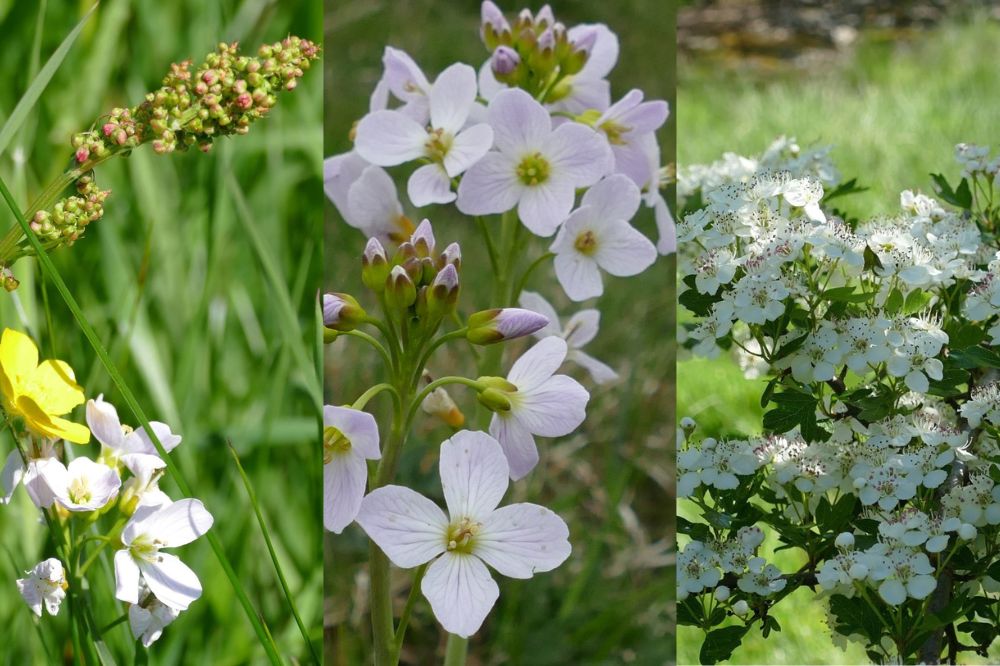
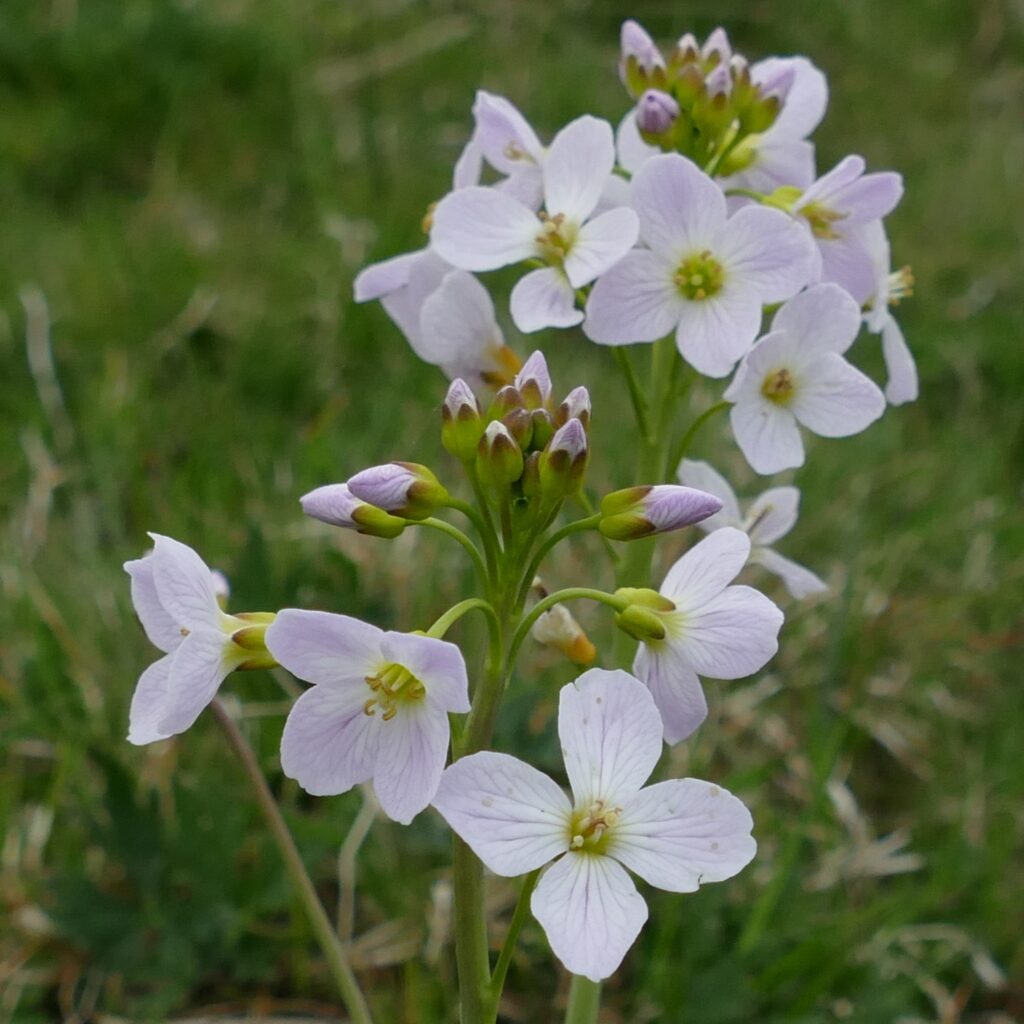
Cuckoo flower (Cardamine pratensis)
Orange-tip butterflies love them, and so do I. They’re also commonly known as ‘Lady’s Smock’ and sometimes as ‘Meadow Cress’.
They like damp fields which are plentiful across my rewilding site and are prominent spots of colour across many fields in spring. They attract the early pollinators, help stabilise soil and look beautiful.
The leaves and flowers are also tasty (peppery) and high in vitamin C.
In folklore they are sacred to fairies and are considered bad luck to bring indoors.
Blackthorn (Prunus spinosa) and Hawthorn (Crataegus Monogyna)
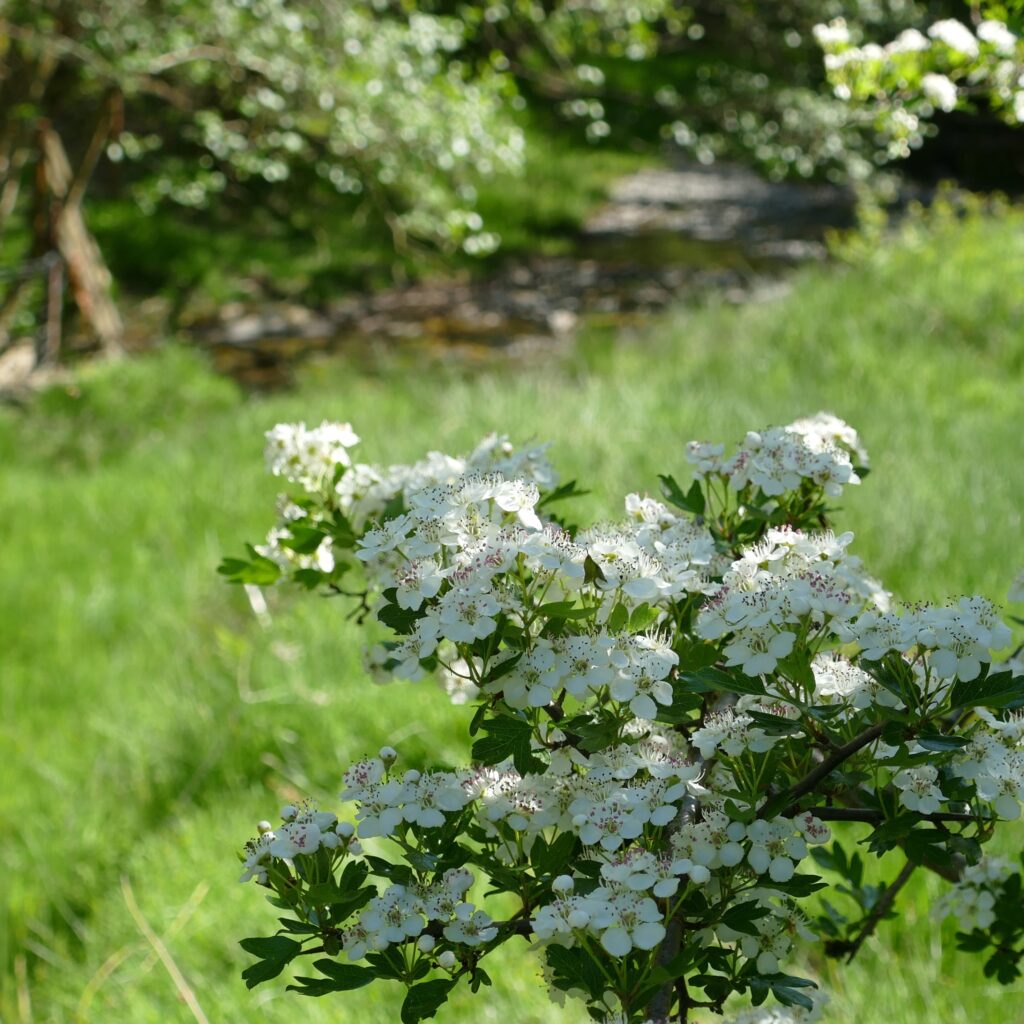
These trees are often found together, especially in hedges. Sometimes in mythology called sister trees, representing light and dark. Hawthorn – the light – was considered so sacred that using any part of this tree was seen as a violation. Blackthorn – the dark – was associated with dark forces and witchcraft.
I associate them more with spring and autumn.
The hawthorn is commonly known as ‘the May Tree’. The leaves of hawthorn are tasty (nutty) in spring, and they are shaped a little like parsley. The dark purple fruit (sloes) of blackthorn are edible but very unpleasant. However, they are great for making sloe gin and vodka. (I survived my first attempt at making this last autumn, surprisingly easy and delicious.)
Ecologically, they are both wonderful and the seasonal distinction doesn’t hold true. The earlier flowering blackthorn attracts pollinators before the hawthorn joins in. The red haws (fruit of the hawthorns), provide sustenance for many birds and mammals in autumn and through the winter.
They help rewilding, breaking out of hedgerows and spikily resisting the many animals that would eat saplings. Kick starting biological diversity.
Sorrel (Rumex acetosa)
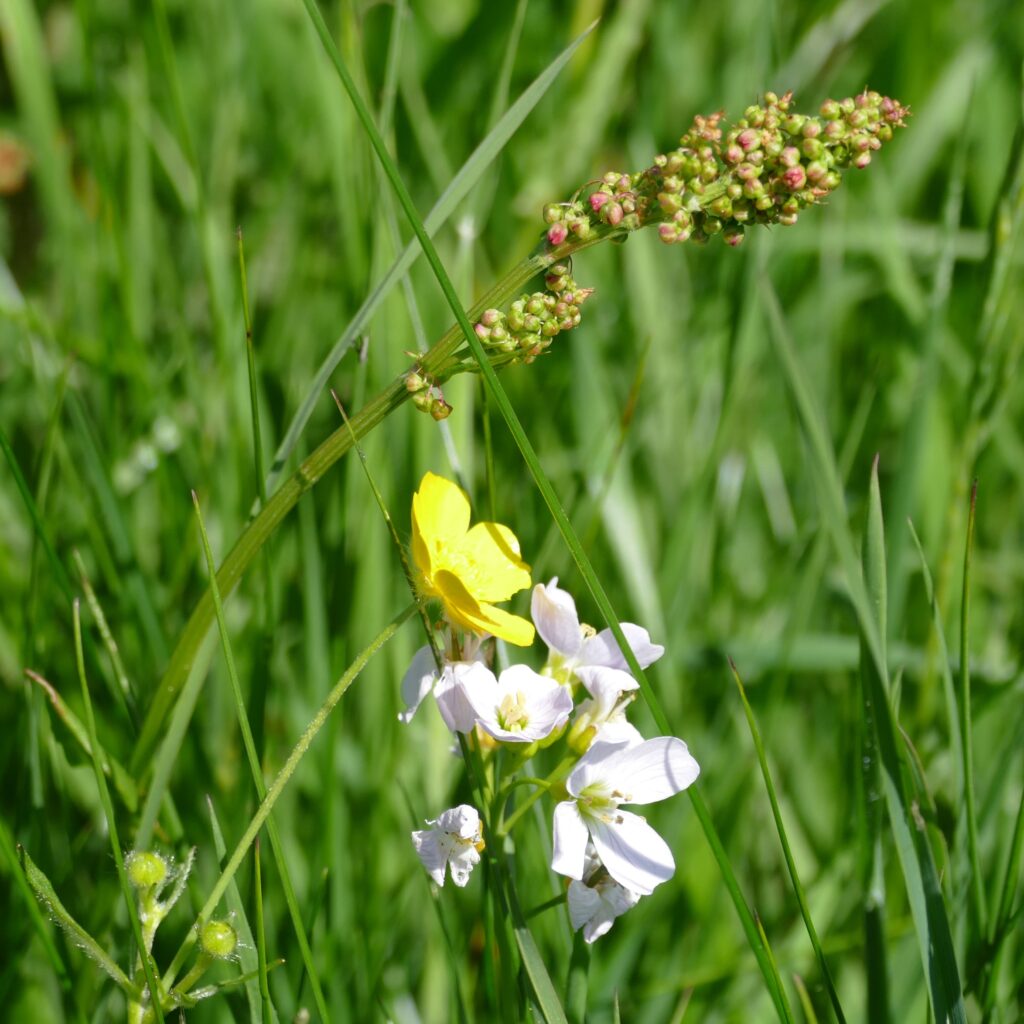
These little beacons of colour rise up out of the grass. Attracting pollinators to their flowers.
The leaves’ distinctive shape and sour (lemony) punch make them easy to identify. The name is thought to come from an old French word, ‘surelle’, which means ‘sour’. It can be eaten in salads or cooked in soups or sauces. You will often find you weren’t there first as their leaves provide food for many invertebrates.
They are important for biodiversity as they can tolerate the grass sward that can block out many other plants. Creating a little ecological variation in pastures. A refuge for life, before other wildflowers can move back in.
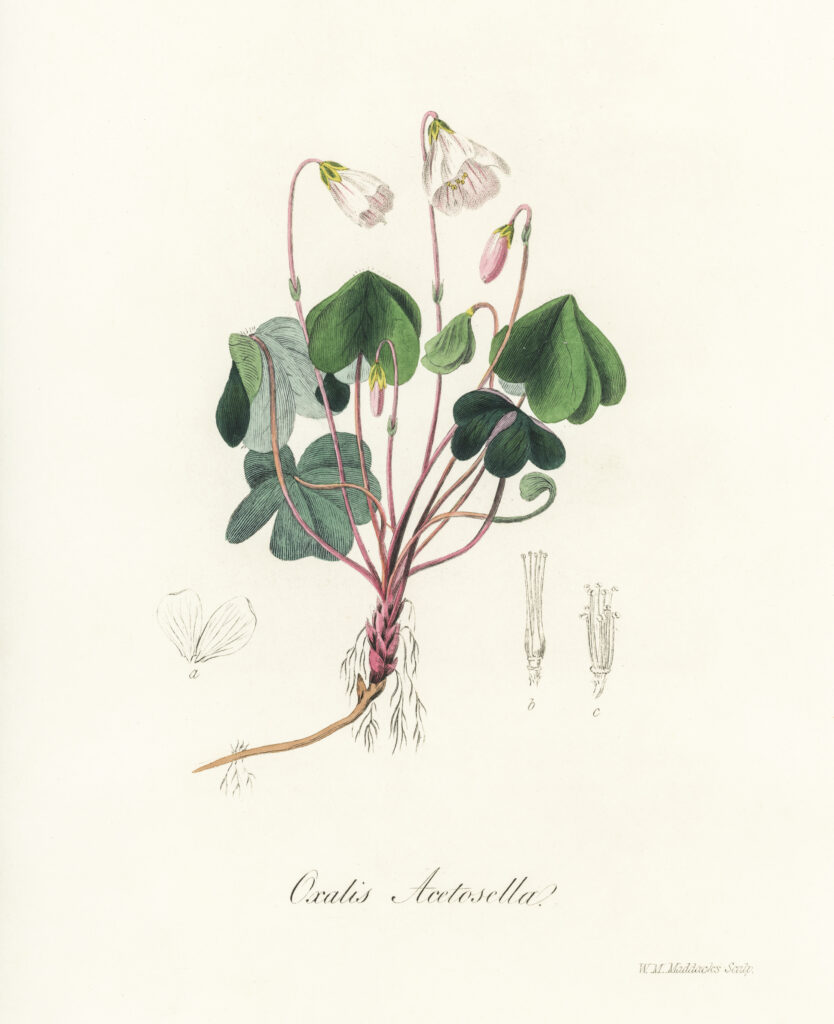
Wood sorrel (Oxalis acetosella)
Names can be revealing. Wood sorrel is not closely related to common sorrel (above). It shares its name as it shares the same tasty sour punch. It can also be eaten in salads or added to lemonade or herbal tea.
In Wales the plant is sometimes called the fairy-bell. The folklore is that the bells (the flowers close and droop at night) ring in the moonlight and attract fairies. The dried leaves were used to protect the heart and bring luck.
Wood sorrel leaves have a trefoil or shamrock shape. It can be an indicator of ancient woodlands. So seeing them in other places can reveal where the land still has a memory of being something different, in the past. And a possible future.
—
Find out more about Wild Mosaic here
Notes
There are wild plants and fungi in the UK that are deadly if you eat them, and some that are incredibly harmful if you touch them. Never consume any wild plant or fungi without confirming that you know exactly what it is. Check several sources of information, and do not rely on just one website or book for a positive ID.
It is against UK law to uproot or dig up any plant matter unless you have the permission of whoever owns the land you are on. It is permitted to pick the leaves, flowers and fruit of plants and to harvest mushrooms from most common land, as long as it is for your own consumption.
Support our Nation today
For the price of a cup of coffee a month you can help us create an independent, not-for-profit, national news service for the people of Wales, by the people of Wales.


