


Three Welsh castles make list of top UK destinations for Traitors fans
Amelia Jones
Three Welsh castles have been named among the UK’s spookiest destinations for fans seeking a taste of The Traitors closer to home.
The ranking offers an alternative to a trip to the hit BBC show’s Scottish filming location, as searches for “Traitors castle” reportedly rose from 645 in November 2024 to 75,000 in August 2026.
Research from car rental company SIXT has identified castle destinations across the UK where fans can enjoy their own atmospheric getaway, particularly as Ardross Castle, where the show is filmed, is not open to the public.
Wales has proved particularly well represented in the ranking, with three castles appearing in the top 10. Caerphilly Castle was the highest Welsh entry, coming third , while Conwy Castle ranked fourth and Raglan Castle came in at number 10.
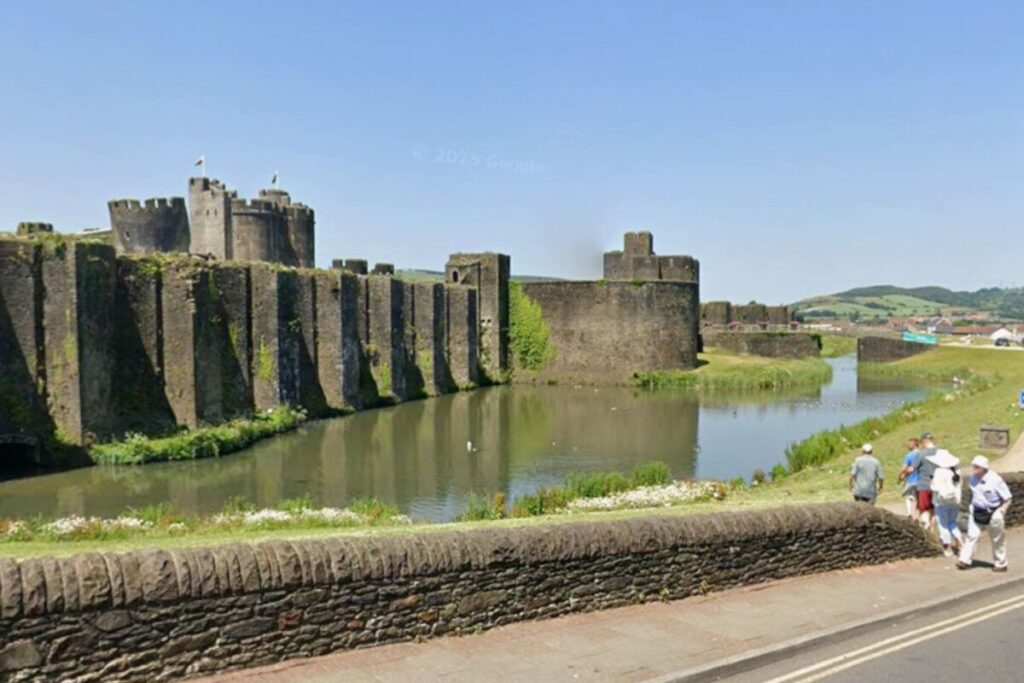
Caerphilly Castle
Taking third place on the list is Caerphilly Castle, which one of Wales’ most impressive medieval fortresses, surrounded by enormous artificial lakes and dramatic drawbridges. It is the biggest castle in Wales and the second-largest in Britain after Windsor, giving it the scale and imposing setting that fans of The Traitors might be looking for.
It was constructed by Gilbert de Clare in the 13th century as part of his campaign to maintain control of Glamorgan, and saw extensive fighting between Gilbert, his descendants, and the native Welsh rulers.
The castle went through a £10 million regeneration project and reopened to visitors in late 2025. It is managed by Welsh Heritage agency Cadw as a tourist attraction and holds several events including a Halloween event this October.
Surrounded by extensive artificial lakes, and considered by historian Allen Brown to be “the most elaborate water defences in all Britain,” it occupies around 30 acres and is the largest castle in Wales and the second-largest castle in the United Kingdom.
You can find out more here.
Conwy Castle
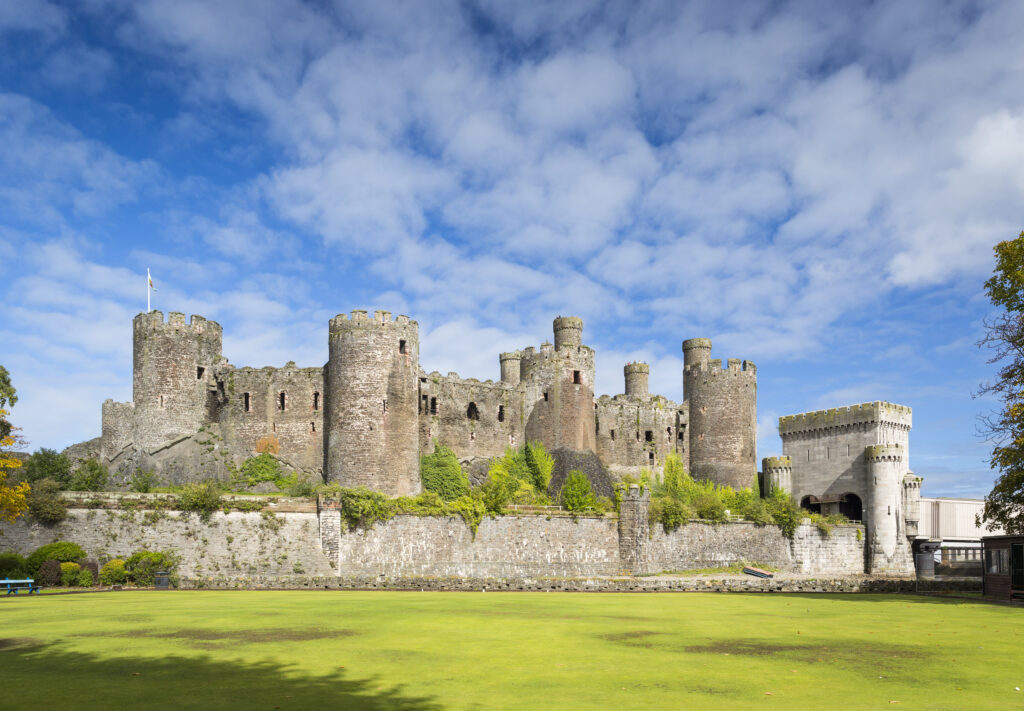
Coming in at number 4 is Conwy Castle, which offers a very different setting, sitting above the historic town and forming part of the UNESCO World Heritage Site of the Castles and Town Walls of King Edward in Gwynedd. Its medieval towers, battlements and surrounding town walls create an imposing backdrop, while its position provides views across the surrounding landscape.
In the distance rise the craggy mountains of Eryri and spread out below you are the harbour and narrow streets of Conwy.
It was built by Edward I, during his conquest of Wales, between 1283 and 1287. Constructed as part of a wider project to create the walled town of Conwy, the combined defences cost around £15,000, a massive sum for the period.
Over the next few centuries, the castle played an important part in several wars. It withstood the siege of Madog ap Llywelyn in the winter of 1294–95, acted as a temporary haven for Richard II in 1399 and was held for several months by forces loyal to Owain Glyndŵr in 1401.
UNESCO considers Conwy to be one of “the finest examples of late 13th century and early 14th century military architecture in Europe”, and it is classed as a World Heritage Site.
You can find out more here.
Raglan Castle
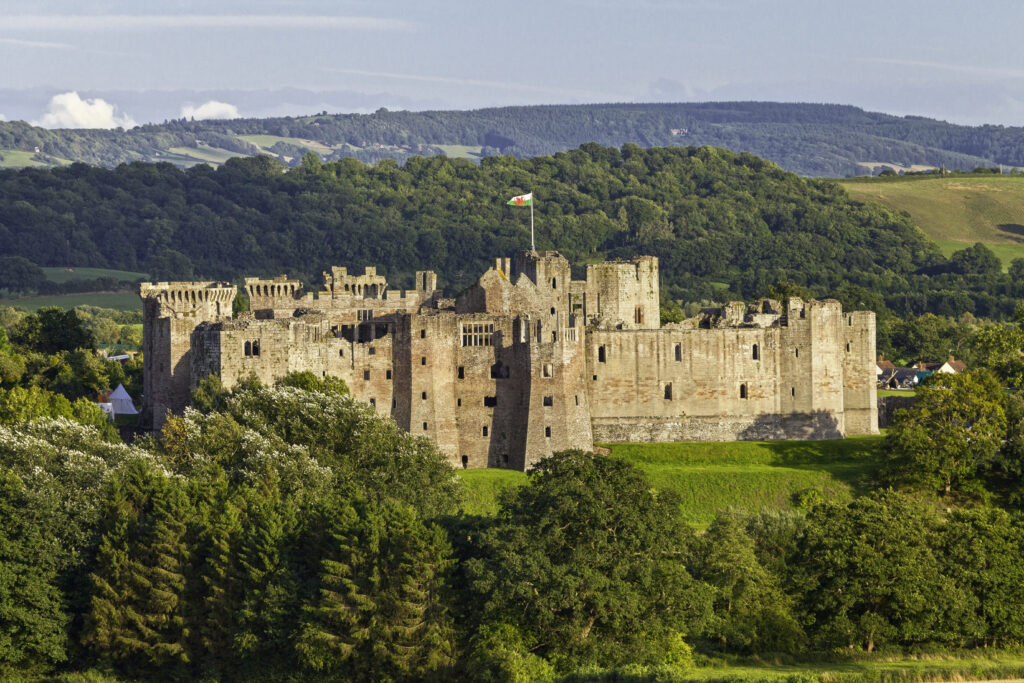
Raglan Castle, meanwhile, came 10th in the ranking. The impressive ruins have a distinctive history and architecture, with the castle developing from a medieval fortress into a grand residence.
It is located just north of the village of Raglan in the county of Monmouthshire in south east Wales. The modern castle dates from between the 15th and early 17th centuries, when the successive ruling families of the Herberts and the Somersets created a luxurious, fortified castle, complete with a large hexagonal keep, known as the Great Tower or the Yellow Tower of Gwent.
Sir William ap Thomas, the ‘blue knight of Gwent’, built the moated Great Tower of 1435 that still dominates the fortress-palace. His son Sir William Herbert, Earl of Pembroke, created the gatehouse with its flared ‘machicolations’.
Under various earls of Worcester Raglan was transformed into a magnificent country seat with a fashionable long gallery and one of the finest Renaissance gardens in Britain.
Despite a garrison of 800 men and one of the longest sieges of the Civil War, it fell to parliamentary forces and was deliberately destroyed.
You can find out more here.
You can view the full list here:
- Stirling Castle, Scotland
- Warwick Castle, Warwickshire
- Caerphilly Castle, Caerphilly
- Conwy Castle, Conwy
- Alnwick Castle, Northumberland
- Bamburgh Castle, Northumberland
- Corfe Castle, Dorset
- Inveraray Castle, Scotland
- Ludlow Castle, Shropshire
- Raglan, South Wales
Support our Nation today
For the price of a cup of coffee a month you can help us create an independent, not-for-profit, national news service for the people of Wales, by the people of Wales.
Get more trusted Welsh news
Choose Nation.Cymru as a preferred source in Google News to see more of our journalism.


