
Translation of children’s book inspires Polish academic to research Welsh swear words
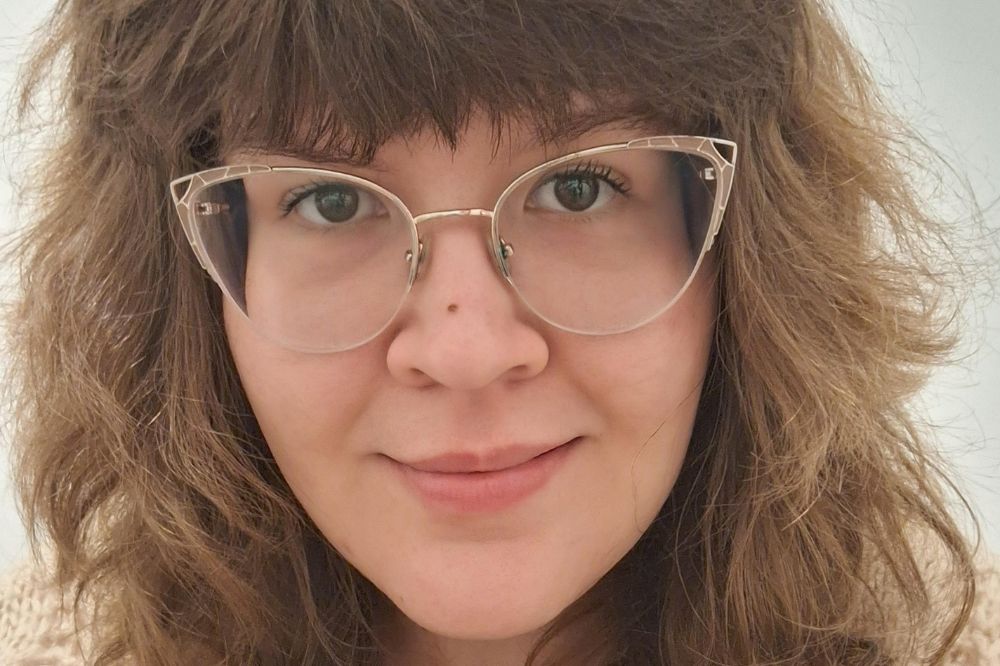
Gosia Buzzanca
There are many ways into finding oneself inspired language and culture. For an academic researcher from Poland, Joanna Człapa, the inspiration came as she read a Welsh translation of Roald Dahl’s classic children’s book, Matilda.
After reading it Joanna had been inspired to carry out research into Welsh words, phrases and swear words.
Joanna was already learning Welsh when she analysed the Welsh translation of Matilda as part of her BA degree in the Celtic Studies Research Unit at Adam Mickiewicz University in Poznań, western Poland.
She found phrases such as ‘car diawl’ (meaning ‘devil car’), ‘nefoedd wen’ (meaning ‘good heavens’), and ‘y cythraul bach diflas’ (meaning ‘the miserable little devil’), which sparked her curiosity about their meaning. Keen to research these expressions further, and Welsh swear words more generally, Joanna found there was little existing academic research.
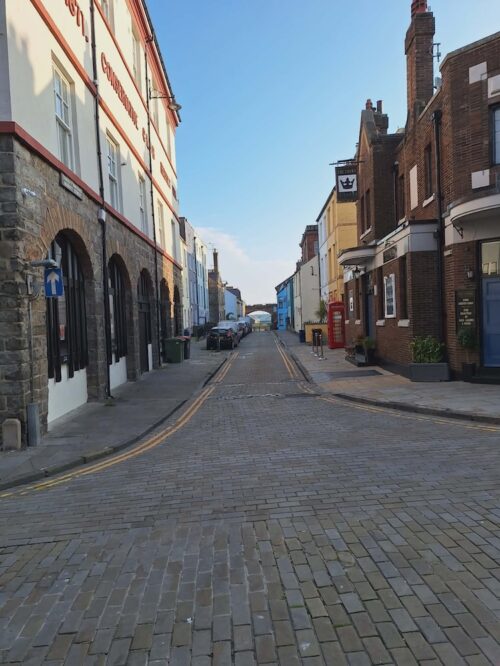
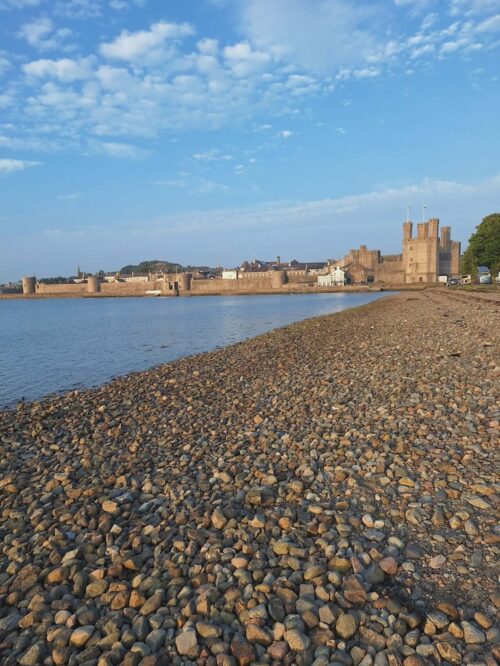
As a result, in July 2025, Joanna went to Caernarfon, where more than 80% of the population speak Welsh, to interview Welsh speakers about which swear words they used, and their attitudes towards them.
This was the first time she had undertaken fieldwork as part of her research. She conducted interviews with shop owners and local people on the street through the medium of Welsh and felt excited about being able to use the language.
Overall, she found that attitudes towards swear words had softened over time, and that people had greater acceptance, although views varied according to different age groups. The final findings will be published in a research article in due course.
Joanna is now following Advanced-level courses with Learn Welsh Gwent and Learn Welsh Pembrokeshire, which are run by Coleg Gwent and Pembrokeshire County Council on behalf of the National Centre for Learning Welsh. She is also studying for an MA degree in sociolinguistics, looking at attitudes towards the use of anglicised words and patterns in Welsh.
Joanna says, “I’ve always enjoyed stories about King Arthur and Celtic legends, so I decided to follow a degree course at Adam Mickiewicz University, where there’s a Celtic Studies Research Unit.
“I started learning Welsh at university through virtual Learn Welsh courses and fell in love with the language.
“I loved the vocabulary in Matilda, and as I’m a curious person, I decided to carry out further research. I think it’s important to look at how people use language, especially minority languages.
“Many of the research participants in Caernarfon said they were unaware of a collection of Welsh swear words.
“I was surprised to hear this, which confirmed the importance of my research and why I want to continue researching this area.”
Alongside her studies and Welsh lessons, Joanna enjoys attending online Welsh chat sessions. She also listens to Welsh-language music, watches S4C, and has recently started reading Welsh poetry.
In addition to Polish and Welsh, Joanna also speaks English and French and can understand some Gaeilge (Irish).
I caught up with Joanna over email and she kindly answered some of my questions.
What surprised you most about doing your first-ever fieldwork in person?
Before heading to Caernarfon, I made sure to read up on how to carry out the fieldwork.
I talked to the scientific supervisor of our project about what not to do and attended a week-long Welsh course with Dysgu Cymraeg Gogledd Ddwyrain to become more familiar with the Northern accent.
I’ve been learning the south Wales accent since I started at my university in Poland in 2021. That said, I was quite nervous about making grammatical mistakes during the interviews.
And I did make some, but to my surprise, the world didn’t end, and no one pointed them out. People were incredibly friendly and happy to chat with me in Welsh (my friends did their interviews in English).
Even more unexpectedly, I managed to conduct the interviews in Welsh despite the differences in accent, which I really put down to the kindness of the people I met there, as I always mentioned that I am a learner at the start of each interview.
Furthermore, some participants stated that there are no Welsh swear words, or that there are rather few of them, and that was both surprising and interesting. This is the reason why I hope to continue my research, since swearing, a daily activity (one might argue, of course), is a part of the language register that is less likely to be taught in formal education.
If such beliefs about this register exist in the case of the minority language, I believe that researching this is worthwhile.
The notion that the Welsh language does not contain many or any swear words at all also appeared in the initial part of the research, which was conducted online through open questionnaires and the Likert scale.
These questionnaires inquired about people’s general views on swearing, examples of swear words they knew, contexts of usage and contexts of swearing in either Welsh or English. The Likert scale that asked participants to rate examples of expletives on a scale from 1 to 5 (with 1 being neutral and 5 being very offensive).
How did people react when they realised you were a researcher from Poland speaking Welsh?
People were definitely surprised; many of the participants thought we were from Bangor University, which they assumed because of the distance from Caernarfon.
When they learnt that I am a researcher from Poland speaking Welsh, they asked why I speak Welsh (or rather, as I prefer to say, learn Welsh). I always explained that there is a Celtic Studies Research Unit in Poland.
Do you think learning Welsh has changed how you think in other languages?
I would say that learning Welsh added one language to think in, and what I love about it is that now I have more music to listen to, more books to read, and more ways to learn how to express myself, which, in my opinion, is the case with every language one learns.
I don’t like the memes I saw about Welsh pronunciation referring to the “impossible” number of consonants to say! I think it’s a beautiful language, and quite my favourite one.
Are there areas of Welsh language use you’d like to research next?
Absolutely! Currently, I am writing my MA thesis about the attitudes of Welsh language teachers towards English calques and Anglicised vocabulary in the speech of learners.
This interest is very much rooted in my own curiosity as a learner who, on one hand, sometimes catches herself using these structures, and, on the other hand, tends to have more idealised, let’s call them, hopes and ideas about the language.
In between these, this study was created. After the MA, I hope to continue into a PhD, because even though my articles (two of which I wrote with my friends as co-authors, and one I wrote on my own) are currently under review, there are more questions to answer and aspects of swearing in Welsh to investigate, as that study just revealed more research gaps and areas to explore.
Support our Nation today
For the price of a cup of coffee a month you can help us create an independent, not-for-profit, national news service for the people of Wales, by the people of Wales.



Gwych! Such a heartwarming read. What lovely woman!