


Trees, Welsh worlds and remembering nature
Dr John Studley
“Alder in the front line began the affray
(‘Gwern ymlaen llaw yn y gad’)
Willow and rowan were late in array.”
(‘Helyg a cherdin hwyr eu llu’)*
So begins Cad Goddeu — The Battle of the Trees — one of the most enigmatic and haunting poems preserved within medieval Welsh literature.
The poem unsettles modern expectations from its opening lines. Trees do not merely frame the landscape or decorate the scene. Alder advances into battle. Birch rises in combat. Oak stands with ancient authority. The forest itself appears animate, differentiated, and active.
Further into the poem, the individuality of the trees becomes even more pronounced. “The alder, though very branchy, was first in the line” (“Gwern, er ei changhennau, oedd gyntaf yn y rheng”), while “the holly, dark green, made a resolute stand” (“Celyn glas tywyll safodd yn gadarn”).
Such lines do more than personify vegetation. They distribute qualities of courage, endurance, rank, and agency throughout the living world itself. Trees become bearers of disposition and presence. The battle is not simply fought within the forest; the forest participates in the conflict as a community of differentiated beings.
Equally striking is the poem’s instability between metaphor and ontology. Modern readers often seek to decode the trees into hidden human referents — kings, warriors, dynasties, or bardic symbols. Yet Cad Goddeu resists complete reduction into allegory alone. The trees retain a strange excessiveness that continues to feel animate even when interpreted symbolically. They appear simultaneously literary and alive. It is precisely this ambiguity that gives the poem much of its enduring ecological power.
To contemporary readers, Cad Goddeu can seem strange: part myth, part political allegory, part visionary cosmology. Yet perhaps what feels unfamiliar is not simply the poem itself, but the world it discloses — a world in which distinctions between human and more-than-human life were imagined differently from today.
Modern environmental discourse frequently describes forests through the language of management and measurement. Trees become carbon stores, biodiversity units, timber values, or natural capital. Landscapes become sites of optimisation, conservation, or extraction. Such frameworks emerge from urgent contemporary concerns, particularly climate change and ecological collapse, yet they also reflect a deeper philosophical inheritance in which nature increasingly appears as something external to human life.
The tree becomes object and the forest a resource.
Cad Goddeu gestures toward another possibility.
Scholars continue to debate the poem’s meaning. Some interpret it as political allegory linked to bardic traditions; others see within it traces of older mythic cosmologies surviving within medieval literary culture. Yet what matters here is less whether medieval Welsh audiences literally believed trees possessed agency than the imaginative orientation the poem reveals.
One striking aspect of Cad Goddeu is the way identity itself appears distributed across the living world. Trees are not anonymous components of “nature” but differentiated beings possessing character and symbolic force. Oak embodies endurance and sovereignty; birch suggests emergence and initiation; alder enters conflict at the forefront of battle. The poem does not present a passive environment surrounding human action. Rather, agency flows outward into the wider animate landscape.
Forest becomes participant rather than backdrop.
This relational imagination appears repeatedly across medieval Welsh literature. In the Four Branches of the Mabinogi, landscapes frequently operate as thresholds through which transformations occur. Pwyll’s encounter with Arawn begins not in court or settlement but within the liminal woodland space of Glyn Cuch. After pursuing a stag deep into the forest, Pwyll encounters “a pack of white hounds with red ears” (“cŵn gwynion a chlustiau cochion”) feeding upon the deer he has hunted. The moment is deeply unsettling because the hunt itself suddenly ceases to belong exclusively to the human realm. The forest becomes the place where ordinary assumptions about authority, ownership, and identity begin to dissolve.
The importance of Glyn Cuch lies partly in its liminality. Forests within medieval Welsh literature frequently function as spaces where ordinary social structures weaken and encounters with alterity become possible. Pwyll enters the woodland as prince and hunter, yet emerges transformed through exchange, obligation, and encounter with the Otherworld. By exchanging identities with Arawn, ruler of Annwn, Pwyll crosses boundaries between human and otherworldly realities. The landscape itself mediates this transformation. The forest is not incidental setting but active threshold — a place through which relations between worlds are negotiated.
Human tragedy
Likewise, in Branwen ferch Llŷr, sea crossings and island landscapes possess symbolic as well as political significance. Human tragedy unfolds through unstable geographies where movement across water repeatedly signals movement between states of being. In Culhwch and Olwen, Arthur’s companions move through forests alive with enchanted animals, magical hunts, and animate presences. The hunt for Twrch Trwyth is particularly revealing. The boar is not merely prey but a disruptive and semi-mythic force capable of reshaping the landscape itself as pursuit unfolds across rivers, mountains, and territories.
Such stories do not present nature as passive backdrop. Forests, rivers, mountains, and animals repeatedly shape events and identities. Boundaries between human and nonhuman worlds remain porous and unstable.
This perspective also appears, more subtly, within Cyfraith Hywel — the medieval Welsh law codes associated with Hywel Dda. Different tree species carried differing legal values and protections. Oak, yew, and hazel possessed particularly high status, while fruit-bearing and economically useful trees carried carefully differentiated compensatory values. Damage to certain trees incurred substantial penalties.
At one level these distinctions clearly reflected practical economic realities. Yet the laws also reveal something more. Trees were not treated as interchangeable units of woodland cover. Different species occupied distinct places within wider social and ecological relations. Legal recognition mirrored cultural recognition. The forest appears not simply as raw material but as an ordered community of differentiated living presences embedded within systems of obligation and reciprocity.
Taken together, these texts preserve fragments of what might be described as a relational ontology: a way of understanding existence in which humans, animals, forests, rivers, and landscapes emerge through relationships rather than existing as wholly separate entities.
Cynefin
The Welsh concept of cynefin perhaps captures something of this orientation. Often translated simply as “habitat,” cynefin carries richer meanings difficult to render directly into English. It evokes customary place, belonging, familiarity, and the environments through which identities emerge. One’s cynefin is not merely where one lives; it is the relational world through which personhood itself is formed.
Contemporary discussions of relational ontologies within Wales increasingly bridge indigenous ecological knowledge, environmental humanities, and posthumanist philosophy through the foundational concept of cynefin. Rather than viewing humans, objects, and landscapes as discrete or self-contained entities, relational ontologies emphasise the deep entanglement between communities, language, memory, ecology, and non-human presences. Identity emerges not in isolation but through relationships — with place, with history, with landscape, and with the living world itself.
In this sense, cynefin expresses more than locality or habitat. It reflects an understanding that people and places continually shape one another through mutual belonging and reciprocal formation. Such perspectives resonate strongly with the medieval Welsh texts discussed here. Forests, rivers, animals, and landscapes do not merely surround human life within Cad Goddeu or the Mabinogi; they participate within the formation of identity, obligation, and meaning itself.
This understanding feels increasingly significant within contemporary Wales and England. Across both countries, woodland restoration initiatives, regenerative farming projects, ecological communities, river stewardship groups, and local biodiversity partnerships continue searching for more reciprocal ways of inhabiting landscape.
Ecological futures
Institutions such as The Centre for Alternative Technology reflect ongoing attempts to imagine ecological futures grounded not solely in technological innovation but also in altered relationships between communities and landscapes. Through ecological design, education, and experiments in sustainable living, such initiatives implicitly challenge assumptions that human wellbeing can be separated from environmental wellbeing.
These concerns also resonate strongly with contemporary Rights of Nature movements. The Rights of Nature movement proposes that rivers, forests, ecosystems, and landscapes possess rights to exist, flourish, and maintain their integrity. Although often articulated through legal language, the philosophical shift involved is profound: nature ceases to be understood solely as property or resource and instead becomes recognised as a community of living relations.
This shift is no longer merely theoretical. In 2017, the Whanganui River in Aotearoa New Zealand was recognised in law as a juristic person represented through guardianship structures. Similar developments in Ecuador, Colombia, Spain, and elsewhere suggest growing dissatisfaction with legal systems that treat the living world exclusively as property.
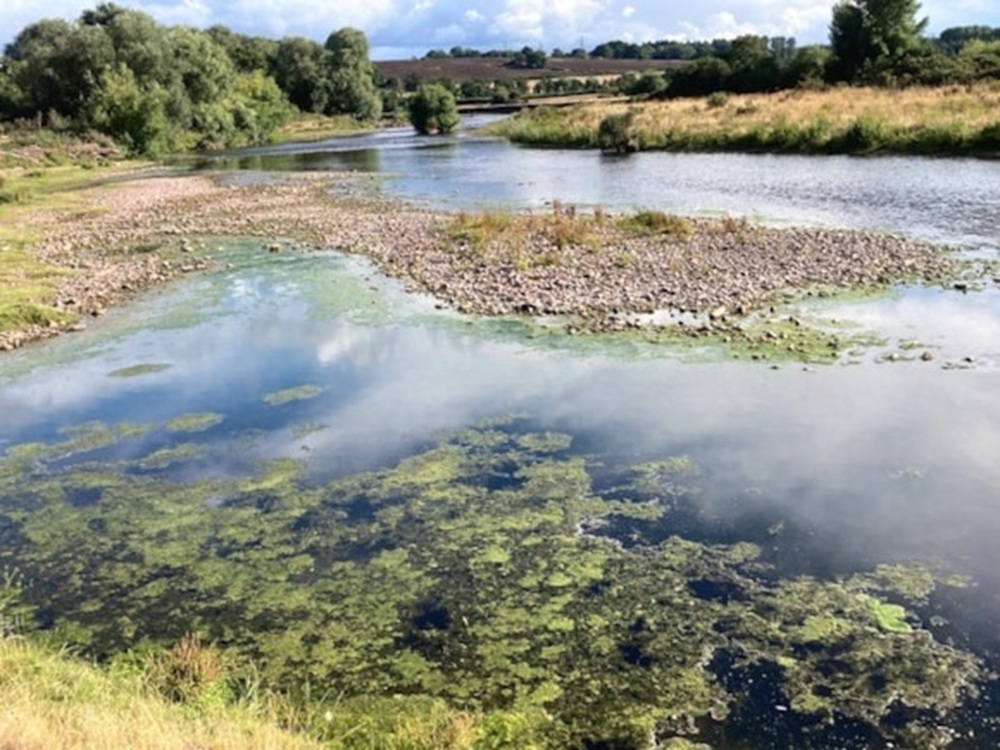
Related developments are now emerging within Britain itself. Across England, local authorities and communities have begun exploring Rights of Nature declarations, ecological governance frameworks, and river guardianship models. In Wales and the English borderlands, guardians have been appointed for the rivers Wye and Usk in response to mounting ecological degradation and concern over water quality, biodiversity loss, and agricultural pollution.
Rights of Nature
These discussions have also entered institutional policy debate within Wales itself. National Infrastructure Commission for Wales has explored Rights of Nature principles within wider conversations concerning governance, sustainability, and the future relationship between communities and ecosystems in Wales. Although such discussions remain emergent and legally uncertain, they indicate a growing willingness to reconsider how rivers, landscapes, and ecological systems might be represented within public decision-making.
Most recently, Cwmaman Town Council adopted a Rights of Nature Charter on 10 June 2026, with formal ratification on 24 June 2026. While it may not create fully enforceable legal rights, it is more than merely symbolic. Such charters can help shape ecological norms, influence public discourse, and encourage new ways of understanding relationships between communities and the living world. Questions once associated primarily with mythology, philosophy, or Indigenous cosmologies increasingly appear within local governance, environmental policy, and public debate throughout Wales and England.
Seen in this context, contemporary Rights of Nature debates in Wales do not appear entirely disconnected from older cultural traditions. The relational imagination preserved within medieval Welsh literature — where forests, rivers, and landscapes participate within human worlds rather than merely serving them — continues to echo within modern ecological thought and governance debates.
Romanticise
This is not to romanticise medieval Wales as an ecological utopia. Medieval societies exploited landscapes, hunted animals, cleared forests, and pursued political power as all societies do. Nor can medieval literature provide direct solutions to climate breakdown or biodiversity collapse.
Yet stories matter because they shape what becomes imaginable.
Modern ecological crises undoubtedly require scientific knowledge, technological innovation, and legal reform. But perhaps they also require acts of cultural remembering. Medieval Welsh literature reminds us that other ways of imagining relationships between people and landscapes once existed. Forests were not merely possessions. Trees were not simply resources. The living world appeared not as inert matter awaiting management but as a realm of relationships within which human life itself unfolded.
The trees of Cad Goddeu still speak across centuries because they challenge assumptions many modern societies now take for granted. Rights of Nature movements — from Aotearoa New Zealand to the rivers of Wales and England — ask similar questions in legal and political forms.
What if the living world matters for reasons beyond usefulness?
What if forests are communities rather than commodities?
What if belonging carries obligations as well as rights?
Perhaps the future does not always begin through invention.
Perhaps sometimes it begins through remembering older ways of belonging within living worlds.
As Cad Goddeu reminds us:
“Though buried they are not lost”
(“Er eu claddu, ni chânt eu colli.”)
Selected references:
Davies, Sioned. The Mabinogion. Oxford University Press, 2007.
Haraway, Donna. Staying with the Trouble: Making Kin in the Chthulucene. Duke University Press, 2016.
Haycock, Marged. Legendary Poems from the Book of Taliesin. CMCS Publications, 2007.
Ingold, Tim. The Perception of the Environment: Essays on Livelihood, Dwelling and Skill. Routledge, 2000.
Jenkins, Dafydd (trans.). The Law of Hywel Dda: Law Texts from Medieval Wales. Gomer Press, 1986.
Cullinan, Cormac. Wild Law: A Manifesto for Earth Justice. Green Books, 2011.
Stone, Christopher D. “Should Trees Have Standing?” Southern California Law Review, 45. (1972): 450-501.
Studley, John. Indigenous Sacred Natural Sites and Spiritual Governance: The Legal Case for Juristic Personhood. Routledge, 2018.
Support our Nation today
For the price of a cup of coffee a month you can help us create an independent, not-for-profit, national news service for the people of Wales, by the people of Wales.
Get more trusted Welsh news
Choose Nation.Cymru as a preferred source in Google News to see more of our journalism.


