

Trial success for grazing goats
Conservation staff are celebrating the success of a trial which saw grazing goats notably improve the habitat for two of Wales’ most at risk plants.
The Welsh Marches project, part of Wales’ foremost conservation programme, Natur am Byth (NaB), has been working to safeguard colonies of Upright Apple-moss (Bartramia aprica) and Black Crystalwort (Riccia nigrella) since its inception in summer 2023, thanks to funding from The National Lottery Heritage Fund.
Stanner Rocks in Powys is the only place in the UK where both of these species grow, however they were at risk of being wiped out completely due to an overgrowth of bramble and gorse which was making the area inhospitable.
Bryophytes, made up of liverworts, hornworts, and mosses, perform a key role in the rocky, mediterranean-like ecosystems at Stanner Rocks, providing micro-habitats for invertebrates, initiating soil formation and acting as excellent bio-indicators that allow us to monitor water and air pollution.
To protect these two species at risk of extinction, NaB and Plantlife Cymru, working with Grazing Management Limited, decided to trial grazing goats at the site to see if they could reduce the level of shading vegetation.
Effectiveness
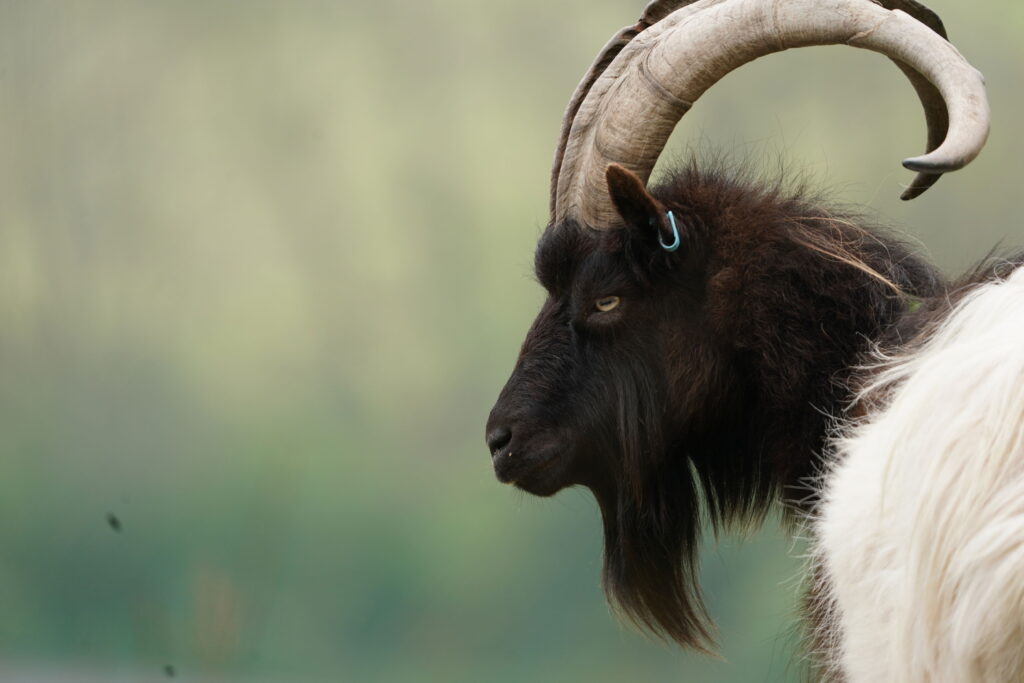
Three adult Bagot goats, trained using no-fence geo collars, began in non-sensitive areas of Stanner Rocks, in order to test the effectiveness of the collars and to see how well the goats could navigate the rocky environment.
They then moved on to areas where Upright Apple-moss (Bartramia aprica) is known to grow, clearing large areas of overgrowth to provide an encouraging habitat for the moss species. Clearing this scrub also led to the discovery of a previously unknown colony that can now recover and spread.
Josie Bridges, Welsh Marches project officer for NaB, said: “We’re thrilled to see the trial has successfully bolstered the habitat for our colonies of Upright Apple-Moss and we’re looking forward to expanding the clearance work to tackle areas affecting Black Crystalwort soon.
“These species are very important but incredibly rare and without work like this to safeguard them we risk losing them forever.
“Historic industrial works have led to steep declines in the populations of many species in Wales. Thanks to conservation programmes like Natur am Byth working with passionate partners like Plantlife Cymru, we can work to remedy the damage of the past and ensure their survival for the future.”
Brink of extinction
Ellie Baggett, Plantlife Cymru Project Officer for NaB, commented: “Restoring habitat for these special bryophytes which are on the brink of extinction in Wales represents a huge moment for pioneering conservation partnership efforts.
“These ‘Mediterranean’ species rely on dry, exposed conditions but until the decision was made to deploy the hardy Bagot goats to the rocky outcrop habitats these bryophytes prefer, they were being increasingly shaded out by scrub encroachment.
“These rare species, that have declined due to quarrying and face threats from atmospheric air pollution, are clinging on to some of the oldest rocks in Wales and it is fitting that one of Britain’s oldest breeds of goat – and their penchant for browsing rough bramble and blackthorn over grass – have come to their rescue at the eleventh hour.”
The trial is expected to expand to a wider area across Stanner Rocks and increase the number of goats on site to 11.
Support our Nation today
For the price of a cup of coffee a month you can help us create an independent, not-for-profit, national news service for the people of Wales, by the people of Wales.


