


Two farming mothers discuss why rural communities make a great place to adopt children
Nation Cymru staff
A childhood in rural Wales is like no other. Traditional in many ways, but untraditional in some. Families who have adopted children might fall into the latter.
With challenges unique to its location, but an environment that can provide children in need of a home with a sense of freedom and security.
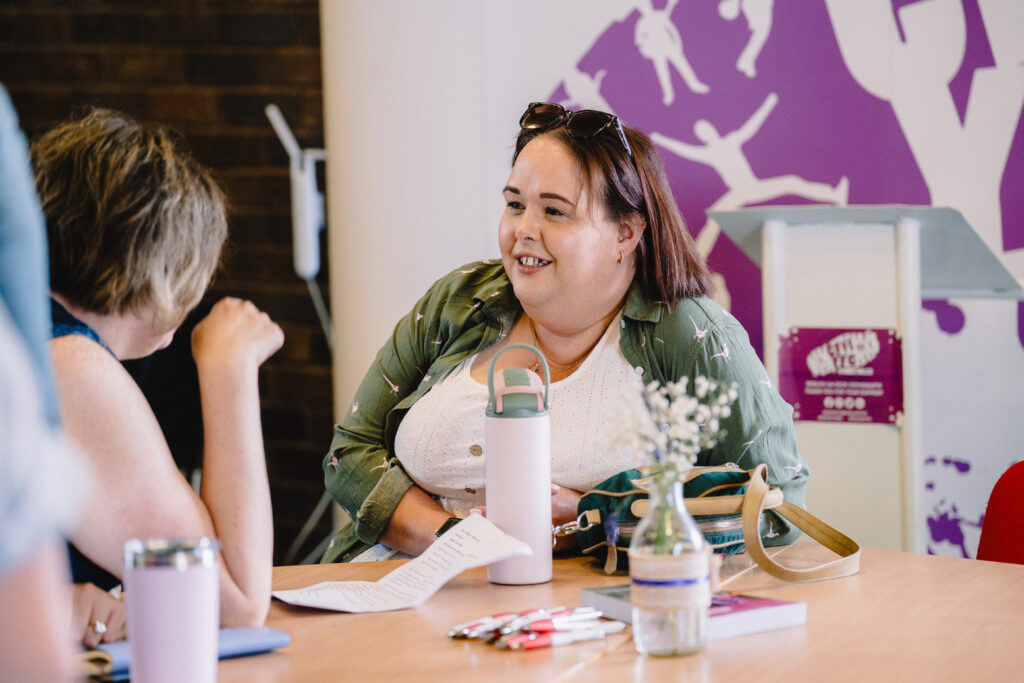
Two mothers from mid and west Wales joined a National Adoption Service for Wales (NAS) panel event at this year’s Royal Welsh Show to share their experiences of adopting children in the agricultural community.
Carys adopted two children and Annwyn adopted siblings through Adoption Mid and West Wales – one of the five regions that along with three Voluntary Adoption Agencies, make up NAS, servicing Carmarthenshire, Ceredigion, Pembrokeshire, and Powys local authorities.
They joined presenter Luke Davies to talk about their experience of the adoption process, and the benefits and challenges of raising a child in a rural setting.
Carys, 32, first adopted when she was 25.
“Living on a farm is the best childhood you’ll ever have,” she said. “And it’s a privilege to know that I’m passing down my family’s generational heritage to my children through the farm.”
There are many children from a variety of backgrounds waiting for adoption in Wales, and the panel explored the differences of raising a child in a city compared to a rural setting. Carys loves the sense of community her children get because of their upbringings on the family farm.
“My next-door neighbours are sheep,” she joked. “Something our community can give to a child is that… In a city, you may not know who your neighbour is, whereas here everyone knows each other.”
The farming community is very tight-knit, and having a child can sometimes become the talk of the village, Carys reflected. She spoke about how people in the community might not always know how to approach the topic of adoption.
“I’ve had someone say to me, ‘Do I say congratulations then?’, or people will avoid the topic because they don’t know what to say,” she said. “But I’m more than happy to have that chat with someone, it’s just education and awareness.”
Annwyn, 38, and her husband adopted siblings.
“My kids are thriving,” she said. “They love to run around the farm, which gives my husband and I a lovely warm feeling because we’ve sowed those seeds and given our children those roots.”
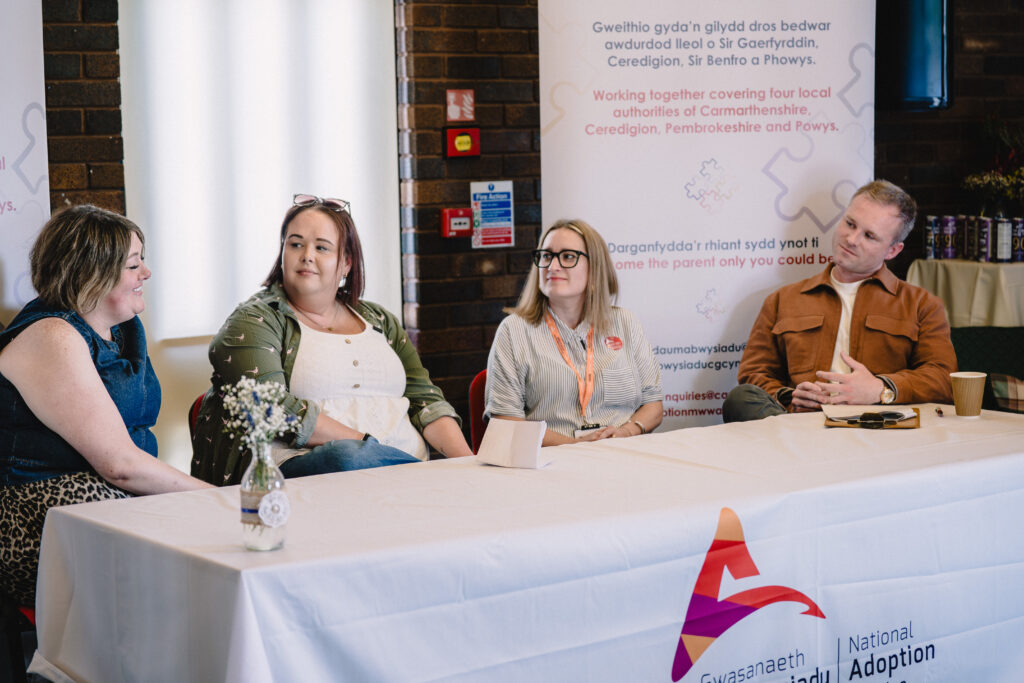
Annwyn told the panel that having a close community around her was a benefit, but because living with adopted children was something new to everyone, she needed to set boundaries from the beginning.
“In a rural environment, we have an open-door policy,” said Annwyn. “So, to stop people wandering in like they usually would, my husband and I had to set some boundaries straight away because our children needed time to settle in.”
Although Annwyn made it clear to those around her that her children needed space and time, this didn’t stop her friends and neighbours helping her out.
“People brought toys for the children,” she said. “And friends were dropping off food parcels in the middle of the night for us.”
Annwyn and Carys told the panel that another benefit of raising their children in a farming community is the relationship parents have with their children’s education.
Class sizes are usually smaller, which means that children have a closer, more personal relationship with their teacher, and parents can better inform educators about their children’s needs.
“My kids go to a school with 36 children,” said Annwyn. “So, although the kids took a little time to settle, I was able to have a chat with their teacher and they’re more open to listen and learn about the children’s needs.”
When asked about her children’s experience in school, Carys said: “I feel like my children understand more, and they’re not just a number so their teachers really do know them.
“One thing that means a lot to me is that my child’s school call them by their first name followed by the name of my farm, it shows that they’re no different to other kids.”
Carys was then asked whether she looked for parenting advice through social media: “I try not to look at it. Every child is different, so the way you parent them is, too. You should embrace everything about your children – this is our happy ending and their exciting beginning.”
Annwyn added: “We can relate to biological parents, but we do look at things differently,” she said. “If a child is acting a certain way, we always ask the question, ‘is this a trauma response?’, where some parents may not.”
Asked what their advice would be to anyone considering starting their own adoption journey, Carys and Annwyn’s message was clear – “Go for it.”
To find out more about adoption, visit the National Adopt Service website.
Support our Nation today
For the price of a cup of coffee a month you can help us create an independent, not-for-profit, national news service for the people of Wales, by the people of Wales.
Get more trusted Welsh news
Choose Nation.Cymru as a preferred source in Google News to see more of our journalism.


