

Voters young and old weigh in ahead of Senedd shake-up
Richard Youle, Local Democracy Reporter
For any politician worried about offending older voters, dropping a clanger on pensions or winter fuel payments at the Mechanics Institute in Pontarddulais on Tuesday mornings would be awkward.
It’s the weekly friendship coffee morning at the institute – hosted by the Carmel Apostolic Church – and hot cross buns and cakes are plentiful.
Conversation is in full flow and although the May 7 Senedd election might not be an obvious talking point among the elderly attendees, opinions are strongly held to say the least.
Pontarddulais is part of the new Gwyr Abertawe constituency – one of 16 new constituencies which will each return six Members of the Senedd, 36 more than the current 60, through a type of proportional representation rather than winner-takes-all.
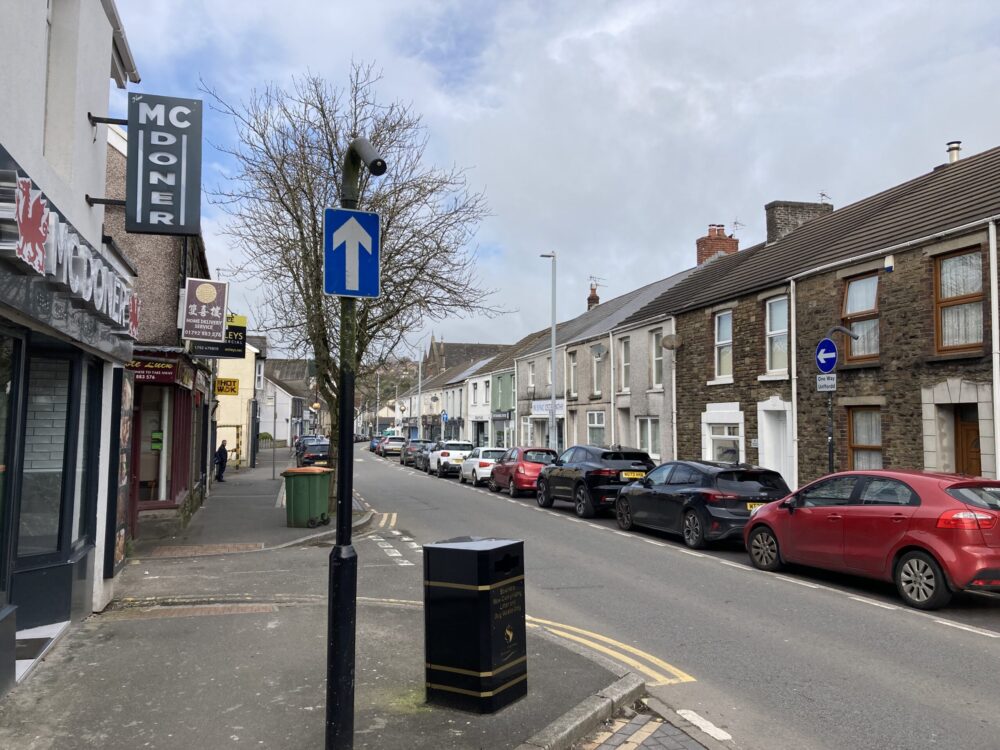
Like many of the new Senedd constituencies, different worlds are being put together. Gwyr Abertawe pairs the Gower and Swansea West UK parliamentary constituencies, and as a result, combines built-up urban areas like Townhill and Port Tennant, district towns like Gorseinon, sparsely-populated uplands in the north, and villages dotted around Gower.
Some voters in Clydach and Swansea’s waterfront area though are part of the neighbouring Brycheiniog Tawe Nedd constituency.
The constituency’s 8.8% unemployment rate estimated by the Office for National Statistics (ONS) at the end of June 2025 was the highest of 13 constituencies it had confidence in publishing data for.
Gwyr Abertawe, like the other 15, has voters aged 16 to those in their twilight years. Around 21% of its population of approximately 212,000 is aged 65 or over, according to ONS estimates – a tad lower than the Wales average – and of course the 16.5% of the population aged nought to 15 can’t vote.
At opposing ends of the age spectrum are those at the Mechanics Institute and sixth form students on a taster day at Swansea University, just a few miles down the road, yet there is agreement about some of the issues they face – jobs, housing, transport and the NHS.
So, how do they feel about the election overall, what are the issues facing them, and do they think the younger, or older selves, would vote differently?
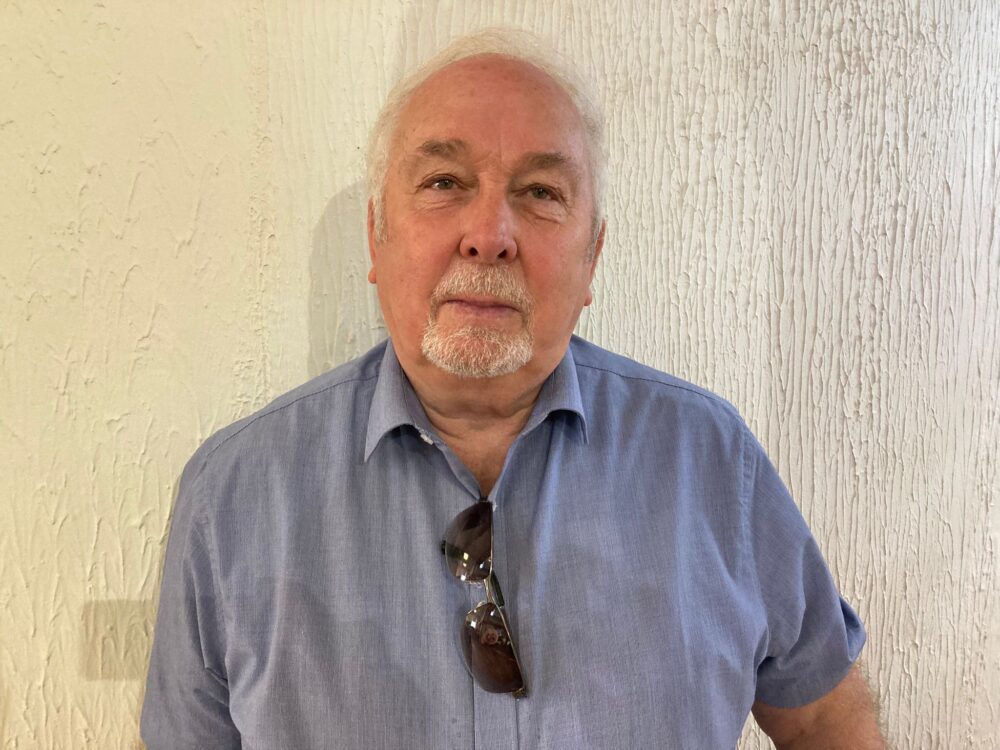
Phillip Davies is a hale and hearty-looking 73-year-old who isn’t lost for words when asked at the Mechanics Institute what the key issues are for him at the moment. “The NHS for starters,” he replies.
Mr Davies says five years ago his wife became unwell one day and that she died around six hours after being taken to hospital without being triaged. “Triaged? I didn’t know the meaning of the word then,” he says. “The NHS is terrible everywhere.”
The keen motorcyclist adds: “Also the condition of the roads. You’re constantly looking out for potholes – that’s a disgrace.” He says he is excited about the Senedd election. “I want to see Labour out, and Reform in,” he says. “I’ve been in industry – I’ve seen the effect Labour and the Conservatives have on it.”
Asked about his likely priorities if he was starting out in life, he replies: “More jobs. The quality jobs aren’t there now. When I was much younger I was a machine driver in a quarry and on £5 a week.
“Now we don’t have enough bricklayers, electricians, carpenters and because of that they can charge the earth,” he says.
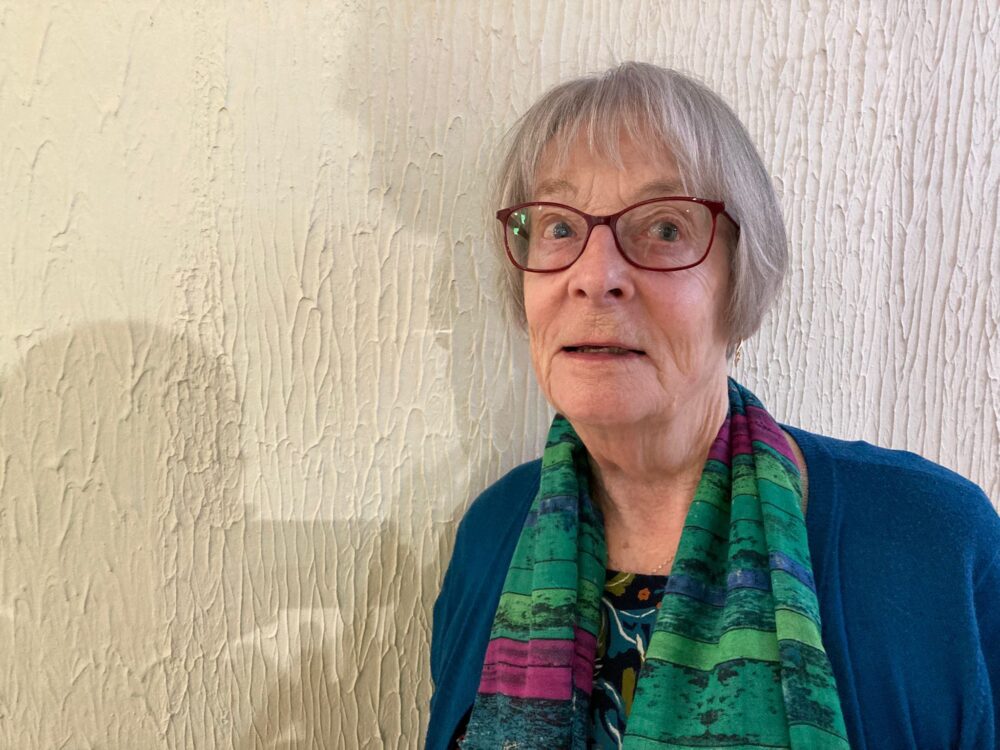
Janet Lewis agrees, saying a lack of jobs for young people is a big issue for her now. “Most of the work is care work, cleaning and shop work,” she says. “I could jump from one job to another. There’s no industry like there was in my day.”
The 77-year-old adds: “I also think the country needs to sustain itself better. We should be in charge of our utilities. At the moment we are dependent on other countries.” Mrs Lewis says she’s excited “in a way” about the election. “It will wake up Labour and the Conservatives,” she says.
This is the second devolved election where 16 and 17-year-olds are eligible to vote, including some of the sixth form students who are taking part in the subject taster day at Swansea University’s Singleton Campus, Sketty.
These learners are part of what’s called “a widening participation programme” where they are mentored by undergraduates known as student leaders, some of whom went through the programme themselves.
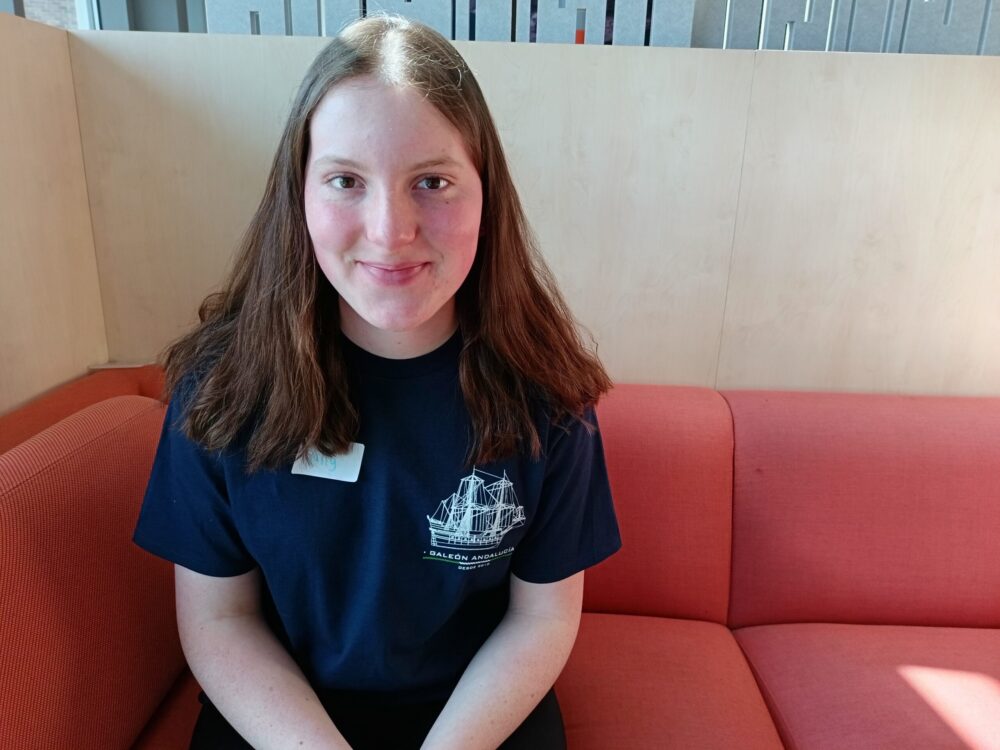
Sally Corbett, 17, says public transport is a big issue for her. “I’m with the sea cadets and go on courses quite a lot,” she says. “Public transport in Wales is far behind England and Scotland.” However she says she’s eligible for the £1 per single journey bus fare that applies to younger people in Wales, introduced by Labour and backed by LIb Dem MS Jane Dodds as part of a deal to pass the budget.
“That’s a really good idea,” she says of the scheme.
She adds: “Housing is also a big one. Many people have multiple homes – not just holiday homes. I think there should be a cap on how many rented houses someone can have. Climate change and the environment is also high up. I think Wales is doing quite well, but there’s always room for extra stuff.”
Sally says she is excited about being able to vote on May 7. “Younger people couldn’t have a say on things like Brexit but it’s affected us the most,” she says. “With stuff like immigration, I think we are bit more open than seniors.”
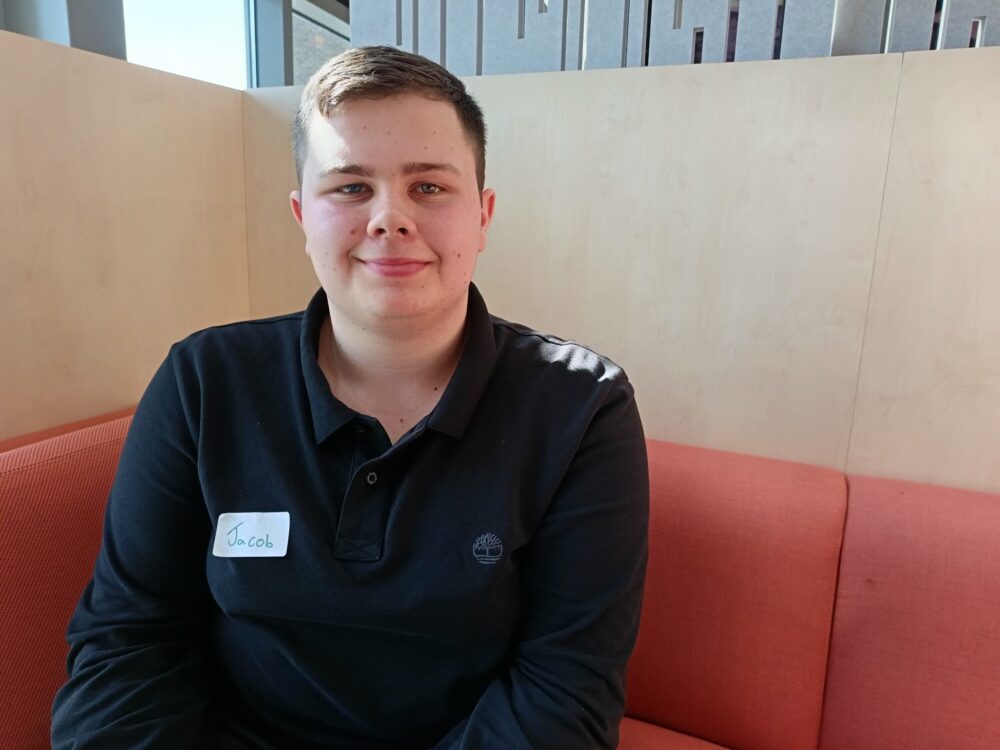
Jacob Daniel, 17, says education is a big issue. “Making sure there are enough qualified teachers,” he says. “A lot of people are leaving teaching.” He adds: “Housing seems quite daunting. Prices don’t seem to come down any more. Saving up for a house and a car feels nearly impossible.”
There is cross-generational agreement there – asked what her priorities might be if she was a young voter, Mrs Lewis agrees that housing would feature. “Jobs, and the housing market. Costs are astronomical. It’s not so much buying houses – more council houses should be built,” she says.
Jacob, who is learning to drive, says it’ll be good to have his say at the election but describes it as quite daunting. “It doesn’t really get talked about at school,” he says. “Most of what I’ve gathered is through social media.” On the question of priorities as an older person, he replies: “I probably would think about things in a different light – maybe more about social care and tax.”

Breaking away from his coffee morning group for a few minutes Ken Davies, 83, says the NHS and roads are big issues for him. “And the fact they are expanding the Senedd,” he says. “It’s a total waste of money, we can do without them. The 20mph speed limit costs millions of pounds.
“I think we should be ruled by Westminster. It’s not because I’m pro-English, but we’d be getting the same as English counties. I’m for cutting out unnecessary levels of government.”
He adds: “I’m excited about the election, but in the wrong way. I think we are wasting money and time again.” What would be uppermost in his mind as a younger voter? “Housing I suppose, or lack of it,” he replies. “I don’t know enough about the state of schools.”
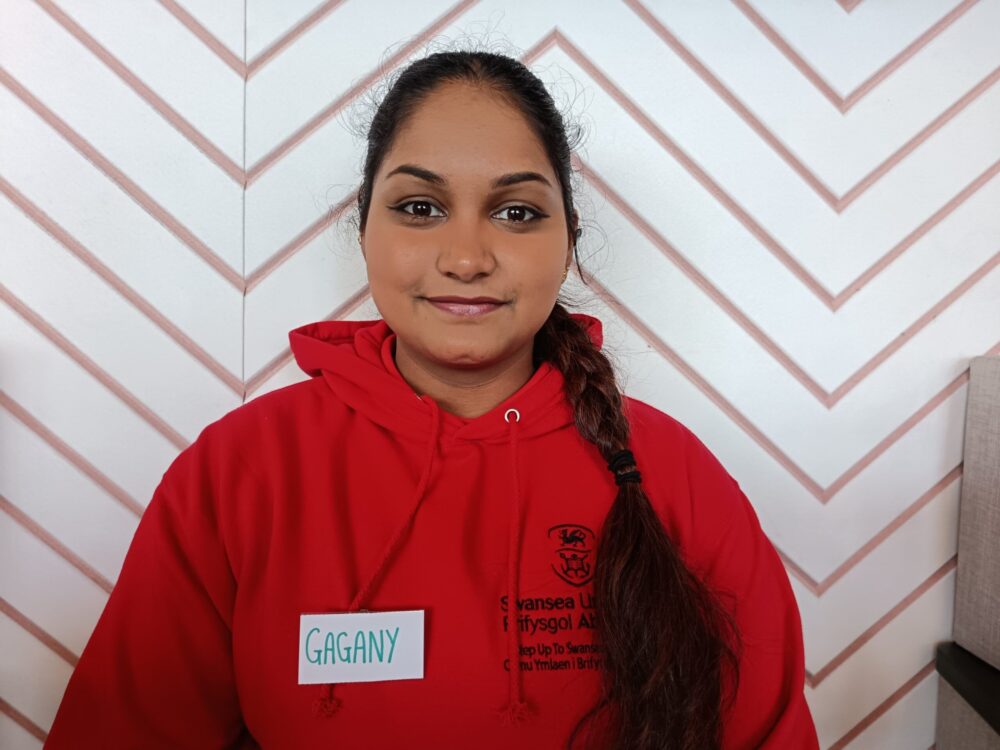
Gagany Dissanayake, 20, is keeping an eye on the sixth form students at the university’s Singleton Campus where she’s studying an education degree.
The big issues for her? “Definitely the job market,” she says. “Students need jobs after they’ve graduated. If you want a better economy you need to retain students and the availability of good jobs. I hope the situation doesn’t worsen – that worries me.
“Also it’s the expertise you’re supposed to have going for a job when you’ve been in a learning environment.” She adds: “Going for a mortgage, a house, even a car, it’s impossible. Years ago it was much easier.”
Gagany says: “I am interested in the election. I know things can’t be fixed overnight. It has to benefit the whole country.” She reckons the public would take heart if they could see that things were being done.
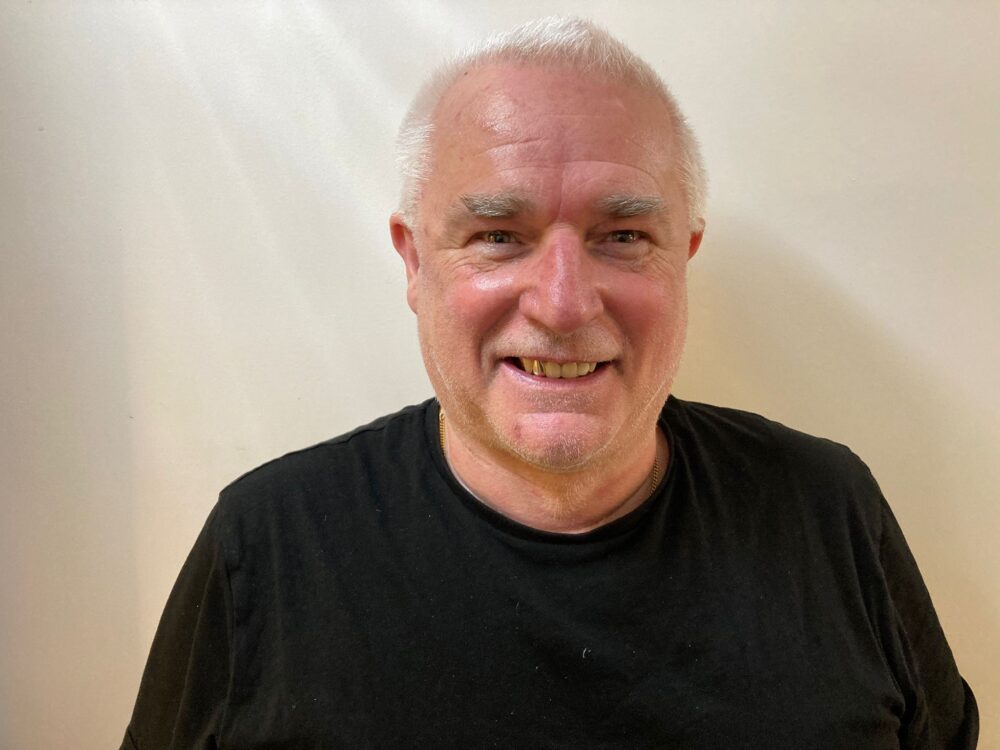
Also at the Mechanics Institute is 66-year-old Andrew Owen, who is registered blind. Immigration, although not a Senedd area of responsibility, and the ambulance service are important issues for him.
He adds: “You can’t get a doctor’s appointment when you want it.” Mr Owen says he’s also reported several potholes of late but says he’s been advised they weren’t bad enough to warrant repair. “I’d like to get Labour out,” he says. “And I think Plaid are just as bad.”
Imagining himself a younger person now, he says he probably wouldn’t have got married and had children as early as he did because of the difficult housing situation. “Back then I was able to get a council flat,” he says. “Youngsters can’t get them now, no chance.”
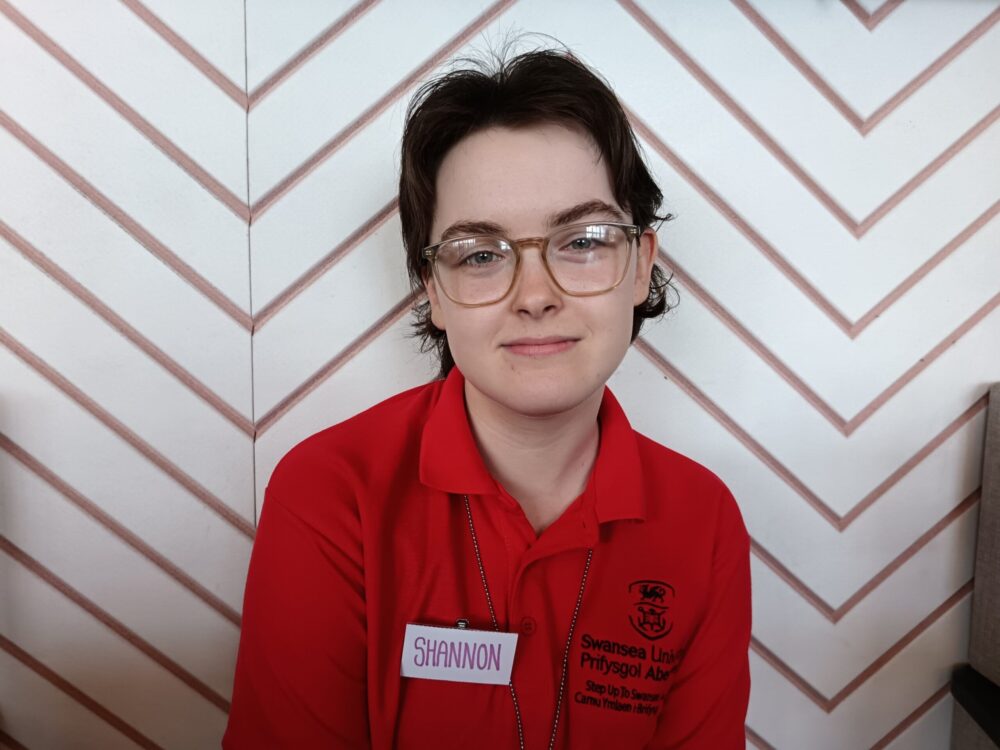
Shannon Mattocks, another student leader, says the main issue for her are LGBT rights. “I think Wales could be doing more to protect transgender and queer people and work with them,” she says. “More could be done to make them feel more comfortable.
“And also more could be done to support people with disabilities who don’t meet certain thresholds and requirements.” The 22-year-old, who has graduated with a first-class degree in history, also says younger people don’t have the job opportunities in industry their forebears had.
Shannon voted at the last Senedd election and says the new-look one on May 7 with its various changes was “more exciting”. She adds: “I have got friends to register who are first-time voters.” And her thoughts through the lens of her imaginary older self? “I think there would be a big focus on the NHS,” she says.
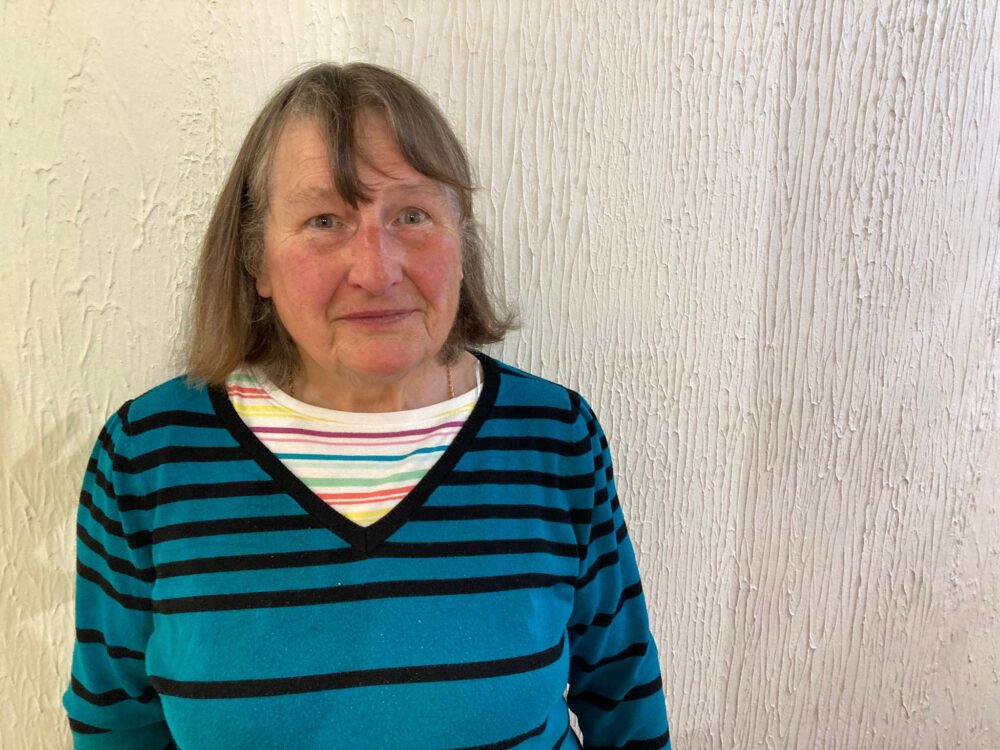
Marie Rees, 81, says potholes are a big talking point. “They should be repaired,” she says. She uses buses and rates the service “okay”. And the NHS? “Room for improvement,” she says.
She isn’t that excited about the election. “I’ll just take it in my stride,” she says. “I’ve always gone for Labour, but I do like Plaid Cymru at the moment.” And her likely priorities as a younger self? “Money, jobs and housing,” she says. “They (young people) don’t have much hope with regards to things like homes. It is a big struggle.”
Money is certainly an issue for Harvey Barker, 19, who is doing a learning disability nursing degree at Swansea University and spends a lot on fuel travelling to placements. “It’s so expensive,” he says.
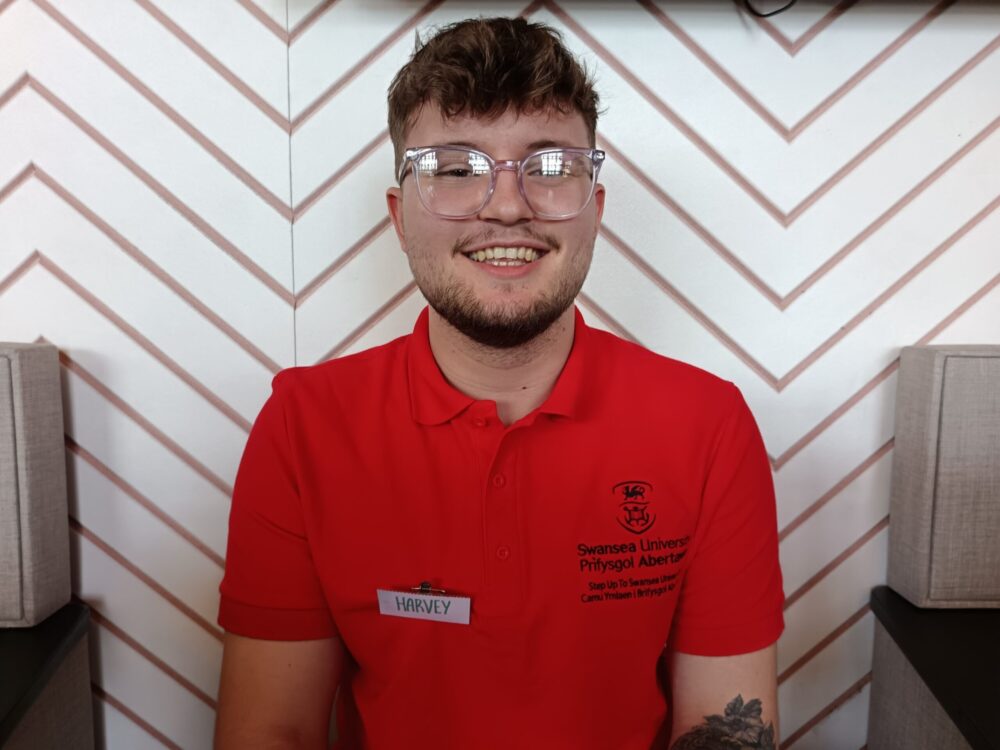
Welsh speaker Harvey, who is from Upper Brynamman in Carmarthenshire, also feels much more should be done to promote Welsh in healthcare. “I’ve been on placements where patients have relied on me to translate (from Welsh) so the need is there,” he says. Harvey also points to a lack of Welsh-speaking assessors in his field.
Another issue for him is jobs. “Paramedics and nurses can’t find jobs,” he says. “It needs an overview, whoever gets in. There a lot of polls – I’m very interested to see in May who actually comes out on top.”
Harvey reckons his priorities would change as an older person, with younger family members relying on him. He adds with a rueful grin: “I’ll probably have to keep working as a nurse; they keep on increasing the age of retirement.”
Voters will get one ballot paper and can vote for either a political party or an individual candidate. The Senedd has powers over things like education, health, housing, the environment and some aspects of transport, energy and taxation.
With six seats and a new voting system which will use a mathematical formula to distribute seats based on the proportion of votes won by each party, there is much to play for in Gwyr Abertawe.
“I think fundamentally what has to be addressed is the changes to the electoral system,” said Dr Louis Bromfield, of Swansea University. Referring to the pairing up of the Swansea West and Gower areas, he said: “Both constituencies have only ever returned two Labour candidates each since 1999.
“In the most recent YouGov MRP (a modelled poll), the new constituency was predicted to see Labour drop down into third, at around 16% of the vote, behind Reform UK at 25% and Plaid Cymru on 29%.
“This estimated that of the six seats Labour would only win one, while Plaid and Reform win two each.” The post-doctoral researcher in politics said he would personally be very surprised if Labour picked up two or more seats.
“Big picture – I don’t think previous election results really inform our expectations for 2026,” he said. “The rejection of ‘legacy’ parties is manifesting itself in many turning to the nearest parties ideologically.
“For Tories, this may see their energy channelled towards Reform, and for Labour voters, Plaid or the Greens represent the natural next step. The issue Plaid might face is that they do face opposition from Greens for that ‘soft-left’ space, while Tories don’t really have anywhere but Reform to go.
“The only threat for Reform here perhaps is apathy and voters staying home.” Dr Bromfield said things didn’t appear to be looking too good for the Tories and Lib-Dems “as projections consistently have them polling in single-digits”.
He added: “For Gwyr Abertawe, I think the recent YouGov MRP is reasonable.”
Support our Nation today
For the price of a cup of coffee a month you can help us create an independent, not-for-profit, national news service for the people of Wales, by the people of Wales.
Get more trusted Welsh news
Choose Nation.Cymru as a preferred source in Google News to see more of our journalism.



Bear in mind that i am in my early sixties and it goes without saying that the future is for the young so i want them to get out there and vote in their droves to seize that future and i will help them in that regard.
Truly frightening that people with any kind of life experience can’t see through the lies being fed by reform.