


Wales and Welsh politics after Labour hegemony
Richard Wyn Jones
As readers of Nation.Cymru, you won’t need me to remind you – the result of Thursday’s Senedd election is very much in the balance.
The polls suggest that it’s too close to call in the battle between Plaid Cymru and Reform UK for the moral high ground that will undoubtedly accrue from emerging from next week as Wales’ largest party.
And whatever the outcome of that battle, government formation looks certain to be a fraught process.
While the progressive bloc in Welsh politics is clearly substantially larger than what the Scandinavians would call the ‘bourgeois bloc’, there are likely to be more wasted votes on the progressive side as voters get seduced by the sixth seat fallacy.
The bourgeois bloc might also be more coherent given that the parties in the progressive bloc may well end up setting preconditions for their support that make it impossible to reach a consensus.
The Welsh Liberal Democrats have already set more ‘red lines’ than it can possibly have Senedd Members.
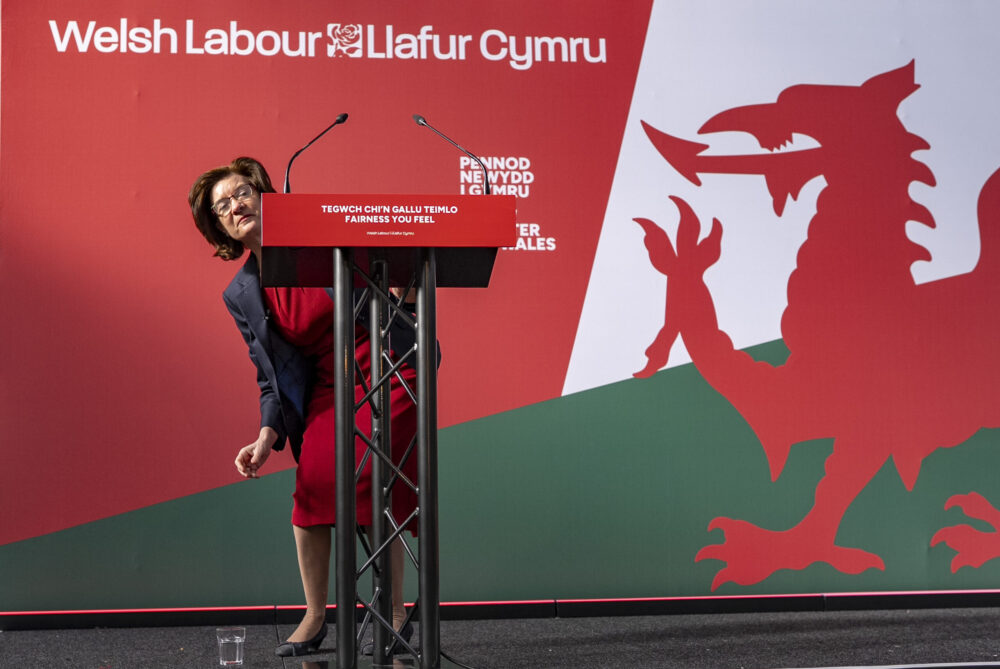
Yet amidst all this uncertainty about what next, we can be sure of one thing: 2026 will be remembered as the year in which Labour’s electoral dominance in Wales came to an end.
Labour dominance has been the central fact in the political lifetimes of everyone currently living in Wales – just think of that for a minute – and the central fact around which the rest of Welsh political life has revolved.
That the party’s aura of invincibility has already been punctured even before a single vote has been counted means that nothing can be the same again.
You may think this sounds hyperbolic, but – if so – you’d be wrong. This is because Labour’s electoral dominance has meant that the party has come to enjoy a hegemonic position in our midst.
We usually associate the term hegemony with the left of politics. It was popularised by the Sardinian Marxist Antonio Gramsci and, in the Welsh context, is probably best known because of its centrality to Gwyn Alf Williams’s magnificent When Was Wales? But, more recently, right wing ideologues have also become interested.
For the uninitiated, the key point is this: to say that Labour has been the hegemonic force in Welsh politics means much more than that it has won election after election for decade after decade.
It means that it has parlayed its political leadership into cultural – even moral – leadership in Wales. Labour values have come to be seen as the very core of Welsh identity itself.
Welsh Labour begat Labour Wales.
This is why the end of Labour dominance is set to mean so much more than a very different colour scheme on an electoral map. It will entail a potentially radical revision of our very identity, our culture and our values, and of course our sense of our place in the world.
This process is now unavoidable and was almost certainly necessary anyway, but that’s not to say that it’s to be an easy or comfortable one.
‘Morbid symptoms’
Gramsci – a man whose health was deliberately destroyed by Mussolini’s fascists – warned us that all kinds of ‘morbid symptoms’ stand to be revealed in the interregnum between the decline of one hegemonic order and the emergence of another.
Neither is it clear what will eventually replace the Labour Wales into which we have all been socialised.
Another related question is how the Labour party itself responds to the fracturing of its hegemony. If the response of Welsh Liberals to the end of their party’s dominance in the 1920s is any guide, it will be with a mixture of disbelief, grief and bitterness.
But of course, the 2020s are not the 1920s. One major difference is the existence of a Welsh level of government coexisting with that of the UK. Given that 27 (out of 32) Welsh MPs at Westminster will continue to represent Labour after the 7th of May, perhaps more likely is a period of what psychologists call ‘denial’.
That is, the party will seek to deny the significance of what has occurred, blaming the Senedd group for their fate. Yes, it will all be the fault of Eluned or Mark or Lee or Jeremy – anyone except Vaughan, of course!
If so, it will take the party a while longer before it starts to acknowledge the extent to which Wales has changed.
Recrimination
And after that? Who knows. But again, it’s tempting to look back to the 1920s and at the way the rump of Welsh Liberals divided into smaller factions characterised by mutual loathing and recrimination.
Power was the glue that had kept the party together during its golden age. Once it was rejected by the electorate, the party split irrevocably which, in turn, speeded its journey into irrelevance.
The current enfeebled state of the Welsh Liberal Democrats shows us how far the previously mighty have fallen.
Liberal Wales was swept away and has never even threatened to re-emerge.
For those who have only known Labour Wales it remains hard if not impossible to imagine how Welsh Labour could possibly fall so low. But we should take nothing for granted as Wales enters a new era in its political history.
Professor Richard Wyn Jones is Director of the Wales Governance Centre at Cardiff University
Support our Nation today
For the price of a cup of coffee a month you can help us create an independent, not-for-profit, national news service for the people of Wales, by the people of Wales.
Get more trusted Welsh news
Choose Nation.Cymru as a preferred source in Google News to see more of our journalism.



I must admit, to having been disappointed by the analysis in the run up to this election and indeed for many years before. Half a century ago, a revolution occurred in the music scene; punk rock swept away the pretentious, unworldly, elitist prog rock. Analogizing Nigel Farage to Malcolm McLaren, the appeal of Reform could be summed up as: “Never Mind the B******s Here are Reform”. Maybe it is just “the Great Rock ‘n’ Roll Swindle”, but it happened.
No it was Fun Boy Three “The Lunatics (Have Taken over the Asylum)” and their predecessors “Ghost Town”
It’s all about globalisation. Witness the fact that Eluned is importing nurses from Kerala when – as reported on these pages – Welsh nurses can’t find a job. Surely that can’t be right. Good to luck to the Kerala nurses, sure they are superb, but it is very strange.