


Wales Ape and Monkey Sanctuary: A beacon of hope and kindness in Cymru
Stephen Price
When we think of the Bannau Brycheiniog National Park, we think of mountains, waterfalls, woodland and the like. But the park is so much more than that – community, industry and a wealth of other attractions that could occupy a lifetime of exploration.
Despite growing up in a small village in the national park, I learned only last month of yet another of its hidden treasures. One I am ashamed to admit I’d not only been unaware of until mere weeks ago, but one I initially felt a little concerned about visiting upon the suggestion of one of my closest friends – Wales Ape and Monkey Sanctuary.
Firstly, let’s get my concern out of the way. I’m totally against zoos and incredibly sensitive about the idea of caging animals, especially wild animals.
Having visited supposed “sanctuaries” in the past, I’ve been shocked at breeding programmes condemning countless more animals to a life in cages, often in pursuit of revenue rather than reintroduction into the wild.
Before even agreeing to visit Wales Ape and Monkey Sanctuary, this concern needed addressing and thankfully their very raison d’être is to be a true sanctuary – nothing more, and nothing less.
Without any further deep-dive into it, I used a free day to pay the establishment, and its inhabitants a long overdue visit.
History
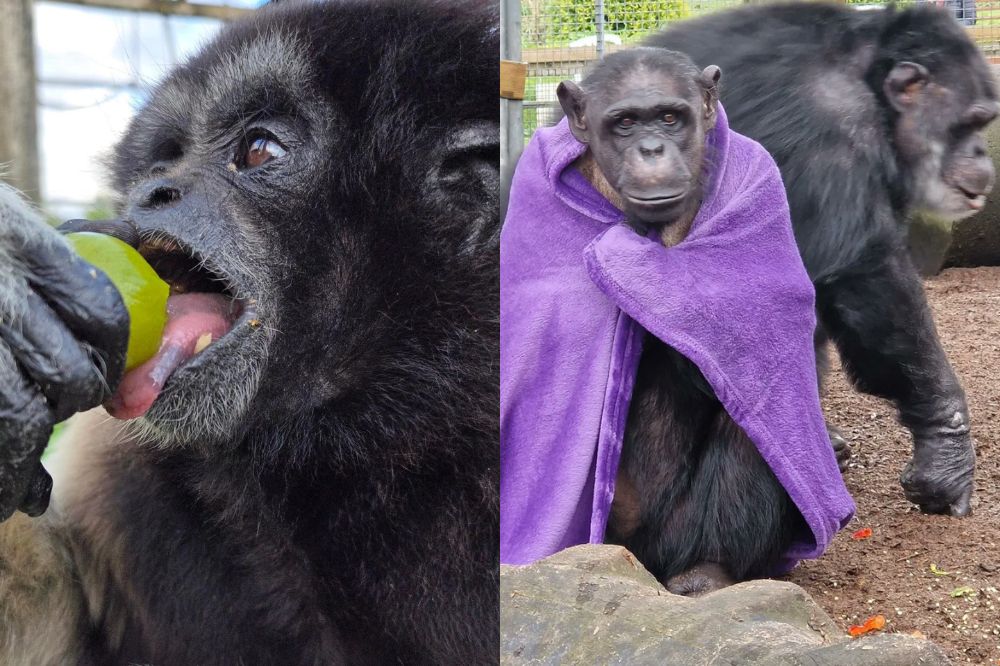
Wales Ape and Monkey Sanctuary rescues and provides a home for many types of unwanted animals, especially primates such as chimpanzees, gibbons, baboons, spider monkeys, vervets, capuchins, tamarins, macaques and marmosets.
Although they specialise in the care and protection of primates, they say they cannot stand by and see other animals in need of help. You will therefore find meerkats, wolf dogs, horses, donkeys, pigs and others at the sanctuary.
All are considered equally important members of the sanctuary’s extended family. And all reflect one common theme – abandonment, confinement and past abuse or neglect from humans.
The sanctuary is owned and operated by husband and wife Graham and Jan Garen, and a team of dedicated workers and volunteers, and sits in impressive settings of Cefn-yr-Erw – once a traditional hill farm, which Jan inherited from her father.
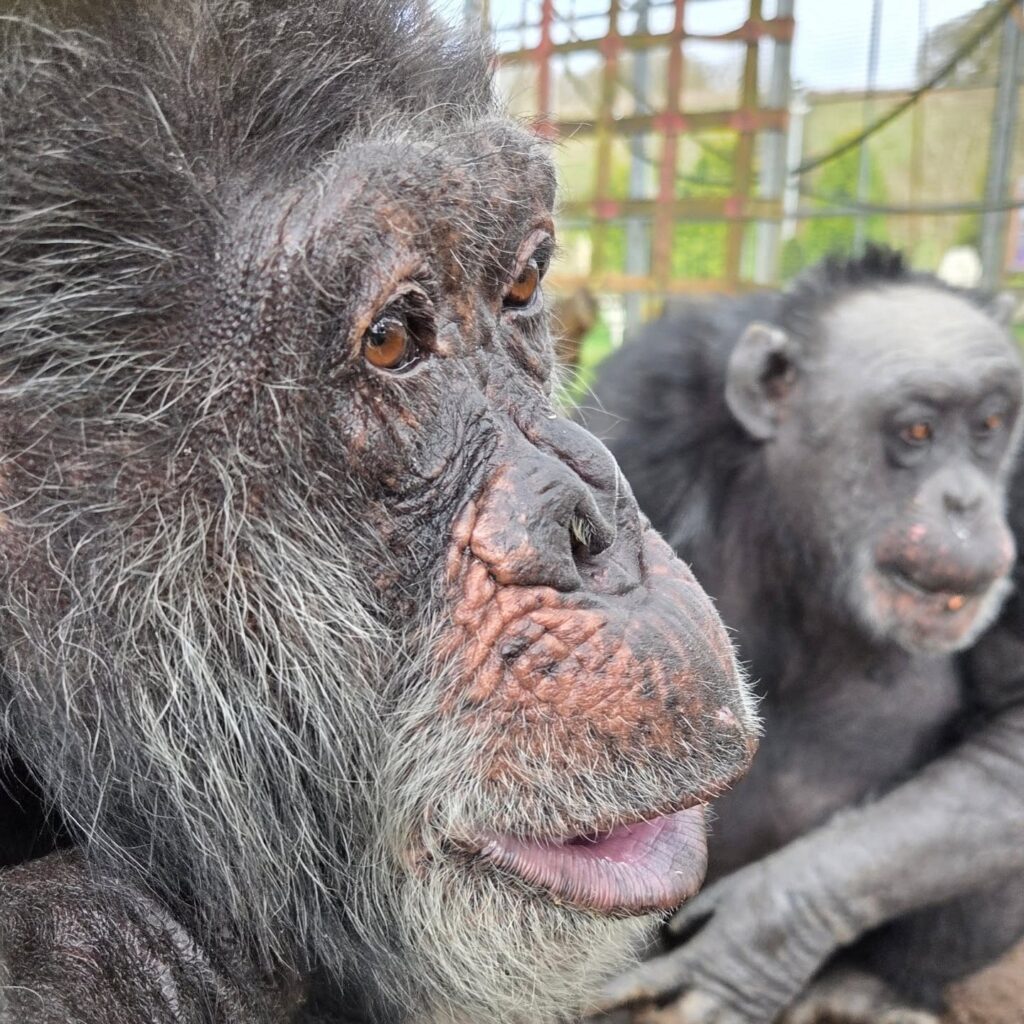
With a growing menagerie of animals already, when Penscynor Wildlife Park closed in 1998, the sanctuary took seven unwanted chimpanzees from the park and were able to house them within the sanctuary.
These, and many of the others now living out their lives in peace, would have been shot without the intervention of the sanctuary, which provides a final port of call for monkeys and primates in particular who are finally able to begin to heal the scars of their former lives.
Importantly, unlike many sanctuaries with breeding programmes, the animals that they rescue are not able to survive in the wild. They try to make the rest of the animals’ lives as enjoyable as possible, and the sanctuary has a strict policy of not breeding any animals.
A day I will never forget
As I parked up at the site, the tears began to fall from my eyes.
Anyone who knows me, reads my writing, follows me on social media, knows that I am a passionate supporter of animal rights, animal equality, and compassion for all living beings.
I’ve been a long term paid-up supporter of a few charities that actively fight against vivisection, and it stirs some of the most upsetting feelings when I see images that I refuse to look away from – knowing that these animals are not voiceless, but that we are simply not listening to what they have to say.
Needless to say, then, knowing that some of the apes and monkeys at the sanctuary come from lives previously lived in laboratories, circuses, tiny cages and the like makes the tears flow quite easily.
We think we know what happens behind closed doors at scientific labs – tales of smoking monkeys and rabbits tortured for makeup have hit the press, but scratch the surface and the horrors stain the mind for a lifetime.
The pictures – out of sight, out of mind – speak for themselves.
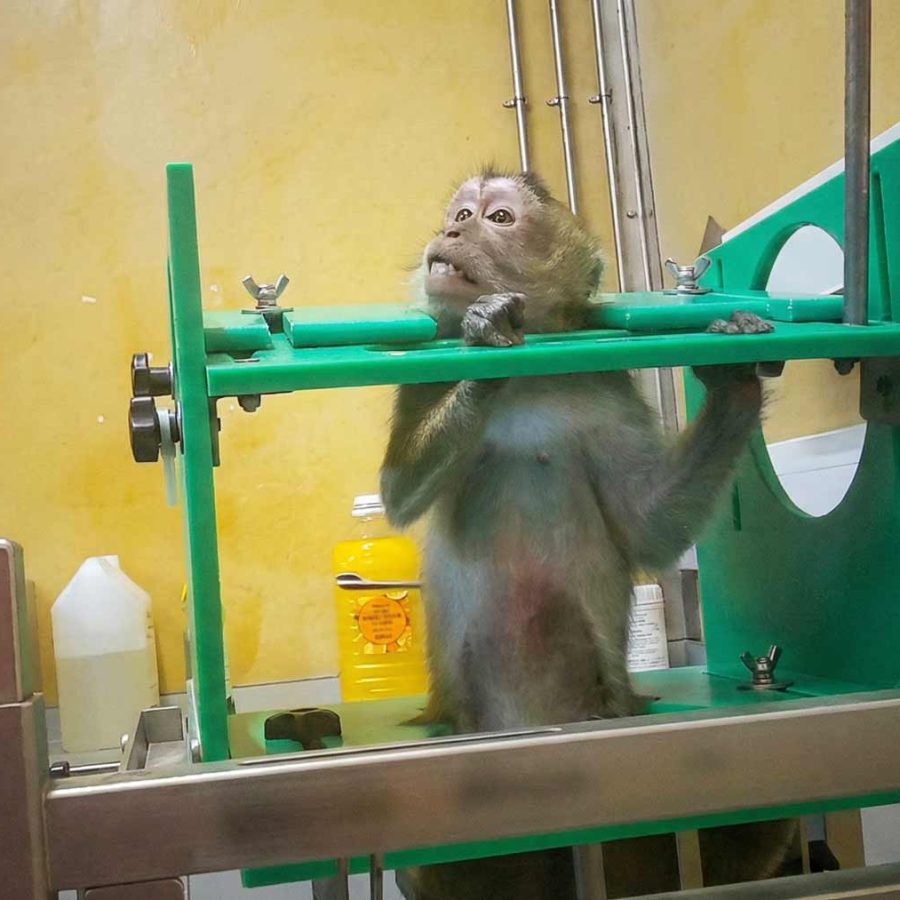
Across the world, hundreds of thousands of primates are imprisoned in laboratories, where most of them are abused and killed in invasive, painful, and terrifying experiments. While it is well known that they are sensitive, intelligent beings, experimenters treat them as if they are disposable pieces of laboratory equipment.
Primates abused in experiments are bred in government or commercial facilities, born in laboratories, or captured in the wild in countries such as China, Cambodia, and on the island of Mauritius.
Babies born in laboratories are forcibly torn from their screaming mothers and permanently separated from them—usually within three days of birth. Numerous investigations have found that in order to abduct primates from their homes in the wild, trappers often shoot mothers from trees, stun the animals with dart guns, and then capture the babies, who cling, panic-stricken, to their mothers’ bodies. Some wildlife traders catch whole primate families in baited traps.
The animals are packed into tiny crates with little to no food or water, and taken to filthy holding centres where they await long and terrifying trips in the cargo holds of passenger airlines.
Besides having their most fundamental needs and desires disregarded, primates imprisoned in laboratories are subjected to painful and traumatic procedures, including the following:
Pharmaceutical tests, where thick gavage tubes are forced up primates’ nostrils or down the animals’ throats so that experimental drugs can be pumped into their stomachs—even though animal tests have an appalling 95 percent failure rate in predicting the safety and/or effectiveness of pharmaceuticals. Video footage taken by whistleblowers continuously reveals the anguish and trauma that monkeys used in pharmaceutical tests endure.
Other tests include maternal-deprivation experiments, invasive brain experiments where these sensitive, intelligent animals then have their bodies immobilised in restraint chairs and their heads bolted into place as they are forced to perform a variety of behavioural tasks while their brain activity is recorded.
In order to coerce the monkeys to cooperate, they are sometimes deprived of water for up to 24 hours at a time. When the experiments conclude, most of the animals are killed and their brains are removed and dissected.
The shelter shared only last month: “We have rescued many monkeys from labs over the years, this is just a few of our current ex lab residents (Capuchin Stanni, Long Tailed Macaques Grace & Claudia, Pig Tailed Macaque Elfie, Marmoset Angus and Vervet Francis).
“Dread to think what they’ve been through, some didn’t even have names when they came here, just known by their number tattooed on them!!
“Just this past week new footage from UK labs has been released showing monkeys, dogs, rabbits, pigs & rats suffering 💔 The UK government vowed to phase out animal testing but this new footage shows just how many amimals are still being tested on.
“This needs to stop! Please consider emailing your MP to take action!”
Hope
Sanctuaries like the Wales Ape and Monkey Sanctuary – true sanctuaries – offer hope.
The sanctuary receives no funding from the UK government, Welsh Government or local councils and therefore relies entirely upon donations from the public and also from the entrance fee paid by visitors.
Currently, the sanctuary’s residents include gibbons, chimpanzees, baboons, spider monkeys and more.
Each one as different as you and I, observing them is at once a deep joy and also a fire – one that demands we do more.
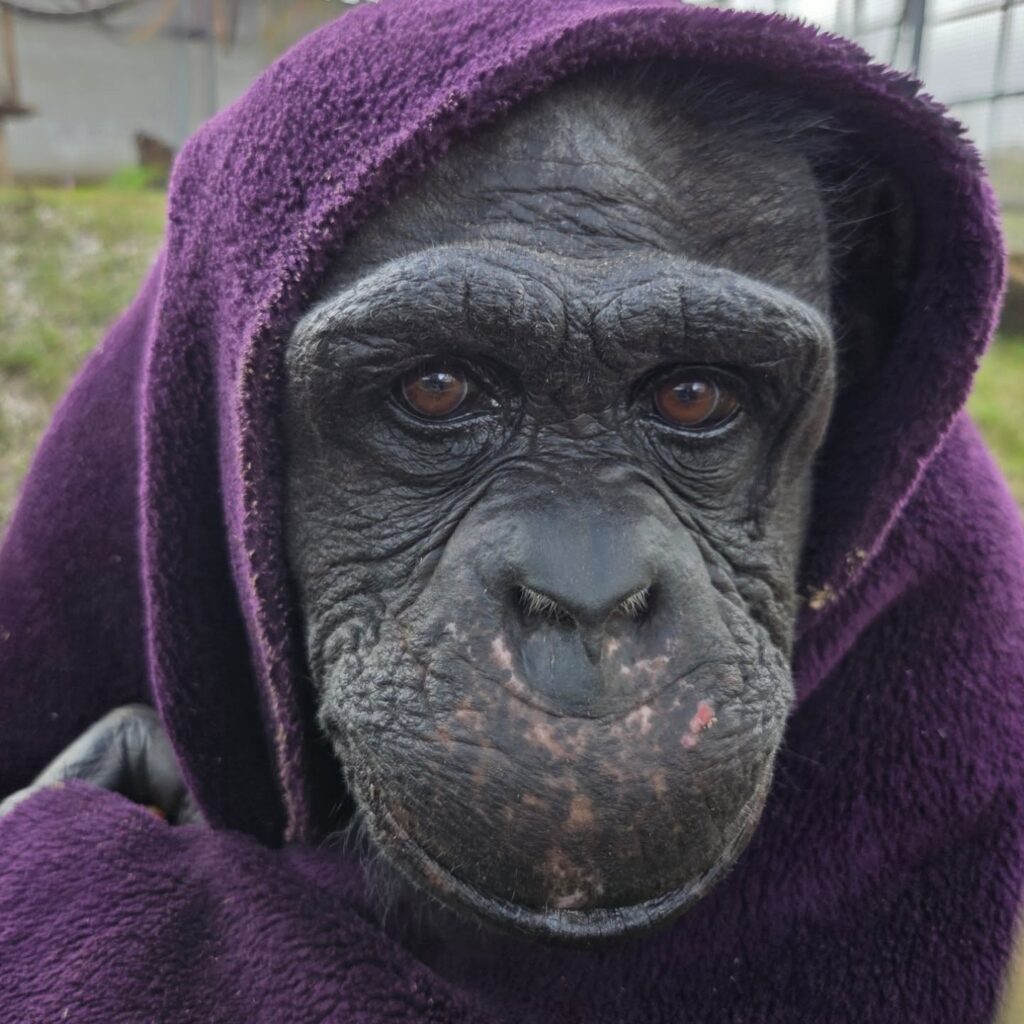
Take just one example – Nakima. The sanctuary writes: “Nakima was born around 1975 and was captured in the forests somewhere in Tropical Africa. She was smuggled into Belgium as a baby. Who knows what fate befell her parents, certainly her mother would have been killed trying to protect her.”
She was given a blanket and for some time would not be parted from it, wrapping herself in it even outside. And today, she can still be seen in her blanket, in peace, surrounded by friends.
Others include a spider monkey kept in a cage, or Heidi and Mushu the lab macaques who were rescued from a lab – their previous lives unthinkable now.
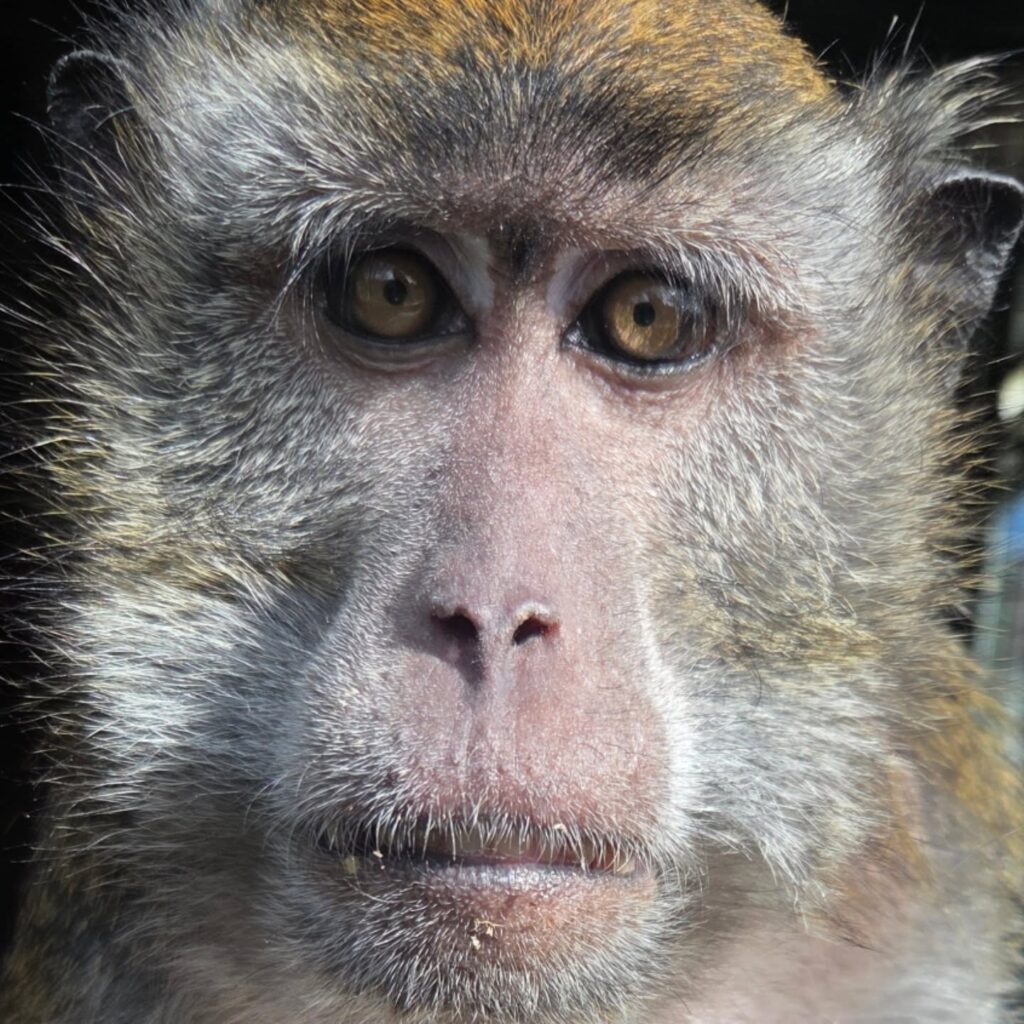
Or there’s Arthur and Rosalie, who came to live at the sanctuary following rescue from a circus – a life of abuse, of being broken down and made to perform for ‘entertainment’.
The sanctuary shares: “The circus owner had rescued Arthur from the pet trade and Rosalie from a closed down zoo. They were both made to perform at the circus doing lots of different tricks. They had to ride on scooters and horses, walk the beam and sit down at a table to eat and drink. All while wearing human clothes
and being in chains.
“The chains were cut off before being loaded into their transport crate, how freeing that must have been for them. They can usually be seen sprawled out on the top platform grooming each other, eating or just observing the world in a peaceful way.
“We will never know what they have both had to endure throughout their lives but we do know that they will never have to suffer at the hands of humans again.”
Currently, the sanctuary is preparing for new enclosures for their latest rescues – again from a life ‘lived’ in a laboratory. The horrors they will have witnessed shame humanity.
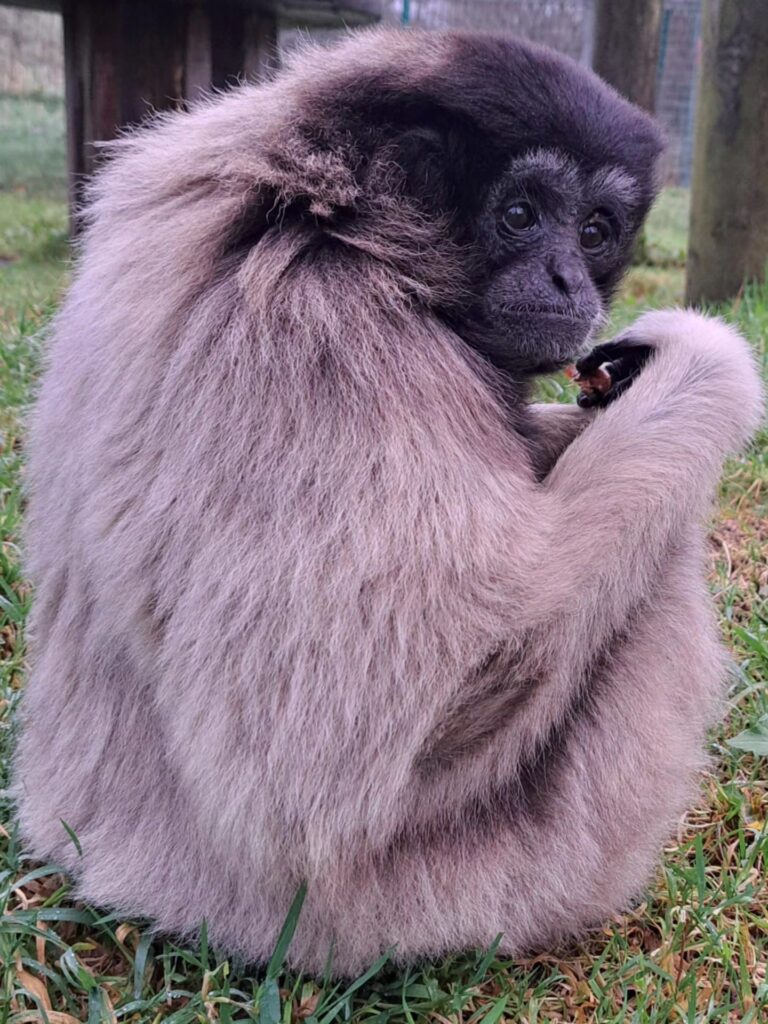
The new additions to the sanctuary bring us face to face with the victims of man’s disregard… no, downright cruelty to the animal kingdom.
It is our duty to face them, to protect them and support them.
And to take our hats off to those in Wales, and the world, giving primates and all animals in need solace, sanctuary and love.
Give them a visit if you can.
And hold on to hope.
Find out more about the Wales Ape and Monkey Sanctuary, and help support them online with a donation or by supporting a resident here.
You can also purchase items to go directly to the animals from their Amazon Wishlist here.
Wales Ape and Monkey Sanctuary is open every day from 10.30am, including bank holidays. Visit at Caehopkin, Abercrave, SA9 1UD
Read more on ape and primate experimentation at PETA and help bring about change by supporting anti-vivisection charities such as Cruelty Free International and Animal Free Research UK.
Support our Nation today
For the price of a cup of coffee a month you can help us create an independent, not-for-profit, national news service for the people of Wales, by the people of Wales.
Get more trusted Welsh news
Choose Nation.Cymru as a preferred source in Google News to see more of our journalism.



Can I just say thank you for this well thought out article. I was aware of the sanctuary and had meant to visit but never got round to it. I never realised the great work they do. On the back of this have purchased a couple of items off the wishlist list and encourage others to help out however they can.