


‘We have to make this’: Inside the star-studded retelling of Owain Glyndŵr’s story
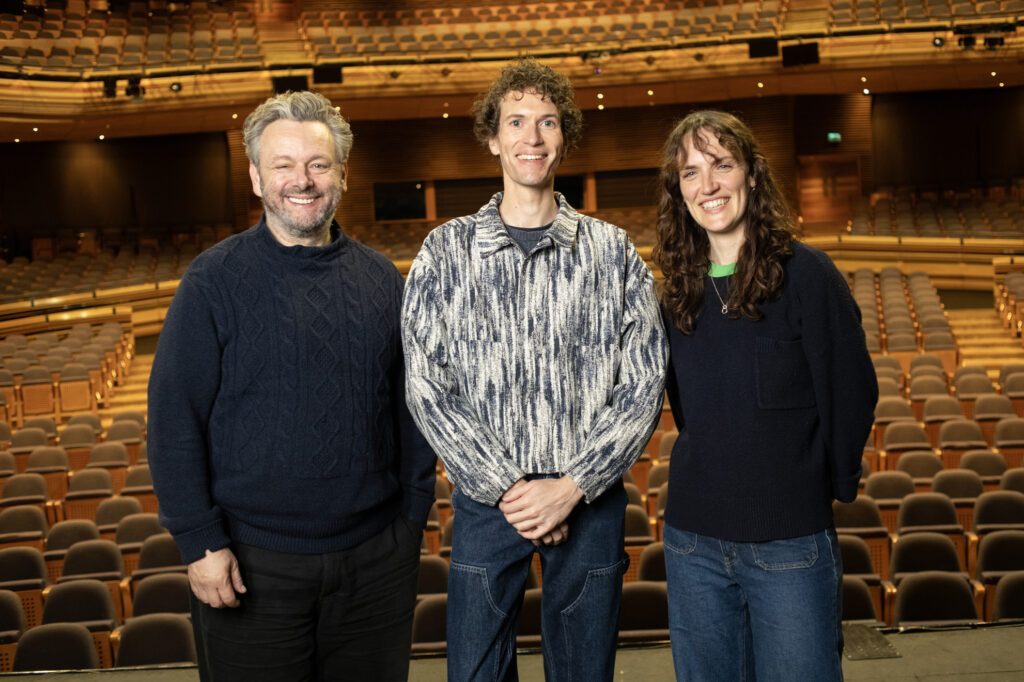
Amelia Jones
Owain Glyndŵr’s rebellion against English rule is one of the defining stories of Welsh history. Now, more than 600 years after his uprising began, Owain & Henry brings that story to the stage on an epic scale.
Written by Gary Owen and starring Michael Sheen as Glyndŵr, the production follows the Welsh prince as he rises from landowner to leader of a rebellion, set against the political turmoil of early 15th-century Wales and England. But beneath the battles and political intrigue, the play is also a deeply human story about power, loyalty, family and the choices people make when the consequences are impossible to escape.
The production will run from 5-28 November 2026 at the Donald Gordon Theatre in Wales Millennium Centre.
Owain & Henry is being billed as a major new telling of a story that many Welsh people know – and many others have never been taught. The team behind the production spoke to Nation.Cymru ahead of stepping into the rehearsal room.
For Swansea-born actress Sophie Melville, who plays Lois, the scale of the production is a huge part of why the project appealed to her. She said: “Obviously, there’s incredible work being made all over the country, but the fact that we’re in a 1,900-seater and 25 people cast, you are able to be as big as you want without having to rein yourself in.”
Melville says she remembers being told at drama school that actors needed to go to London if they wanted to work on productions of this scale. The fact that something so ambitious is being made in Wales is therefore particularly exciting for her.
Her character, Lois, experiences the rebellion from a deeply personal perspective. At the beginning of the play she is living with her family on a farm when invaders arrive and take everything she has, including her husband.
Her grief eventually becomes a desire for revenge, sending her on what Melville describes as a “bloodthirsty rampage”. The actress says the physicality of the production was another attraction, with the play filled with movement and fighting – two things she describes as among her favourite aspects of performing.
View this post on Instagram
Alongside the battles and spectacle are much quieter, more personal stories. Rakie Ayola who is best known for her role in BBC drama Holby City plays Glyndŵr’s wife Mared Ferch Dafydd, a character she describes as “practical, forward thinking and a realist”.
Rather than simply standing behind her husband, she is the person questioning his decisions and making him confront the practical consequences of leading a rebellion.
Ayola said: “She’s the person going, ‘we’ve got all these people, we’ve got nowhere to live, we need to feed them.’”
Even when others insist there is enough food, Mared is thinking beyond the immediate moment.
She added: “She’s going, ‘Enough for three days. What happens after that?’”
It is a role Ayola clearly relishes because of the way Mared thinks through the consequences of every decision. She said: “She’s fearful, but she thinks it through,
“If we do that, that will happen. And then they’ll do that. Then we’ll have to do that. Are you okay with that?”
Ayola even recognises something of herself in that process, comparing Mared’s approach to conversations she has had in her own marriage.
She said: “I think even in my own life, sometimes my husband’s will say: ‘I’m going to ring up and I’m going to say this.’ And I go, yeah, okay, you can do that. Just bear in mind that if they don’t say sorry, what’s your next move?”
The human behind history
That human perspective is central to Gary Owen’s writing. Rather than treating Glyndŵr simply as a larger-than-life historical figure, the playwright is interested in the people underneath the mythology. He focuses on what they wanted, feared and felt in the moment.
Talking about his writing process, he said: “When you start writing scenes, they’re really human things. They’re just somebody moving from moment to moment.
“As soon as I start writing a scene where he’s talking to his wife, that makes it quite personal, quite instantly.
“That’s one of the really enjoyable things about doing this kind of work, is that we know an awful lot about the facts of what happened. There’s a huge amount of documentary evidence about what happened and when and how much everything cost, but we don’t know why people did things or what they were feeling.
“That’s the stuff that historians don’t know and I get to just make up.”
The play has also taken a long route to the stage. Owen says he has been working on the script for over a decade, partly because he had noticed the absence of a large, populist English-language telling of Glyndŵr’s story, then the production caught Michael Sheen’s eye.
He is co-directing the production alongside Artistic Director and Joint Chief Executive of Theatr Cymru Stefano Donnelly. Talking about his collaboration with Sheen, he said: “It’s been really great working with Michael trying to get into how we’re going to stage what is such a remarkably epic piece, but also has these pockets of really intimate dialogue, you know, in the kitchen chatting that feel really contemporary.
“So almost that kind of zooming out into battlefields and all the things you’d expect from a historical epic, but also being able to achieve the texture and tone of those more personal, intimate moments.”
Welsh history
That question of who gets to tell history sits at the heart of the production. For those behind Owain & Henry, the project is not simply about bringing a famous historical figure to the stage. It is about telling a major Welsh story on a scale that has rarely been attempted in Wales.
Donelly said the production also raises questions about the way Welsh history has been taught, particularly when it comes to the country’s own rulers.
He added: “It’s funny, isn’t it, that in our history classes we know every single one of the kings of England.”
It is a gap that Melville and Ayola also recognised from their own education. Melville said: “It’s nuts. We don’t really learn our own history, especially in English medium schools, but you really are told everything about England. So not only is it educational, but it’ll be thrilling and epic and it’s made me want to learn more as well.”
Ayola agreed, adding: “I think people will study this play and I think that it will become the history and there’ll probably be a point where Gary will have to tell people which bits he made up.”
Unmissable opportunity
For Wales Millennium Centre and National Theatre Wales, the project offered an opportunity to take a Welsh story and give it the scale and platform they felt it deserved.
When they first read the script, the reaction was immediate, according to Graeme Farrow, Chief Creative and Content Officer at Wales Millennium Centre.
He said: “When we read it, we just said we have to make this.
“It’s a foundational story about who we are. I just felt like an unmissable opportunity.”
For Farrow, it also represents something much bigger for the Welsh creative sector.
He added: “It kind of says everything about the ambition and the belief in Welsh writers and Welsh talent to tell their own stories at scale and also to tell any stories.
“It doesn’t have to be this epic tale of a New England, it could be anything. But I think what this production will do is show the world how spectacular Welsh theatrical talent is and Welsh creative talent.”
That ambition comes with risk, particularly at a time when new work is increasingly difficult to finance. But Farrow said that risk is part of the point.
He said: “When Welsh National Theatre was founded, we said we wanted to work at scale and promote Welsh talent and have that vision,
“We’re doing it so we can demonstrate that it is possible to do this, to fund it, to take the risk, to make it work.”
The production also means that investment stays in Wales, with the work made locally and its revenue reinvested in the Welsh creative sector. For Farrow, that is part of the wider purpose behind putting on a production of this size.
He added: “Go big or go home. This was about demonstrating an ambition and a vision for the future, and I think you’ve got to make the space and conditions for that.
He believes Wales Millennium Centre has a responsibility to do more than simply bring established productions to Cardiff.
He said: “Otherwise, Wales Millennium Centre will be putting on West End musicals for the rest of its life, which is great, but it doesn’t make it a nationally significant organisation that supports Welsh talent and Welsh companies.”
Owain and Henry will take place 5-28 November 2026 at Wales Millennium Centre. You can book tickets to see the production here.
Support our Nation today
For the price of a cup of coffee a month you can help us create an independent, not-for-profit, national news service for the people of Wales, by the people of Wales.
Get more trusted Welsh news
Choose Nation.Cymru as a preferred source in Google News to see more of our journalism.



Since learning more about Welsh history and the injustices Wales has experienced, actor Michael Sheen returned his OBE. This led him to question Wales’s relationship with the monarchy, including the need for a Prince of Wales, and to call for a wider public conversation. This is particularly relevant in light of Prince William’s role as President of the Football Association, in which he supported England against Wales during the 2020 European Championship and the 2022 World Cup. Do we really need, in the 21st century, a prince foisted upon us who is not Welsh, does not live in Wales, and… Read more »
I agree, abolish the prince of Wales title, but we don’t need a king of Wales. Monarchies aren’t very 21st century.
I agree Y Cymro, but like Owain who fought for the English married an English Barons wife, it was when he had to keep his lands and the people who worked on his land he turned. I agree if he had not lost his lands he would like all the elite, Owain would have looked after him self. So good on Henry for betraying Owain, what a mistake that was, still he came good in the end, pity about Usk castle, funnily enough the Melyn maes, is still there at the back of the Castle, got to be a chemical… Read more »