


Slouching Towards Cardiff Bay – a warning for Welsh democracy
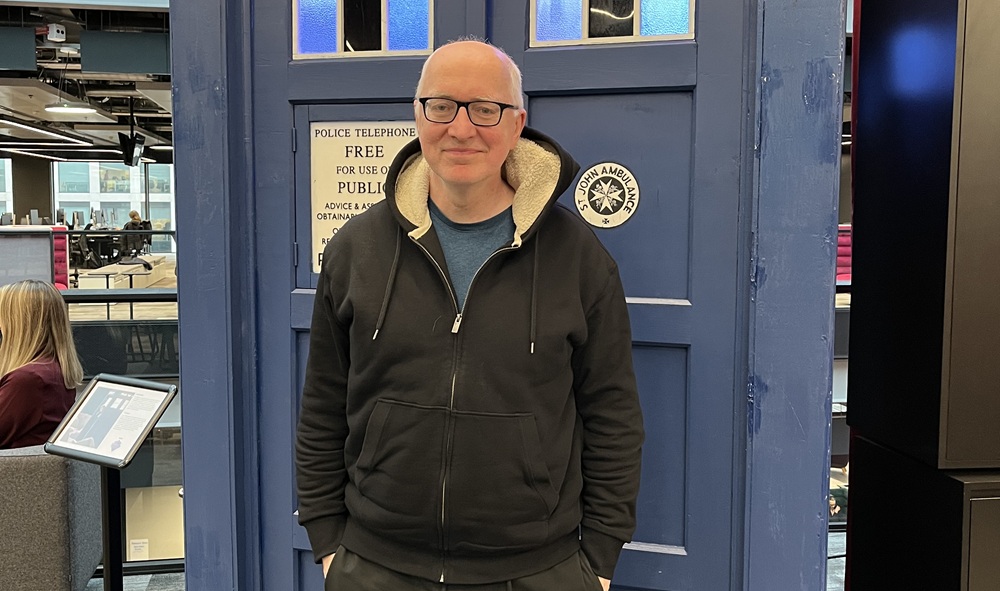
Our books editor, Des Clifford, launches his first book this week. ‘Camu Tua’r Bae/ Slouching Towards Cardiff Bay’ is an essay which anticipates the second era of Welsh democracy. Jon Gower has been finding out about this debut.
Let’s start by unpacking the title…
Slouching Towards Cardiff Bay – so Cardiff Bay is short-hand these days for Senedd Cymru. The title is lifted from a WB Yeats poem, The Second Coming, about the Beast from the Book of Revelation “slouching towards Bethlehem to be born”.
Obviously it’s an inversion of the birth normally associated with Bethlehem and a suggestion of coming chaos. Perhaps that’s all a bit operatic for the normally sleepy world of Welsh politics, but it’s a warning that Welsh democracy is precious and important and should never be taken for granted.
Part of your motivation for the book is the importance of the forthcoming Senedd elections? What is the importance?
In a way I’m less bothered about the immediacy of the coming election than I am about the longer term of Welsh democracy. We’re moving from the first era of devolution to a second era. The obvious difference is we’re moving to a larger Senedd with more Members . It seems clear, too, that there’ll be a change of government after the long Labour hegemony.
We don’t yet know what form the new government will take, but either way it’ll be a massive change. We live in an age of populism in politics and turmoil in the wider world which is concerning and not something we can ignore. Scapegoating and division have been introduced to the political discourse here and I appeal to our traditions of tolerance, neighbourliness and concern for each other. Wales is a collection of communities, not a pool of sharks each looking out for themselves.
Equally, there’s no getting away from the fact that people feel disappointed with much of what politics has served up – in Wales and the wider UK context.
Politicians need to be braver in prosecuting solutions to real world problems instead of sticking with a mushy consensus and the status quo. I think that sense of “stasis”, nothing ever really changing, is part of why people got fed up of Labour – perhaps inevitably after 27 years. What wasn’t inevitable was the failure of the Labour UK Government to deliver something for Wales, and the mealy-mouthed response from the Welsh Government. The bottom line is that everyone elected by the Welsh people, for whatever party, should be pushing for Wales and defending Welsh interests all of the time. If they’re not doing that, what’re they doing there? They should shove off and make room for someone who will defend Wales.
You’ve also got out the crystal ball to imagine a future Wales. How does it look to you?
The future is unwritten, of course, and no one knows. Welsh voters want parties who take them and their issues seriously and who will stand up for them.
We need decent quality public services. This needs honest analysis of why we underperform with some aspects of health and education attainment. Decent health coverage and excellent education are two things that the Welsh Government should be able to deliver, even if they did nothing else.
It’s easy for governments to get distracted away from the big issues because they find them difficult – that’s exactly why they should run towards them and give them all their energy and priority.
We also need to breathe life and energy into Wales’ economy. I know of so many people who’ve built successful businesses outside Wales – we need to capture that energy at home. We should be on a gradually rising economic trajectory.
I like to imagine a future Wales confident and at ease with itself, with strong institutions working with clear purpose, tolerant and a shared spirit uniting town and country. I find divisions between urban and rural communities especially sad, both are essential to the spirit of the country. I’d also like everyone who lives here to feel they belong, no one should feel left out or ignored.
There’s a poem by W. B. Yeats running through the book. What’s its significance?
Back to The Second Coming…Yeats wrote it in 1919 when the world was going to hell in a handcart. World War One has just ended, the centre of Dublin was destroyed by the Easter Rising and a vicious revolutionary war had just broken out between the IRA and British forces, the Spanish Flu epidemic was rampaging, killing thousands.
In Wales we’ve lived through a long period of peace and relative prosperity (with some caveats) but the events of recent years clearly remind us that nothing can be taken for granted. We should elect leaders of good judgement and press for justice and the operation of rules in the world – the alternative is just grim.
Presumably this book aims not only to inform but also to engineer change. What needs changing? And how might such changes be wrought?
In democracies change comes about through electing good governments capable of making good decisions.
The political parties have responsibilities to encourage participation and attract talent and develop solutions to society’s challenges.
The rest of us have responsibilities to vote and to keep ourselves well-informed on the issues. We need to preserve critical thinking, appreciate what’s positive and be critical of shallow or incompetent thinking.
Clear-sightedness is often the first thing to go when people give blind loyalty to a political party. Loyalty is fine, but it should never be blind.
More practically, there are practical changes needed in our constitution to make government in Wales, and Britain, more effective. I find it depressing that the UK political parties show zero interest in Wales (or Scotland or Northern Ireland).
It’s possible after the election we’ll have First Ministers in three out of four UK countries supporting separation. You’d think that would be enough to make UK political parties sit up and take some notice but I’m not confident they will.
It’s your first book. Excited by the debut?
Yep, first book. Excited.!
What will follow this book?
I’m doing a kind of memoir of the birth of devolution 1997-2000. It’s a minority sport but there’s a little community of interest out there!
Beyond that, I’m thinking of a few ideas but nothing nailed down yet. The thinking is the hard part!
Slouching Towards Cardiff Bay is the first in a series of essays under the banner Corn Gwlad, to be published by the H’mm Foundation. There will be 3-4 essays a year tackling different aspects of life in Wales, with Des Clifford as the series editor.
The book will be launched at 19.00 on Friday the 24th April at Oriel Afallon, 13, Whitchurch Rd., Cardiff, CF14 3JN when Des will be in conversation with Martin Shipton. Tickets are free but you should register by sending an e-mail to [email protected].
Support our Nation today
For the price of a cup of coffee a month you can help us create an independent, not-for-profit, national news service for the people of Wales, by the people of Wales.
Get more trusted Welsh news
Choose Nation.Cymru as a preferred source in Google News to see more of our journalism.


