


Weird Britain: Guardian names two Welsh locations among ’10 glorious oddities to visit’
Nation Cymru staff
The Guardian has highlighted two ‘quirky’ Welsh locations among ’10 glorious oddities to visit and marvel at’ following the publication of an acclaimed new book.
Following the publication of Weird Guide by Dave Hamilton, the author discussed ten standouts for the recent article, writing: “One thing unites the British more than anything else. It stands there in plain sight but is rarely spoken about.
“We may try to hide it; we may not admit it to ourselves; but under the surface, deep down, in the nicest possible way, we are all a little odd. Not in a sinister way, just eccentric, weird, unpredictable and downright wonderful.
“As a nation we have an artistic and creative zest and boffin-like inventiveness. In fields of innovation, we led the tech world with some of our brave and crazy inventions.
“Even our landscapes are damn weird, with some of the oldest, most mysterious and diverse geological oddities in Europe, and plentiful legends too.”
He added: “I spent years exploring the enchanting strangeness of Britain, discovering follies, eccentric public art, strange buildings, mysterious ruins and eerie landscapes for my Weird Guide, which features about 300 of these curiosities.”
Among the favourites highlighted in the article are two Welsh locations – Little Italy, Gwynedd and Sultan the Pit Pony, Mid-Glamorgan.
Little Italy
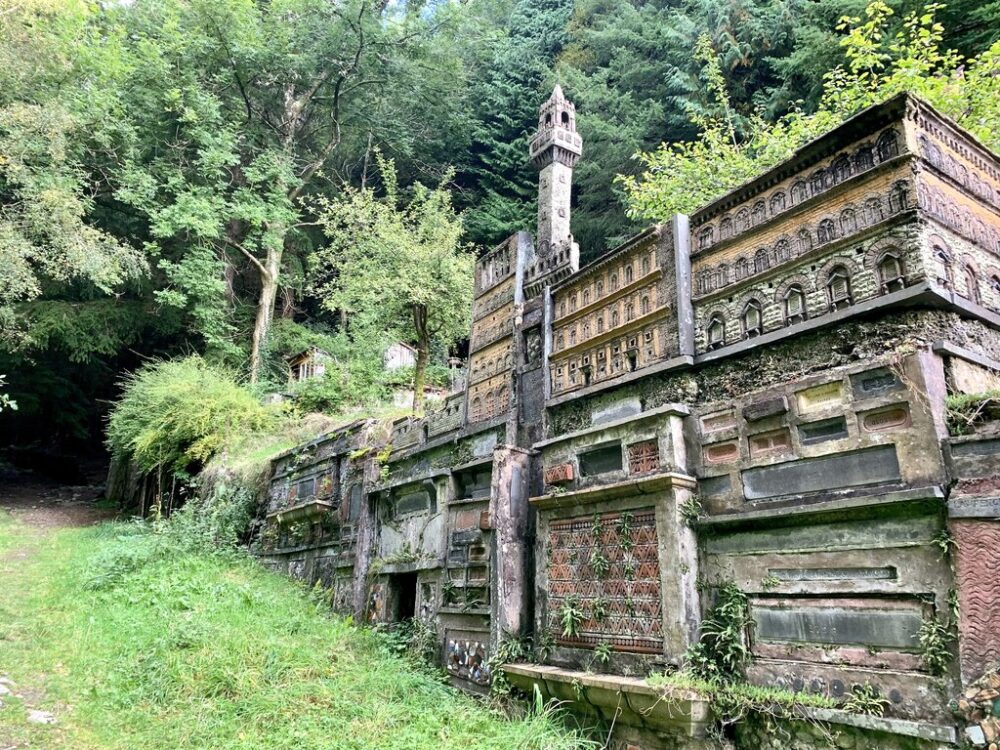
Just outside the small village of Corris, Little Italy is a collection of small structures – miniatures of some of Italy’s most famous landmarks, including Florence’s Duomo, Venice’s Rialto Bridge, as well as Rome’s Mouth of Truth. There is even a small-scale version of Michelangelo’s David.
Hamilton writes: “The late Mark Bourne, a chicken farmer, was obsessed by Italy, visiting as often as he could, filling notebooks with sketches of buildings and architecture.
“When he returned to his remote cottage on the Corris hillside in Gwynedd, Wales, he and his wife aimed to recreate what he had seen in their garden.”
View this post on Instagram
“Both worked on the creation, named Little Italy, well into their 80s, with models of everything from the Leaning Tower of Pisa to Florence’s Duomo.
“Although Bourne’s old garden is strictly off-limits to passersby, the surrounding wall is relatively low and the buildings are large enough to see from the path. From the Corris Institute, turn left up the hill along the lane then follow a footpath on the right after the youth hostel for about 100m.”
Sultan the Pit Pony
Sultan the Pit Pony is a massive 200-meter-long earth sculpture located at the former Penallta Colliery site near Caerphilly, South Wales. Built between 1996 and 1999 by artist Mick Petts, it serves as a memorial to the thousands of ponies that labored in the underground coal mines.
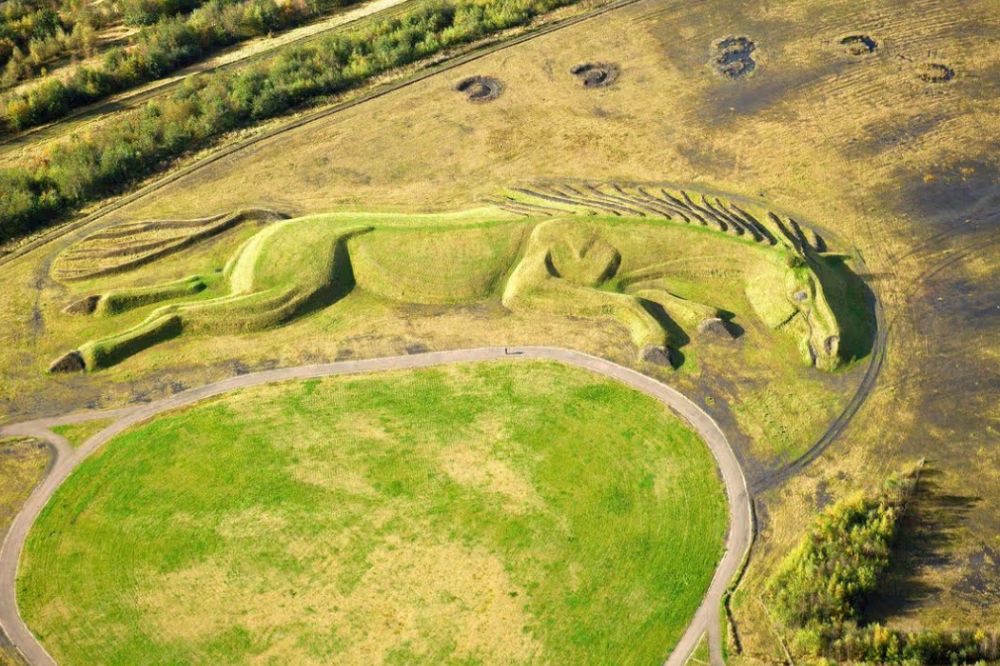
Hamilton shares: “Measuring close to 200 metres from his nose to the end of his tail, Sultan the Pit Pony sits on the site of the old Penallta colliery north of Caerphilly.
“Mike Petts used 60,000 tons of coal shale rock to create the sculpture, which he built in the late 1990s to honour the thousands of ponies put to work in British mines throughout the Industrial Revolution.
“It’s close to Parc Penallta Ponds, with its wonderful wildlife and walking trails.”
Read Dave Hamilton’s article in full here.
Weird Guide by Dave Hamilton, published by Wild Things Publishing available at all good book shops
Support our Nation today
For the price of a cup of coffee a month you can help us create an independent, not-for-profit, national news service for the people of Wales, by the people of Wales.
Get more trusted Welsh news
Choose Nation.Cymru as a preferred source in Google News to see more of our journalism.


