


Welsh woman describes horror in Jamaica after Hurricane Melissa
Adam Johannes
A Welsh woman has described the horror she witnessed in Jamaica during Hurricane Melissa, warning that communities are still struggling and calling for more support from the UK and Wales.
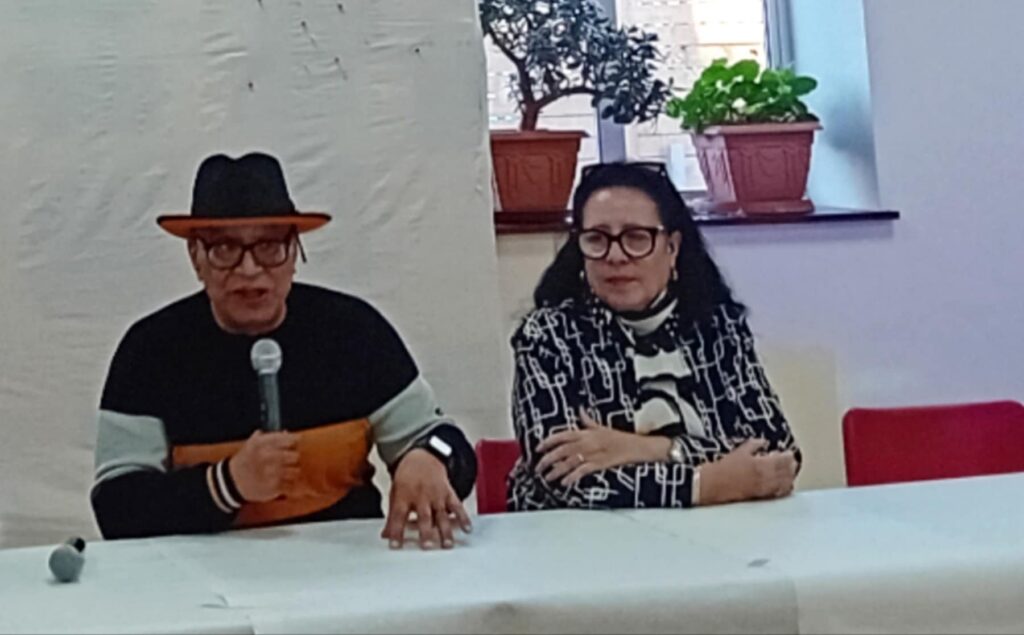
Hilary Brown was on the island working with the North Wales Jamaica Society when the hurricane struck.
Reporting back to a meeting in Cardiff to launch a campaign for an increase in UK aid to Jamaica to £50 million, she said she chose to remain despite warnings, saying it was important “that we got real evidence of what was needed, and what it was like on the ground.”
In the days that followed, Brown travelled with local charity workers and saw devastation first-hand. “Official aid took far too long to get through and over to people, who were in desperate need,” she said.
She described the severe impact on ordinary people. “People were hungry in the first two or three days, and then they’re starving. After a week and after a fortnight there were still absolutely impassable areas, where dead bodies had not been retrieved and recovered.”
“I was days without being able to connect to anyone because the whole infrastructure had been depleted and the networks were down, but I am delighted to say that when I was able to get some Wi-Fi there were people saying, ‘What can we do?'” she added. “And I remember when Lee Jasper had to send money to take his family, I wasn’t able to go to a bank or Western Union because the whole infrastructure was down.”
Rotting animals
“I visited places where the smell was overwhelming of rotting animals, and that should not happen in a country that is one of the best holiday destinations in the world, There is something there that is fundamentally wrong.”
She warned that Jamaica’s struggles go far beyond the immediate impact of the hurricane. “For far too long we have been held at gunpoint, with the noose around our neck.”
“It is about time that Jamaicans were able to set their own pathway and decide their own destiny and it seems that every time we take one step forward, we seem to take two steps backwards, because of debt and now because of natural disasters.”
“Going forward we need to bring the eyes of everybody of Jamaican descent in the UK, friends and associates of Jamaicans, we need to tell the story and bring home the real hardship of what is going on in Jamaica. Jamaica needed help when Melissa hit, it still needs help, and it will need help for a long time to come.”
Brown emphasised Wales and Jamaica’s shared histories: “After World War II, when Britain was devastated, a call was made to Jamaica and the other Caribbean Islands and the Commonwealth countries, and they answered.”
“Many medical professionals came to the UK in the very same year that the NHS was rolled out, and I often wonder if it wasn’t for the nurses and medical professionals who came, would the NHS have the success that it is today. And let’s not forget it started with the idea of a Welsh politician.”
Brown reported she had written to Welsh Government minister Jane Hutt asking whether Wales could contribute to hurricane relief efforts, and expressed anger that she had yet to receive a response.
Climate
Joining Brown, veteran activist Lee Jasper accused the West of worsening the impact of hurricanes across the Caribbean.
“The West is responsible for the vast amount of carbon pollution the world suffers from. Hurricane Melissa followed Hurricane Beryl sixteen months earlier. The island had barely recovered from Beryl before Melissa hit,” he said.
Jasper criticised international climate talks. “We have to talk about the principle of Climate Justice, once a year these wonderful conferences take place around the world.”
“They’ve come to many agreements, but just like most international agreements they’re strong on words, but they’re weak on delivery, so the most vulnerable people suffering as a consequence of the climate crisis are the ones expected to pick up the bill for the climate pollution paid for by the West.”
“If I come to your house and dump stuff on your doorstep, you shouldn’t be carrying the charge to pick it up The polluter pays. And the West has polluted the world to such an extent way past 1.5 degrees so hurricanes and tropical storms are intensifying. Jamaica cannot sustain two force five hurricanes in two years. Recovery efforts are being destroyed.”
Jasper criticised the UK government for leaving ordinary people to shoulder the burden.
“To repair Jamaica, guys like us, sent home hundreds of thousands of pounds to our families to cope with the crisis, and it’s a crisis made here in Britain.”
“We end up, communities of Jamaican descent here who are not on fantastic wages, taking money from our low wages to keep people sustained and alive, under cover, with food, basic medical care. So we’re subsidising the pollution of the environment affecting the Caribbean, and we still can’t get our government to live up to its responsibilities to deliver more aid to Jamaica.”
Emotional toll
Jasper described the emotional toll of events. “I didn’t sleep during those days, wrestling, thinking, ‘Is it coming? Do I have to get up and check WhatsApp? Has it actually hit the island?’ People don’t realise the compound stress that the community suffers when you’ve got people in Jamaica and family and loved ones.”
He highlighted Britain’s historical exploitation of Jamaica. “Britain has benefited to the tune of hundreds of billions from Jamaica during colonial rule. Since independence, Jamaica has struggled with debt and development. No sooner had the country reduced its historical loans than it was hit by another disaster.”
“What we are looking at is an uncertain future, Every year or two, one of those areas is going to be hit by a hurricane, and every year we are going to be digging into our own pockets to subsidise the climate pollution because our governments are too chicken to deliver climate justice for Jamaica.”
“If you think of the emergency response of the British government, from the UK to Jamaica, they offered Jamaica 2.5 million pounds. Now the damage according to the UN has been calculated at over 8 to 10 billion pounds. So 2.5 million pounds by way of emergency aid is doing nothing to really substantively address the damage.”
Brown and Jasper called for Welsh communities to organise Jamaica solidarity events building up to a day of action outside Parliament to demand Jamaica gets the aid it needs.
Support our Nation today
For the price of a cup of coffee a month you can help us create an independent, not-for-profit, national news service for the people of Wales, by the people of Wales.



There is a lot of stereotyped nonsense here in between an eye witness account of a horrible natural disaster. First of all in earthquakes and storms where multiple simultaneous deaths occur and infrastructure is destroyed especially in a tropical climate the inevitability of the stench of dead bodies is a sad fact. The fact that the island is a holiday destination has nothing to do with it. Second the association between climate change and hurricanes is not a direct consequence of historic Carbon Dioxide output as far as can be shown. There were hurricanes before and there will be after… Read more »