


‘What a godforsaken place’: 1960s documentary resurfaces showing Englishman’s attitude towards Wales
Ella Groves
A BBC documentary from the 1960s has reemerged online depicting an English man’s attitudes to Wales in the mid-twentieth century.
Produced by Aled Vaughan for BBC Wales in 1968, the documentary followed Londoner, Alfred Rimmer, who visited the village of Caio in Carmarthenshire
Described as always having been “a bit suspicious” of Wales and the Welsh, Alfred was convinced by a friend to set out on a week-long holiday in Wales.
After hearing of the plans, the BBC approached Alfred and asked if he minded being followed by a film camera for some of the time.
In response Alfred said they were welcome to come so long as they paid “for a couple of pints and help with the hotel bill.”
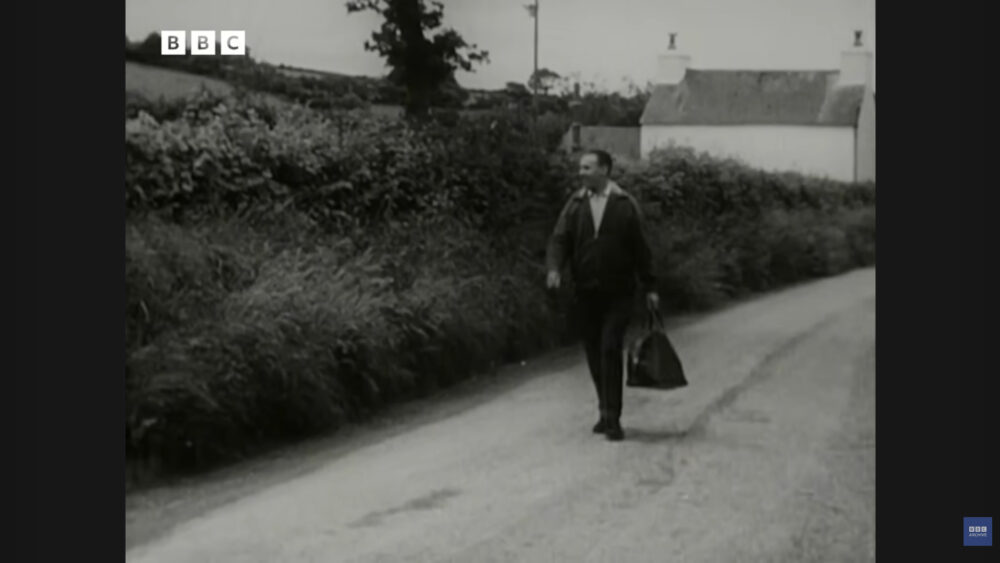
The documentary begins with the film crew meeting Alfred off the bus that dropped him a few miles outside of the village.
The voiceover notes that at the time this was the closest point to the village served by public transport – a fact that Londoner Alfred struggled to believe.
Before even reaching the village, Alfred describes it as a “godforsaken place”, questioning whether it is “even the place for a holiday.”
Surrounded by green countryside Alfred declares that “the place is dead.”
“Religion”
On his exploration of the village Alfred comes across a Welsh chapel which he describes as “grim, really grim”.
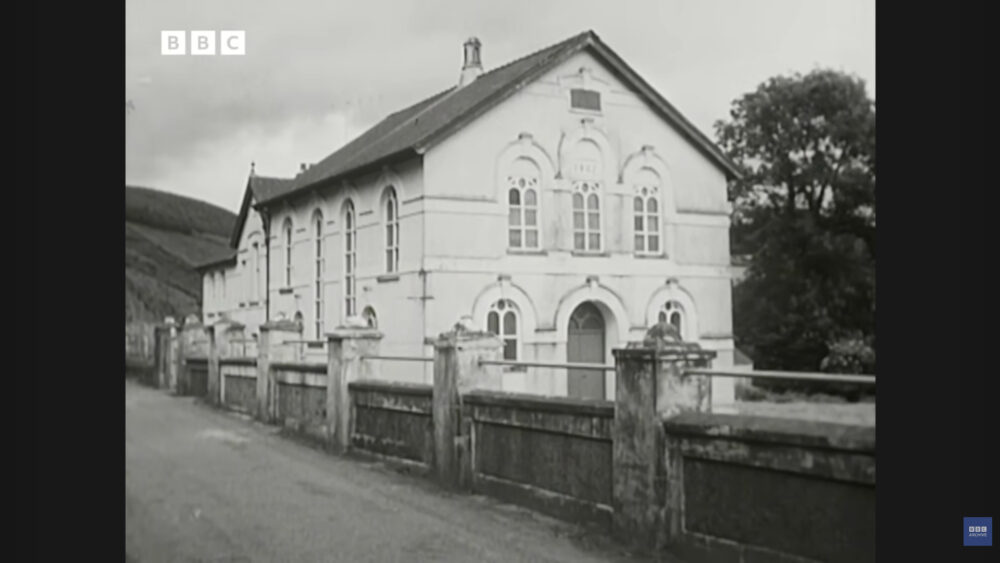
He continues: “This is a place where, I believe, that the devil is very close to the people of this village.”
Chapels, such as the one shown in the documentary, are common in Wales due to the rise of Nonconformism – Protestant groups not aligned with the Church of England – in the 18th and 19th centuries.
Often described as a central feature of Welsh culture and history, chapels served as a point of religious difference from England as well as a hub for the Welsh language with many offering services in Welsh.
Conversely however, as Alfred approaches a more traditional church and the sound of the Welsh congregation singing a hymn plays over the footage, he says: “This is great stuff. The Welsh can certainly sing and I know this hymn, I could almost join in with them.
“There must be at least 40 or 50 people in that church. It does sound good.”
The documentary then, to Alfred’s shock, reveals just about a dozen people exiting the church following the service.
‘Language’
Perhaps the most controversial point of the documentary is, however, Alfred’s comments on the Welsh language.
He visits a local pub, which he notes with shock is closed on a Sunday, where the village residents are conversing largely in Welsh, and, in a voiceover, describes the Welsh language as “barbarous”.
He says: “It’s a barbarous language. It is. To me there’s no reason why they should speak Welsh because… the English are supposed to be like Germans but who are the Welsh? I don’t know. You’d think it was in the… the other side of the channel.”
Invited to sit with some of the locals Alfred presents his thoughts on the irrelevance of the Welsh language and is, unsurprisingly, met with little support.
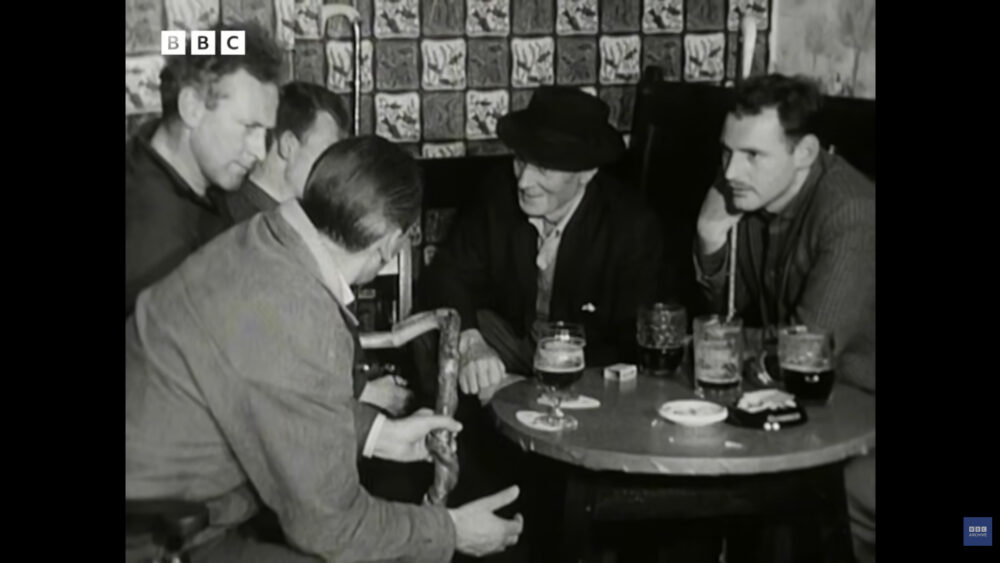
He says: “This language of yours, you know, it’s, from an Englishman, it’s a funny, it’s a barbarous language, you know, you get two Welshmen speaking together and they go on and on and on, you know, and for an Englishman to come from England to Wales and not understand the people, it seems so ridiculous, you know, in this day and age.”
In response one of the locals tells Alfred: “Oh no I don’t think it’s ridiculous at all because you only speak your own language and we speak our own language.”
Alfred continues his dismissal of the Welsh language as the documentary shows footage of children in school learning in Welsh.
He says: “I didn’t know everybody spoke the language, I thought it was just little groups, the nationalists maybe. But babes speak it.
“It’s a heathen language all the same but I don’t suppose the headmaster will agree with me.”
‘Women’
Alfred also has opinions to share on the women of Caio, noting that the mini skirt did not appear to have yet made it to the village.
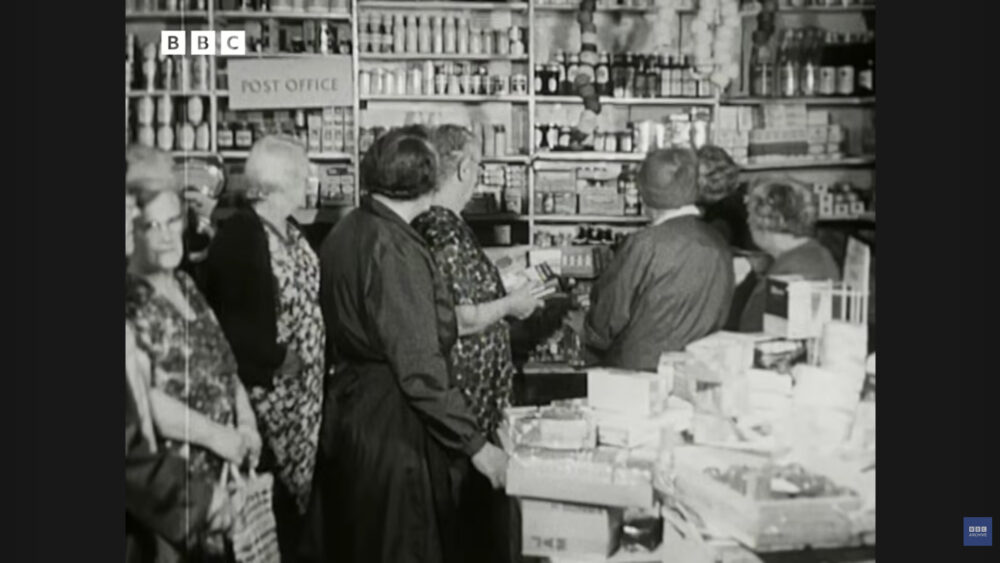
He said: “The women… they’re big women. Not the petite… bird of my walk of life. They’re statuesque, more the Amazon type – but they’re nice!”
“Serenity”
For much of the documentary Alfred appears dismissive of the language, culture, and general way of life of the people of Caio, even describing the village as a “backwater”.
Yet as the film draws to a close having met many of the residents of the village including the vicar, a historian, a forester, and Mrs Jones, a local elderly lady, Alfred appears to have changed some of his opinions regarding the quiet Welsh village.
He closes the documentary by saying: “I’m sorry to be leaving this village I think. There’s a serenity about it, there’s no rat race. People just take their time and get there just the same. Time just goes on.
“I came here with preconceived ideas about the dour hard-bitten Welsh but how wrong can one be. They’ve really taken me in and made me really welcome over pints of beer, cups of tea.
“I’m gonna miss this lot. I can understand why people want to come back here and why they don’t want to go away.”
You can watch the documentary in full on the BBC Archive YouTube channel.
Support our Nation today
For the price of a cup of coffee a month you can help us create an independent, not-for-profit, national news service for the people of Wales, by the people of Wales.
Get more trusted Welsh news
Choose Nation.Cymru as a preferred source in Google News to see more of our journalism.



The rhetoric may not be so blatant these days but much of the sentiment still exists across the border. Cymru is a backwards backwater place to many. I often think it’s a miracle our language and culture is still here, considering all the abuse by our neighbour. It’s now time to solidify our identity – through independence.
Being faced with a different culture can make people feel alien, but once they embrace that culture they understand that people are all the same, just a different laid back way of life
Sounds like a Reform candidate 🤔
The difference is that Alfred admitted he was wrong by the end of his visit; you won’t find many reformers doing the same.
Agree 👍
Sadly, this bigotry hasn’t gone away. It’s often been hiding behind euphemisms and guarded phrasing, but is now coming out into the open again.
The usual colonial contempt for culture they are devoid of, it still applies today when Fromage (in his monoglot mongrel language) describes our indigenous language as a foreign language.
The ignorance is off the scale here, and the same attitudes to Cymru, among the English (even those who live here), are often on display. However, not all saeson are like this; contrast Alfred with George Borrow. Read his book “Wild Wales”, an account of his walking tour in the 19th century. Not only did Borrow learn Cymraeg, he took the trouble to study the bards, writers, and history of this country. There are many instances in the book where he contrasts the profound ignorance of the average English man or woman with the proud cultural understanding and literary knowledge… Read more »
Indeed,…well said.
Oops, I mean Cymru (for the country), and Cymry for the people.
They have lived uninvited nexdoor to us for over a thousand years and still don’t know anything about us.
Things have changed now . The amount of English people who have moved to Wales learning Welsh I see is increasing in my experience over the years . I think it’s brilliant. I see loads of it. Yes there are challenges but I think the media tends to concentrate on the negative stuff not the good stuff . The Weish language belongs not just to Wales but to the world . Let’s celebrate that and be positive. This is going back 60 years plus , why bring it up ? It’s irrelevant! I’d rather isee a documentary of our brothers… Read more »
There are many documentaries and articles on the TV and in other media on english people learning Cymraeg, as well as non-welsh Cymry tackling the language for the first time. I am surprised you seem to think that this is not covered in the media. The downside is that there are far too many english immigrants here who look down on Cymraeg and lose no opportunity to denigrate it, along with the culture. They may have enough sense to keep quiet when talking to locals, but I have met many who are quite happy to bad-mouth Cymru when they think… Read more »
I don’t think we see the positive stuff enough . Rarely we see it. Okay we see some stuff in social media but not enough on mainstream. It always tends to be ‘ the English are taking over ‘ etc etc kind of stuff . On another point I think integration is a two way thing. I live in what’s considered a ‘Welsh speaking area’, and I have seen especially the last 5 years or so integration on a 2 way scale working amazingly, where there are many people from England and also other countries too who are learning Weish… Read more »
Scotland and Ireland were, and still are, treated with the same snobbish attitude. When they want us to fight in their wars or vote for their politicians, their tune changes to suit!
Coincidentally Andrew RT Davies was born exactly 9 months after this was filmed.
Stopped me speaking Welsh in Chepstow.the english rule.1960’s.