


What does the data centre boom mean for Wales?
Mark Mansfield
Billions of pounds of investment in artificial intelligence data centres could transform the Welsh economy over the next decade, but the rapid expansion is also set to place unprecedented demands on electricity, water supplies and the planning system.
Wales is already emerging as Britain’s leading location for data centres outside London and is preparing for a wave of new developments that could make it one of the UK’s most important hubs for artificial intelligence infrastructure.
But as ministers champion the opportunities, a new Senedd Research briefing suggests difficult questions remain over whether the country is ready for the scale of expansion now being proposed.
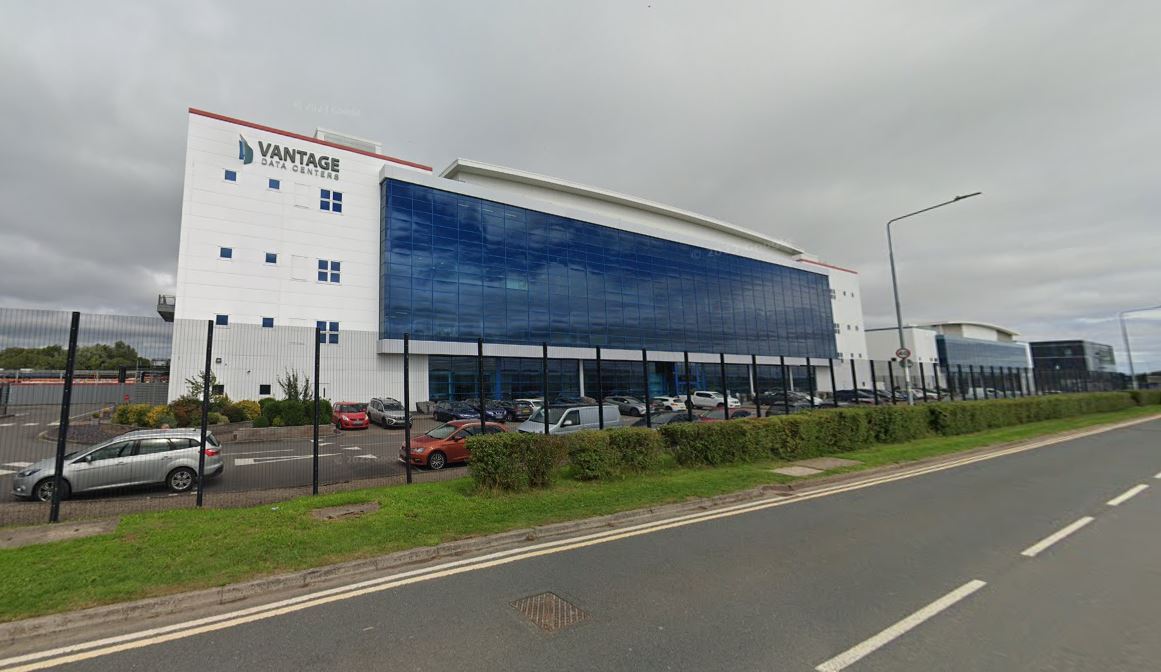
The report highlights a series of major developments planned across Wales, including two proposed data centres in Cardiff with capacities of 148 megawatts (MW) and 150MW, a 200MW facility in Newport, a site of around 600MW in Bridgend and a proposed 349MW development on Anglesey.
Together, those projects would add well over 1.4 gigawatts of capacity – almost ten times the 154MW of operational data centre capacity estimated to exist in Wales in 2024.
The UK Government has also designated north and south Wales as Artificial Intelligence Growth Zones, intended to accelerate the development of AI infrastructure.
For a country better known internationally for its renewable energy potential than its digital infrastructure, it represents one of the biggest industrial shifts in decades.
What is a data centre?
Data centres are secure buildings filled with computer servers that store, process and distribute digital information.
Every online search, streamed television programme, bank transaction and AI query relies on data centres somewhere in the world.
Artificial intelligence has dramatically increased demand for computing power, creating a race to build larger “hyperscale” facilities capable of handling huge volumes of data while operating around the clock.
Why Wales?
The Senedd Research briefing says Wales already had the highest data centre capacity outside London in Great Britain in 2024.
Much of that growth has been driven by South Wales’ existing fibre-optic connectivity, available industrial land and access to electricity infrastructure.
Former industrial sites around Cardiff, Newport and Bridgend have proved particularly attractive because developers can build on previously developed land while making use of existing grid connections and communications networks.
The Welsh AI Growth Zones are expected to reinforce that position by attracting further investment linked to artificial intelligence.
Billions in investment
The economic opportunities are considerable.
The UK Government expects the South Wales AI Growth Zone to attract around £10 billion of investment, while all AI Growth Zones across the UK could generate up to £100 billion.
It has also suggested the Welsh Growth Zones could support around 3,400 jobs in north Wales and at least 5,000 in south Wales.
Those figures include construction work as well as permanent jobs.
However, the Senedd Research paper notes that data centres are highly automated once operational, with relatively small permanent workforces compared with the scale of the buildings and infrastructure they require.
It also highlights research published by Action to Protect Rural Scotland questioning whether industry estimates of long-term job creation are overly optimistic, pointing to evidence from the United States suggesting employment benefits may be lower than often claimed.
The pressure on infrastructure
If the economic opportunity is clear, so too are the challenges.
The South Wales AI Growth Zone alone has the potential to require more than one gigawatt of electricity by the early 2030s – equivalent to around 13% of Wales’ total electricity generating capacity in 2024.
At the same time, securing electricity connections is becoming increasingly difficult.
The National Energy System Operator said there were around 173 grid connection requests from proposed data centres across the UK by May this year, representing more than 100GW of demand.
Ofgem has warned there are currently more proposed data centres seeking grid connections than the electricity network can accommodate.
Water is another growing consideration.
Modern AI servers generate far more heat than previous generations of computing equipment and increasingly rely on liquid cooling systems.
While these systems are more efficient than traditional air cooling, they also increase demand for water, both directly for cooling and indirectly through electricity generation.
The briefing also notes that data centres will have to be considered as Wales works towards meeting future carbon budgets.
Planning
Unlike planning frameworks in England and Scotland, Welsh planning policy does not explicitly refer to data centres.
That means planning authorities are not currently required to give specific consideration to the industry’s needs when preparing development plans or determining planning applications.
As facilities become larger and increasingly significant to the national economy, the report suggests questions are emerging over whether existing planning arrangements are equipped to balance investment against impacts on biodiversity, energy infrastructure, water resources and nearby communities.
Local opposition has already emerged around some proposed schemes in Wales, reflecting concerns that have also been raised internationally over the size of developments, noise from cooling systems and environmental impacts.
Hosting infrastructure
The Welsh Government argues the expansion should be about more than simply providing sites for international technology companies.
Speaking in the Senedd, Cabinet Minister for Economy, Energy and Planning Adam Price said Wales had an opportunity to position itself at the forefront of the AI revolution.
He said: “We’re living through a massive age of disruption, through AI and other related technologies, but, in that, there is opportunity as well, and we are well placed to grasp those opportunities.
“We have two AI growth zones, we have much of the hard infrastructure through the data centres that are going in, but we don’t just want to host hard infrastructure, in the same way that we don’t just want to host energy infrastructure; we want to get the benefit of it.
“That’s the kind of strategy that will be the driving force for our Government.”
The briefing concludes that the industry’s long-term success will depend not only on attracting investment but on balancing economic growth with pressures on electricity, water, planning, biodiversity and local communities.
Support our Nation today
For the price of a cup of coffee a month you can help us create an independent, not-for-profit, national news service for the people of Wales, by the people of Wales.
Get more trusted Welsh news
Choose Nation.Cymru as a preferred source in Google News to see more of our journalism.



Councils should get to keep 100% of the business rates from these behemoths but ringfenced for local economic development so they can use these empty shiny boxes as anchor tenants for new business, science and technology parks that create real high paid jobs.
If such arrangements are not made we will be one or more steps nearer serfdom. Or is that the “plan”?
In keeping with the little housing association ghettos and historical extractive industries…data centers primarily extract massive amounts of electricity, water and land, while we struggle to feed these ravenous monsters. Where does the money go…
‘Silicon Valley’ billionaires…won’t get fooled again my skinny backside..
AI is a tech bubble waiting to burst.
In the ongoing third gulf war, data centres are one of the biggest casualties. They have their uses but they are a massive liability and I am not sure they are worth it.