

What I learned from tackling poverty in the south Wales valleys

Martin Hoban
I recently left Wales after living there for 25 years. For much of this time, I worked in the south Wales valleys doing community work, education and research.
I loved the people, the landscapes and the humour. As an outsider, I was welcomed but it was not immediate. There was a mistrust of the stranger. People had seen others like me come and go and their lives were no better off.
I found that there were many similarities with my previous work in Ireland and England. It seemed to me that poor and excluded people in the south Wales valleys shared many common problems with those in diverse cultural contexts such as Dublin and Newcastle upon Tyne.
Their problems were generally related to unemployment, low income, poor housing, crime, education, health and lack of services. They also shared a common experience of struggle both within and outside their localities.
In this article, I would like to reflect on my time trying to tackle poverty in the valleys. I will do this by sharing eight key things I learned. I do so with the purpose of sharing experience and informing further dialogue among those who are concerned about the valleys and the ongoing social decline.
I will conclude by offering my own thoughts on a possible new approach and propose questions for future dialogue and research.
1. The people were not in deficit. Their poverty was caused by historical and structural factors
First off, I learned that the poverty and decline I saw around me was not down to the moral failure of the people. They were not feckless, apathetic, or scroungers.
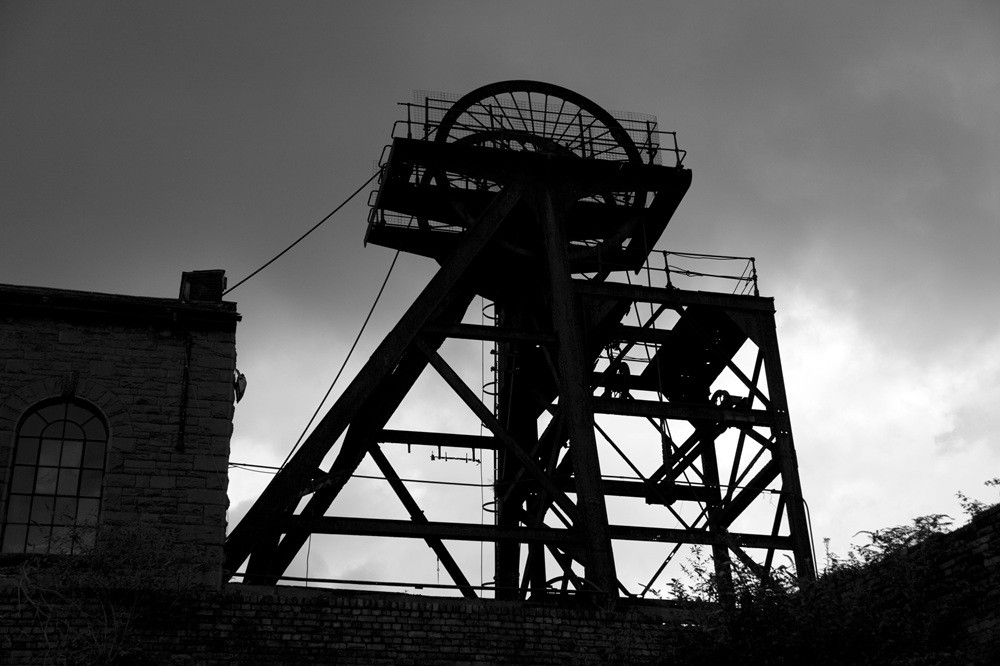
While 1980’s pit closures precipitated and sustained the decline that followed, the problems of the valleys were deeply rooted in the past and in complex factors that lay outside the region. Essentially, these were economic forces, Thatcherism and the ongoing neglect from those with power.
There is no escaping the fact that the loss of the economic base led to deep structural unemployment that is at the root of the problem. Moreover, the human consequences arising from this loss were never seriously addressed by both UK and Welsh governments.
2. The language of poverty was oppressive
I learned that valleys people were repeatedly objectified as ‘poor’ and ‘deprived’. Such depictions were mainly formulated and sustained by people who did not live there. They were prevalent among politicians (from both the right and the left), professionals, educators, local authority workers and media commentators. Such depictions created enduring and false images of victimhood, hopelessness, dependence and desolation.
Of course, this discourse revealed how we have always framed those who live in poor areas as ‘the other’. It is expedient to ignore a historical reality of deindustrialisation and the obvious truth that people and communities only prosper where there are meaningful jobs.
Most residents responded negatively to being told they lived in a ‘deprived’ area. They did not see themselves or their families as ‘deprived’ in any way.
Of course, this reluctance was understandable. To admit to being ‘poor’ or living in a poor area can be an admission of individual failure in a society dominated by values of wealth, individualism and personal success. The concept of ‘poverty’ was also seen as a devalued and stigmatising identity which people are reluctant to adopt as a basis for organisation.
3. Welsh Labour sought to save rather than liberate poor people
I learned that Welsh Labour constructed poor people as helpless ‘victims’ of structural forces. They set out to save them based on a well-meaning paternalism and charismatic forms of leadership. This approach was part of a long tradition in south Wales whereby labour and trade union leaders (usually male) led ‘the fight’ in localities.
Such strategies were clearly important in the past and led to the provision of vital services and facilities across the region. However, over time the paternalism and forms of leadership that exemplified this approach has merely fostered a culture of deference and followership rather than one of collective resistance and liberation.
4. Successive government initiatives have largely failed
Top-down policies and programmes from governments had limited impact on the problems. Recent anti- poverty interventions such as Communities First merely conveyed a feeling of unreality with well-meaning people ‘doing good works’ in localities surrounded by historical and structural degeneration. Such initiatives, while well-meaning, often felt like an admission of failure with no real conviction that a viable alternative existed.
Economic regeneration was mainly about road building, housing construction and retail parks. Social issues were largely framed as individual, community and regional pathologies rather than as a deeper and more complex societal problem.
This view was underpinned by a massive assumption that things could be changed from within the region. However, these initiatives could never address many of the complex problems associated with poverty that required interventions at local, Welsh and UK government levels.
5. Power was entrenched in central and local government
I learned that real power was never devolved to the people. Despite the empowerment rhetoric associated with devolution and anti-poverty discourse, governments and local authorities controlled the debate, the policies and the money.
Projects, human resources and targets were centrally controlled, and community groups were just agents of delivery. Empowerment was more about personal development and the acquisition by the individual of cultural capital for self–advancement. It was not about creating opportunities for political empowerment that could challenge historical and dominant relations of power. The result was that most residents had little say. Their anger, passions and capabilities were subdued, and the status quo remained.
6. The ‘helpers’ were mainly about control
I saw at first hand that it was professionals and managers who largely controlled community initiatives.
Community development workers became the managers of poor people rather than their advocates, enablers and educators.
Such controlling roles reflected a missionary analysis of poverty. The overall assumption was that poor people relied on the impetus and leadership of benevolent and professional experts. While many workers genuinely believed they acted from a sense of solidarity, their actions revealed a mostly controlling practice that kept people dependent.
The result was that people were not helped to liberate themselves from poverty. At the same time, conventional social research (often well intentioned) was carried out for or on behalf of poor people. However, it was rarely if ever conducted with them. Poor people had limited involvement and had little if any ownership of the results.
In these models of practice, power was mostly retained by agencies and resident involvement was tokenistic. Local leaders and activists were incorporated into a process not of their making. As a result, it has largely been a case of well meaning ‘have’s’ speaking and acting on behalf of the ‘have-nots’.
This process has also shaped a burgeoning industry for consultants and universities which supposedly served the poor. In my experience, most did not.
In my view, political activists, NGOs, and the helping professions need to critically reflect on how we work with poor people. Maybe we need to stop trying to fix, mould and make people fit externally defined ideals. Maybe people learn more from each other rather than from external experts.
We may need to recognise that we have much to learn and that we may need to change ourselves before we seek to change others.
7. Co-operation and a spirit of protest survives
I discovered that there was little evidence of old-style radicalism in the Valleys. However, I did find that a spirit of co-operative endeavour and resistance endured.
While many people accepted and tried to adapt to the economic and social changes around them, some strived over the years to improve their circumstances often against the odds. Across the valleys, people formed an array of voluntary and community organisations that represented generic and specific interests and groups.
While some were supported by paid workers and external funding, many relied on dedicated volunteers for their commitment and time. Most of these groups attempted to create positive experiences for people through involvement in a wide range of activities. In doing so, they reignited experiences of co-operation and solidarity that were a mainstay of traditional valley communities.
I saw that activists can take collective power about issues that are close to their hearts. Most issues emerged from personal and local experiences and were mostly expressed by women. They saw the immediate problems that impacted on their daily lives particularly in relation to income, housing, children, young people, crime, health and so on.
I found that anger was a common response to their innate sense of unfairness and there was a lot of it about.
Apart from a small number of men, it was local women that provided the energy and leadership for social action. As they became more involved, they became more confident and critically aware of the policies and ideological mechanisms that impacted on their lives and localities. They were not afraid to write letters, stage road protests, lobby councillors, do TV interviews and to confront council officers and politicians.
They did all those things with determination and persistence while retaining a sense of good humour.
8. There is no longer just one community voice
Finally, I found that while many localities shared similar histories, culture and experiences, there was also a rich diversity of people both within and across the valleys. These were mostly defined by age, location, nationality, colour, disability, gender or sexualities.
Each had their own stories to tell. I found that trying to build anti-poverty and regeneration initiatives on traditional notions of geographical identity did little to address complex and often deep-rooted problems. Such imposed concepts of ‘community’ tended to ignore the diversity and fragmentation that reflected wider changes within an increasingly globalised world.
The concern with ‘community’ also emphasised notions of ‘constancy’ rather than ‘change’. As such, it acted mainly as an ideological term that disguised the permanence of underlying tensions within localities and stifled a deeper critical analysis. In making this observation, I am not seeking to deny the benefits of attachment to family and neighbourhood that existed.
In addition, the value of local identities and the many commonalities of mutual aid and support at this level. However, the main danger is that a focus on geographical community alone can disguise the existence of other identities, allegiances and tensions within and between villages, estates and Valleys.
What next?
I would argue that the problem with previous initiatives was that their analysis of poverty was seriously flawed. I start from the premise that it is important to critically analyse the cause of problems before we can propose solutions. Of course, how we choose to understand the problem will largely determine our response. In my view, the architects of such policies failed to consider the clear and tangible connection between the past and the present and ignored the impact of deeper structural and cultural forces. They defined poverty in terms of the inadequacies of people and place rather than in relation to structures and inequitable relations of power.
Their appeals for more ‘community’ were merely a benevolent attempt to be seeing to be doing something. Powerholders dominated the debate, the policies and the practice. Consequently, the underlying problem of unemployment and poverty was managed rather than seriously challenged.
A humanising approach
“…only one thing really matters, the people who live in these communities must come first. Their needs, aspirations, views and experiences must override any programme, project or political motive” (Valleys activist)
Based on my own practice and research, I would argue that there is a need for a fundamental shift in the analysis. By this I mean turning the dominant analysis on its head and shaping a new way of thinking about how to bring about change.
Thus, the starting point must not be with politicians, policy makers, academics, and managers. Instead, it must start with the people who live there.
The missing element has been the voices, experiences and energies of the people. I would argue that valleys people and their involvement with others are the essential ingredients for improving their own lives and their living environments. Their personal and collective experiences are crucial in seeking to understand and address poverty. They have a knowing (feelings, experiences, life situations, understandings, analyses) acquired from a lifetime of living, work and struggle. Their knowledge is crucial and must be paramount for any new approach. It is also important to note that the increased need for bottom-up approaches resonates with similar studies and narratives in Britain and further afield.
The important questions now are whether it is possible to create a people-led approach within the structures of economic and political power that exists?
As we approach the next Welsh Senedd election in 2026, early indications reveal that there may be significant challenges to Welsh labour hegemony. The main challenges will likely come from the Welsh nationalists and the far-right populist Reform UK. However, it is likely that whatever about the political hue of the next Welsh Senedd, new ideas and creative approaches to address poverty in the valleys are unlikely to emerge from the centres of power.
I believe that if there is to be a serious attempt to address poverty in the valleys then it can only emerge from the bottom-up. A movement from the bottom-up that can bring poor people to the centre of the debate and with a core mission of improvement and social change.
Clearly, its philosophy would need to go beyond the paternalism of Welsh Labour and the blatant individualism and scapegoating of right-wing politicians. It would be a movement for social change that would involve poor people as active participants.
First steps
First steps must be to create spaces for dialogue and participatory research. I offer these questions for further dialogue.
Can a new approach address the democratic deficit and challenge the power inequalities that exist in south Wales?
Is it possible to reengage and revise ideas of collective self-help, critical education and protest that were previously synonymous with south Wales mining communities?
Can we move beyond the oppressive language of poverty to something that people can understand and that offers solidarity and hope?
Can we link personal and political development for improvement and social change?
Can a new approach harness the potential of new participatory methodologies methodologies, digital
technology and the people’s literature to increase involvement and broaden dem ocracyocracy?
Is it possible to reconcile differences and forge common cause across the boundaries of location, class, and other identities?
What can be learned from former coal mining communities in the UK and further afield?
Could any new approach attract the necessary and appropriate support from NGO’s, trade unions and others?
And crucially, can we learn to work with poor people without imposing our own agendas?
The task of building and supporting an alternative bottom-up approach would be a major challenge.
There is also likely to be resistance from vested interests and a dominant culture which will seek to limit the parameters of the debate.
There is also an immediate threat from right-wing populists who are seeking to win over working-class people by promoting anti-immigrant sentiment and depicting themselves as the new messiah.
However, the price of doing nothing is to face depopulation by stealth, more human suffering and spiralling social decline.
To sum up, repeated attempts that applied the same old fixes have failed to address the core problems of unemployment and poverty. From a litany of failures, one thing is clear. Meaningful change to the lives of Valleys people cannot be imposed from the top.
The problems must be identified, the answers found, and choices made by the people who live there. It is also important to acknowledge that these are changing times.
New ideas are emerging on the progressive left of politics and among social movements that offer hope for the future.
Key to these endeavours is the active involvement of those who are directly affected by oppression.
The rallying slogan ‘nothing about us without us’ is particularly relevant to this time and place.
It is time to trust the people of the Valleys to shape their own futures.
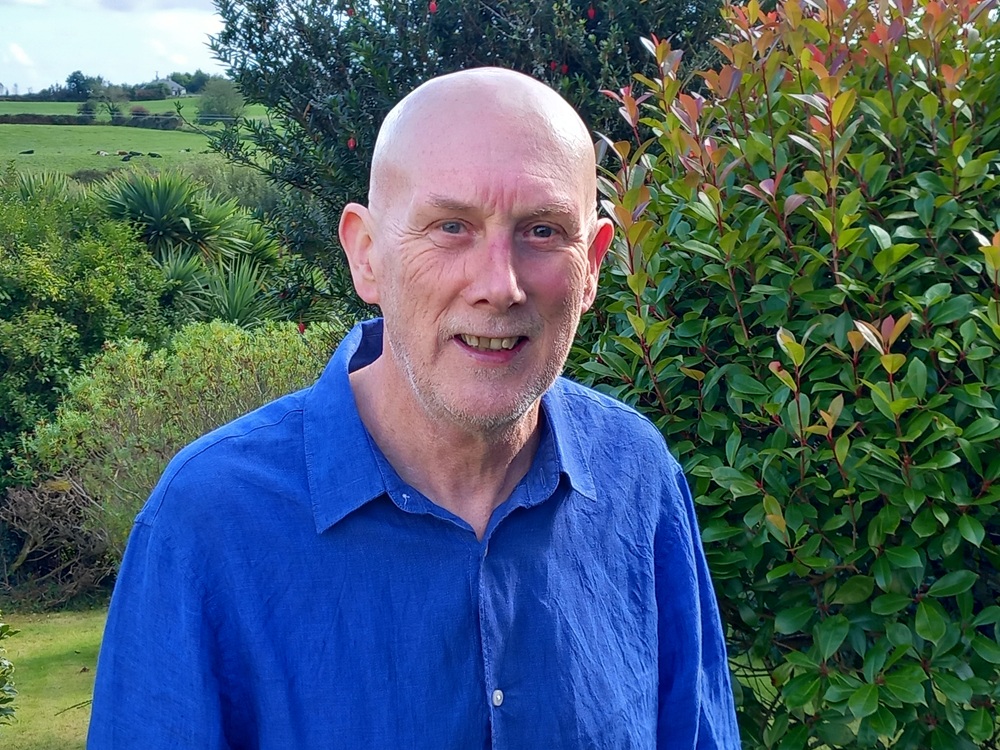
Martin Hoban lives in West Cork, Ireland. He has had a long-standing involvement on issues of participation as a community worker, educator and researcher.
He worked as a community worker in Ireland, Newcastle upon Tyne and in the South Wales Valleys. He is interested in critically analysing a range of topics such as regeneration policy and practice, poverty, class, health, chronic pain, and the helping relationships.
Support our Nation today
For the price of a cup of coffee a month you can help us create an independent, not-for-profit, national news service for the people of Wales, by the people of Wales.



I think this article perpetuates the attitudes towards the Welsh Valleys that it purports to want changed. It’s littered with labels and assumptions dressed up as academic comment. Academic comment made by someone not of the communities themselves. The South Wales Valleys are discussed as if they’re an interesting petrie dish to be viewed and interpreted from a position slightly removed.
The author may have been well meaning but it has a whiff of “great white saviour” to it.
Fine – but what is the solution?
Part of the solution is to stop imposing negative labels on the communities. Part of the solution is for education to properly equip communities to develop what they need for themselves. Part of the solution is to build on the history, traditions and craftsmanship within the communities with pride. Part of the solution is recognising that there are many happy people living in these communities who lead fulfilling, well balanced lives and don’t recognise these labels imposed upon them. Part of the solution is to change the narrative. How are these communities expected to attract investment when theyre talked down… Read more »
Ball locks.
This article is too complex for most to read / understand / use to make change. I was born in the Welsh Valleys and comment on this forum as i would like to see the region develop. New organisations are being created every day; but why are no major ones being created in the Welsh Valleys? The answer must include University of South Wales (USW) as they are a major employer and can network with global Universities to share best practice and avoid consultancy fees. The Senedd / Welsh Government could support USW by stopping single sourcing work to google… Read more »
Politicians can’t create well paid jobs unless they’re government jobs. All they can do is create the right conditions to encourage private sector to create more jobs. One change I’d like to see is variable employers National Insurance, linked to GDP per capita in the council area where the employee lives. It simply doesn’t make sense to have the same tax on jobs in Mayfair as Merthyr. Zero rate employers NI in the areas that have the lowest GDP per capita and double it in the richest areas and see what happens
It should not be about lets see what happens.
USA organisations moved to Dublin as low corporation taxes; other European countries responded by changing their procurement processes to automatically fail organisations based in low-tax regimes.
Politicians can affect economic growth of Universities and subjects such as Engineering (global shortage).
Warrington has nuclear engineering hubs to support projects in Cumbria and Southern England – why has Senedd not created an engineering hub in Wales for global rail projects to follow on from first trial in world of a digital train on Cambrian line?
How do you create an engineering hub? You can build some units and a new road but they might sit empty for a decade. You can offer grants, attract some businesses who burn through the cash only to close when it runs out, or move to somewhere else offering grants. These approaches aren’t enough on their own to reach an economic critical mass where it can sustain itself without government support. Meantime politicians get crucified for empty “white elephant” industrial estates and “wasted” taxpayer money when businesses close or leave. There needs to be something more to encourage investment outside… Read more »
USW can’t solve their own challenges let alone someone else’s problems. It is time USW became what it really is, namely a further education college.
While not born in the South Welsh valleys I’ve lived in them for a long, lonnng time. Honestly, I feel like much of the article is accurate. I have lived in places like Cheltenham or Marlborough and there is no doubt that there is significant deprivation. The problem is that technically not everyone is technically deprived, at least not relatively. Some people have good paying jobs… for the area. However, one must recognize that they live in a deprived community and make use of the services that aim to combat that deprivation. They must do that, not because it helps… Read more »
Sadly both Labour and the Conservatives have no intention of ever tackling poverty in Wales not just the former slate & coal communities . They manage poverty, limit expectations, leading to apathy. See, dependency is an invisible prison cell, a barrier of sorts, that traps its victim. Why end poverty when it can be used to your advantage. I wish those in the former mining communities would realise this instead of continually voting for parties like Labour that have no intention of making their lives and communities better. Poverty also drives those into the arms of the far-right, as seen… Read more »
England has no interest in its’ own country; Blackpool has tried to grow its’ economy for decades on low paid seasonal tourism jobs and nobody in London has supported them in growing their economy – Blackpool is being left to fail.
I thought Blackpool had got three hundred million for regeneration with a further ninety million promised. It is also one of 20 places for Kings cross type regeneration
Blackpool had a rail link upgrade to Mainline, but no new jobs in region – just easier to work somewhere else. High levels of depression https://www.blackpoolgazette.co.uk/news/shocking-figures-show-one-in-five-people-in-blackpool-have-been-diagnosed-with-depression-by-their-gp-4840590 I may be incorrect on Blackpool, but https://www.blackpool.gov.uk/Your-Council/Creating-a-better-Blackpool/Regeneration/Housing-regeneration/Consultation/Central-housing-regeneration-area-phase-one.aspx#:~:text=Housing%20conditions%20in%20central%20Blackpool,to%20400%20poor%2Dquality%20properties. shows new properties, not new organisations moving to the region. Cardiff City Region covers the Welsh Valleys and in last ten years has only created 437 jobs per year. Yet that region has appoved non UK organisations based in Dublins low-tax regime to build data centres. Of the top 100 technology organisations in the world UK only has BT and Vodafone (pay full UK taxes). Sadly… Read more »
Blackpool rail link makes access easier for tourists.
The main tourist season is summer, the rest of the year most of the catering staff are on universal credit / using food banks.
1999 Switzerland moved away from tourist; even Spain has woken up and is gradually moving away – one of my friends managed a football academy linked to FC Barcelona for wealthy Asian tourists, it has recently closed along with lots of Barcelona tourist businesses as the city has relaunched as a business focused destination: Iberia is code-sharing with Aerolineas Argentinas to increase trade between Spain and Argentina, tourist taxes etc
The autumn illuminations last for 2 months. Christmas by the sea is also popular.
Blackpool doesn’t help itself however by switching off its world famous illuminations in the first week of January instead of running them through to March, and encouraging international visitors during these dark quiet months by marketing the town using proceeds from a visitor levy.
My understanding of ‘North’ in the North/South divide sense it was basically a shorthand for almost anything outside of London and the Southeast.
Effectively the ‘North’ is whole of Scotland, Wales, most of Southwest England and all the coalfield communities of the East and West Midlands, as well as the North of England itself.
Certainly the Southwest, especially Cornwall, has a huge amount in common with Wales, a lot in common with County Durham and nothing at all with Surrey.
This is absolutely the point. Those seeking to make it a Welsh problem rather than a UK problem are actually serving those in London who benefit from the status quo.
I agree with the vast majority of this article. Especially about the adoption of a bottom up approach. However, writing about adopting a bottom up approach and doing it are often two different things. I am chair of a charity based in the valleys. We have tried consulting with local people about their village and its facilities. We have set up public engagement meetings, held a n outdoor week long consultation, attended local pop-up events and tried to speak with people. I’d like some advice please as to how the adoption of a bottom up approach could become a reality… Read more »