

What makes a Miss Wales?
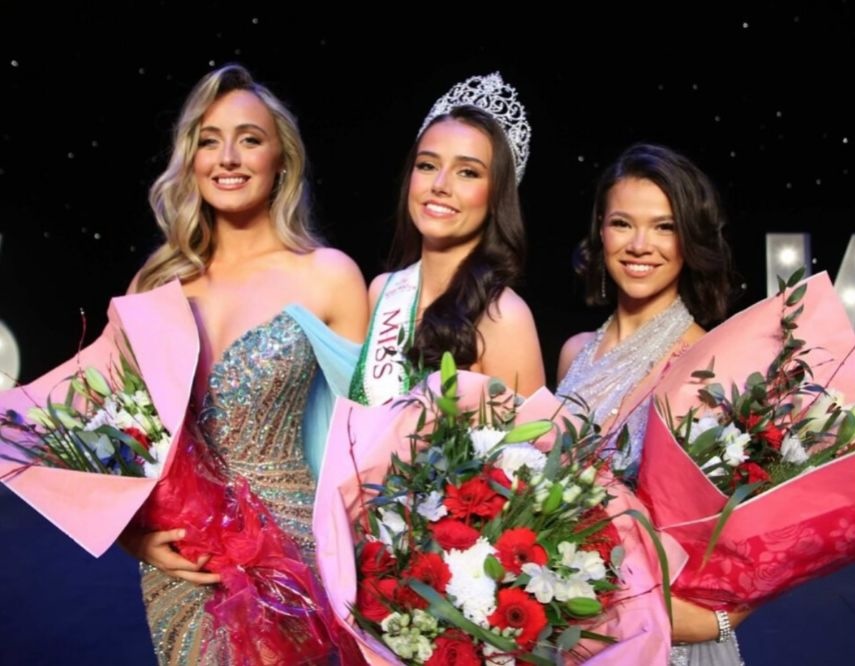
Molly Stubbs
The structure is a dazzling display of silver-tone, scrolling foliate, with central and upper crests formed from repeated ornamental teardrops, and covered from its graduated skyline to its circlet in a metric boatload of crystals.
The Miss Wales crown, come April 2026, will sit in all its glory atop a new head.
But the metalwork’s glamour and importance pale in comparison to the young women who have entered one of Wales’ only national beauty pageants hoping to become its new owner.
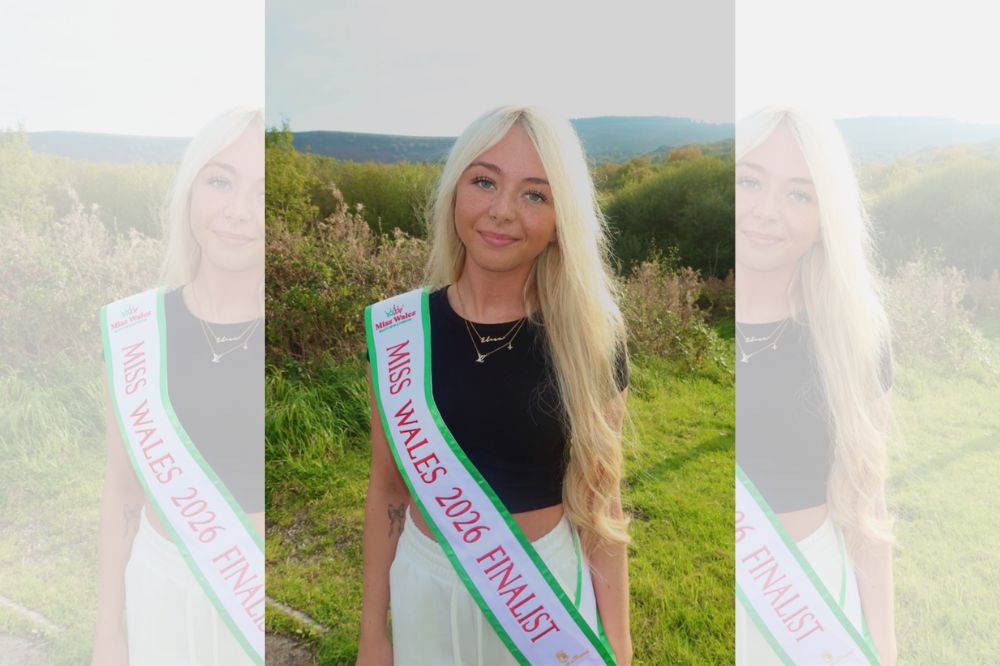
Among the group of finalists is Elise Marie Scaccia Waters, a 19-year-old estate agent from Aberdare.
“I’m really passionate about self-confidence and encouraging young women to believe in themselves,” Elise explains. As well as raising money for Diabetes UK in honour of her mother Angela, who was diagnosed with Type 1 diabetes in September 2010, she hopes to use the Miss Wales stage to relay a message that resonates with her:
“Don’t let other people’s opinions shape the way you see yourself. You’re allowed to be your own person, take up space, and grow at your own pace.”
Confidence comes up a fair few times in conversations with this year’s Miss Wales finalists. Understandable, since putting yourself up for a competition that ostensibly judges women on a metric many consider to be entirely subjective must take, excuse the expression, a lot of balls.
But, to take another expression, there is more here than first meets the eye.
The beholder
Though physical beauty may appear the main criteria for entrance into and success in beauty pageants, the clue being very much in the name, for the Miss Wales team it’s what’s inside that counts.
Paula Abbandonato, National Director at Miss Wales and Miss Universe GB, confirms this. When asked if the selection process comprising an online application and interview is ‘tough’, she diplomatically replies: “I think we’re about, you know, the person’s essence if you like.
“I would say that very often, girls select themselves… The difference in being in the Miss Wales final and not being in the Miss Wales final is confidence.”
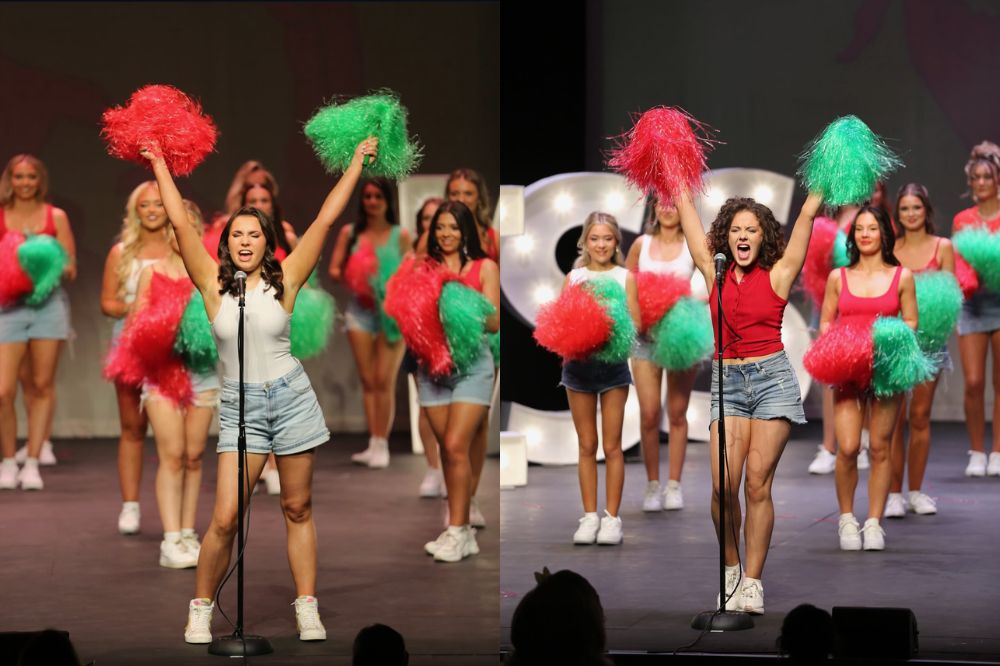
It is hard not to notice that confidence seems to have become beauty’s modern stand-in: the trait we measure when we would rather not say we are measuring anything else.
For some entrants, however, Miss Wales is less the culmination of the winding journey to self-confidence that most women must undertake, more a step in the right direction on that road.
“I saw a quote that said ‘You don’t need confidence to enter a pageant. Entering a pageant is what gives you confidence’, and from my experience this is extremely accurate,” says Ellie-Jayne Garnett, an 18-year-old from Bargoed with ambitions to become a play therapist.
With firsthand experience of being bullied, Ellie-Jayne applied for Miss Wales to encourage other women to recognise their individuality and build self-worth. You don’t need to feel “as though you need to be this very loud, extremely confident character” to be a part of Miss Wales, she believes. You must only “be yourself and enjoy every moment of it.”
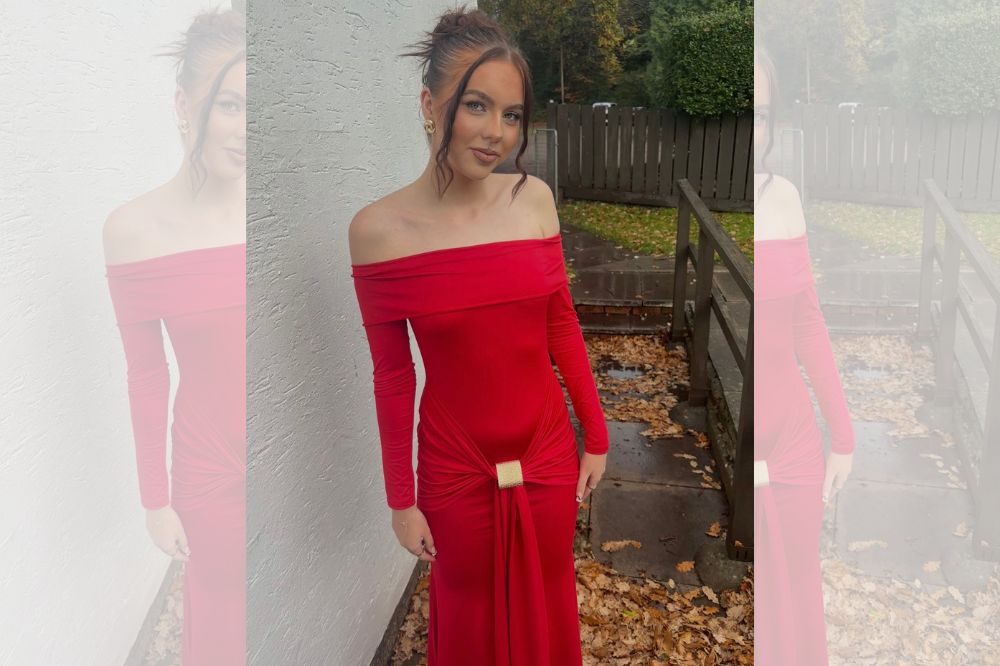
Maybe it is not confidence so much as the courage to put oneself out there even if unconfident that makes a Miss Wales.
These qualities are far easier to judge than the slippery, politically fraught concept of beauty. After all, we either have them or we don’t. Compared to beauty, confidence and courage are also more comfortable to quantify. They can be celebrated without embarrassment and defended without apology, especially when many of the contestants are still teenagers.
Wives and mothers
But what of the qualities the competition eschews? Say for example being a wife and/or mother, which the Miss Wales application declares any hopeful ‘must never’ have been.
“It’s the Miss World rule,” Paula states.
While this is true, there are those who have called it discriminatory. Veronika Didusenko, then-24-year-old Miss Ukraine 2018, felt it “humiliating and insulting” when organisers revoked her national title upon finding out she was a mother and divorcee. Notably, Didusenko was not the first mother to win the crown, but was the first to be disqualified because of it.
Julia Morley, chair and CEO of the Miss World Organisation, defended the rule on Good Morning Britain: “When you’re trying to get a worldwide organisation to agree, you have to look to everyone, and they vote as to what is acceptable. Whatever I feel or whatever Europe feels is one thing. What the rest of the world may feel, when they’ve got to look at their various religions, various things… we don’t just have our own feelings, we have to consider others.”
Although not explicitly clear how it will impact an entrant’s chances, the Miss Wales application also questions whether an applicant has previously done glamour modelling.
Paula sighs. “I think that it’s just about being a role model. I always see the Miss Wales girls as a little army of role models running around Wales, showing girls how to live their best life. We’re not looking for perfection, but the right intention.
“Little girls, little sisters, cousins, girls next door, people in school looking at these girls will think, ‘Oh yeah, that could be me.’ They’re making those choices that help them.”
Defining what a contestant can and cannot be, speaking the language of empowerment while enforcing rules, requires a delicate balance. However carefully confidence is built and judged, it brushes up against a much older, much harder-to-shake idea of what pageantry is and represents.
The idea that these competitions are, as a quick trip across the internet will tell you, “hollow”, “useless”, and “unhealthy” is one both the Miss Wales organisation and its finalists come up against.
Ellie-Jayne explains: “I’ve had some comments from people who still believe pageants are all about looks. But this is not the case anymore, today pageants focus on topics like charities or empowerment.”
Elise takes on another stereotype, that of the catty, competitive pageant girl: “What a lot of people don’t realise is how encouraging the atmosphere is. Everyone supports one another, and the women involved are incredibly driven, kind and inspiring.
“There’s no negative competitiveness at all. Everyone genuinely wants each other to do well.”
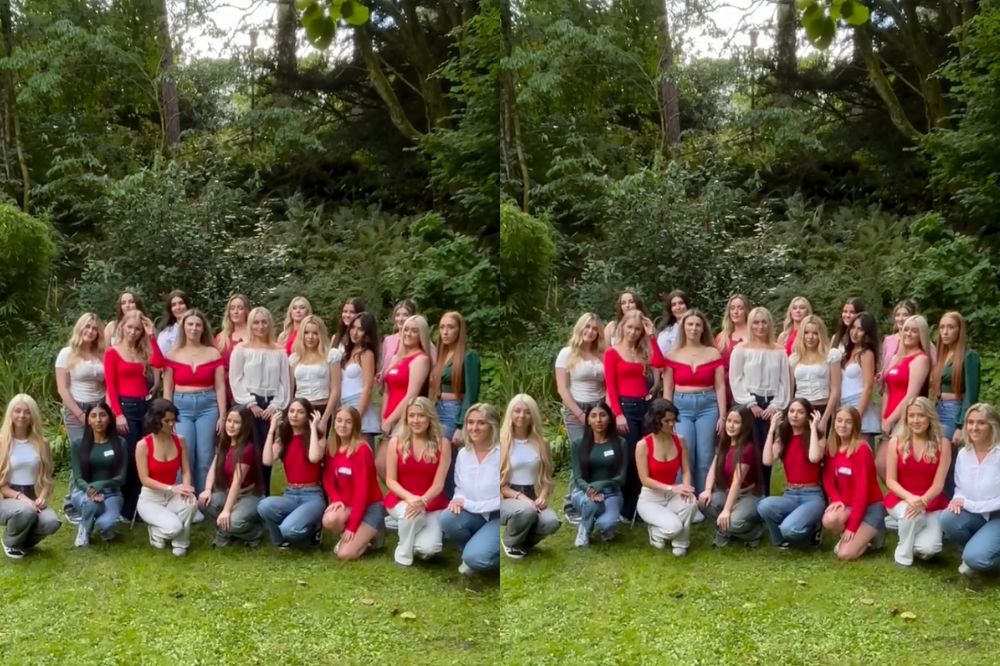
While it may seem pageantry inspires a battle of ‘for’ and ‘against’, in Paula’s view the process must steel itself against external critique.
“I can’t tell you what it’s not; I can only tell you what it is. So I am not one for talking about any negatives because I feel like they’re reinforced by even giving them time.
“Unless all that we do mirrors our values — the personal development of young women, the support of good causes, in particular the female cause, and the celebration of the feminine — then we don’t do it.
“It’s much easier to criticise ourselves and go, ‘I’m not tall enough, I’m not thin enough, I’m not pretty enough, I’m not rich enough, I’m not stylish enough’. But the girls who stand on our stage, for that moment at least, are liberated because they’re saying, ‘I am good enough’.
“Any noise from outside is just noise.”
From application form to final
Confidence, self-belief, and the “uplifting” environment that Elise describes are also undeniably helpful when it comes to the busy process that begins at selection and ends at the three-day Miss Wales final every April.
As well as social media challenges, fundraising for chosen charities, and photoshoots, the finalists support A-Sisterhood, a charity dedicated to women’s causes worldwide, as well as undertaking ASK ME training with Welsh Women’s Aid to help women and girls who may be enduring domestic violence seek safety and support.
“It requires a lot of time management,” says Ellie-Jayne. “Although, it has shown me that I am capable of balancing both of the things I am passionate about.” She adds that the process has given her confidence and helped her become more organised.
Elise agrees that, though rigorous, the journey is a net positive: “Balancing full-time work as an estate agent with preparing for the Miss Wales final can definitely be challenging, but loving my job makes such a big difference! It keeps me motivated and driven.
“The journey so far has been really exciting, and with events coming up soon, each step makes me even more grateful to be part of this experience.”
View this post on Instagram
For Paula, there is a personal element. Having worked in the industry for two decades, unable “to bear the thought of doing anything else”, there is the impression not just of an organiser, but a mentor.
“If I have 40 girls in a given year and only one girl comes out the winner, I would see that as a failure on my part.
“But very often I’ll get messages off people who didn’t win going ‘this is the best thing I’ve ever done’, ‘my confidence has gone through the roof’, ‘I’m going to do XYZ now’. It’s because they push themselves out of one comfort zone, so they feel comfortable pushing themselves out of the next.
“The programme is intentionally designed to enable girls to develop in confidence, have a new friendship group, and contribute to good causes.”
What makes Miss Wales Welsh?
Apart from the three-day final, which involves an ’empowerment day’, the Miss Wales Charity Ball and the catwalk event, held at Cardiff’s Holland House Hotel and The Riverfront in Newport, everything is optional.
“I’m a better busy than bored kind of woman, and I think the more you do the more you get out of it,” says Paula, before explaining that a finalist in their A-Level year will likely do less than one on a gap year. Despite this, “most girls rise to the challenge.”
View this post on Instagram
Miss Wales is, ahem, not unusual in this regard. Versions of the structure, challenges, charity work, confidence and charisma, exist in almost every national pageant around the world. So what is it that makes Miss Wales Welsh?
In many cases, regional pageants around a country will feed into its national pageant. Though Miss Wales is open-entry instead, finalists still represent their communities.
“Representing Bargoed means so much to me. Bargoed is a place that has taught me to value and support each other and I can’t wait to put it on the map!” Ellie-Jayne says, reiterating the “honour” of growing up in Wales.
“The Welsh community is so supportive and they all come together, which is one of the reasons I appreciate Wales and the people in it.”
The feeling is much the same for Elise, who is excited for the “meaningful” experience of representing Aberdare, and loves celebrating Welsh culture and “the sense of community we have here.”
“Being Welsh definitely shapes how I connect with others. There’s such a strong sense of pride and warmth in our culture. Speaking Welsh helps me feel even more connected to my roots.”
Heavy is the head that wears the crown
Since 1999, Miss Wales is itself a feeder pageant for the Miss World competition, and last year’s winner Helena Hawke will represent the country on the global stage at the end of May.
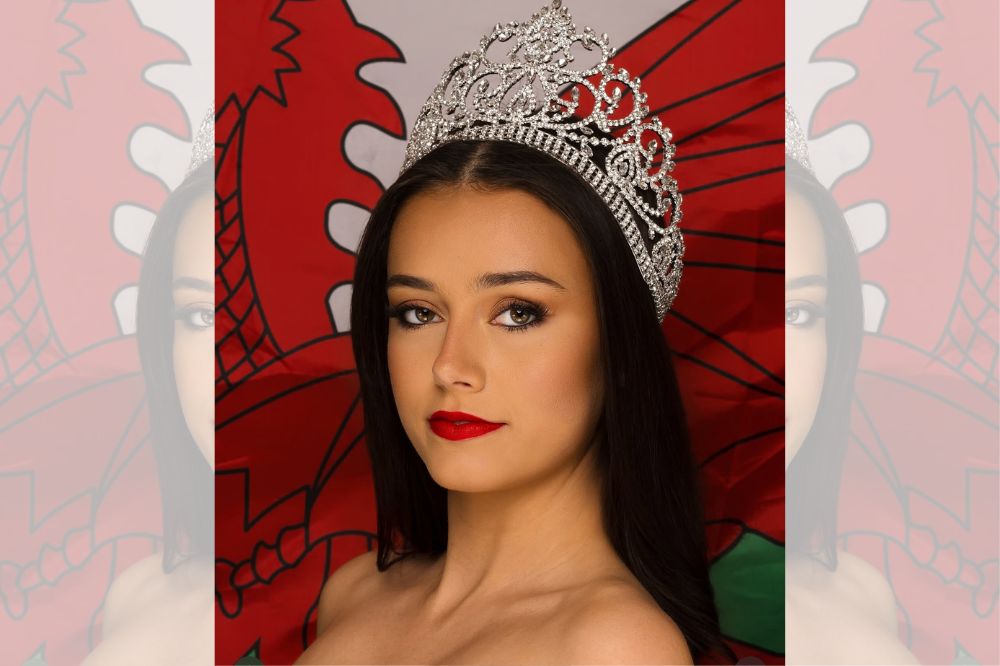
However, there can only be one winner and for the rest, as Paula says, “Miss Wales is just a chapter of their lives.”
In Elise’s case, continuing with pageantry is a definite. “I’ve met so many kind, inspiring women and discovered a real passion for pageantry. Whether this leads to more competitions or new opportunities, I just know I want to keep growing, learning and using my experiences to uplift others.”
Ellie-Jayne’s passions remain with charity fundraising, namely for the Childhood Tumour Trust to raise money for neurofibromatosis which her little sister was diagnosed with at a young age, and “supporting children and their families.”
“Although, I also see myself staying involved in the pageant world,” she says. “I love being a part of a team and it has taught me so much even in a short amount of time!”
The 2026 Miss Wales crown is the same ornate, opulent, “classy” symbol it always has been. In April, it will be lowered onto the winner’s head, and in that moment a Welsh girl, perhaps an estate agent or a childcare student, becomes Miss Wales. There is an undeniable magic in that.
But that transformation does not happen on the night, as the finalists prove. By the time a stiletto ever touches that stage, the work has already been done. And it will continue for long after they step off.
Pob lwc, ladies.
Elise’s Miss Wales journey is sponsored by her place of work, T Samuel Estate Agents, while Ellie-Jayne is sponsored by RR Davies LTD Scrap Metal Merchants.
Support our Nation today
For the price of a cup of coffee a month you can help us create an independent, not-for-profit, national news service for the people of Wales, by the people of Wales.


