


Why are patients being treated in hospital corridors in Wales – and can it be stopped?
Mark Mansfield
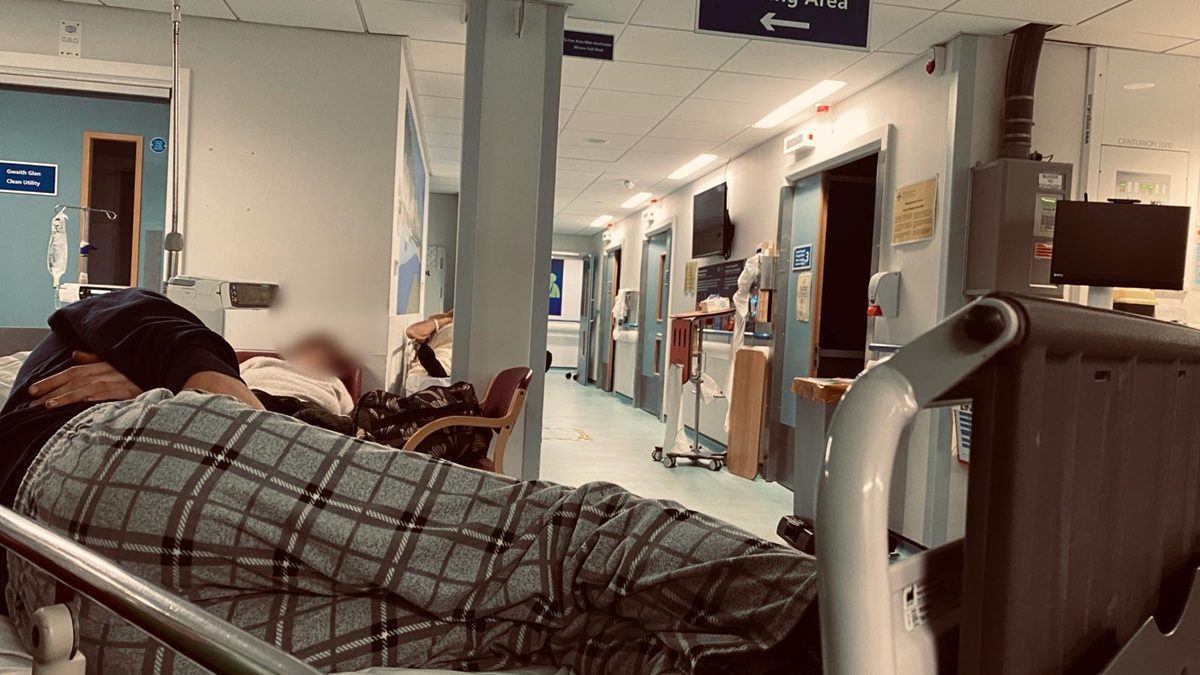
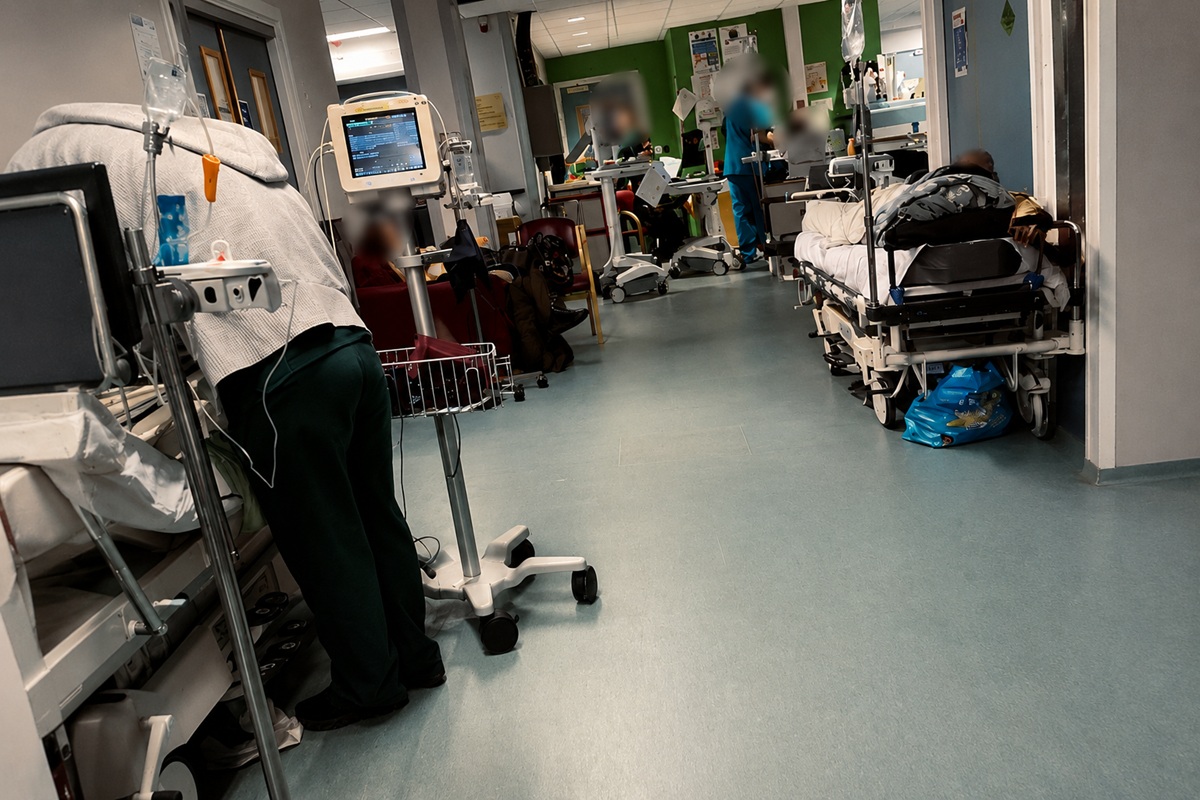
Patients being treated on trolleys in hospital corridors has become one of the most visible signs of the pressure facing the NHS in Wales.
Every major emergency department in the country was found to be using corridors or other inappropriate spaces to treat patients during a snapshot survey last year, while waiting-time figures show hospitals continuing to struggle with demand.
Health Minister Mabon ap Gwynfor has warned that emergency departments are “buckling under the strain of relentless demand and insufficient capacity”, with unsafe practices such as corridor care becoming normalised.
Now Angharad Lewis of Senedd Research has examined how widespread corridor care is, what is driving it and whether the Welsh Government’s plans can bring the practice to an end.
So what does the evidence tell us about the scale of the problem – and what would actually have to change to end it?
What is corridor care?
Corridor care generally refers to patients being treated in spaces that were not designed for clinical care, including hospital corridors and storage areas.
The Royal College of Nursing Wales (RCN) has described the practice as unsafe and undignified for patients and distressing for NHS staff.
It can involve patients spending long periods on trolleys or chairs while waiting for an appropriate bed or treatment space to become available.
In December 2025, the Senedd debated a petition from the RCN and British Medical Association Cymru Wales calling on the Welsh Government to “eradicate” corridor care. More than 10,000 people signed it.
How widespread is it in Wales?
One of the central findings highlighted by Senedd Research is that nobody knows precisely.
Unlike in England, national statistics on the incidence of corridor care are not routinely published in Wales.
A snapshot survey by the Royal College of Emergency Medicine (RCEM), carried out over three days in January and February 2025, found all 12 major emergency departments in Wales were treating patients in corridors.
On average, 13.5% of patients in those departments were being treated on trolleys in corridors or other inappropriate spaces when the survey was carried out.
But because it covered only three days, the figures cannot show how frequently corridor care occurs throughout the year.
The previous Welsh Government said health boards collect operational information on hospital capacity and patients being cared for in non-clinical environments, but that information is not held nationally.
England has since begun publishing corridor-care figures. Senedd Research says an estimated 4.8% of A&E attendances and 18.1% of emergency admissions there experienced corridor care during May and June 2026.
There are questions about how useful such figures are, however. The Nuffield Trust has warned that the definition used in England could potentially encourage hospitals to keep patients elsewhere, including in ambulances, to avoid recording them as receiving corridor care.
Nevertheless, publishing the figures would provide greater transparency about the scale of the problem in Wales.
Why are emergency departments struggling?
Demand has risen considerably.
There were almost 1.1 million attendances at emergency departments in Wales during 2024-25 – the highest number on record – with demand increasing faster than the population.
The Welsh Government has two principal waiting-time targets for emergency departments: 95% of new patients should be admitted, transferred or discharged within four hours, while nobody should wait more than 12 hours.
Major emergency departments are a long way from achieving either.
In July 2026, just 49.9% of patients spent less than four hours in a major emergency department.
Not one of Wales’ major emergency departments met either the four-hour or 12-hour target.
The picture is substantially better at other emergency departments and minor injury units. Across Wales, 96.1% of patients at those services spent less than four hours there in July, while 100% spent less than 12 hours, although performance varies between individual hospitals.
Does waiting longer matter?
Long waits aren’t simply inconvenient.
Research has linked prolonged waits in emergency departments with an increased risk of harm, including longer hospital stays and higher mortality.
Older patients are particularly affected, with people aged 85 and over consistently experiencing the longest median waits before being admitted, transferred or discharged.
The Royal College of Emergency Medicine has estimated that during 2025 an average of 18 deaths a week were associated with emergency department waits of 12 hours or more in Wales.
That does not mean the waits were necessarily the sole cause of those deaths, but the figures underline the risks associated with prolonged stays in emergency departments.
Why can’t hospitals simply find more beds?
Because, as the Senedd Research analysis makes clear, the causes of overcrowding stretch far beyond emergency departments themselves.
One of the biggest problems is the movement of patients through hospitals.
If somebody who is medically fit to leave hospital cannot be discharged because appropriate social or community care isn’t available, their bed remains occupied.
That means another patient cannot be moved out of the emergency department into the hospital, which in turn leaves less capacity for newly arriving patients.
Senedd committees examining patient flow during the previous parliamentary term identified shortages in social care capacity and problems with cooperation between health and social care services as contributors to delayed discharges.
There is also the physical condition and capacity of hospitals themselves.
The Welsh NHS Confederation has argued that maintaining, modernising and expanding the NHS estate is crucial to improving patient flow. The maintenance backlog across the Welsh NHS stands at £1.4bn.
Hasn’t the Welsh Government already tried to tackle this?
Yes.
The previous government introduced additional funding and policies including the Six Goals for Urgent and Emergency Care programme, which sought to reduce pressure on emergency departments partly by providing alternatives to hospital care.
But Audit Wales has warned that some services designed to reduce pressure on emergency departments are being underused and has called for a greater emphasis on planning across the entire health and care system.
The new Welsh Government is now promising a different approach.
Mr ap Gwynfor has described ambulance handover delays, lengthy emergency department waits and the persistence of corridor care as visible consequences of pressures throughout the healthcare system.
So what’s going to change?
The government says it wants the NHS and social care system to become better at anticipating pressure rather than responding once hospitals become overwhelmed.
One element involves identifying people at risk of hospital admission earlier, including through proactive care for people living with frailty in the community.
Health boards have also been asked to produce improvement plans prioritising earlier hospital discharge, working alongside community care services.
The intention is eventually to move away from treating winter as a distinct period of crisis towards continuous planning throughout the year, with the new approach expected to be embedded by 2030.
That reflects another emerging pressure on the NHS. Hotter summers and more frequent heatwaves can increase deaths and exacerbate chronic illnesses, particularly among older people, babies and children, adding to demand on emergency departments.
Can Wales actually end corridor care?
There is no single measure that will do it.
The evidence brought together by Senedd Research suggests corridor care is the end result of pressures throughout the health and social care system rather than simply a problem within emergency departments.
Reducing it would therefore depend on several things happening together: preventing avoidable hospital admissions, improving patient flow, getting medically fit patients home sooner, increasing community and social care capacity and ensuring hospitals have sufficient appropriate space.
There is also a more immediate problem: Wales does not have national figures showing how frequently corridor care is happening.
Without consistent data showing where it occurs and whether its use is increasing or declining, it will be difficult to judge whether government policies are actually succeeding.
As the research concludes, the coming years will test whether the new approach can reduce corridor care and deliver sustained improvements in Wales’ emergency departments.
Support our Nation today
For the price of a cup of coffee a month you can help us create an independent, not-for-profit, national news service for the people of Wales, by the people of Wales.
Get more trusted Welsh news
Choose Nation.Cymru as a preferred source in Google News to see more of our journalism.


