


Why has drought been declared for the whole of Wales – and what does it mean?
Mark Mansfield
The whole of Wales has been declared in drought after weeks of exceptionally dry weather left rivers at unusually low levels, groundwater falling and growing pressure on wildlife and farming.
Natural Resources Wales (NRW) extended drought status across the country on Thursday, July 30, after conditions deteriorated rapidly during one of the driest periods on record.
The declaration does not mean Wales is about to run out of drinking water, nor does it automatically trigger hosepipe bans.
Instead, NRW’s drought classification reflects a combination of indicators including rainfall, river flows, groundwater levels, soil moisture and the impact dry conditions are having on ecosystems, agriculture and land management. Water companies operate separate drought plans and have their own triggers for restrictions on customers.
How dry has Wales been?
July has been exceptionally dry.
As of July 27, Wales had received just 8% of its long-term average rainfall for the month, putting the country on course for its driest July since records began around 190 years ago.
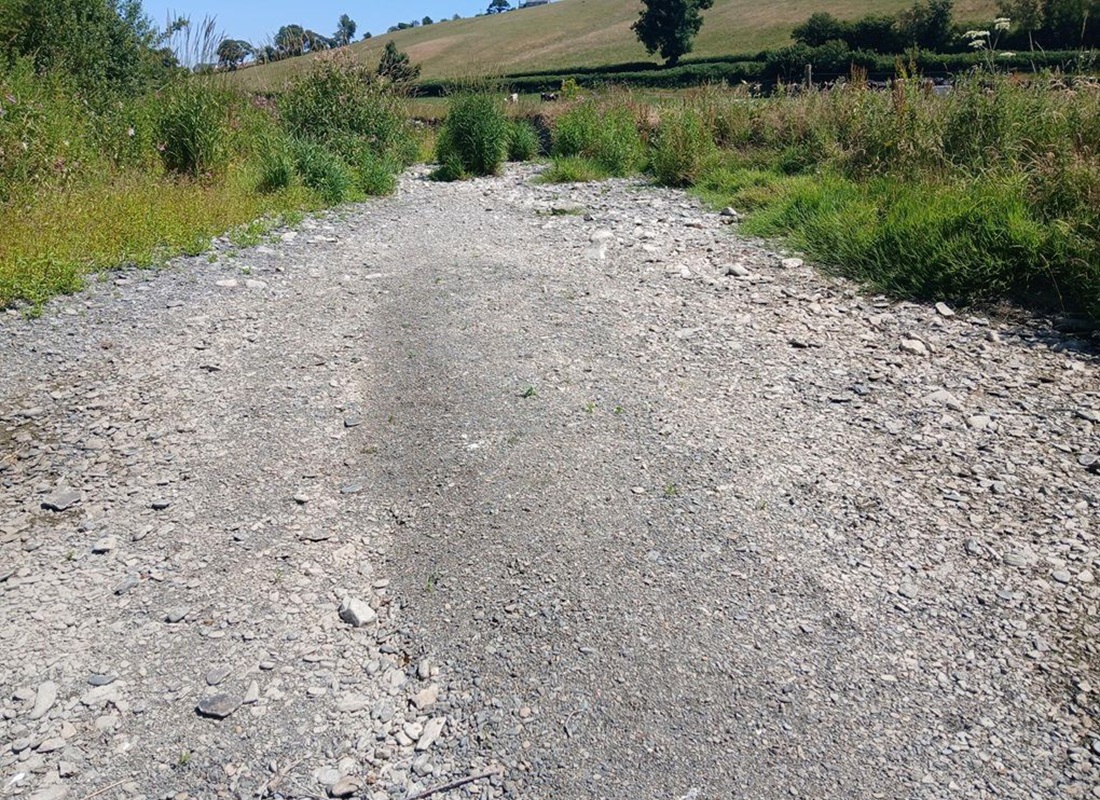
River levels are low across much of Wales, with some watercourses at exceptionally low levels for the time of year, while groundwater levels have continued to fall.
Recent showers have provided some short-term relief by dampening soils and temporarily reducing wildfire risk in places, but NRW said they had not been enough to reverse the wider deterioration.
The dry spell followed a below-average April to June period, when rainfall across Wales was around 86% of what would normally be expected.
By mid-July, some parts of the country had received virtually no rain at all during the month.
How quickly did the situation deteriorate?
The speed of the change has been striking.
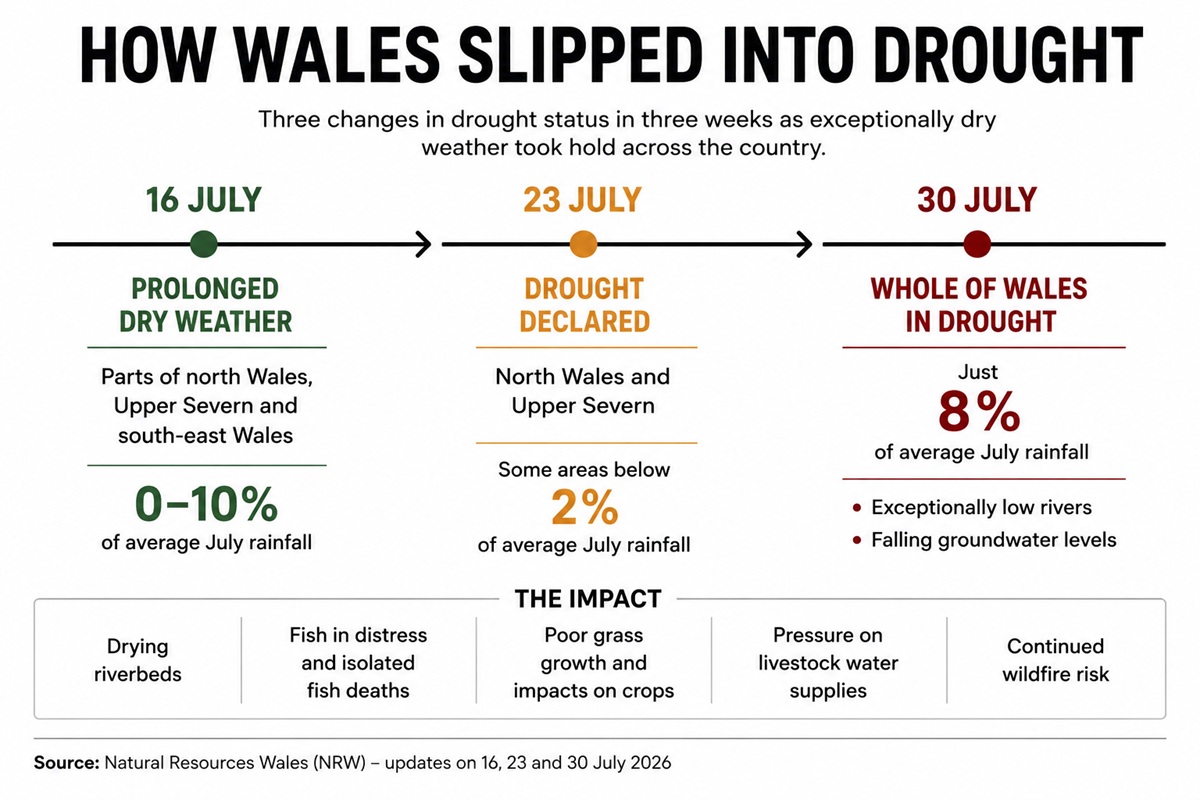
On July 16, NRW moved parts of north Wales, the Upper Severn and south-east Wales from “Normal” to “Prolonged Dry Weather” status.
At that point, rainfall during July was running at between zero and 10% of the monthly average across Welsh catchments, with many rivers already lower than expected and some at exceptionally low levels.
A week later, on July 23, north Wales and the Upper Severn were formally moved into drought.
Some of the driest catchments in the Upper Severn, Gwynedd and Clwyd had received less than 2% of their expected July rainfall, while new monthly minimum flows had already been recorded on some rivers.
At the same time, large parts of south and west Wales were moved into prolonged dry weather status.
Then, on July 30, those remaining areas were also moved into drought, meaning the classification now covers the whole country.
It was the third change in drought status in as many weeks.
What does ‘drought’ actually mean?
NRW uses four broad stages when assessing dry weather: Normal, Prolonged Dry Weather, Drought and Recovery.
Prolonged dry weather means indicators such as rainfall, river flows and soil moisture have remained below expected levels for a sustained period and impacts on the environment or other sectors are beginning to emerge.
Drought represents a more serious stage, involving a significant period of low river levels and reduced rainfall, with ecosystems, agriculture and water resources coming under greater pressure.
There are also different types of drought.
An environmental drought can affect rivers, wetlands, habitats and wildlife; an agricultural drought can reduce crop yields, grass growth and water available for livestock; while a water-supply drought relates to the amount of water available for homes and businesses.
Those different forms can occur at the same time.
What is happening to Wales’ rivers?
Some of the clearest effects of the dry weather are being seen in rivers and streams.
NRW has received reports of riverbeds and tributaries drying out, fish becoming distressed and isolated cases of fish deaths.
By July 16, almost half of the flow in the lower River Wye was being maintained by releases from the Elan Valley reservoirs, illustrating how depleted natural flows had become.
Temperatures in rivers including the Wye and Usk had also exceeded 26C during hot spells, placing additional stress on fish and other aquatic life.
NRW has been using river regulation schemes to support flows where possible, including on the Dee, Severn, Tywi, Clwyd and Wye.
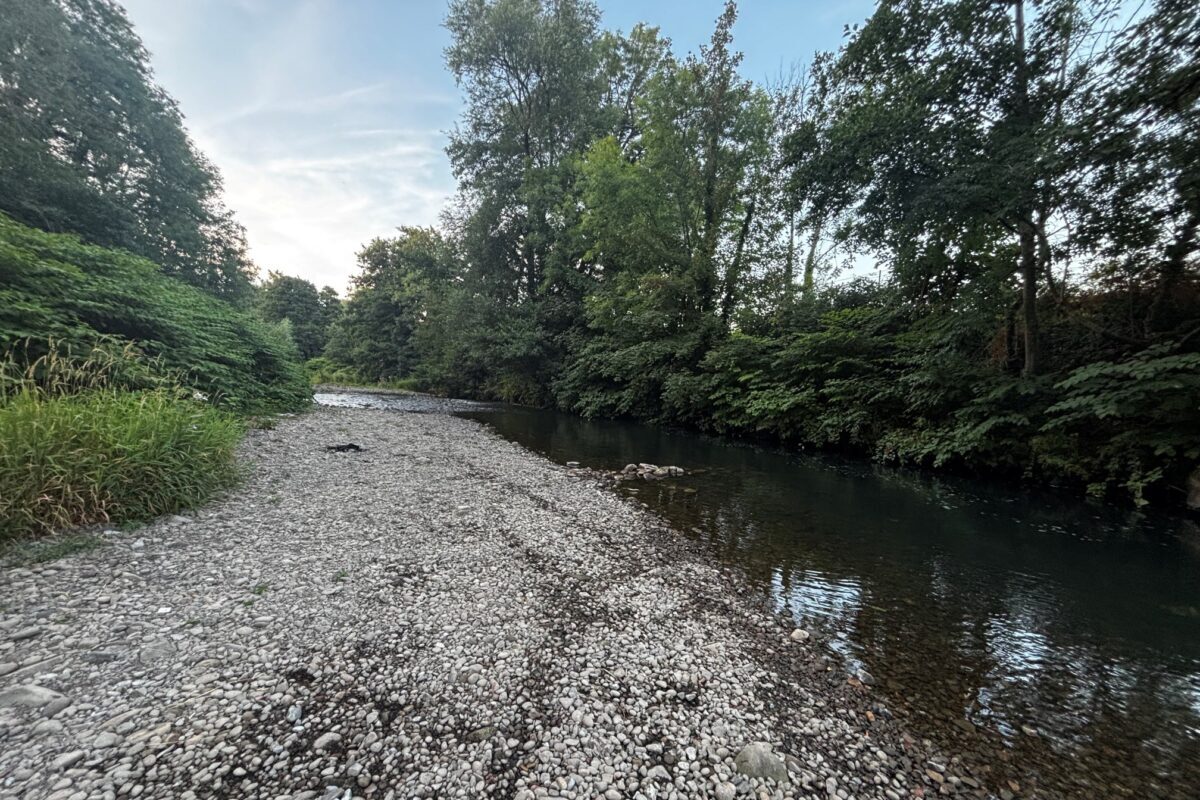
Additional reservoir releases have also been made into the Dee and Afon Aled to help protect fisheries and river ecology.
In one example of the impact on wildlife, freshwater pearl mussels in the Afon Eden had to be relocated to deeper water as levels fell.
What does it mean for farming and wildlife?
The effects are extending well beyond rivers.
Farmers have reported reduced grass growth, pressure on crops and concerns about water supplies for livestock.
In some areas, winter feed stocks have already been used because dry conditions have limited the amount of grass available during the summer.
NRW has also received reports of agricultural water sources and some private supplies drying up.
Protected habitats including peatlands, grasslands, heath and wetlands are also under pressure.
Drying and cracking peat can increase wildfire risk, while grassland habitats can dry out before plants have had the opportunity to flower and set seed.
The prolonged dry weather has coincided with major wildfires across parts of Wales, adding another layer of pressure on already stressed landscapes.
Does drought mean a hosepipe ban?
Not necessarily.
NRW’s declaration relates primarily to the hydrological and environmental state of Wales.
Water companies assess their own supplies separately and use different criteria when deciding whether restrictions are required.
A Temporary Use Ban is already in place in Mid and South Ceredigion, but drought status across the rest of Wales does not automatically mean similar measures will follow elsewhere.
Reservoir levels have generally remained healthier than river flows, although high demand during hot weather can still put pressure on supplies.
What changes when drought is declared?
NRW increases monitoring and inspections, checks that water companies are following their drought plans and makes sure abstraction licences are being complied with.
Some abstraction licences contain “hands-off flow” conditions, requiring businesses or landowners to stop taking water from rivers once flows fall below a particular level.
Those restrictions are increasingly likely to come into force while rivers remain low.
Further measures can also include responding to applications for drought permits or orders and imposing additional restrictions on water users such as spray irrigators.
What happens next?
The crucial factor is not simply whether Wales gets some rain, but whether there is enough sustained rainfall to replenish soils, rivers and groundwater.
Short spells of rain can temporarily reduce fire risk and improve surface conditions, but they may make little difference to groundwater or river systems after weeks of depletion.
NRW said the outlook continued to include a risk of further dry weather and additional periods of heat during the remainder of the summer.
That means drought status is likely to remain in place until there has been enough prolonged rainfall for the country’s hydrological and environmental indicators to begin returning towards normal levels.
Support our Nation today
For the price of a cup of coffee a month you can help us create an independent, not-for-profit, national news service for the people of Wales, by the people of Wales.
Get more trusted Welsh news
Choose Nation.Cymru as a preferred source in Google News to see more of our journalism.


