
Why reading still matters — and why I wrote Arwr Arfro
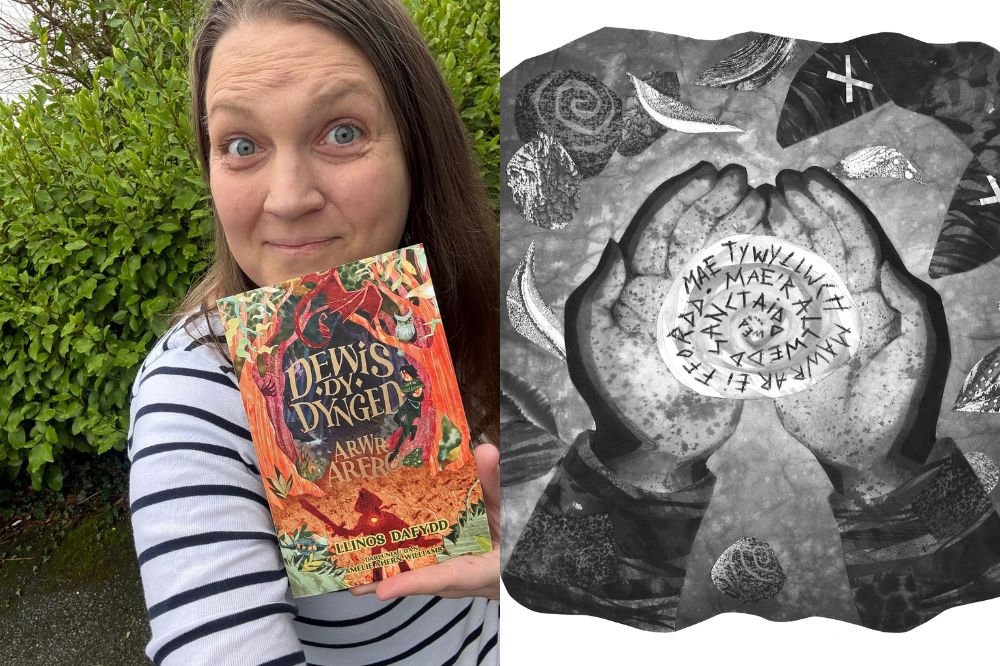
Llinos Dafydd, Author, editor and translator
This year has been named the National Year of Reading. On the surface, that feels like something everyone can agree on. Reading is good. Reading is important. We nod, we share a post, we move on.
But if this year is to mean anything, it has to go deeper than slogans.
I’ve just published Dewis Dy Dynged: Arwr Arfro, an interactive fantasy novel for children aged 7 to 12. The reader is the hero. Every choice they make changes the outcome. You can take one path today and a completely different one tomorrow. The same book becomes multiple journeys.
I didn’t choose that structure lightly.
Post-Covid literacy levels have fallen, and confidence has shifted. Through initiatives such as the Books Council of Wales’ Cam Cynnydd 3 grant, it has been recognised that children in this age range need books that feel more accessible — a better balance between illustration and text, language that allows them to relax into the story rather than brace themselves against it.
Children cannot enjoy reading if every page feels like assessment.
And reading for pleasure matters.
Research consistently shows that reading for pleasure supports not just literacy, but wellbeing, empathy and long-term educational outcomes. But pleasure cannot be forced. It has to feel voluntary. It has to feel safe.
That’s where agency comes in.
Reading as participation
For many children, reading becomes something that happens to them rather than with them.
You’re told what to read.
You’re told what it means.
You’re told when you’ve understood it correctly.
Slowly, reading can start to feel like another space where mistakes are exposed.
At its best, though, reading is one of the first places a child can make decisions safely. Where they can hesitate, experiment, take risks and try again without real-world consequence.
That’s what I wanted Arwr Arfro to offer.
In this story, you can be brave, or unsure. You can trust, or turn back. You can reach a dead end and start again. That re-reading isn’t repetition for its own sake; it builds familiarity, reinforces language and strengthens confidence.
It reminds the reader that they are capable.
The visual invitation
Accessibility isn’t only about structure. It’s also about how a book looks and feels.
The illustrations by Amelie Ahern-Williams play a central role in that. Even before the first page is turned, the textured collage cover signals that this world is alive — layered, tactile and slightly unpredictable.
For a child who might feel uncertain about longer texts, illustration can be the bridge that says: come in. This is for you.
Visual storytelling builds atmosphere and lowers intimidation. It reassures and excites at the same time. It makes the book feel inhabited.
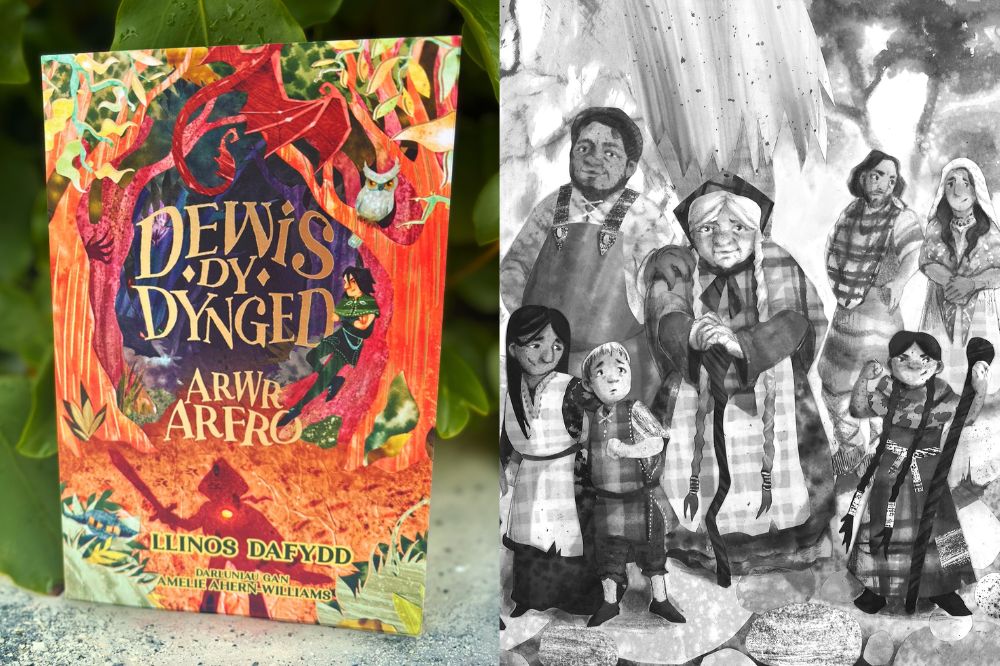
In a story rooted in Welsh myth — forests that feel alive, ancient creatures, warnings and wonder — that sense of immersion matters.
But this isn’t about testing knowledge of folklore or recognising references. You don’t need prior understanding to step into Arfro. What matters is curiosity.
Belonging, not pressure
If the National Year of Reading becomes simply about increasing numbers, we will miss the point.
The real question is whether children feel that books belong to them.
Do they feel trusted as readers?
Do they feel allowed to choose, to question, to interpret?
Do they feel safe to make mistakes?
Reading thrives when it feels alive, not when it feels measured.
Families can buy books like Arwr Arfro, or borrow them from local libraries. They can read together, talk about the choices made, and return to the story again and again. The format matters less than the atmosphere around it.
Because the more a child feels ownership over a story, the more likely they are to return to reading as a habit, not a task.
A quiet hope
I didn’t write Arwr Arfro to fix reading. I wrote it because I love stories, and because I believe children deserve books that trust them.
Books that don’t talk down.
Books that leave space.
Books that say: you are capable of more than you think.
If this National Year of Reading achieves anything, I hope it reminds us that reading isn’t about compliance.
It’s about confidence.
And sometimes, all it takes is one story that hands the power back to the reader and asks:
What will you do next?
Dewis Dy Dynged: Arwr Arfro is published by Gwasg Rily Publications and available in all good bookshops.
Llinos Dafydd is a Welsh-language author, creative editor and translator with over 20 years’ experience in publishing. She has worked across children’s literature, adaptation and cultural campaigns, and has just published her first original novel, Dewis Dy Dynged: Arwr Arfro, with Gwasg Rily.
Support our Nation today
For the price of a cup of coffee a month you can help us create an independent, not-for-profit, national news service for the people of Wales, by the people of Wales.


