


Y Filltir Sgwâr Revisited – the Canada Tips
Tom Maloney
It’s been a little while since writing the last of the articles for the series ‘Y Filltir Sgwâr’, but I think I knew that a time would come when I would want to put pen to paper again and share something of the delights of my locality as its hold on me is too strong.
So, I hope you will indulge me one more time with this little stroll around the Canada Tips, near Blaenafon, which is to be found on the opposite side of the road to the ever-popular Keeper’s Pond.
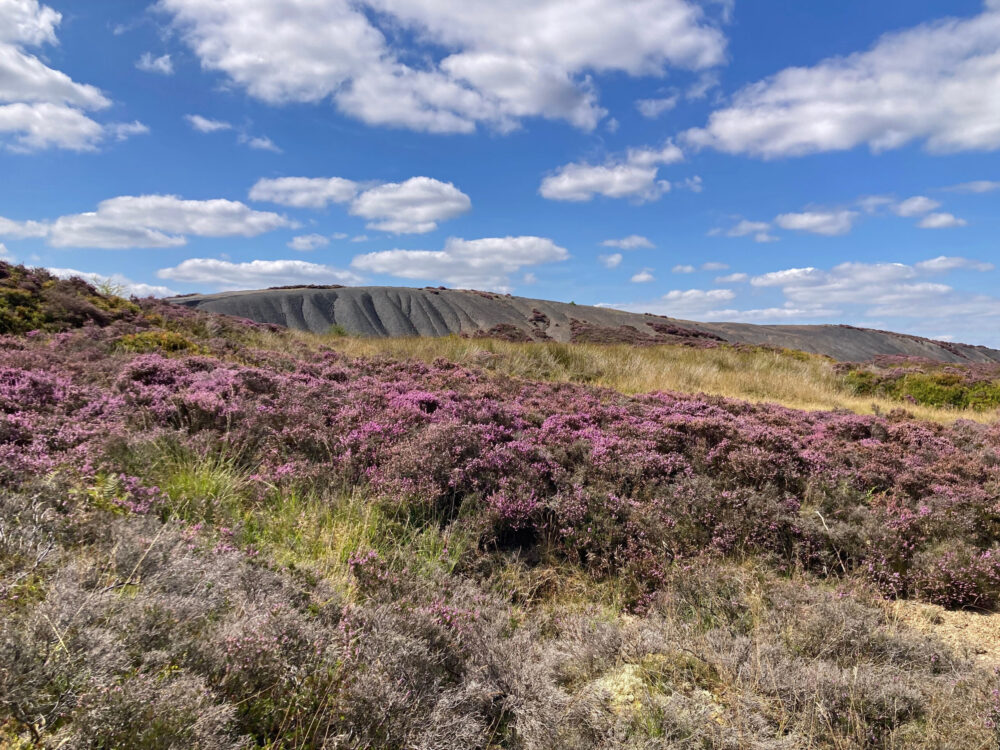
The ridge is rather like the rib cage of an enormous, sleeping dragon and dominates the skyline. Curiously, it holds secrets that are hidden within plain sight.
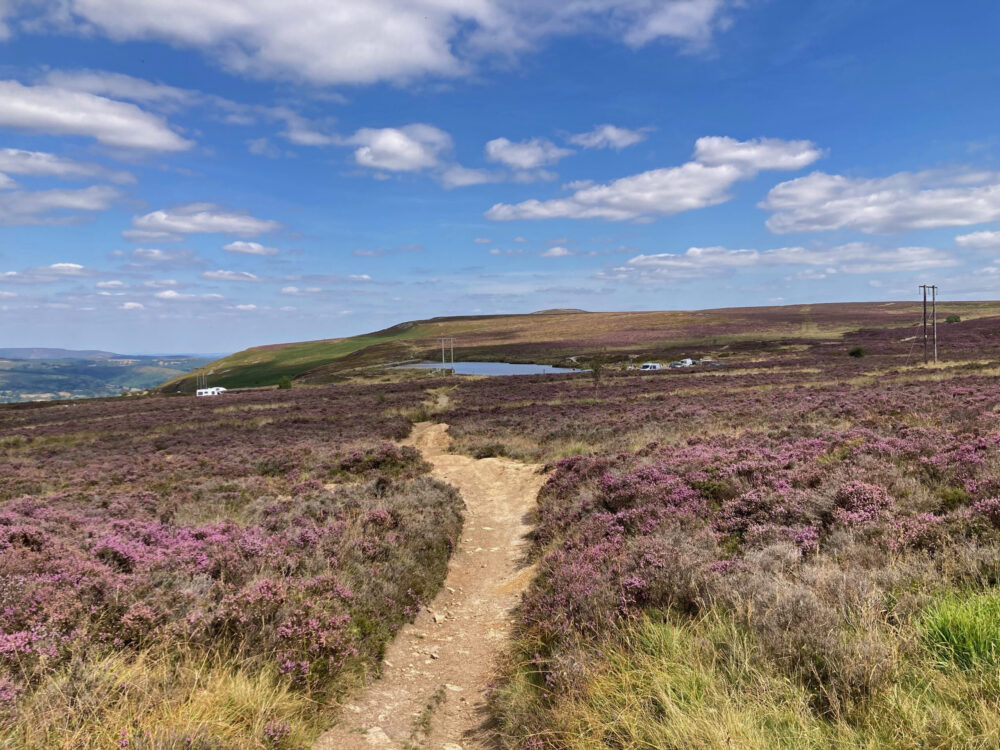
In truth, it is a strange place of contradictions, where extremes go hand in hand. Add into the mix the frequent presence of powerful, at times deafening, offroad motorcycles and this may explain why this rugged, undulating terrain goes well and truly under the radar.
Rich tapestry
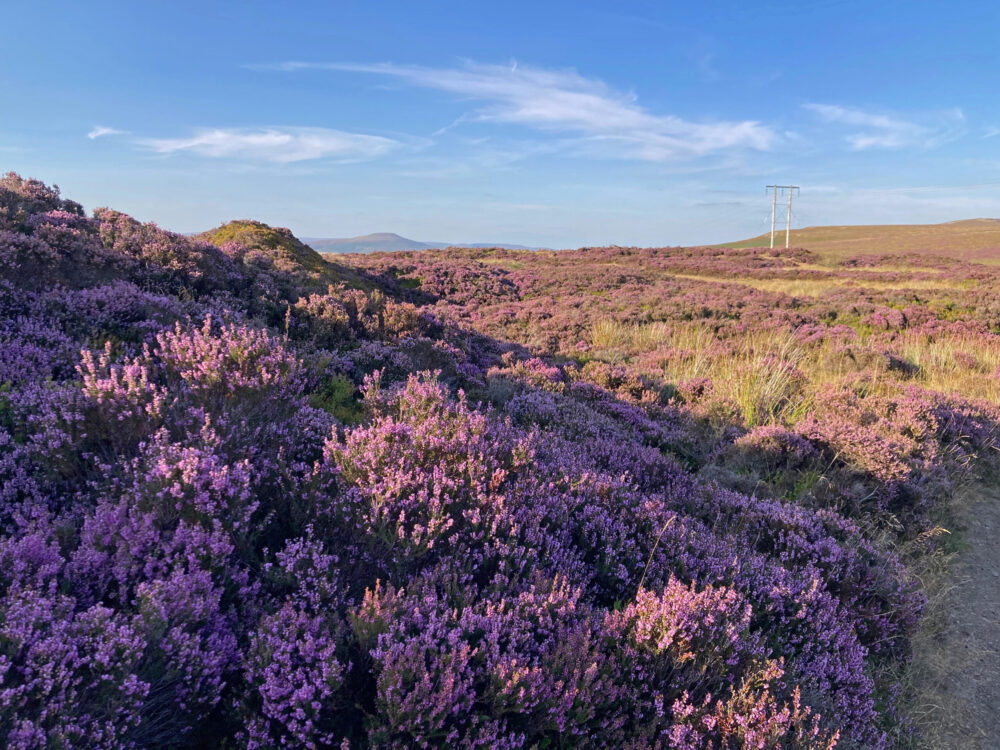
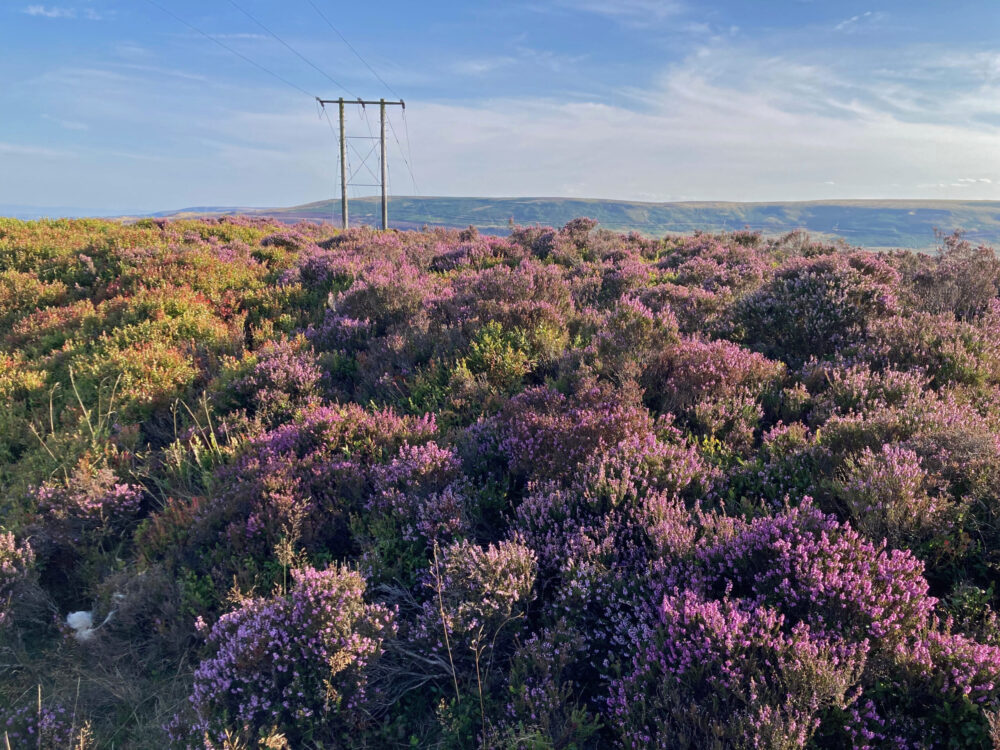
But … catch the moment, especially of a summer evening, when the sun is generously giving of its warmth, then you will find yourself walking in a rich tapestry of colour and texture that nurtures your soul.
The heather is simply sumptuous just now.
So, what is in the name? As is the case so often, clues to past history can lie in place names and the history here is huge.
‘In parts of the landscape, particularly near Pwll-Du, the late eighteenth and early nineteenth century workings are overlain by tips of waste from surface workings for coal of the 1940s.
The early development of open cast working was considerably aided by troops of the Canadian army based in Britain who provided diamond drills and the expertise needed to work them. Some of the waste deposits at Pwll-Du are significantly known as the ‘Canada Tips’.’
Heneb: The Trust for Welsh Archaeology / Glamorgan-Gwent Archaeological Trust
Scars
You do not have to walk very far along the meandering paths before encountering the scars of the opencast workings and personally, I don’t think I am ever prepared for what I see.
Hidden within the heart of the tips the old workings are laid bare and what fills your eyes is both stark and uncompromising, probably the closest that I can imagine to a desolate moonscape.
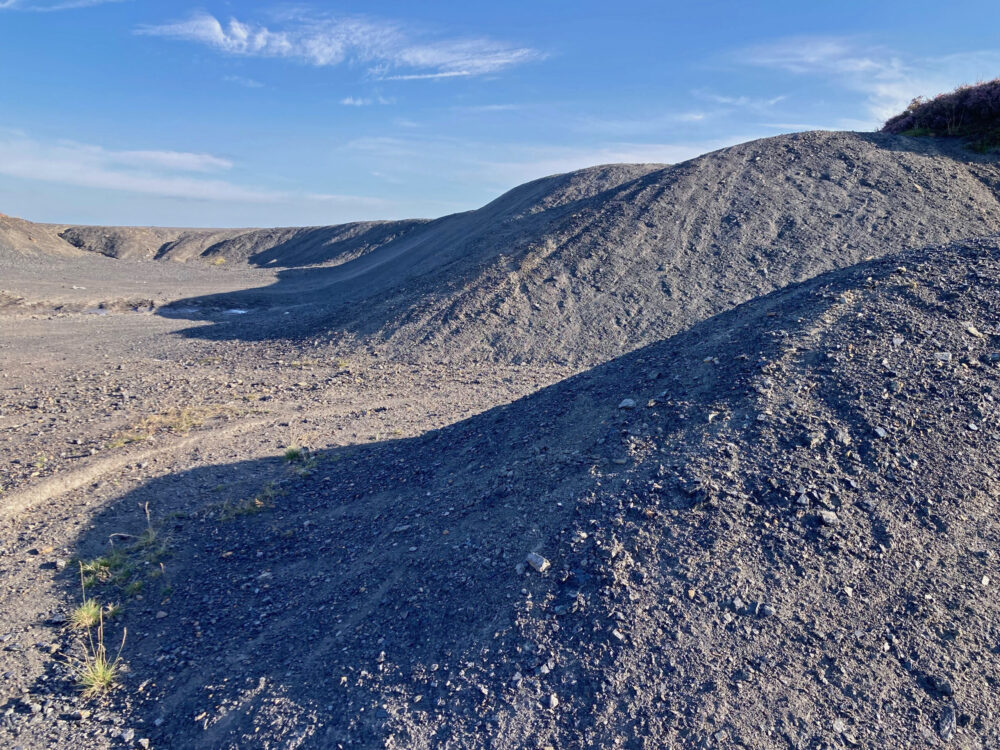
And as you look there is the realisation that everything hereabouts would have looked just like this during the 1940’s.
Mound after mound, heaped with coal spoil scooped out of the earth with mechanical ease would have stretched in every direction and the air would have been thick with the dust of extraction.
Who would have possibly believed back then that Mother Nature would be able to care for the wounds with her healing hands?
Incredibly, that is just what Mother Nature has done and in good measure too.
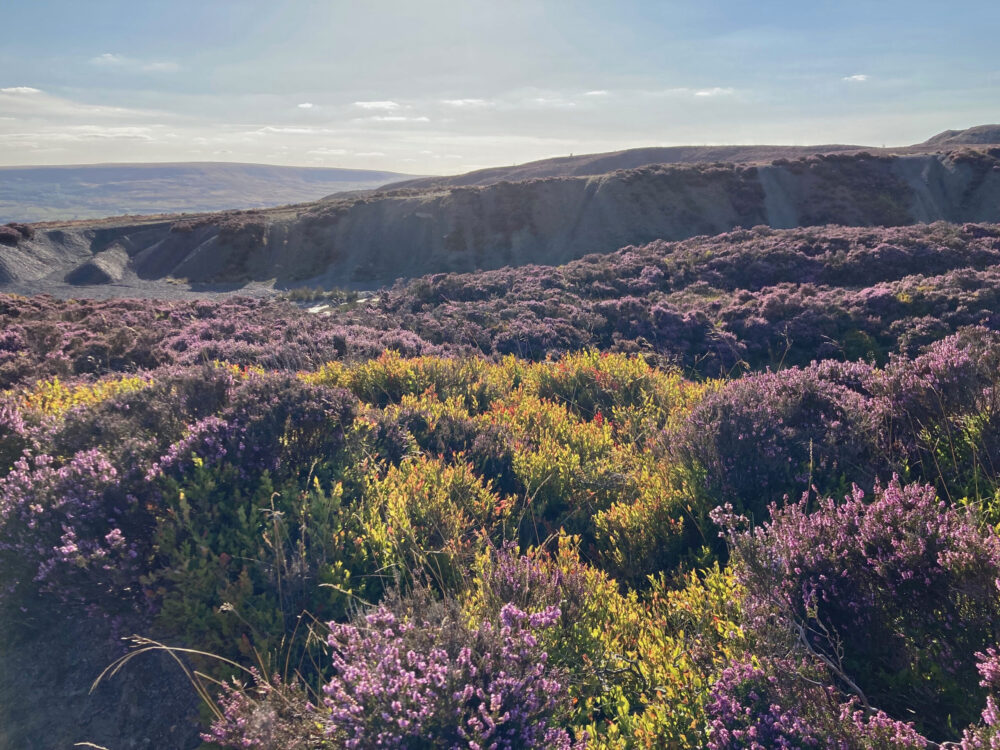
And I suppose that brings me to why I walk. Sometimes, I like to test myself, to give myself a physical challenge, but mostly I walk because I feel the need for the mental well-being lift that it brings.
Industrialisation
Perhaps, the mark of industrialisation will always be on this land, but the recovery is also there as well and this gives me a such a sense of hope.
And the views from the ridge, well they are always changing, always engaging and always inspiring.
In the Welsh, ‘Mae’r tir yn arbennig’ – The land is special.
Some Helpful Information
Parking
There is a car park at The Keeper’s Pond, but on a day when the weather is fair this can fill very quickly. There other places nearby where you can park safely.
Be Prepared
This is a landscape that can be deceptive. Paths, even in dry weather can be surprisingly slippery, so good walking boots or sturdy shoes are a must
I would also recommend a walking stick as a third leg. These days I hardly ever walk without a trusty stick.
Support our Nation today
For the price of a cup of coffee a month you can help us create an independent, not-for-profit, national news service for the people of Wales, by the people of Wales.



Good to see your writing back again Tom!
Many, many thanks Chris, I am hoping to do some more articles about the places that I enjoy in the near future.
Hynod oddiddorol – diolch yn fawr!
Diolch yn fawr iawn am yr ateb. Mae’n dirwedd ddiddorol gyda haenau o hanes.