


Yes Breizh outlines vision for devolution in Brittany
Stephen Price
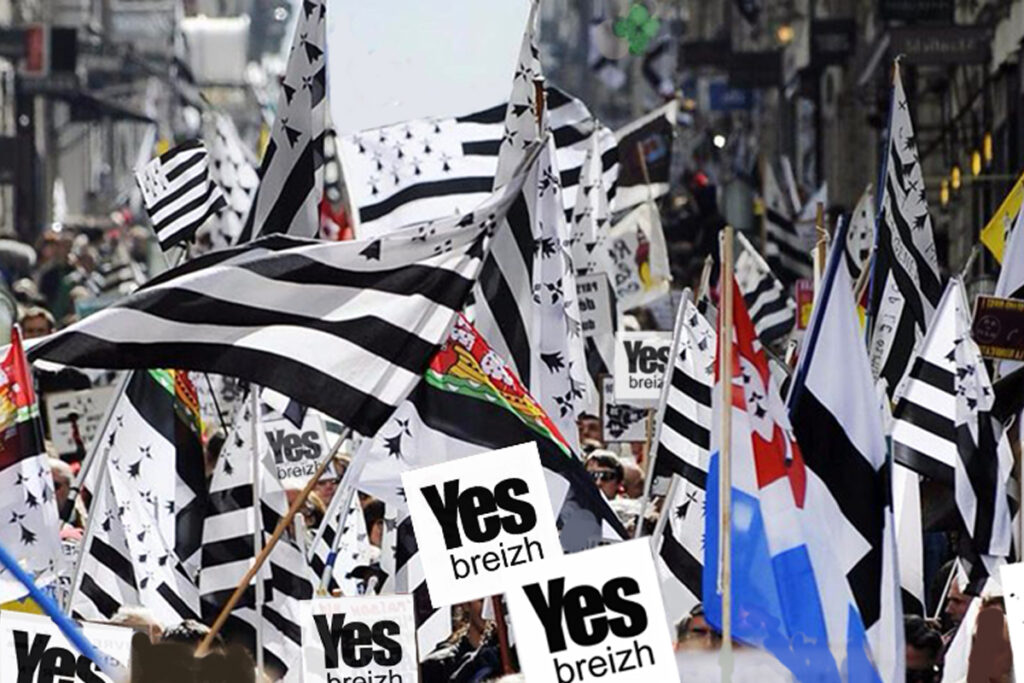
Yes Breizh, the non party-political movement advocating for more control over Brittany’s destiny has outlined its new vision for the Celtic nation, calling for full self-government in the face of France’s ongoing political ‘chaos’.
Launched in summer 2025, Yes Breizh is committed to explaining why Brittany has a future of its own, and to making the subject an essential part of public debate in Brittany, France and Europe.
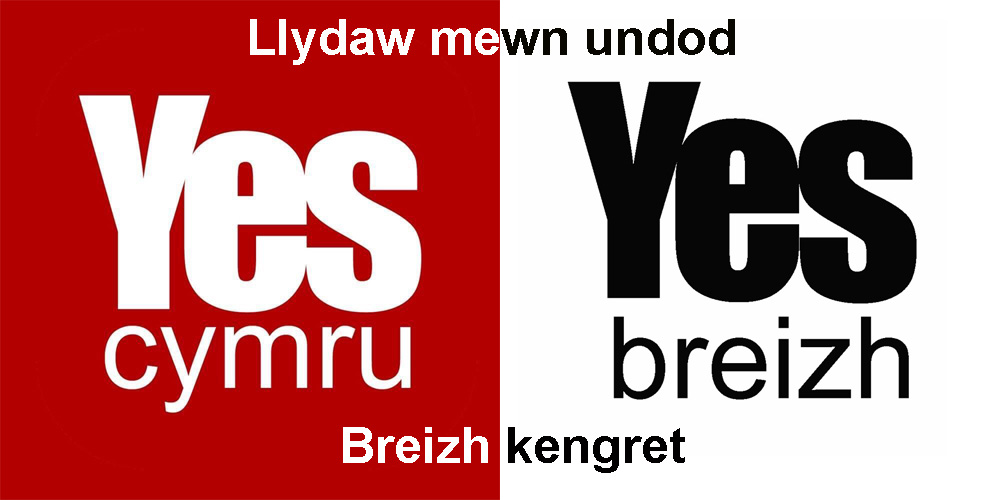
Inspired by movements including Yes Scotland and Yes Cymru, they aim to open up the debate, inform, and persuade people that full self-government is a credible, modern, and beneficial path for the people of Brittany.
By 2032, members of the group wish to see Brittany become “a positive, united, dynamic, respectful and courageous community”.
According to its founders, the current uncertainty over Brittany’s future, and status within France, is leading to “a dispersal of resources and a context of instability at global, European, French and Breton level”.
They argue that Yes Breizh acts rationally, realistically, factually and prospectively, and in proportion to the issues at stake for Brittany, our country.
Vision in full
Sharing their vision, members of Yes Breizh shared: “The political situation in France puts each and every one of us at risk, whether economically, environmentally, culturally, socially, etc.
“Yes Breizh, a movement rather than a party, calls on everyone in Brittany to support a process of devolution of powers to Brittany.”
View this post on Instagram
Beginning with a definition of devolution, they shared: “Beyond the word itself, devolution is a process that is crucial for the future of Brittany.
“For several decades, the debate on the institutional future of Brittany has often revolved around two terms: autonomy and independence. One seems overused, the other too divisive. Yes Breizh proposes to replace them with a word that brings people together, a word that opens up a realistic and constructive perspective: devolution.
“This term, borrowed from the British experience, refers to the transfer of powers from a central state to a nation or region. For Brittany, it is a question of building a real capacity to decide its future, within a democratic and clear framework, without getting caught up in tricky debates.”
The vision continues: “The word devolution comes from the Latin devolvere, which means ‘to roll towards’ or ‘to transmit’. In legal French, devolution refers to the transfer of a right or responsibility, for example in the case of succession or inheritance.
“Applied to the political sphere, it takes on a broader meaning: the transfer of powers from central government to a local or national authority. This is not a sudden break, but a gradual, supervised and negotiated process. It is this meaning that took on particular significance in the United Kingdom at the end of the 20th century.”
The British model
Using the UK as a template, the vision continues: “In 1997, the United Kingdom embarked on a major constitutional reform: the ‘devolution of power’. This enabled Scotland, Wales and Northern Ireland to obtain extensive powers in areas such as health, education, agriculture, culture and the economy.”
“After more than 25 years, devolution has enabled these nations to strengthen their democracies, adapt their public policies to their realities and give institutional visibility to their national identities.
“Admittedly, tensions exist, particularly in Scotland with the question of independence, but the United Kingdom has not fallen apart as a result.
“Devolution, autonomy, independence: clarifying the terms
“To avoid confusion, it is essential to distinguish between three concepts:
• Autonomy: expanded but limited local power, which remains dependent on the central government.
• Independence: complete sovereignty, the creation of a separate state with its own diplomacy, army and currency.
• Devolution: a gradual, step-by-step process that transfers specific powers to a nation. It can lead to a very high degree of autonomy, or even independence if the people so decide, but it does not require a choice to be made in advance.
“This is why Yes Breizh prefers this word: it is clear, pragmatic, unifying and forward-looking.”
Why devolution for Brittany?
Explaining the rationale behind the movement, Yes Breizh share: “For centuries, Brittany has suffered under the weight of French centralism. Its institutions were abolished in 1789, its voice reduced to that of one ‘region’ among many, its resources often controlled from Paris.
“The result: political under-representation, budgets that are ridiculously low compared to needs, lagging infrastructure, and contempt for its culture and language. Brittany is treated as a periphery, even though it has many assets: a young and skilled population, an economy open to the world, and a strong and inclusive culture.
“Devolution would enable Brittany to regain control over decisions that affect it, manage its priorities and invest according to its real needs.”
Key areas for devolution in Brittany
Successful devolution, according to the movement, would need to cover a number of areas:
• Health and social action: hospital organisation, prevention policy, support for carers.
• Education and culture: tailored programmes, promotion of the Breton and Gallo languages, artistic and scientific development, teaching of the history of Brittany.
• Economy and taxation: collection of taxes in Brittany for Brittany, support for SMEs, innovation strategy.
• Energy and environment: management of offshore wind power, energy transition, coastal protection and, more generally, sustainable development through responsible ecology.
• Agriculture and fisheries: adaptation of European policies to the realities of Brittany.
• Housing and development: combating speculation, regulating second homes, investing in social housing.
• Transport and infrastructure: modernising the rail network, interconnections between cities, ports and airports.
• Political representation: creation of a Breton Assembly and an executive accountable to citizens.
Obstacles and objections
Much like the independence movements of Wales and Scotland, Yes Breizh ask: “Too small… in terms of surface area?
“With an area of 34,000 km², Brittany is larger than Belgium (30,688 km²) and Slovenia (20,273 km²) and only slightly smaller than the Netherlands (41,543 km²). Many prosperous countries have a smaller surface area.”
“Too small… in terms of population?
“Brittany has a population of nearly 5 million, which is as many as Slovakia, the Republic of Ireland or New Zealand, and far more than Croatia, Slovenia or the Baltic states. These nations are independent, some of them members of the EU, and perfectly viable. And no one would dream of questioning their status.”
The German Länder model
The comparison is even more striking in Germany, argue Yes Breizh, who add: “Länder such as Saarland (990,000 inhabitants) and Bremen (680,000 inhabitants) have parliaments, governments and extensive powers. Brittany, with its 5 million inhabitants, therefore has far greater legitimacy than several German Länder, which nevertheless govern their own affairs fully.
“Brittany is therefore neither too small nor too poor. It has simply been deprived of its means of action.”
Process
The group continue: “Devolution can only happen if the people of Brittany want it. This requires an open and informed debate, followed by a democratic vote, such as a referendum. This is Yes Breizh’s ambition.
“A realistic timetable could be set for 2032, with clear stages:
• Launch of a public and media debate.
• Consultative referendum in Brittany.
• Constitutional revision in France.
• Elections for a Breton Assembly and establishment of a responsible executive.
“This gradual process avoids sudden ruptures and builds a new relationship of trust between Brittany and France.
Devolution and a shared future
According to Yes Breizh: “Devolution does not mean breaking ties with the central government. It simply allows these ties to be redefined on a fair and respectful basis. Paris would retain certain sovereign powers (diplomacy, the army, currency), while Brittany would manage most social and economic issues.
“At the same time, Brittany could strengthen its position in Europe and the world: direct relations with Ireland, Scotland and Wales, openness to the Atlantic and the Celtic Sea, and active participation in European regional networks.”
The vision ends: “Devolution is not a slogan. It is a tried and tested political tool that has already proven its worth elsewhere. For Brittany, it represents a historic opportunity: the chance to take back control of its destiny, build a fairer and more efficient society, and give confidence to future generations.
“Neither vague autonomy nor immediate independence: devolution charts a clear, democratic and progressive course.
“A course that allows Brittany to finally be in control of its future, while remaining open to the rest of the world.
“This is the ambition of Yes Breizh.
“Beyond the current political divisions, which are completely outdated.”
Anyone who wishes to join, from Brittany, Wales or anywhere else in the world, has been encouraged to find out more via the Yes Breizh social media accounts at Facebook, Linkedin, X, Instagram and BlueSky or via email [email protected]
Upon the launch of the vision, Yes Breizh also shared a link to their ongoing crowdfunding campaign.
Support our Nation today
For the price of a cup of coffee a month you can help us create an independent, not-for-profit, national news service for the people of Wales, by the people of Wales.
Get more trusted Welsh news
Choose Nation.Cymru as a preferred source in Google News to see more of our journalism.



I don’t think France will allow any sort of independence or autonomy with Brittany or any other region of the country . There are thirteen places around the world where deputies are elected to the French Parliament , the expenses must be phenonmeal !l