


Young Wildlife Photographer of the Year winner reveals prize image was ‘happy accident’
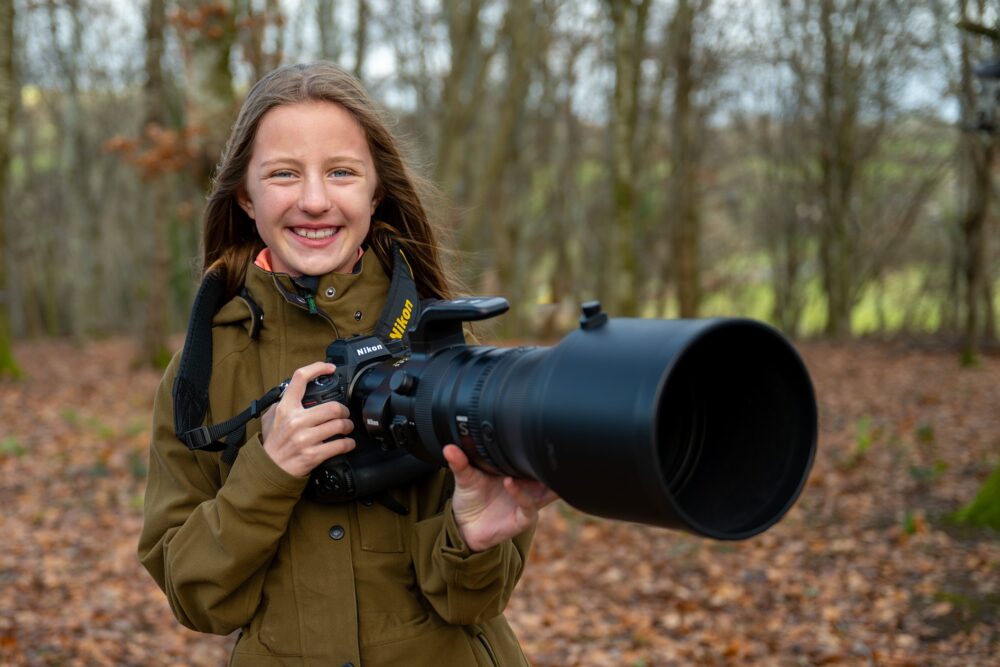
The young Welsh photographer, dubbed as Generation Alpha’s answer to David Attenborough, who won the Young Wildlife Photographer of the Year competition has revealed the winning shot was a happy accident.
Ten year old Jamie Smart recalled how she took the winning photograph early one autumn morning when she went into the family garden in the countryside near Llandrindod Wells.
“There were water droplets everywhere, and I thought it would be a really nice time to go out and capture some photos of animals,” says Jamie.
Spotting a blob of spider’s web among dead dock leaves, she followed it until she found a garden spider, perhaps half a centimetre long, tucked up inside a hide-out which it weaves freshly each day.
Jamie used flash and a diffuser, “changing settings and angles and all sorts” to light up the spider in a breathtaking close-up shot.
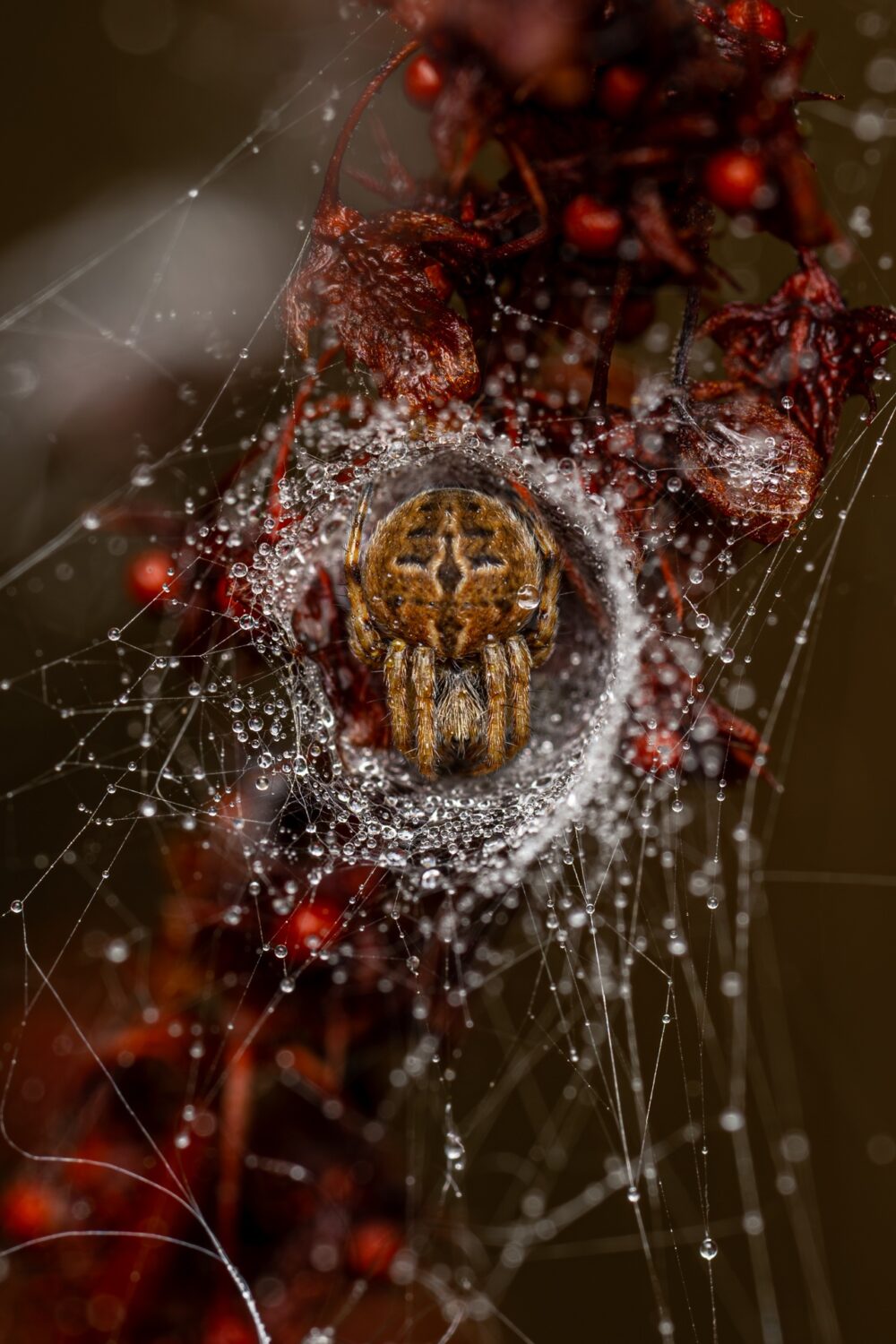
Spiders are among Jamie’s favourite creatures to photograph and she is keen to dispel fears about them – “They don’t want to harm you! They’re just full of character and some are really cute – their hunting behaviours are incredible”.
She loves doing close up macro photography of bugs “because they have so much detail on them… It helps people look into this different world, a world we don’t fully understand yet”.
She has captured a huge variety of animals, from baboons to guinea pigs to fish, on her way to landing at least five major awards this year in youth sections and open adult competitions, most recently two categories at the RSPCA Young Photographer awards.
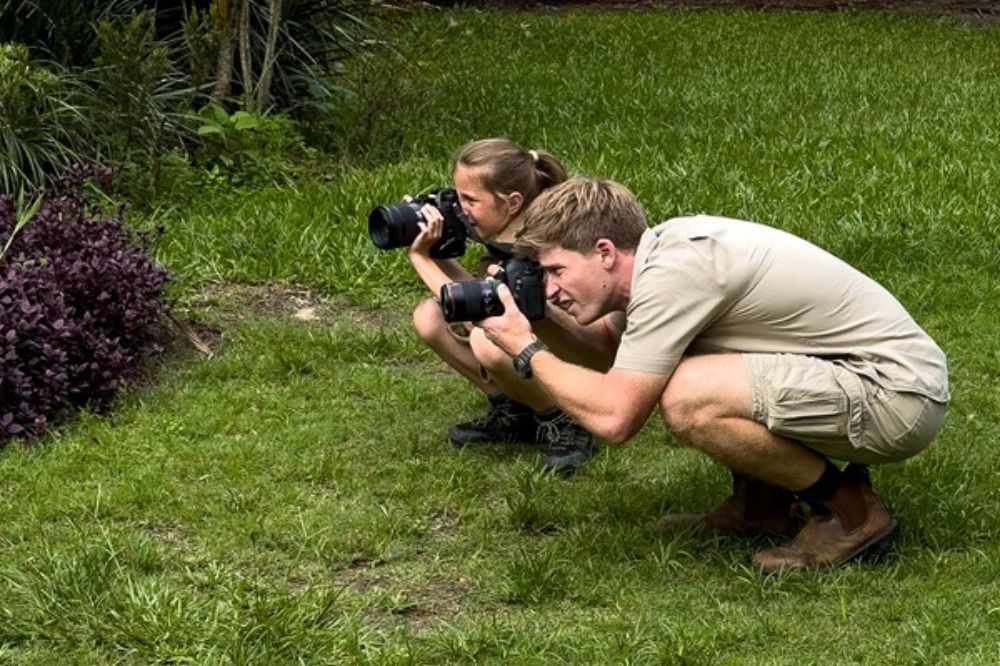
Competition success has opened up further opportunities – such as a trip Down Under to photograph animals at the wildlife hospital set up by Steve Irvin, alongside the late conservationist’s son Robert.
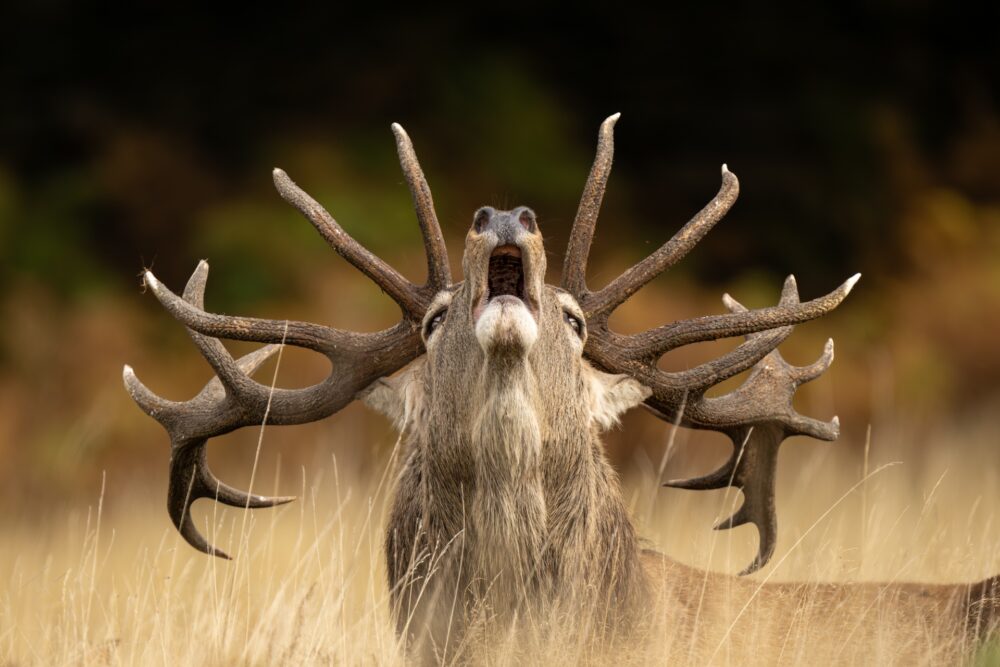
A photo taken at Bradgate Park, Leicestershire of a monarch stag bellowing to ward off a younger rival was the fruit of two days’ working dawn to dusk with wildlife photographer Danny Green, a prize from the 2023 RSPCA Young Photographer awards.
Jamie found herself “running up and down the path to get the correct angle to try and catch the stag looking at me”. The image won her a commendation at Wildlife Photographer of the Year 2025.
Home-schooled Jamie’s love of wildlife grew from her “immense” early passion for dinosaurs. She has been taking animal photographs since she was six and a half, supported by her dad James, a carpenter who used to take photos as a hobby but hadn’t picked up his camera in years.
James is now trying to master videography to film Jamie for her social media, and to help her understand how the wildlife photography industry works. “We’ve been learning together, we never stop,” he says.
Over the past couple of years, James, Jamie and mum Eleri have let the garden run wild, turning it into a wildlife haven. “We don’t use pesticides,” James says. “Watching it, the natural balance has come back, you can see the ecosystem thriving”. Jamie suggests budding wildlife enthusiasts who have a garden can start by putting out bee boxes and bug hotels.
She calls her home area “a beautiful place in the sticks – there’s a lot of bugs around, you get to go through woodlands and see what’s there”. She enjoys the “whole different world” of nocturnal wildlife that emerges after dusk – illustrating with a convincing owl impression.
With more than 170,000 followers of her Eagle Eyed Girl @eagle_eyed_grl Instagram account, Jamie says her mission with photography is “to show people how amazing wildlife is, to educate them about it and bring awareness. I hope that if I show them my passion for it, I’ll inspire them to have a passion too. And if they want to protect that species, maybe they want to protect other species”.
This year’s Wildlife Photographer of the Year competition attracted a record-breaking 60,000 entries from 113 countries.
Of other UK-based photographers in the exhibition, Kutub Uddin, who specialises in captivating close-ups of fungi and slime mould, said the contest is important “because it helps people connect emotionally with nature. When people see the beauty, complexity and vulnerability of the natural world, it encourages respect and appreciation.
“That connection is often the first step towards thinking differently about sustainability… Everything in nature has value”.
Fortunato Gatto, who relocated from Milan to Scotland to follow his passion for unspoilt nature, said: “We need strong institutions and visionary people to give credibility, support, and momentum to our dream of a better future. Through creativity and collective effort, we can inspire a more conscious relationship with the planet.”
Amy Jones, whose image of an elderly tigress used as a breeding machine on a tiger farm was Highly Commended in the Photojournalism category, said: “Many environmental and animal issues remain distant or abstract for people.
“We need breathtaking images of nature to inspire people to care; at the same time, we need harrowing images that uncover the harm animals face at human hands. Wildlife Photographer of the Year brings both of these perspectives together on a global stage, reaching beyond traditional advocacy audiences”.
The Wildlife Photographer of the Year exhibition is on at Wolverhampton Museum & Art Gallery until January 25 2026 and at Bristol Museum & Art Gallery until April 26 2026
Support our Nation today
For the price of a cup of coffee a month you can help us create an independent, not-for-profit, national news service for the people of Wales, by the people of Wales.


