

Yr Hen Iaith part 80: Ann Griffiths – the women who wrote some of the most popular Welsh hymns of all time
Jerry Hunter
As we’ve stressed several times, one of the more exciting developments in Welsh scholarship over recent decades has been the illumination of poetry by women which was previously confined to manuscripts and virtually unknown.
Poets such as Gweirful Mechain (episode 27), Alys ferch Gruffudd (38), Angharad James (76) and Marged Dafydd (77) are being worked into new Welsh literary canons.
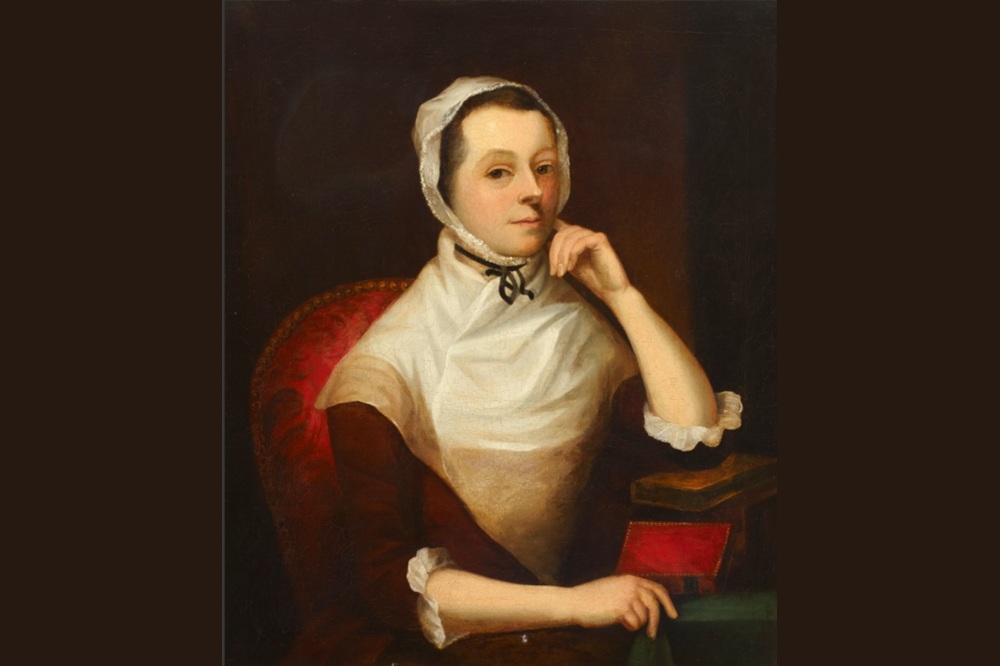
Previously, the only Welsh woman who was visible in the canon was Ann Griffiths. Several of her strikingly original and arrestingly personal hymns had become some of Wales’ most popular religious songs by the middle of the nineteenth century. However, like any figure achieving iconic status over the years, there are aspects of Ann’s story which are not so widely known.
For example, she was only known as Ann Griffiths during the last year of her short life. She took the surname Griffiths upon marrying in 1804 and died less than a year later at the age of 29.
Ann Griffiths was known as Nansi Thomas to most of her friends and family for 28 out of her 29 years.
She grew up on the family farm, Dolwar Fach, in Montgomeryshire. Though raised an Anglican, Ann became a Methodist following a spiritual awakening which she experienced when she was 20 or 21 years old. And, as Wyn James has stressed, she became known in the local Methodist community for the intensity of the experiences which continued to mark her religious life: ‘Ann, then, was considered a person whose spiritual experiences were remarkable even at a time of powerful religious awakening.’[1]
Her poetry was composed as a direct response to these spiritual experiences. Even though Ann Griffiths (or Nansi Thomas) was literate – she read the Bible constantly and several letters in her hand have survived – she composed her hymns orally.
Ruth Evans, who worked in Dolwar Fach as a maid and who also became one of Ann’s close friends, memorized a great number of the compositions (some 70 verses in total survived).
After Ann’s death in 1805, Ruth recited them to her husband, John Hughes, and it was these hand-written texts which Thomas Charles used to produce the first published collection.
The work of this famous poet – including some of the most popular Welsh hymns of all time – only survived because of this fragile chain of transmission. And the first two links in this chain, the transmission of the verses from Ann to Ruth and then Ruth’s transmission of them to her husband, were via oral performance.
Intensely personal
It is sobering to think that the vast majority of Welsh poetry composed by women in the medieval and early modern periods was composed and transmitted orally and never committed to writing and thus lost to us. And it’s a safe bet that Ann Griffiths composed hymns which she didn’t transmit even to Ruth. For her poetry was intensely personal in nature and meant to be her own way of processing her own personal spiritual experiences.
Like so many things relating to Ann Griffiths, I first learned all of this from E. Wyn James. Among other things, Professor James has highlighted the significance of a death-bed conversation between Ann and Ruth which Ruth’s daughter recorded:
‘Gwell i chi’, meddai fy mam wrthi, ‘ysgrifennu yr hymns yna, a chithau’n gwaelu yn eich iechyd. [M]i fydde yn gresyn mawr ’u colli nhw.’ ‘Na, ydw i ddim yn ’u gweld nhw yn deilwng. Does arna’i ddim eisio i neb ’u cael nhw ar fy ôl. Rwy ’i yn ’u cyfansoddi nhw er cysur i mi fy hun,’ meddai Ann Griffiths.’ [2]
‘ “You had better write those hymns down,’ said my mother, ‘seeing as your health is failing. It would be a great pitty to lose them.” “No, I don’t see them as worthy. I compose them for as comfort for myself,” Ann Griffiths said.’
It is only because Ruth ignored the wish of her dying friend that they were recorded, an act of disobedience for which a great many people are surely grateful today. However, it does pose an interesting moral question about our right to sing, read and study these very personal hymns.
Many have noted that a consistency of vocabulary characterizes Ann Griffthis’ hymns, including the verb rhyfeddaf, ‘I wonder at’ (or ‘I’m amazed by’), the adjective rhyfedd, ‘wondrous’, and the noun rhyfeddod, ‘a wonder’.
Wonder
Her compositions are punctuated by – and sometimes entirely driven by – a joyous acknowledgement of the wonder which she has experienced. It is thus possible to read her work as expressing her own unique kind of Christian mysticism; these texts contain her meditations on spiritual experiences which are, in many ways, beyond the power of words to describe. Take, examples, these lines drawn from three different compositions:
Mae bod yn fyw yn fawr ryfeddod
O fewn ffurneisiu sydd mor boeth,
Ond mwy rhyfedd, wedi mhrofi,
Y dof i’r canol fel aur coeth.
‘Being alive within furnaces which are so hot
is a great wonder,
But [it is] a greater wonder that, after being tested,
I come to the middle like purified gold.’
Rhyfedda fyth, briodas ferch
‘Wonder, always, bride’
Rhyfedd, rhyfedd gan angylion,
Rhyfeddod fawr yng ngolwg ffydd
‘Wonderous, wondrous for the angels,
A great wonder in faith’s view[.]’
In another hymn, she uses a dizzying series of images to describe the place where she meets her God, beginning with a tent reminiscent of the Tabernacle, the portable temple used by the Israelites in the wilderness.
Dyma babell y cyfarfod
Dyma gymod yn y gwaed,
Dyma noddfa i lofruddion,
Dyma i gleifion feddyg rhad;
Dyma fan yn ymyl Duwdod
I bechadur wneud ei nyth,
A chyfiawnder pur Jehofa
Yn siriol wenu arno byth.
‘Here is the tabernacle [or ‘the tent of meeting’],
Here is atonement in the blood,
Here is a santuary for murderers,
Here is a ready physician for the ill;
Here is a place beside the Godhead
For a sinner to make his nest,
With Jehovah’s pure justice
Pleasantly shining on him for eternity.’
The rhythmic repetition of dyma, ‘here’, at the start of this series of lines might be read as her way of trying to describe what for her was a very real place, that spiritual realm ‘beside’ God where even murderers, their sins washed away ‘in the blood of Jesus’, might find ‘sanctuary’.
In the opening lines of the second verse, she places herself among the ‘sinners’ seeking sanctuary:
Pechadur aflan yw fy enw,
O bai rai y penna’n fyw;
Rhyfeddaf fyth, fe drefnwyd pabell
Im gael yn dawel gwrdd â Duw[.]
‘Impure sinner is my name,
The worst of all of the ones alive;
I will wonder [at it] forever: a tent was provided
For me to meet God quietly.’
As was stressed in episode 64 of Yr Hen Iaith, the hyms of William Williams, however personal in nature, were composed for singing by groups of worshipers. There is some evidence that Ann Griffiths, in addition to sharing many of her verses with Ruth, also sung them with a small group of women who attended the same seiat, the regular religious meeting held by the local community of Methodists.
However, knowing what we know about the circumstances in which she produced her oral compositions and knowing what we know about her attitude towards them, it’s difficult to conclude that this meditation on her status as ‘a sinner’ giving thanks for God’s ‘sanctuary’ was not meant to be disseminated so widely.
Darllen Pellach/Further Reading:
- Wyn James, Ann Griffiths Website (Cardiff University): https://www.anngriffiths.cardiff.ac.uk/cynnwys.html
in English: https://www.anngriffiths.cardiff.ac.uk/contents.html
- Wyn James, ‘Ann Griffiths: o lafar i lyfr’ in Angharad Price (ed.), Chwileniwm: Technoleg a Llenyddiaeth (Cardiff: University of Wales Press, 2002).
[1] E. Wyn James, ‘Introduction to the Life and Works of Ann Griffiths’: https://www.anngriffiths.cardiff.ac.uk/introduction.html
[2] E. Wyn James, ‘Ann Griffiths: o lafar i lyfr’ in Angharad Price (ed.), Chwileniwm: Technoleg a Llenyddiaeth (Cardiff: University of Wales Press, 2002).
Support our Nation today
For the price of a cup of coffee a month you can help us create an independent, not-for-profit, national news service for the people of Wales, by the people of Wales.


