


Yr Hen Iaith part 84: Anglican patronage and literary longing
Jerry Hunter
I’ll begin with a confession. When I was first trying to get to grips with as much Welsh literary history as possible, I was put off by the label yr hen bersoniaid llengar (‘the old learned vicars’).
The subject simply didn’t sound very interesting to that younger version of myself. I’m sure I said something dismissive and sarcastic like, ‘well, it’s nice that those old vicars were learned, but what does it matter in terms of the development of Welsh culture?’
The answer turns out to be ‘quite a lot’.
The term is misleading. While the label covers a number of Anglicans who were passionately interested in studying, promoting and creating Welsh culture, they weren’t all vicars. Indeed, some of the most interesting members of this network – or group, or circle – of enthusiasts were women. And these women made substantial contributions.
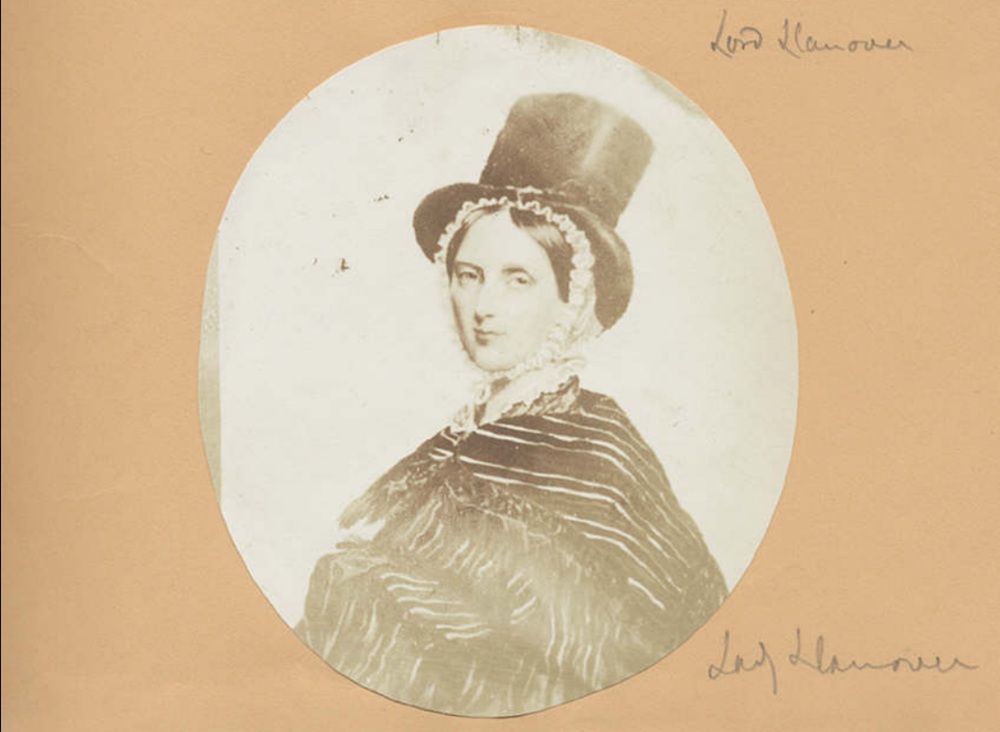
One was Lady Charlotte Guest (1812-1895), famous for publishing the first English translations of those medieval Welsh tales which she called ‘The Mabinogion’. And there was Augusta Hall, Baroness Llanover (1802-1896), who took the bardic name ‘Gwenynen Gwent’, ‘the Bee of Gwent’.
She campaigned for the public status of Welsh (in church services, for example), and invented much of what became known as traditional Welsh costume.
Angharad Llwyd (1780-1866) was one of the most important collectors of Welsh manuscripts and an authority on several aspects of Welsh history and culture.
The group did include a number of real vicars. Walter Davies, or ‘Gwallter Mechain’ (1761-1849), earned quite a reputation as a poet and authority on literary history. Several other of the hen bersoniaid were primarily known as antiquarians and historians, including Thomas Price or ‘Carnhuanawc’ (1787-1848) and John Williams, who took the bardic name ‘Ab Ithel’ (1811-1862).
Another was John Jenkins (1770-1829), who, though originally from Cardingashire, became known as ‘Ifor Ceri’ after becoming the vicar of Kerry –or Ceri – in Montgomeryshire.
What can we say about these people as a group? In many ways, their cultural contributions were similar to those of the London Welsh societies – the Cymmrodorion, the Gwyneddigion and Cymreigyddion – in that they strove to study and preserve the Welsh past while also encourage contemporary Welsh culture.
Some of them were active in eisteddfodic culture (as organisers, patrons, judges and contestants) during the decades before the establishment of the National Esteddfod in 1861. Ideologically, they were conservative Anglicans who set their cultural contributions against the increasing power of Welsh nonconformism.
Patronage
Drawing upon the resources of Anglican institutions which included the Llandovery School and the Lampeter College, and in some cases having considerable personal wealth, these people were able to provide patronage to poets partly reminiscent of that enjoyed by beirdd yr uchelwyr (‘the poets of the gentry’) in earlier centuries.
Indeed, after Ifor Ceri had a comfortable new parsonage built, visiting poets likened it the ‘court’ of Dafydd ap Gwilym’s patron and reffered to it as ‘Llys Ifor Hael’ (‘The Court of Ifor the Generous’). Ifor Ceri’s patronage was well spent on Evan Evans or ‘Ieuan Glan Geirionydd’ (1795-1855), a versitile poet who composed both free- and strict-metre poetry, and produced narrative ballads, short lyrics, and hymns.
He put words to the traditional tune ‘Morfa Rhuddlan’, producing a memorable ballad about the ‘Cyflafan’ (‘Massacre’) which took place there c. 796 when Caradawg ap Meirion, king of Gwynedd, and many of his host were killed by the invading Anglo-Saxons.
This song moves artfully between the eighth-century battle and the narrative present in which the poet’s persona describes what he sees in Morfa Rhuddlan. The first verse sets the spine-tingling scene:
Cilia’r haul draw dros ael bryniau hael Arfon,
Llenni’r nos sy’n mynd dros ddôl a rhos weithion,
Pob rhyw chwa ymaith a gilia o’r llwyni,
Ar fy nghlust draw mae ust y don yn distewi,
Dan fy mron clywa’m llon galon yn curo
Gan fawr rym dicter llym wrth im fyfyrio
Ar y pryd pan fu drud waedlyd gyflafan,
Pan wnaed brad Cymru fad ar Forfa Rhuddlan.
‘The sun retreats yonder over the the crest of Arfon’s generous hills,
The curtains of night falling now over meadow and moor,
Each and every breeze retreats from the thickets,
My ear notes the sound of the waves growining quiter in the distance,
Beneath my breast I feel my excited heart beating
Driven by sharp anger’s great strength as I think about
The time when there was a cruel bloody massacre,
When good Wales was betrayed upon Morfa Rhuddlan.’
Taking us back to the ancient battle, we are made to hear the cries of the warriors filling ‘bryn a phant, cwm a nant’ (‘hill and hollow, valley and dale’), the portentuous sound moving west from the Rhuddlan salt-marsh to Eryri, ‘braw a brys’, ‘fright and bustle’ filling the ‘court’ (‘[ll]ys’) of Caradawg. Ieuan Glan Geirionydd returns us to the present at the end, melding the narrative voice which has enthralled us with a description of the bloody battle with what is presented as biographical reality:
Af yn awr dros y llawr gwyrddwawr i chwilio
Am y fan mae eu rhan farwol yn huno;
Ond y mawr Forfa maith yw eu llaith feddrod,
A’i wyrdd frwyn a’r hesg lwyn yw eu mwyn gofnod;
Ond caf draw, gerllaw’r llan, drigfan uchelfaith
Ioan lân, hoffwr cân, diddan gydymaith,
Ac yn nhŷ’r Ficar fry, gan ei gu rian,
Llety gaf. Yno’r af o Forfa Rhuddlan.
‘I will go now across the green-tinted ground to search
For the place where their earthly remains rest;
But the great expansive Sea-marsh is their damp tomb,
With its green rushes and sedge thickets as their gentle memorials,
But I will reach yonder, by the church, the lofty expansive home
Of good Ioan [John Jenkins, Ifor Ceri], a lover of song, good company,
And there in the house of the Vicar, I will receive
Lodgings from his dear wife. There I will go from Morfa Rhuddlan.’
It thus ends as a tribute to his patron, enshrining Ifor Ceri’s interest in poetry, history and Welsh identity in this emotional ballad’s narrative fabric.
Hiraeth
Besides several popular hymns, Ieuan Glan Geirionydd’s most popular poem is surely the short lyric ‘Ysgoldy Rhad Llanrwst’, ‘Llanrwst’s Free School’. Influenced by the English ‘graveyard school’ of poets, and reminiscient of earlier Welsh poems employing the ubi sunt (‘where are they [now]’) theme, this poem describes the adult man’s return to the school he attended as a child. The building is closed, empty and silent. Filled with hiraeth or longing, he asks
Pa le mae’r si a’r dwndwr,
Gaed rhwng dy furiau gynt,
A’r plant o’th gylch yn chwarae
A’u hatsain yn y gwynt?
‘Where are the buzz and bluster
Which used to be heard between your walls,
And the children playing all around you
With their sound [heard] in the wind?’
He asks where the school children are today and then answers his own question with a sombre realisation:
Mae rhai mewn bedd yn huno,
A’r lleill ar led y byd,
Nad oes un gloch a ddichon
Eu galw heddiw `nghyd.
‘Some are sleeping in a grave,
And others are all over the world;
There is not one school bell which can
Call them together today.’
Further Reading (and listening):
Bedwyr Lewis Jones, Yr Hen Bersoniaid Llengar (The Church in Wales, 1963).
John Blackwell (Alun), Cathl i’r Eos a Cherddi Eraill (Melin Bapur, 2025).
Alaw, ‘Baled Morfa Rhuddlan’:
Support our Nation today
For the price of a cup of coffee a month you can help us create an independent, not-for-profit, national news service for the people of Wales, by the people of Wales.


