

Yr Hen Iaith part 98: A vision of Wales in words: the early work of O. M. Edwards
Jerry Hunter
As we’ve explored the end of the nineteenth century in recent episodes, one salient theme has been the relationship between Welsh-language literary culture and the nationalistic politics of the Cymru Fydd movement.
Consider, for example, the titles of some of the periodicals edited by O. M. Edwards: Cymru Fydd (edited with Thomas John Hughes), Cymru, Cymru’r Plant (‘The Children’s Wales’) and Wales.
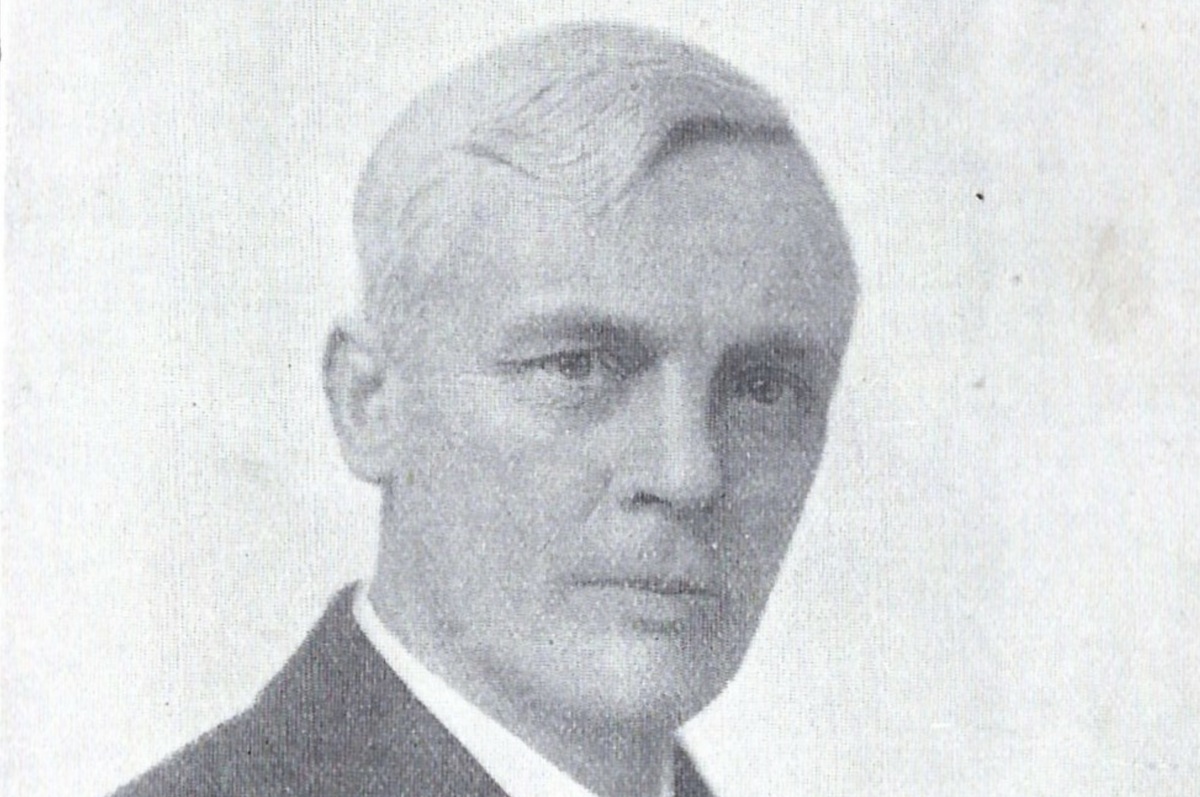
Born in Llanuwchllyn in 1858, Owen Morgan Edwards excelled academically, graduating with first-class honours in history at Oxford in 1887. He would return to Oxford two years later to teach after spending time travelling in Europe.
Both his undergraduate study of history and his experiences on the continent inform a piece which he published in Cymru Fydd in January 1888. Entitled ‘Geneva: Ei Dylanwad ar Gymru’ (‘Geneva: Its Influence on Wales’), it is a short treatise on the contrasting Catholic and Protestant periods in Welsh history, presented as a discussion about the influences of two cities:
Nis gellir byth adrodd hanes Cymru’n llawn heb ddangos fod dwy ddinas estronol wedi bod o fawr bwys yn ffurfiad tymer genedlaethol ei thrigolion. Yn newidiad graddol ei chyfraith, yn ffurf ei hen Gristionogaeth, yn ei geiriau ymhob gwyddor a chelf, hyd yn nod yn enwau ei blode, gwelir ol dylanwad Rhufain. Yn nwysder teimlad ei phobl, yn eu credo glir, yn eu moesoldeb gaeth a manwl, gwelir dylanwad Geneva, “Rhufain y Protestaniaid.” Yn wir, gellid dweud fod cymeriad Cymru wedi’i ffurfio dan ddylanwad y ddwy ddinas hyn; a gellir rhannu ei hanes yn ddwy ran, amser dylanwad Rhufain, ac amser dylanwad Geneva.
‘The history of Wales can never be related fully without demonstrating that two foreign cities have been of great importance in the formation of the nature of the nation and its inhabitants. In the gradual transformation of its laws, in the form of its early Christianity, in its vocabularly relating to every kind of learning and art, even in the names of its flowers, the influence of Rome is seen.
“In its people’s intensity of feeling, in their pure belief, in their strict and thorough morality that the influence of Geneva, ‘The Protestants’ Rome’, is seen. Truly, it could be said that the character of Wales was formed under the influence of these two cities, and its history can be divided in two parts, the time of Rome’s influence, and the time of Geneva’s influence.’
He then moves swiftly from the history of Wales to the present ‘awakening’, claiming that, in addition to influencing ‘Cymru Fu’ (‘the Wales which Was’), all that Protestant Geneva represents influences ‘[t]refn a thawelwch deffroad Cymru Fydd’ – ‘the order and tranquillity of the awakening of Cymru Fydd’ (‘the Wales which will Be’).
This historiographical and European articulation of the Cymru Fydd agenda is ‘tranquil’ because the goal was for Wales to achieve something like the relationship between Geneva and Switzerland: Nid ymgynhyrfu yn erbyn Lloegr y mae Cymru’n wneud, ond teimlo bywyd a gobaith newydd (ydym yn obeithio fydd effaith bywyd newydd Cymru Fydd. (‘It is not agitating against England that Wales is doing, but rather experiencing a new life and hope’).
Welsh nationalism
As my co-presenter, Richard Wyn Jones, emphasises on the podcast, this is typical of the Cymru Fydd strain of Welsh nationalism. (See his upcoming book – noted below – which compares and contrasts the types of Welsh nationalism represented in turn by Cymru Fydd and Plaid Cymru.)
To my mind, one of the most striking pieces which O. M. Edwards published in the periodical Cymru Fydd is a treatise on ‘Tri Deffroad’, ‘Three Awakenings’. The first of the three Welsh national stirrings he describes was ‘an awakening to see the beauty of nature’ (‘Deffroad i weled tlysni natur’). He locates this in the later Middle Ages:
Yn y bedwaredd ganrif ar ddeg, yr oedd Cymru mewn perygl o golli nodweddion gore ei meddwl. Yr oedd ei milwr wedi dod adref o Ryfeloedd y Groes, gan ddwyn y gwahanglwyf a geiriau Saesneg gyda hwynt. Yr oedd yr ysbryd Cymreig fel pe buasai wedi marw [. . . .]. [ . . . .] [Ond] Teimlodd y genedl ei bywyd, canodd o lawenydd, a chan Dafydd ap Gwilym y perffeithiwyd ei chân.
‘In the 14th century, Wales was in danger of losing the best characteristics of its purpose [or ‘thinking’]. Its soldiers had come home from the Crusades, bringing leprosy and English words with them. It was as if the Welsh spirit had died. But the nation sensed its life, it sang out of joy, and Dafydd ap Gwilym perfected its song.’
It is fascinating to see such an astute historian boiling down complex historical processes to produce the compact vision which drives this passage’s rhetoric: the two main threats were ‘leprosy’ and the English language! Whatever the threat, the antidote for everything was the love and nature poetry composed by Dafydd ap Gwilym.
This early piece is a striking example of the way in which Edwards placed Welsh-language literature at the centre of his vision of Welsh nationhood. And in that respect, he was similar to many other members of the Cymru Fydd movement.
Nonconformism
He then writes that the second national awakening came with the advent of Nonconformism: Yn y deffroad cyntaf gwnaethom heddwch â natur, yn yr ail gwnaethom gyfamod â Duw (‘In the first awakening we made peace with nature, in the second we made a covenant with God’).
Although he does not mention Catholicism by name, his underlying assumption here is thoroughly anti-Catholic, for his articulation of the nature of this ‘awakening’ assumes that no such Christian ‘covenant’ existed in Wales before the advent of Protestantism.
Welsh poetry is again centre stage, as Edwards sets a concise literary canon at the heart of the past developments driving contemporary Welsh nationhood: Mae Williams Pantycelyn, erbyn heddiw, wedi cyfarfod Dafydd ap Gwilym (‘Williams Pantycelyn, by today, as met Dafydd ap Gwilym’).
The third ‘awakening’ is the political one taking place at the time of his writing. Not only does he name the movement, but he does so in capital letters: Hoffem i GYMRU FYDD barhau i fod yn llais i’r dyhead hwn (‘we would like for CYMRU FY DD to continue to be the voice for this desire’).
O. M. Edwards began producing a new journal, Cymru, in 1891. As the title suggests, it was an attempt to produce a vision of ‘Wales’ in words. The periodical can be seen as an attempt to depict the entire nation – its geography, its history, its people and its literature.
And, like that earlier essay on the three national awakenings, the contents of Cymru often suggest that it is Welsh literature which binds all of the various strands of Welshness together. Among other things, he used the journal to begin constructing a Welsh literary canon, something he did in the very first number with a chronology entitled ‘Blynyddoedd ein Llenyddiaeth’ (‘The Years of our Literature’).
Agenda
In his ‘Rhagymadrodd’ (‘Introduction’) to that first number, O. M. Edwards presents his agenda plainly:
Yr wyf yn credu nad oes dim gryfha gymaint ar gymeriad Cymro a gwybod hanes ei wlad ei hun; yr wyf yn credu nad oes gystal moddion addysg Cymro a’i lenyddiaeth ei hun; yr wyf yn credu mai trwy gadw ei Gymreictod y bydd Cymro gryfaf, a pharatoaf i wneud daioni, a mwyaf llwyddiannus, a dedwyddaf, ac agosaf at Dduw.
‘I believe that there is nothing which strengthens a Welshman’s character as much as knowing the history of his own country; I believe that there are no means of educating a Welshman which are as good as his own literature; I believe that it is through keeping his Welshness that a Welshman will be the strongest, and most ready to do good, and most successful, and happiest, and closest to God.’
I can’t help wondering what he’d think about our podcast.
Darllen Pellach / Further Reading
Hazel Walford Davies, Writers of Wales: O.M. Edwards (1988).
Hazel Walford Davies, O.M.[:] Cofiant Syr Owen Morgan Edwards (2020).
Richard Wyn Jones, Rhoi Cymru’n Gyntaf: Syniadaeth Wleidyddol Plaid Cymru, volume 2 (appearing soon). An English translation of the book is also planned.
Support our Nation today
For the price of a cup of coffee a month you can help us create an independent, not-for-profit, national news service for the people of Wales, by the people of Wales.
Get more trusted Welsh news
Choose Nation.Cymru as a preferred source in Google News to see more of our journalism.


