

Yr Hen Iaith part 99: A Nonconformist’s dream of a Catholic Wales
Jerry Hunter
A sleeper in the early 1890s travels by means of his dream to the year 2012. The future Wales he glimpses is surprisingly different from the present. Protestantism has died and been replaced by a vibrant Catholicism.
This is a good thing: society is balanced and extremely civilised, and the Welsh language thrives.
This is the vision presented in an astoundingly original work of fiction, Breuddwyd Pabydd Wrth Ei Ewyllys, ‘A Catholic’s Dream According to His Desire’, published serially in Y Geninen between 1890 and 1892. Equally surprising is the fact that the author was a Welsh Methodist minister.
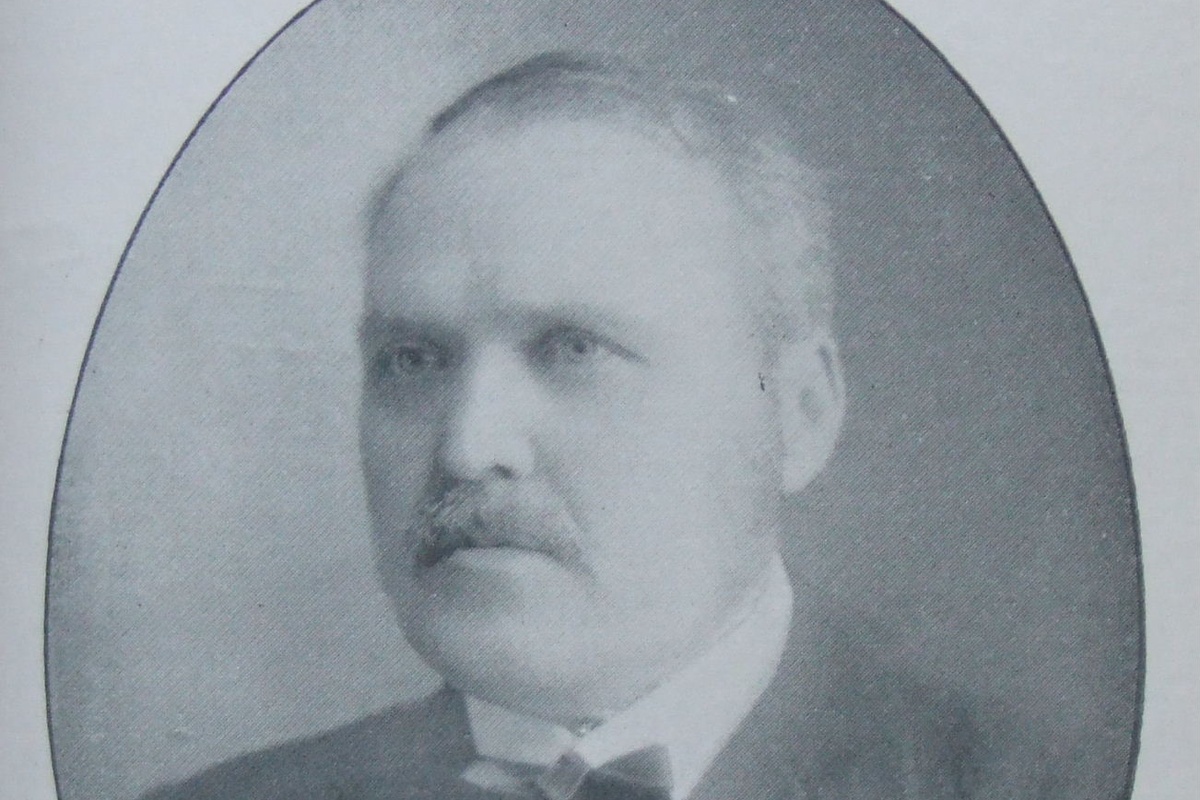
Robert Ambrose Jones was born near Abergele in 1848. He tried his hand at a range of professions as a teenager, working in clothing shops in Wrexham and Liverpool, and following in his father’s footsteps for a time by working as a gardener back in Wales.
After attending the theological college at Y Bala, he taught school for a while and then accepted a position as minister of an English-language church at Caergwrle. Extremely unhappy in this role, he left after only a few months. Working for some three years on the continent as a schoolteacher allowed him to become fluent in French and German. After returning to Wales in the late 1870s he was to serve as minister at a series of Methodist chapels.
He began publishing in earnest at this time as well. In keeping with his vocal opposition to the increasing Anglicisation of Wales, he changed his name to Emrys ap Iwan. One of his early essays, ‘Y Dwymyn Seisnig’, ‘The English Fever’, published in Baner ac Amserau Cymru in December 1876, is a powerful expression of this stance.
It is also a fine example of the rollicking satire which would characterise so much of his later writing. He begins by stating in a humorously roundabout fashion that the illness he is addressing is not a bodily affliction but rather a mental one:
Rhag bod yn euog o dynnu dwfr i enau seiri eirch a thorwyr beddau, ac o daflu cneuen goeg i feddygon, clochyddion, a cheraduriaid rheibus eraill, dylwn, ym mlaenaf dim, hysbysu mai nid yr English Cholera a feddylir wrth destyn yr ysgrif. Nid y bola, ond y pen a flinir gan y clefyd yr wyf fi ar fedr sôn amdano.
‘Lest I be guilty of causing coffin makers and grave diggers to salivate, and throwing a worm-eaten nut to doctors, sextons and other greedy creatures, I should, first of all, inform readers that it is not the English Cholera which is meant by the subject of the essay. It is not the stomach, but rather the head which is troubled by the sickness I intended to discuss.’
This biting satire is directed first and foremost at something of which he had first-hand experience while working as minister in an English-language church:
Nodwedd amlycaf y dwymyn Seisnig ydyw fod y neb a fo tani wedi ei feddiannu gan deimlad o’i rwymedigaeth i sefydlu achosion Seisnig mewn lleoedd nad oes mo’u heisiau.
‘The most obvious characteristic of the English fever is that whoever is afflicted by it is possessed by a feeling of obligation to establish English causes [churches/chapels] in places where they are not needed.’
However, the thrust of his satire is easily applied to any way in which Welsh people were Anglicising themselves. The illness is self-inflicted: Ni ddaw’r haint ddim ei hunan at neb (‘The disease doesn’t come of its own volition to anybody’). It engenders ‘a powerful delusion’ (amryfusedd cadarn) ‘which causes the sick person to believe a lie’ (a bair i’r claf gredu celwydd).
Like many of the writers discussed in recent episodes, Emrys ap Iwan was also a passionate advocate for Home Rule for Wales. Packaged and presented in a biography which T. Gwynn Jones would publish in 1912, Emrys ap Iwan’s thinking would become a big influence on Welsh nationalists during the first half of the twentieth century.
As literature is our primary concern here, let’s return to that work of fiction published serially in Y Geninen in the early 1890s. Breuddwyd Pabydd wrth ei Ewyllys is a provocative masterpiece, a biting satire attacking the sectarianism (enwadaeth) which plagued Welsh Nonconformist culture and those Welsh people who adopted a submissive and servile stance in the face of aggressive Englishness.
The fictional dreamer/writer is Y Tad (‘Father’) Morgan, and he begins by explaining the title, noting that his vision is of a Welsh-speaking Catholic Wales and that ‘many Protestants’ (llawer Protestaniaid) ‘will groan’ (ebychai) ‘after reading the writing’ (ar ôl darllen yr ysgrif).
Emrys ap Iwan then has Father Morgan introduce his dream vision, characterising the narrator as a learned, well-travelled, moral and likeable Catholic priest, and spicing the sentence with his characteristic humour:
Y mae gennyf gydwybod rhy dawel, a dannedd rhy dda, ac oherwydd hynny, gylla rhy iach i freuddwydio llawer, a phan y digwyddo imi freuddwydio, ni byddaf odid byth yn coelio fy mreuddwyd, nac, yn wir, yn ei gofio. A phaham y byddwn yn goelgar? A minnau, fel eraill o’m brodyr, wedi bod yn astudiwr dyfal am ugain mlynedd a mwy, heb wraig na phlant i’m blino, ac wedi tramwyo llawer gwlad, a dysgu aml iaith, er mwyn ymgymhwyso i fyned yn genhadwr i ba le bynnag y gwelai fy uchafiaid yn dda fy nanfon. Eithr ti a addefi, ddarllenydd tirion, fod rhagor rhwng breuddwyd a breuddwyd.
‘I have a conscience which is too quiet, and teeth which are too good, and because of that, a stomach which is too healthy to dream much, and when I happen to dream, I almost never believe my dream, nor, truly, remember it. And why would I be [so] credulous [as to believe in dreams]? I, like many of my brothers, have been a committed student for twenty years and more, without wife or children to distract me, and I have travelled through many countries, learned many languages, in order to qualify myself to go as a missionary to whatever place my superiors see fit to send me. Yet you will confess, gentle reader, that not every dream is like another.’
This earthy meditation on the circumstances of dreaming is in some ways reminiscent of Ellis Wynne’s 1703 classic, Gweledigaethau’r Bardd Cwsg (‘The Visions of the Sleeping Bard’), and it is no surprise that Emrys ap Iwan would publish a new edition of that canonical work before the end of the 1890s.
A man of reason, Father Morgan then tells us that he never believes a dream unless he dreams it three times consecutively. He cites ‘a Welsh tradition’ (traddodiad Cymreig) which holds that ‘With the third time comes belief’ (‘Y drydedd waith y mae coel’). Emrys ap Iwan should be acknowledged as one of the pioneers of Welsh science fiction, and this detail is an excellent example of the world-building which helps make his speculative fiction so rich and appealing. The future Welsh-speaking Catholic Wales he describes has its own traditions and proverbs, ones which seem believable to Welsh readers yet are products of the author’s imagination.
Vision
Following this introductory framing, we are then introduced to the world of the dream vision:
Breuddwydio a wneuthum dair gwaith fy mod yn y flwyddyn 2012 Oes Crist mewn ystafell neu ddarlithfa hanner cron, lle yr oedd llawer rhes o feinciau yn ymgodi yn raddol, y naill uwch law y llall . . . ac yn eistedd arnynt yr oedd tua dau gant o feibion a merched gweini, heb law aml feistr a meistres, ynghyd â’u plant. Er fod dillad y rhai olaf yn fwy drudfawr na dillad eu gweinidogion, go gyffelyb oeddynt o ran dull. Clos pen glin diwygiedig oedd gan y meibion, yr hwn, o blegid ystwythter ei ddefnydd a’r brodwaith oedd arno, a’r ysnoden a’r tasel oedd ar gammedd y garr, oedd yn llawn tebycach i glos yr Hungariaid nag i glos y Cymry gynt. Eisgidiau isel ag iddynt fyclau pres, neu arian, yn ôl gallu’r gwisgwr.
‘I dreamt three times that I was in the year 2012 A. D. in a room or lecture hall shaped like a half circle, where there were rows of benches rising gradually, one row higher than the other . . . and sitting on them were about two hundred serving men and women, not counting many masters and mistresses, along with their children. Although the clothing of the latter was more costly than the clothes of the servants, they were fairly similar in style.
‘The men wore a kind of knee-length breeches which, because of the suppleness of the fabric, the embroidery on them, and the ribbon and tassel at the bend of the knee, were much more like Hungarian breeches than the breeches of the Welsh of yore. They had low shoes with brass buckles, or silver, depending on the wearer’s means.’
Again, the world-building is intense. Describing the clothing of Welsh people in the future provides visual detail foreshadowing the coming description of their manners, beliefs and culture. The idealised future Wales is not a communist utopia, but rather a nineteenth-century Liberal one: there are still class differences, yet these are tempered by a kind of egalitarian spirit and common courtesy which ensures that those belonging to the servant class are not debased and oppressed by their status:
. . . ni welais i gymaint ag un yn gwladeiddio o flaen ei feistr, na neb isel ei radd yn ymhyfhau ar un uwch ei radd oblegid eu bod ill dau yno ar dir cyffredin. Fel pawb a fagwyd ac a ddisgyblwyd yn Eglwys Rhufain, yr oedd pob un yn medru bod yn rhydd ei ymddygiad a’i ymadrodd heb beidio â bod yn foesgar, ac heb anghofio, hyd y mae yn weddus, y gwahaniaeth mewn dawn a sefyllfa . . . .
‘I didn’t see a single one [of the servants] humbling himself before his master, nor anybody of low status making bold with one of higher status, because both were there on common ground. Like everybody raised and schooled in the Church of Rome, each one was able to be free in his behaviour and his speech without failing to be courteous, and without forgetting, as long as it was proper, the difference in ability and situation[.]’
Lecture
We are reminded that these people are here to hear a lecture, and it turns out to be a learned talk about the history of Wales and Welsh Catholicism. This, of course, is a perfect vehicle for presenting a vision of a century’s worth of imagined Welsh history.
Again revelling in detail, Father Morgan tells us that the lecturer was ‘from Gwynedd’ (Gwyneddwr), and describes his accent at length. This leads to a meditation on the differences between the Welsh of today and the speech of future Welsh people:
Er bod y pethau hyn oll yn llyfnhau llawer ar yr iaith, ac yn ei gwneud hi yn ddiau yn bereiddiach i’r glust, eto y mae’n debygol y teimlasai Cymro y dyddiau hyn ei bod yn swnio yn rhy werinaidd[.]
‘Although these things polish the language, and surely make it sweeter to the ear, yet it is likely that a Welshman from these times would think that it sounds too homespun.’
The ideal Welsh imagined is grounded in folk culture, free of English influence and yet suited to elevated cultural creation, being both ‘polished’ and ‘sweet’. We can assume that a great many Welsh readers in the 1890s would’ve found this aspect of the vision appealing.
Moving from the lecturer’s language to the main topic of his lecture, I can’t help wondering about the reactions of Nonconformist readers in the 1890s when they saw the heading ACHOSION CWYMP PROTESTANIAETH YNG NGHYMRU, ‘THE REASONS FOR THE FALL OF PROTESTANTISM IN WALES’.
Utopian
It’s easy to imagine that theme driving a Welsh Nonconformist’s dystopian fiction. This, however, is a utopian vision. As we have discussed recently in this series, Daniel Owen’s 1891 novel, Profedigaethau Enoc Huws (‘The Tribulations of Enoc Huws’) provides a critical look at a Welsh Nonconformist culture in which religion had become a superficial façade for many, easily manipulated and used to cover underlying sins. Emrys ap Iwan’s experimental work, published at roughly the same time, uses a very different fictional mechanism to cast a critical look at contemporary Welsh religious culture.
Further reading:
Richard Wyn Jones, Rhoi Cymru’n Gyntaf: Syniadaeth Wleidyddol Plaid Cymru, cyfrol 1 (2007), especially pages 28–36. The book is also published in English as Putting Wales First: The political thought of Plaid Cymru, volume 1 (2024).
Dafydd Glyn Jones (ed.), Emrys ap Iwan: Breuddwyd Pabydd wrth ei Ewyllys (2011).
T. Gwynn Jones, Emrys ap Iwan: dysgawdr, llenor, cenedlgarwr (1912).
Support our Nation today
For the price of a cup of coffee a month you can help us create an independent, not-for-profit, national news service for the people of Wales, by the people of Wales.
Get more trusted Welsh news
Choose Nation.Cymru as a preferred source in Google News to see more of our journalism.


