


1000 fewer casualties in Wales after 2 years of 20mph default speed limit
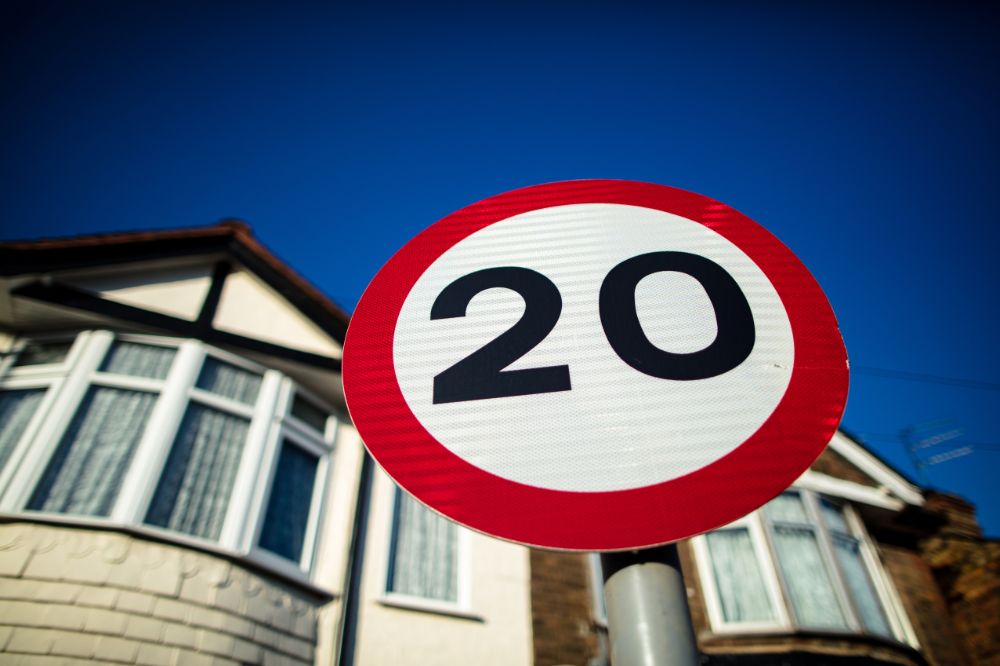
Two years on from the roll out of Wales’ controversial 20mph default speed limit, new data has revealed that policy has resulted in over 1000 fewer casualties.
Collision data is now available for the first 18 months of the speed limit’s implementation shows that 882 (or 25%) fewer people were hurt in road crashes on 20/30mph roads – with an expected 1,000 fewer casualties in the first two years.
The 20mph default speed limit proved a highly contentious issue when it was rolled out on Welsh roads in September 2023.
It led to a widespread public backlash with road signs vandalised, protests organised and a record-breaking Senedd petition which garnered nearly half a million signatures.
Hospital
But statistics show that over the first 18 months of the speed limit being in force, 14 people have not been killed on Welsh roads and 98 will have avoided a hospital visit for a serious injury.
Slower speeds saw UK-based insurer Esure reduce car policy premiums for drivers in Wales at the end of 2023 with Welsh drivers seeing an average £45 benefit to their insurance premiums.
The reduction in casualties of 25% on 20/30mph roads is twelve times the decrease on roads with higher speed limits.
The 20 is Plenty campaign group says the impact of 20mph in Wales is “more than a statistical blip” as compared with the pre-20mph year of 2022-23, casualties are down in every quarter.
Claims
All four police forces in Wales say they have seen casualty reductions.
In north Wales, where 94% of roads changed from 30mph to 20mph, casualties fell by 46%.
Motor insurers are have reported lower vehicle damage claims after implementation of the new 20mph default speed limit.
Esure has reported a 20% relative reduction in car claims in Wales since the nationwide limit was introduced.
Adrian Berendt, Director, 20’s Plenty for Us said: “As well as making Welsh communities safer, with over 1,000 fewer casualties, 20mph is benefitting drivers in lower insurance costs.
“We congratulate politicians, local authority representatives and community leaders who called for and implemented 20mph as an urban/village norm.
“We thank Welsh drivers who have altered their behaviour to make their communities even better places to be.”
‘Disastrous’
On the second anniversary of the introduction of 20mph in Wales, the Welsh Conservatives branded the policy “disastrous’.
Shadow Cabinet Secretary for Transport and Infrastructure, Sam Rowlands said: “The Labour Welsh Government ignored the people of Wales when they forced through their disastrous 20mph speed limit and dismissed a record-breaking Senedd petition calling to scrap it.
“The rollout has already cost taxpayers £32 million, with an estimated economic hit of up to £9 billion. Labour and Plaid’s blanket 20mph speed limit has been nothing short of a disaster for Wales.
“Lower speed limits make sense outside schools, hospitals and in dangerous areas, but Labour and Plaid’s one-size-fits-all approach doesn’t work. The Welsh Conservatives are the only party in the Senedd committed to scrapping Labour’s 20mph speed limit.”
Support our Nation today
For the price of a cup of coffee a month you can help us create an independent, not-for-profit, national news service for the people of Wales, by the people of Wales.



Based on an average cost of £1.5 million per road death in the UK, and £150,000 per serious injury, this policy has saved the taxpayer £35.7 million and cost £34 million to implement. So it’s paid for itself in around 2 years. And those figures are probably out of date so the savings may be greater than that. And that’s ignoring the cost of smaller injuries which may still have resulted in costs. Politicians in the Senedd should be significantly more bold and unapologetic in bringing this policy. Pound for pound it’s possibly the most significant road safety policy for… Read more »
Exactly this. Fewer deaths, fewer injuries, and it turns out, a cost saving too! Good work by the Senedd.
And it’s also worth noting that that’s also 14 less grieving families, at least 96 less unpaid carers helping a family member who may take years to get through rehab from their injuries or may have even been permanently disabled by what happened.
It’s so easy to focus on the fiscal savings but we cannot forget the impact road deaths and injuries have on families and communities.
Anyone who is still against this policy really needs to think much more critically about what they are speaking out against.
I’m glad the policy together with many other factors such as the year on year decline in ksi has been successful as it well should be but absolutely no ACTUAL real money has been saved. Has any NHS or now ‘less required’ rta ambulance, or any fire or police budget been trimmed back? No. These are pie in the sky figures to deceive and aggrandise. Not a single person has been laid off and no hard cash has been saved.
RTCs cost money outside the emergency services. Coroners, courts, social care, road repair etc.
That money has been saved but it can now be spent elsewhere in those services. For example, we regularly have people waiting a long time for ambulances, some of those would have been attending crashes before so they couldn’t attend a stroke, but as there’s less serious crashes now that will be less of an issue in future.
I get your point and less pressure on our overstretched and decaying services is a bonus, as is less pressure on clogged courts etc – road repair is often claimed on drivers’ insurance however – so the point remains that is NOT a cash saving as is being claimed time and again.
Also, no one drives at 20mph, everyone is travelling at 30mph plus. So the the figures are lies.
The data shows there’s been a slight increase in fatalities on 20/30mph zones since the 20mph default has been introduced.
https://www.gov.wales/police-recorded-road-collisions-interactive-dashboard
This is probably expalined by increasing violations within existing 20mph zones, where it’s needed, which are no longer ‘special’.
In other words, some entitled idiots think the law doesn’t apply to them, so they are entitled to ignore it. This is a problem of criminality, not improper legislation.
Amazing result.
My car insurance, like that of many others in Wales, has dropped significantly this year thanks to the 20mph limit, if Reform gets into power in the Senedd and abolishes this insurance premiums will rise once again in addition in an increase in casualties.
Well done Lee Waters for sticking to your guns in the face of so much abuse and introducing this.
Labour budget this October is tipped to increase in Insurance Premium tax. You should expect your motor insurance cost to fall as you get older and have a longer period of no-claims. To put this wholly down to a 20mph speed limit is daft. The most significant effect on motor insurance costs is the cost of living crisis where motorists increase their excess value in the policy which has two effects, a lower premium and less likely to claim on smaller cost accidents.
If my insurance goes up so what? The real winners in all this are the 1000 or so who could have been seriously injured or worse, killed. Not to mention the savings to the NHS and taxpayers.
It’s 882 if you read the article, based on a press release by the 20sPlenty campaign and cannot be substantiated by the published police stats. The BBC rounded this up to 900 and this areticle forecast a future number of 1000. Let’s stick to the data and drop the rhetoric. Let’s have 20 where it’s needed not where it’s not.
Where it is needed is where there are houses and street lights, which is where the 20 zones are.
Rare example of unintended consequences working well for us. I’ve got no personal beef with 20 mph in most places but I can’t stand those situations where the limit shifts up and down a few times with a matter of 1/2 a mile. Absolutely stoopid. Somebody got shares in some sign company ?
It’s not as simple as just swapping a 30 sign with a 20. There needs to be a ‘graded approach’ to a 20 stretch of road. So it goes down to 30, before down to 20 and back up again. Double the amount of signage and in some cases additional rumble strips and moving any tarmac roundels or traffic calming measures. There’s also sign placement consideration, hedges, bends and hidden dips. This is why it was so expensive to implement and after the folly of some 20s, so expensive to revert.
The 20 zones are saving money, especially for the NHS, so the cost of installation is irrelevant.
Tidy! Prior to the introduction of 20 mph, residents across Cardiff were arguing for the limit in their own street. I was thus always weary of the logic which determined that it was a good thing to protect kids in ones own neighborhood providing you had the freedom to 30 mph through somebody else’s.
1000 fewer casualties. It is political correctness gone mad. As GB News would say “imagining living in woke Wales where there has been 1000 fewer casualties because of a 20mph speed restriction. It makes you wonder why they have an Assembly”.
Ha Ha! Da iawn!
It’s not just fewer casualties, it’s also countless minor incidents that became near misses. A day ruined turned into a few seconds of muttering.
Ironically all those collisions are part of the £9billion (over 30 years – I think) economic cost of 20mph scheme.
Fewer accidents = less business for mechanics.
Oh dear! Economics not your strong point is it?
According to the reform supporters this saving lives stuff is woke. Although barely any of them threw tantrums when Bristol, London and Birmingham implemented it in around 2010, so I’m not sure if they’re just being anti Welsh or anti living children.
Hard to with them.
Bristol, London and Birmingham introduced it with a pre-exemption period, where the metropolitan borough, local consultations or district could exempt core routes without strict criteria to qualify for exemption. Not so in Wales. The reason why in Wales there was a change to the policy and we’ve since spent millions converting the 20mph imposition back to 30mph on key routes.
There wasn’t a change in policy. There was a gentle reminder to councils to use the powers devolved to them to tailor the new policy to meet the needs of their community. Swansea and Gwynedd managed to exempt plenty without being told off.
It was a change in policy with an additional restorative budget of up to £18million to do so. The policy change occurred after Lee Waters MS resigned as transport minister, an almighty c**k-up.
What changed about the policy? All that happened was some councils unused to being asked to make decisions on behalf of their citizens threw the toys out of the pram until some cash was dangled in front of them.
It’s sad that the 20 mph default speed limit, although its implementation by the Welsh Labour Government had flaws that could have been rectified in time, did save lives, is effectively now being reversed by councils because it was demonised by the Welsh Conservatives using blatant falsehoods along with the aid of their English MP counterparts who cynically set up fake social media accounts to whip up hostility encouraging detractors to damage & daub road signs costing thousands to repair and replace, and where we find ourselves now. Shameful.
It’s not being reversed by councils, it’s been implemented as intended. The whole point of a new default is to start there and increase where appropriate for individual communities rather than starting at 30 and dropping it only when enough people die. The handful of reversions are small beer compared to the thousands of roads staying at 20.
Of course, because although some idiots would like increased speed limits so they can save a few seconds on their commute, no-one in their right mind is going to accept a 30 limit where they live and where their children play or where they walk the dog.
‘Esure’s Rob Clark, Head of Motor Underwriting, said: “We can see a clear drop in claims for car accidents in Wales since the 20mph speed restriction was introduced in September 2023. During a time when we usually see these claims rise, they dropped and have continued to do so in Q1 2024. The restriction is clearly having an impact.”’
https://www.esuregroup.com/media/muqdfwsf/esure-20mph_10_06_2024.pdf
Keyboard warriors whether for or against our twenty mph limits can give their fingers a rest.
Insurers have done the maths and unlike the ‘warriors’ have put their money where their mouth is.
There are less claims due to higher manditaory excess on their policies.
Not necessarily higher excess but the either way, less claims is always a good result. 20mph is working and best decision for road safety in residential areas.
https://www.esuregroup.com/media/0doiiv4c/esure-group-2025-climatewise-report.pdf
published August 2025
‘As a result, we have been able to offer discounts to policy holders in some areas with 20mph zones, with policyholders in Wales seeing an average of £45 decrease in premiums as a result of the roll out there‘
and
‘Our data shows the increase in 20mph zones in Wales has led to significant reduction in accident frequency and severity. As a result, Welsh drivers have seen adjustments to insurance premiums.’
Maybe you could contact the esure group and explain to them why your analysis of the situation is right and they’ve got it wrong.
Proof?
I think we should take it down to 10mph , would make an incredible difference
You might upset the gentleman on the left.
Yes, he was a strong supporter of 20 zones originally, he would have hated 10!
It wouldn’t. There’s diminished returns in going below 30kmh (approximately 20mph in imperial units) but it does make sense for very sensitive areas such as directly outside a primary school or on a holiday park.
Or where old people live, or where people walk their dogs, or where children play or ride their bikes …or where delivery men cross the road with heavy parcels, or the postman does, or where tradespeople unload their tools.. in fact everywhere there are houses and street lights, which is where the 20 zones are. These are all “sensitive areas”.
Speed kills simple…for all those going nowhere fast…slow down..
If Reform continue to pursue their policy of wanting to scrap it, their politicians must take a long hard look at themselves in the mirror. Lives before votes.
I love the 20 limit. Whenever I am tailgated by some entitled idiot who thinks they are above the law, I take great delight in knowing that I am getting on their nerves, and increasing their journey time by 2 or 3 seconds. On the other hand, there is less chance they will wrap themselves around a tree or brick wall, thus maintaining the number of idiots in the general population. Still, swings and roundabouts… (no pun intended).