


14,000 job losses or 22% tax hike: The stark choice facing Welsh councils
Chris Haines, ICNN Senedd reporter
Welsh councils have warned plugging a £436m budget gap for next year would require an average council tax increase of 22% or the loss of 14,000 jobs.
The Welsh Local Government Association (WLGA), which represents Wales’ 22 councils, said local authorities face £560m of pressures in 2026/27 – £100m more than expected.
Councils warned a 2% settlement in the Welsh Government’s “roll-over” draft budget would be “extremely damaging” for services and leave a £436m shortfall. Ministers have proposed an average 2.5% increase, with a funding floor to ensure no council receives less than 2.3%.
Bridging the £436m gap would require “unconscionably high” council tax rises of about 22% or the equivalent of around 14,000 job cuts across Wales, according to the WLGA.
The stark warning was echoed by Wales’ outgoing auditor general who said some councils are “very close” to having to issue a formal section 114 (effective bankruptcy) notice.
‘Right at the edge’
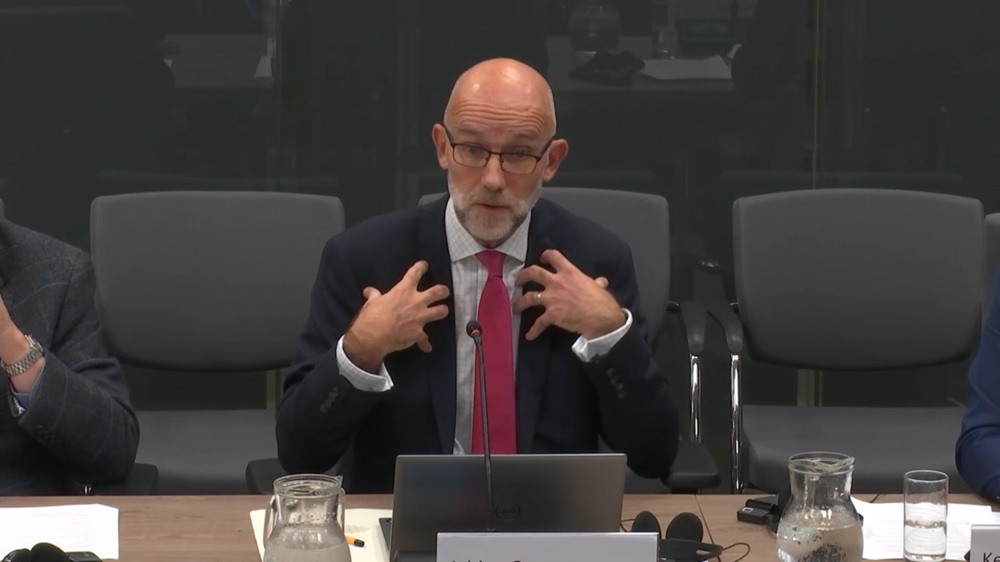
Adrian Crompton told the Senedd’s finance committee that councils – which are forecasting a £184m overspend in 2025/26 – are struggling to balance their books.
He said: “There are undoubtedly a few authorities that are very close to having to issue a section 114. Our assessment at the time of publishing our report was that none were about to, so they all had sufficient grip on their in-year position, so it wasn’t imminent.
“But some are right at the edge and they are all facing some very significant demand-led pressures in areas like children’s services, additional learning needs, temporary accommodation, which are very hard to predict.”
Mr Crompton, whose eight-year term as auditor general ends in July, added: “When you’re right at the edge of financial sustainability, if you get hit with a couple of significant cases that you have to deliver against, that could be sufficient to tip authorities over the edge.”
He warned their fragile financial state means councils would be the “most immediately and severely hit” sector if the Welsh Government’s budget fails to pass.
‘Slippery slope’
The financial pressures facing councils were detailed in the WLGA’s written evidence on the draft budget which showed how demand-led services are spiralling.
For example, the net cost of homelessness and temporary accommodation has exploded nearly eight-fold in a decade – from £12.8m in 2016-17 to £100.8m budgeted for this year.
The WLGA also warned of “unsustainable” pressures on school finances, with children’s care and education accounting for the majority of the forecasted £184m overspend.
One council said 33 primary and six secondary schools – nearly 70% of all schools in its area – were projecting a deficit budget.
Another reported its schools had “completely eroded a £15m surplus balance into a £2m deficit” and projected a £9m in-year overspend. Others warned of job losses, reserves running dry and class sizes rising above legal limits.
The financial strain is so severe councils are failing at their basic accounting duties, with many missing deadlines to file their accounts – a situation Mr Crompton described as a “slippery slope” for bodies “so close to financial sustainability”.
‘Unsustainable’
He argued spiralling demands are a symptom of a wider failure to shift spending to prevention. The auditor general said his recommendation for the Welsh Government to “embed prevention into the budget-setting process” had been rejected.
“It’s disappointing that it’s been rejected because it seems so fundamental,” said the auditor general, who added: “I don’t fully understand why.”
Councils’ evidence echoed this, stating while policy “increasingly references the importance of prevention, this is not often reflected” in funding. The WLGA said this has forced councils to cut non-statutory services such as leisure, transport and community facilities.
Mr Crompton’s warning about councils was part of a wider assessment that Wales’ entire model of public service delivery is “unsustainable on its current trajectory”.
Giving evidence on November 5, he told Senedd members demand is “outstripping” funding and critical areas have been “hollowed out” after two decades of tight budgets.
Mr Crompton warned this “unsustainable” model was not unique to local government, with all seven health boards in Wales breaching their statutory duty to break even over three years. The finance committee heard the NHS is forecasting a £191m deficit this year.
Support our Nation today
For the price of a cup of coffee a month you can help us create an independent, not-for-profit, national news service for the people of Wales, by the people of Wales.



And this is why next senedd election is so critical and true scrutiny of parties is needed. Rather than just arguing about Barnett or HS2 etc, you can literally see how grim education, culture and local government funding is going to be by the end of the next parliament and senedd session.
The rises to health and defence spending (neither of which are anywhere near enough) plus the rise in social/elderly care, SEND and in-work benefits (not devolved, but related) means exactly what the WLGA man says – cuts or big job losses – just to stand still.
It’s called ALN in Wales not SEND. Most schools in England are privatised and operate as academies. SEND there is just a method of dumping poor performing pupils into separately and additionally funded institutions. ALN in Wales, however, comes under the same local authority provision, and they shoulder the costs directly.
When do we reach the tipping point? Year on year council tax increases (22% anyone) in return for a year on year decline in services provided? At what point does the revolt start and the widespread refusal to pay for inadequacy? I certainly don’t dismiss the real constraints councils are under but in the context of wider cost of living demands merely to exist, something suely has to give. There is a limit to individual elasticity and shrugged shoulder deference.
How much money did they lose through Brexit?
A lot. In fairness the Welsh Government was anti-Brexit and campaigned to remain inside the EU. The heads of the valleys road would not have been built without EU funding and the funding from the UK government that was supposed to match the funding levels has fallen inadequately short. Coupled with Wales being continuously short changed from infrastructure costs. They’re in a very tough place and this article is a fairly chunky rock they’ve found coming towards them at a high rate of knots. It wouldn’t have mattered whether Reform, Plaid, Labour, Green, Lib Dem, Tory… or the Socialist Workers… Read more »
Ironic that this £184m overspend is about the same sum that local authorities have had to swallow in the payroll from the hike in employers NI contributions from Rachel Reeves the Labour Chancellor of the Exchequer in London. Eluned Morgan our FM said it would be better to have Labour in charge at both ends of the M4. Not so. She should know where she stands when she was welcomed to the rostrum by Kier Starmer at Labour party conference as “Elenor from Wales”. Unlike councils in England we have not been inoculated from the effects of decisions in London,… Read more »
Why doesn’t all 22 Welsh councils lobby the government for more cash? We, as taxpayers, cannot possibly expect to foot the shorfall every April. It’s getting beyond a joke now between the hefty water, electricity, gas and other increases. Once the working classes and OAPs get wage and pension increases there are sharks waiting in the wings to take it off us……and more!! Wait until Reeves clobbers us in the budget too.
Because the Welsh Government does not have an infinite pot of money, it has a rather limited pot of money in fact and as yet it has been unwilling to reform Council tax. The councils can lobby all they wish, but if the money isn’t there they can’t get it. While more money has come from Labour than we would have expected under the Tories it’s still woefully inadequate. In short we need to manage our own taxes and Council Tax is the only tax Wales has control over. Energy Policy is not strictly speaking one of them. However, Wales… Read more »
I was referring to the UK government not the Senedd. I understand that the Senedd only has limited funds. However, when it comes to England there are unlimited funds for whatever they need. What England wants England gets!! It’s about time the four nations should be in charge of the Treasury not just one. We are supposed to be “united”. All shareouts should be equal.
In my view, there is an underlying problem. The Welsh government, Senedd (all parties) and their network have had a delusional approach to legislation and policy making for years. In other words, they largely ignore the cost of what they are doing. The chickens are now flapping around the roost.
I think they certainly didn’t budget for the future. In the case of councils, they knew they would face an ageing population 10, 20 years ago. Taxed more to pay for the future real term costs. Basically passed the buck to the next generation. Mins you we are doing the same now with crazy debt levels and allowing in work benefits to increase so much
The alternative is to increase the minimum wage… but for some reason people are terrified about that.
Why would this make a difference to council deficit? Do you mean reduce it?
It’s going to be unfortunately necessary to wildly increase council tax. It’s really the only tax that Wales has any real control over (aside from some odds and sundries like Business Rates). Anyone who is pro-independence should not be shying away from this. If we expect to be funding our own public services without relying England and to prove we can do it, this is the one way we can prove it. What needs to happen though is a fundamental reform of how Council Tax is collected. We should switch to an Income-related Council Tax, whereby tax is paid per… Read more »
What happens when ordinary people (not the tiny minority of rich) simply can’t pay it? We are pretty close to that already?
Which councils are successfully reducing their temporary accommodation bill by building and buying more council homes using the proceeds of their second home levy? This information should be available for the next council elections.