


2025’s top 10 climate disasters cost more than 120 billion dollars, charity says
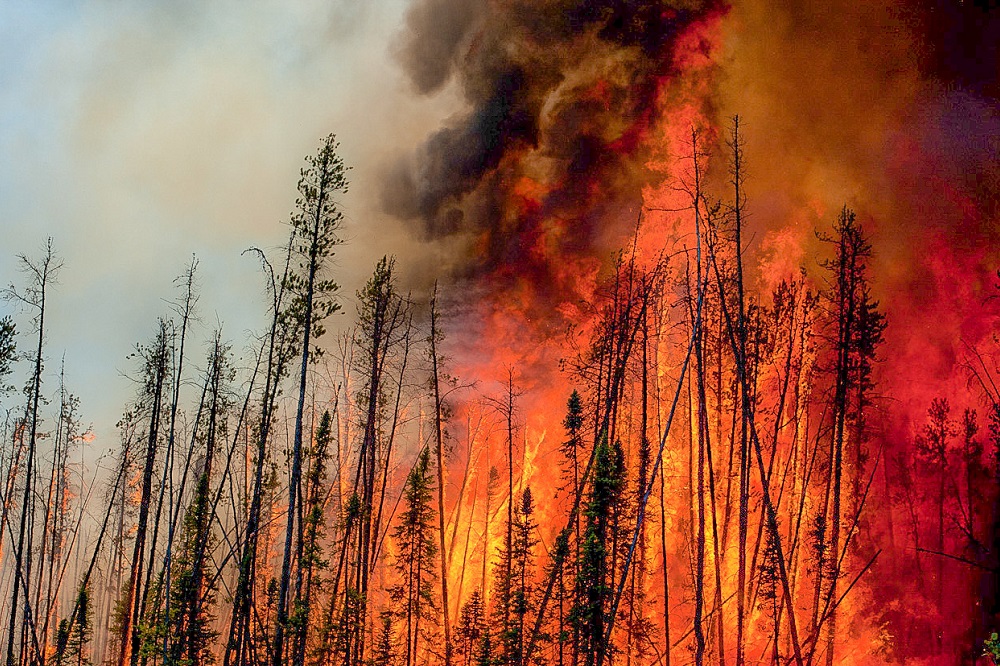
Heatwaves, droughts, wildfires and storms cost the world more than 120 billion US dollars this year, as climate disasters worsen, a report warns.
The annual assessment from charity Christian Aid outlined the 10 most expensive climate disasters, each of which cost more than 1 billion US dollars (£750 million) in insured losses.
The single costliest disaster was the 60 billion US dollar (£45 billion) Palisades and Eaton wildfires in California in January, which ripped through neighbourhoods and destroyed homes and businesses, with more than 400 deaths linked to the blazes.
The second most expensive climate disaster was a cluster of cyclones, extreme monsoon rainfall and flooding that hit Thailand, Indonesia, Sri Lanka, Vietnam and Malaysia in November, racking up insured losses of 25 billion US dollars (£19 billion) and costing more than 1,750 lives.
Extreme rainfall and floods in China between June and August cost the country 11.7 billion US dollars (£8.7 billion), Hurricane Melissa, which hit Jamaica, Cuba and Barbados, cost 8 billion dollars (£6 billion) and flooding in India and Pakistan caused insured losses of 5.6 billion dollars (£4.2 billion).
In total, the 10 worst climate disasters racked up costs of more than 120 billion US dollars (£90 billion) in 2025.
Climate disasters also claimed hundreds of lives, and have costs beyond insured losses, in damages to livelihoods, lost income, permanent displacement of residents and long-term damage to the environment, putting the true price tag for such disasters much higher, the report said.
Alongside the most expensive disasters, the Christian Aid report also examines 10 other significant climate-driven extreme events in 2025.
These range from unprecedented wildfires in the UK, which burned a record area of moorland, heath and forest, to blazes in Spain and Portugal due to extreme heat, drought in Canada, and multiple devastating floods in the Democratic Republic of Congo.
Christian Aid chief executive Patrick Watt said: “These climate disasters are a warning of what lies ahead if we do not accelerate the transition away from fossil fuels.
“They also underline the urgent need for adaptation, particularly in the global South, where resources are stretched and people are especially vulnerable to climate shocks.”
And he urged: “In 2026, world leaders must act – supporting communities already adapting at a local level, and providing the resources urgently needed to protect lives, land and livelihoods.”
The report said the economic impact of greenhouse gas emissions is measurable, totalling an estimated 28 trillion US dollars (£21 trillion) in damage between 1991 and 2020 alone, according to scientific research.
Joanna Haigh, emeritus professor of atmospheric physics at Imperial College London, said: “The world is paying an ever-higher price for a crisis we already know how to solve.
“These disasters are not ‘natural’ — they are the inevitable result of continued fossil fuel expansion and political delay.
“While the costs run into the billions, the heaviest burden falls on communities with the least resources to recover.
“Unless governments act now to cut emissions and fund adaptation measures, this misery will only continue.”
Christian Aid says the extreme events show the need for more urgent action to cut the emissions driving global warming and increasing extreme weather, which mostly come from burning fossil fuels, shift more quickly to renewables, and provide funding for vulnerable people.
The 10 costliest climate extreme events in 2025, according to the report, were:
1, Palisades and Eaton fires – United States – January – more than 60 billion US dollars
2. South and Southeast Asia cyclones – Thailand, Indonesia, Sri Lanka, Vietnam and Malaysia – November – around 25 billion US dollars
3. Extreme rainfall and flooding – China – June to August – 11.7 billion US dollars.
4. Hurricane Melissa – Jamaica, Cuba and Bahamas – mid- to late-2025 – 8 billion US dollars.
5. Extreme monsoon rainfall, flooding and landslides – India and Pakistan – June to September – around 5.6 billion US dollars.
6. Typhoons and tropical storms – the Philippines – mid-year to November – more than 5 billion US dollars.
7. Drought – Brazil – January to June – 4.75 billion US dollars.
8. Ex-tropical cyclone Alfred – Australia – February – 1.2 billion US dollars.
9. Cyclone Garance – Réunion (East Africa) – February – 1.05 billion US dollars.
10. Extreme rainfall and flash flooding – Texas, United States – July – 1 billion US dollars.
Support our Nation today
For the price of a cup of coffee a month you can help us create an independent, not-for-profit, national news service for the people of Wales, by the people of Wales.


