
25 women receive payouts following gynaecological surgery by one doctor at Welsh health board
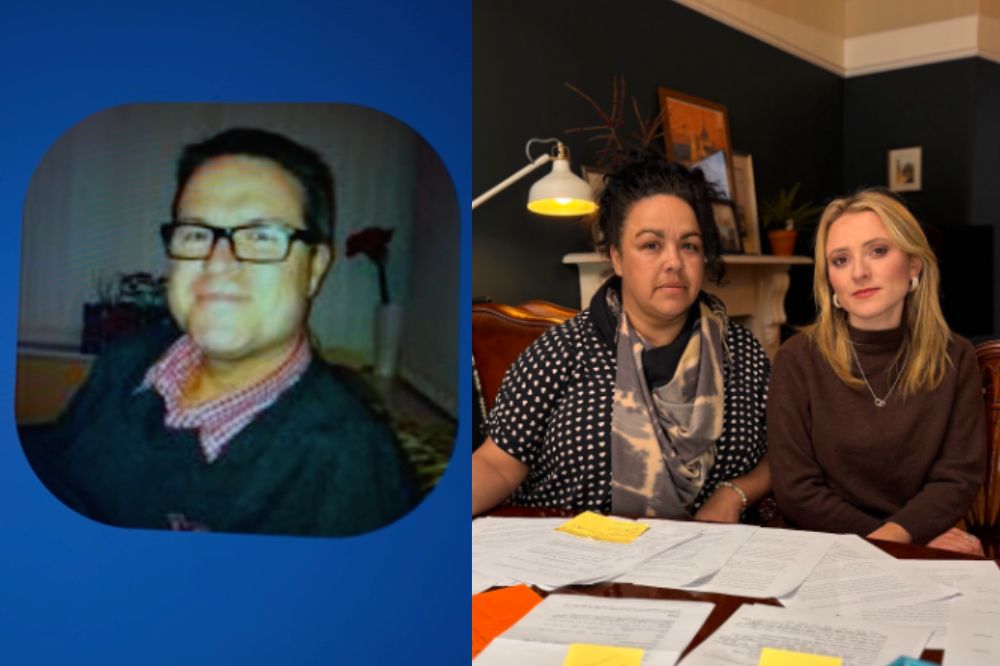
Twenty-five women have received compensation from a Welsh health board following gynaecological surgery carried out by a single surgeon.
S4C’s current affairs programme Y Byd ar Bedwar has been investigating the work of gynaecological surgeon Derek Klazinga, who was employed by Betsi Cadwaladr University Health Board between 2002 and 2016.
In several cases, the health board acknowledged that patients were not fully informed about alternative treatment options or the potential risks and side effects of procedures, including those involving TVT and TVT-O vaginal mesh, before surgery took place.
One woman has received compensation as recently as April 2025 – Kerry Watson from Kinmel Bay, north Wales.
Ms Watson underwent surgery in 2014 at the age of 29 after being diagnosed with bladder prolapse. During the procedure, two types of artificial mesh were implanted. She says she was not adequately informed of the risks involved.
Following the operation, Ms Watson experienced severe and ongoing pain, which she says has never improved. She now takes around 120 tablets a week to manage the pain, and was diagnosed with post-traumatic stress disorder (PTSD) in 2024.
In 2023, after discovering legal action was being taken against the health board in relation to surgery carried out by Mr Klazinga, Ms Watson began her own claim.
That expert in her case claimed a simpler, less intrusive treatment, like injections or a pessary would’ve eased Kerry’s symptoms.
Betsi Cadwaladr denied injections would have been appropriate for Kerry, but they admitted that other non-surgical treatments, such as vaginal prolapse pessaries, should have been discussed with her and that the process of obtaining Kerry’s consent for the surgery fell below the standard to be expected of a reasonable, competent surgeon. She received compensation in April 2025.
View this post on Instagram
Y Byd ar Bedwar has spoken to seven women in north Wales who have received compensation since 2015 after undergoing surgery by Mr Klazinga. Between them, they say they have received more than £600,000. Several said they did not consent to the procedures they received, while most described chronic pain that has had a profound impact on their lives.
When asked how much compensation had been paid specifically in relation to surgeries carried out by Mr Klazinga, Betsi Cadwaladr University Health Board declined to provide a figure. Betsi Cadwaladr confirmed it does hold the information, but could not release it as it relates to personal data. However, the board confirmed that it has paid more than £5 million in compensation over the past decade following errors in gynaecological treatment.
Solicitor Michael Strain, who has represented one of the 25 women in a claim against the health board, said it is highly unusual for one clinician to be linked to so many claims and calls for greater transparency.
Y Byd ar Bedwar understands that Mr Klazinga was scheduled to appear before a General Medical Council fitness-to-practise hearing in 2021, but removed his name from the medical register before the scheduled date, which meant the hearing never took place.
In a statement to Y Byd ar Bedwar, Derek Klazinga said: “Firstly, I wish to express my sincerest sympathy that these ladies have had to endure such physical and psychological pain caused by, what we now know to be, defective medical products used in their treatments.”
“These products were identified as potentially harmful and temporarily banned in 2018. This was followed in 2020 by a National Enquiry: The Independent Medicines and Medical Devices Safety Review, chaired by Baroness Julia Cumberlege.”
“I ceased practising medicine 10 years ago, more than two years before the ban. Before retiring in 2016, I always practised with the patient at the centre of my care, while abiding by the first principle of medicine: ‘First, do no harm’. I acted with the utmost professionalism and integrity. I was, of course, completely unaware of the defective nature of the products, which wasn’t subsequently exposed until two years after I retired.”
Y Byd ar Bedwar gave Mr Klazinga several opportunities to take part in an interview and explained that they are aware of the dangers of the mesh itself but wanted an explanation as to why he had failed to explain the side effects and complications of the operations to the patients and why he had not obtained their full consent. He did not respond to these points.
The use of TVT and TVT-O mesh has been suspended in Wales since 2018 following patient safety concerns. While we do not know which manufacturer made the mesh used by Derek Klazinga during the surgery of the 25 women concerned, we do know that some manufacturers have paid settlements for complications arising from mesh surgery while not admitting liability.
Dr Clara Day, BCUHB’s Executive Medical Director, said: “Firstly, I want to sincerely apologise to all women who have suffered complications through the insertion of vaginal mesh after treatment within our Health Board. Across the UK, we know a number of claims have been settled and I want to acknowledge the stress and pain this has caused to a small proportion of women in our region who underwent those procedures.
“Since I became BCUHB’s Executive Medical Director in September last year, I have been made aware of some historic claims in relation to one clinician who left the Health Board in 2016. Via the legal system, we have acknowledged physical harm to some patients who underwent procedures and we have found record keeping and consent had not been completed to the required standard in a number of cases.
“In all cases we have followed the correct legal processes and sought to finalise those claims as quickly as possible, in the best interests of those patients – and within the rules and requirements covering such claims. Every claim has resulted in learning for us, which has been scrutinised by experts outside of our Health Board.”
The full investigation can be seen on Y Byd ar Bedwar: Dan Gyllell Klazinga on S4C, S4C Clic and BBC iPlayer, 9 February. English subtitles are available.
Support our Nation today
For the price of a cup of coffee a month you can help us create an independent, not-for-profit, national news service for the people of Wales, by the people of Wales.


